On Via dei Pastini in Rome's historic centre, Il Barroccio occupies a stretch of the city where tourist volume and genuine Roman cooking have long coexisted in uneasy proximity. The address places it within the tighter gravitational pull of the Pantheon neighbourhood, where the line between credible trattoria and tourist trap is narrow and the dining room's internal discipline tends to be what holds it on the right side.
Pearl is the En Primeur Club membership app — saves, bookings, and concierge access live there. Same editors, same standards.
- Address
- Via dei Pastini, 13/14, 00186 Roma RM, Italy
- Phone
- +393966793797
- Website
- ilbarroccio.it
- Directions
- Get directions
 Saves & bookings on Pearl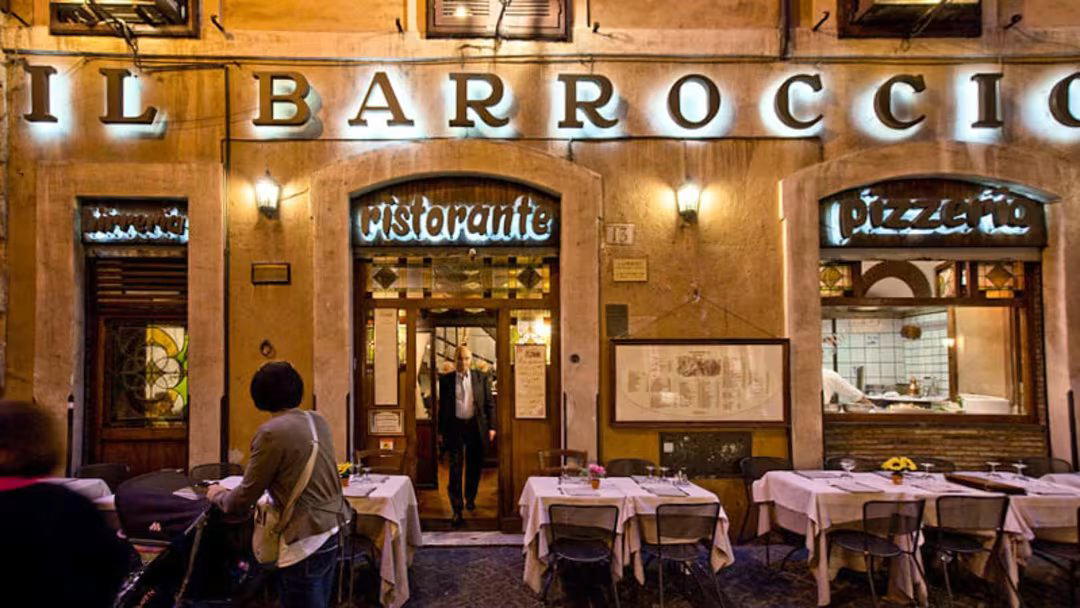
The Pantheon Quarter and What It Demands of a Kitchen
Via dei Pastini runs south from the Pantheon at a distance close enough that the piazza's shadow, metaphorically speaking, falls across the dining room. In Rome's historic centre, that proximity is a double-edged condition. The foot traffic is high and the competition for it is intense, but the visitors who arrive having researched their options are often more exacting than the average neighbourhood diner elsewhere in the city. Restaurants that survive in this pocket without compromising on product tend to do so because their internal systems, from the kitchen to the floor, are calibrated to absorb pressure without losing discipline. Il Barroccio is a traditional Roman osteria in Rome, at Via dei Pastini, 13/14, 00186 Roma RM, Italy, with a smart casual dress code and reservations recommended. Il Barroccio sits on that precise axis: a city-centre address that rewards the kitchens willing to operate seriously inside it.
Rome's central dining scene has fragmented in recent years into recognisable tiers. At the leading, places like La Pergola operate at a remove from the city's street-level tempo, while creative contemporary addresses such as Il Pagliaccio and Acquolina have built their reputations on culinary ambition rather than location. Below that tier, the better mid-range addresses in the centre succeed or fail on the quality of their ingredient sourcing and the coherence of their service teams, rather than on any single marquee element.
What the Floor Tells You About the Kitchen
In dining rooms where the collaboration between kitchen, sommelier, and front-of-house tends to be underwritten. In Rome's middle tier, it is frequently that collaboration, or the absence of it, that separates a coherent evening from a disjointed one. A well-aligned floor team reads the room's pace and adjusts. A sommelier operating in genuine dialogue with the kitchen can use the wine list to extend the logic of a dish rather than simply accompany it. These are the operational details that rarely appear in a venue's own communications but that experienced diners register immediately on arrival.
At Il Barroccio's address on Via dei Pastini, the physical setting places the dining room near venues that lean on their proximity to the Pantheon as a selling point in itself. The more durable position, particularly for repeat visitors and those arriving with specific culinary intent, is built on service coherence rather than address. Rome's better trattorias and mid-range restaurants have always understood this: the neighbourly reliability of a well-run floor, coordinated with a kitchen that knows its register and stays within it, is what earns the second visit. Creative restaurants elsewhere in Italy, from Enoteca Pinchiorri in Florence to Osteria Francescana in Modena, have built international reputations in part on exactly this internal alignment, even if their culinary ambition operates at a different register entirely.
Roman Dining Tradition and Where This Address Sits Within It
Rome's culinary identity has historically been anchored in the quinto quarto tradition, offal-based cooking rooted in Testaccio, and in a set of pasta preparations, cacio e pepe, amatriciana, carbonara, that have become both the city's signature and its most frequently diluted export. The central neighbourhoods, particularly those within the rione Colonna where the Pantheon stands, have been less associated with that tradition than the outer boroughs, and more associated with the challenge of feeding a mixed population of residents, office workers, and visitors without losing culinary identity in the process.
That context matters for understanding what a restaurant in this pocket is actually doing when it operates credibly. It is not working with the neighbourhood reinforcement that, say, a trattoria in Prati or Pigneto can draw on. The culinary references and sourcing discipline have to come from within the operation itself. Across Italy's broader fine dining circuit, from Le Calandre in Rubano to Piazza Duomo in Alba, the addresses that have built lasting credibility share a common characteristic: the cuisine is grounded in a specific regional logic, even when the technique reaches beyond it. In Rome's centre, the equivalent discipline is knowing which version of the city's cooking you are actually committed to.
Peer Context: Creative and Contemporary Italian in Rome
Within Rome specifically, the creative and contemporary Italian tier has consolidated around a small number of addresses. Enoteca La Torre and Achilli al Parlamento represent the city's more formal, research-led end of that spectrum. Outside Rome, the Italian creative scene has expanded to include addresses as varied as Uliassi in Senigallia, Reale in Castel di Sangro, and Quattro Passi in Marina del Cantone, each defining its own register. Internationally, the collaboration-driven model, where sommelier, kitchen, and service operate as a single editorial voice rather than separate departments, has been most systematically developed at addresses like Le Bernardin in New York City and Atomix in New York City. The relevance for a Rome city-centre address is not that it should aspire to those formats, but that the underlying principle applies regardless of price tier or culinary register.
Italy's broader north-south axis also shapes expectations. The grand dining room tradition, associated with places like Dal Pescatore in Runate or Atelier Moessmer Norbert Niederkofler in Brunico, carries a different set of service assumptions than a Roman city-centre trattoria. Enrico Bartolini in Milan represents another register entirely. What these comparisons clarify is that a Via dei Pastini address is operating in a distinct local tradition, not competing against those formats but accountable to its own version of seriousness.
Planning Your Visit
The restaurant is at Via dei Pastini 13/14, in the rione Colonna, a short walk from the Pantheon. Booking ahead is recommended.
Budget and Context
Comparable venues nearby, for context on price, style, and recognition.
| Venue | Cuisine | Price | Notes |
|---|---|---|---|
| Il BarroccioThis venue — the venue you are viewing | Colonna, Traditional Roman Osteria | $$ | Not listed |
| Ristorante dai Pupi | Campo Marzio, Sicilian Seafood | $$ | Not listed |
| Trattoria da Lucia | Trastevere, Traditional Roman Trattoria | $$ | Not listed |
| Osteria dal 1931 | Gianicolese, Traditional Roman Osteria | $$ | Not listed |
| Arso Trattoria Moderna | Not listed | $$ | .null, Traditional Roman Trattoria |
| Hostaria Isidoro | Monti, Traditional Roman Trattoria | $$ | Not listed |
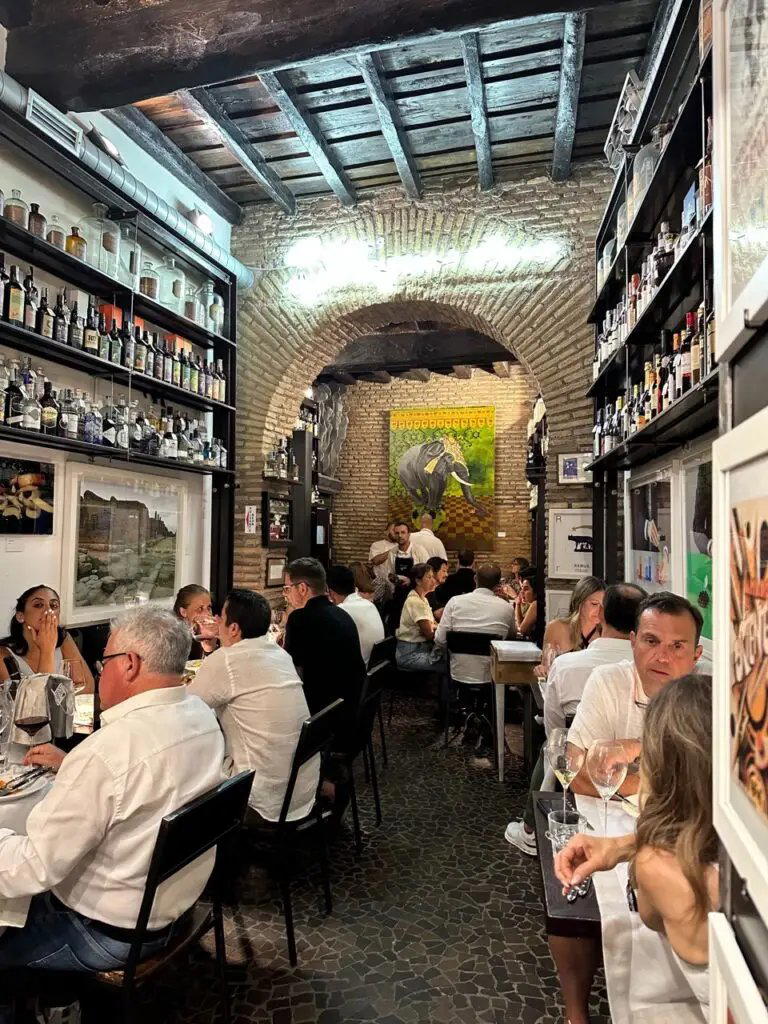

At a Glance
- Cozy
- Classic
- Rustic
- Intimate
- Casual Hangout
- Group Dining
- Historic Building
- Extensive Wine List
- Street Scene
Current opening hours
- Monday
- 11:30 AM–11 PM
- Tuesday
- 11:30 AM–11 PM
- Wednesday
- 11:30 AM–11 PM
- Thursday
- 11:30 AM–11 PM
- Friday
- 11:30 AM–11 PM
- Saturday
- 11:30 AM–11 PM
- Sunday
- 11:30 AM–11 PM
Hours can change for holidays and private events. Last verified .
Cozy and charming historic tavern atmosphere with warm welcoming service.