Our verdict
Hirugao sits inside Tokyo Station's celebrated Ramen Street, placing a refined shio ramen counter at one of the city's most-trafficked transit hubs. The bowl here draws on a delicate salt-based broth tradition that sits in deliberate contrast to the richer, heavier styles dominating mainstream ramen culture. For travellers passing through Marunouchi, it represents a considered stop rather than a convenience choice.

Pearl is the En Primeur Club membership app — saves, bookings, and concierge access live there. Same editors, same standards.
The menu
What to order
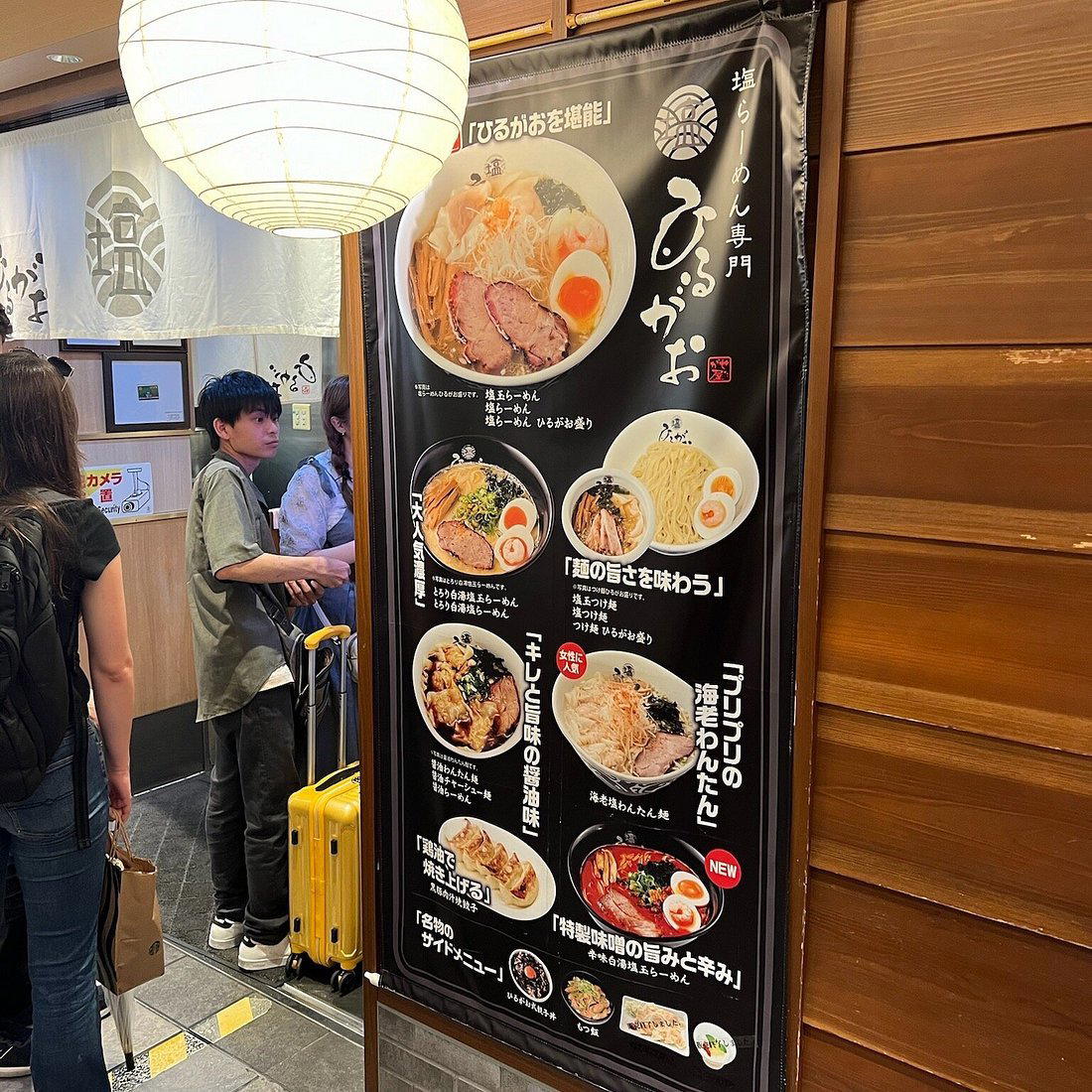
- Shio-Tama Ramen
- Ebi-Shio Ramen
Tokyo Station as a Dining Address
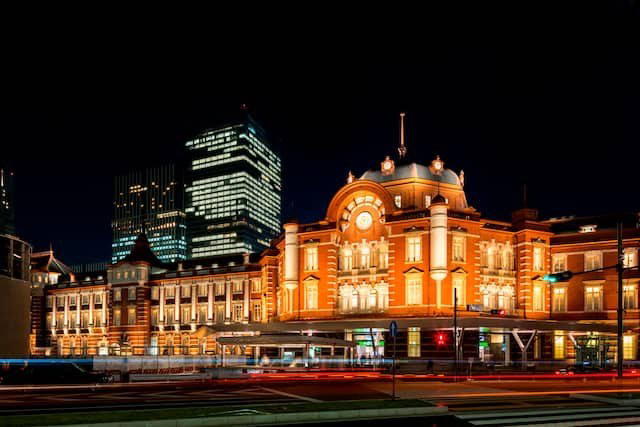
The basement corridors beneath Tokyo Station have evolved well beyond their transit-hub origins. Ichiban-gai, the retail and dining complex threading through the station's lower levels, now contains Ramen Street — a curated strip of eight counters that functions less like a food court and more like a concentrated argument about what ramen can be. The address, 丸の内1-9-1, places Hirugao (ひるがお) at one of the highest-footfall intersections in Japan, yet the format inside reads as deliberate and focused rather than volume-driven.
This is worth pausing on. Tokyo's Marunouchi district is defined by corporate infrastructure — the station itself processes roughly 400,000 passengers daily, and the dining options around it have historically prioritised throughput over craft. Ramen Street was a structural response to that dynamic, selecting counters that could demonstrate category depth to a captive but sophisticated audience. Hirugao's placement within that selection positions it as a shio ramen representative in a format that rewards repetition and refinement.
Shio Ramen and the Salt-Based Tradition
To understand what Hirugao offers, it helps to understand where shio ramen sits within Japan's broader ramen taxonomy. Salt-based broths are the most technically demanding of the four principal ramen styles. Where tonkotsu relies on emulsified pork fat and soy tares carry their own weight, shio requires that the broth itself carry flavour without opacity or heaviness as a crutch. The margin for error is narrow. A well-made shio broth is clear, pale gold, and built on layered dashi, typically a combination of chicken and seafood stocks, with the salt tare functioning as an accent rather than a structural element.
Tokyo has a smaller but serious shio ramen culture. The style traces stronger historical roots to Hokkaido and the coastal north, where seafood-heavy broths developed in parallel with local fishing economies. Hirugao's presence on Ramen Street places it as a representative of that tradition for the hundreds of thousands of visitors moving through the station annually, including a significant proportion arriving from or departing to other parts of Japan where the shio style is more deeply embedded in regional identity.
The Station Context and What It Changes
Dining at a ramen counter inside a transit station reads differently depending on where you stand in relation to the journey. For the domestic traveller connecting between Shinkansen platforms, Ramen Street operates as a legitimate destination interlude, a known quantity with a manageable time commitment. For the international visitor arriving at Tokyo for the first time, the same counters function as an early calibration point for what Tokyo ramen quality looks like before venturing into the city's neighbourhood-level specialists.
That dual audience shapes the experience at Hirugao. The counter format, typical of serious ramen operations throughout Japan, keeps service direct and efficient. There is no table service dynamic to manage, and ordering is typically handled through ticket machines at entry, a system that reduces friction regardless of language. The physical environment of Ramen Street, while underground, is maintained to a standard that reads as intentional rather than incidental, the selection of eight counters creates a contained scene with its own internal logic rather than the noise of a general food hall.
For comparison, the broader Marunouchi dining scene above street level skews toward expense-account French and kaiseki-adjacent Japanese, with counters like those represented by Harutaka and the kaiseki precision of RyuGin operating at price points and booking lead times that require advance planning. Ramen Street operates at a different register entirely, accessible without reservations and priced to reflect the category rather than the address. This makes Hirugao's location an asset rather than a qualifier.
Where Hirugao Sits in the Wider Tokyo Ramen Scene
Tokyo's ramen landscape has diversified significantly over the past two decades, with Michelin-starred counters appearing since 2015 and a growing number of destination bowls drawing comparable advance planning to fine dining. The city's leading shio and shoyu counters now draw regular coverage from publications tracking serious Japanese food culture. Ramen Street, as a curated subset of that broader scene, carries an editorial position, its eight slots are not arbitrary, and counters within it have been selected for their ability to represent a category at a level appropriate to the station's profile.
That context places Hirugao in a middle tier that is harder to define than either neighbourhood specialist or high-concept destination. It operates with the credibility of curated selection but without the friction of advance booking or premium pricing. For travellers already planning a sequence that includes Tokyo's higher-end dining, L'Effervescence or Sézanne at the French end, or Crony for something more structurally inventive, a bowl at Hirugao functions as a calibration point in the other direction, grounding the trip in a category that operates entirely outside the fine dining framework.
Travellers extending beyond Tokyo might also consider how the ramen tradition connects to regional specialties elsewhere: Goh in Fukuoka operates in a city where tonkotsu has its own distinct regional grammar, and the broader question of how Japan's serious dining culture distributes itself across cities is worth exploring through our full Tokyo restaurants guide. For context further afield, HAJIME in Osaka, Gion Sasaki in Kyoto, and akordu in Nara each represent how Japan's regional dining scenes operate at their own high-water marks. Beyond Japan, the parallel question of how serious noodle and broth traditions translate into curated urban dining contexts appears in places like Atomix in New York City, where Korean technique operates at an equivalent level of intensity.
Planning a Visit
Hirugao is located in the B1F level of Tokyo Ichiban-gai within Tokyo Station, accessible directly from the station's internal concourse without exiting through the fare gates. Reservations: Walk-in only; queues form during peak lunch hours (roughly noon to 1:30pm on weekdays) and on weekends, particularly in colder months when shio ramen draws higher demand. Timing: Arriving before 11:30am or after 2pm reduces wait times substantially. Budget: Ramen in this category typically runs in the ¥1,000 to ¥1,500 range per bowl; the station location does not carry a significant price premium over neighbourhood counters. Access: Tokyo Station is served by the Yamanote Line, Chuo Line, Keihin-Tohoku Line, multiple Shinkansen lines, and Tokyo Metro Marunouchi Line, making it the single most-connected station in the city.
Frequently asked questions
Where is Hirugao (ひるがお) in Tokyo?
Hirugao (ひるがお) is located at 丸の内1-9-1 (東京駅一番街 B1F 東京ラーメンストリート), 千代田区, 東京都, 100-0005, Tokyo.
Is Hirugao (ひるがお) worth visiting specifically for shio ramen compared to other Tokyo Ramen Street shops?
Tokyo Ramen Street in Ichiban-gai (B1F, Tokyo Station, Chiyoda-ku) groups eight distinct counters representing different regional ramen styles, making direct comparison unavoidable. Hirugao's focus on shio — the salt-based category — sets it apart from the tonkotsu and shoyu counters on the same corridor, giving it a defined niche within the strip. For visitors specifically tracking salt-broth ramen across Tokyo, Hirugao's station location makes it a logical stop given its accessibility directly from the internal concourse.
What's the signature dish at Hirugao (ひるがお)?
Hirugao specialises in shio ramen, the salt-based style that relies on a clear, delicate broth rather than the heavier miso or tonkotsu preparations. Within Tokyo's ramen taxonomy, shio is considered the most technically demanding broth to balance, as there is no opacity or fat content to mask imprecision. Hirugao's placement on Tokyo Ramen Street at Tokyo Station (Ichiban-gai, B1F, Chiyoda-ku) reflects the venue's standing within that competitive salt-broth category.
How hard is it to get a table at Hirugao (ひるがお)?
Hirugao operates as a counter inside Tokyo Station's Ramen Street, a concentrated strip of eight ramen shops in the B1F Ichiban-gai complex. Queues form during peak transit hours, particularly at lunch and on weekend evenings when foot traffic through the station surges. Because it operates within the station concourse and requires no reservation system, timing your visit outside the midday and evening rush windows is the practical approach.
A quick snapshot of similar venues for side-by-side context.
| Venue | Cuisine | Price | Awards | Notes |
|---|---|---|---|---|
| Hirugao (ひるがお)This venue — the venue you are viewing | Shio Ramen Specialist | $10–20 | Not listed | Not listed |
| Harutaka | Edo-Style Omakase Sushi | $200–300 | 3 Michelin Stars · World's 50 Best #76 | Sushi |
| L'Effervescence | Modern French with Japanese Influences | $200–300 | 3 Michelin Stars · World's 50 Best #69 | French |
| RyuGin | Modern Kaiseki | $500+ | 3 Michelin Stars · World's 50 Best #41 | Kaiseki, Japanese |
| Crony | Modern French with Japanese Influences | $150–200 | 2 Michelin Stars · World's 50 Best #34 | Innovative, French |
| Florilège | Modern French-Japanese Plant-Based Fine Dining | $50–100 | 2 Michelin Stars · World's 50 Best #31 | French |