
A small Jingumae soba room where handmade buckwheat noodles sit inside Tokyo’s serious lunch culture rather than its luxury tasting-menu circuit. Recognition from Tabelog’s Soba EAST 100 in 2025, plus earlier selections, places it among specialist noodle addresses with a reputation built on craft, sake, and a compact counter-and-table format.
Pearl is the En Primeur Club membership app — saves, bookings, and concierge access live there. Same editors, same standards.
- Address
- 2 Chome-19-12 Jingumae, Shibuya, Tokyo 150-0001, Japan
- Phone
- +81 3-3402-7738
- Website
- tabelog.com
- Directions
- Get directions
 Saves & bookings on Pearl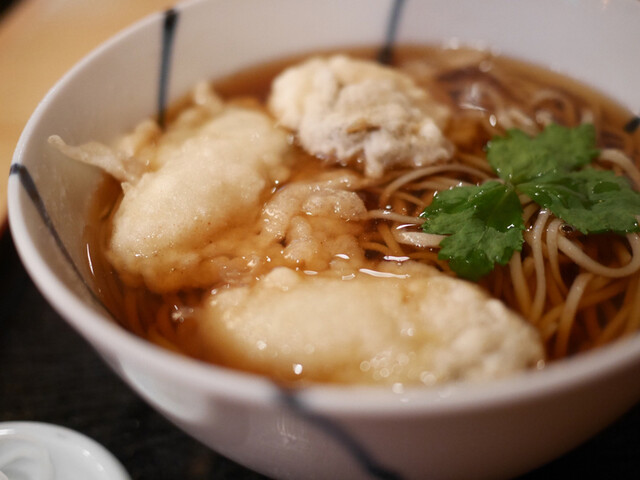
Jingumae changes tone quickly once the traffic and retail glare of Harajuku fall away. The streets around Kita-Sando and Meiji-Jingumae carry a different Tokyo rhythm: design offices, low-rise apartments, small restaurants with short services, and the kind of lunch rooms where craft matters more than spectacle. In that setting, Handmade buckwheat Matsunaga belongs to the city’s quieter soba tradition, a compact 20-seat address where handmade noodles and sake define the experience rather than ceremony or luxury staging.
Tokyo’s noodle culture is often flattened into ramen queues and late-night counter eating, but soba has its own hierarchy. The serious end of the category prizes flour quality, handwork, dipping broth balance, and restraint. It also tends to operate on a narrower timetable than international visitors expect. That rhythm matters here: this is not a long evening tasting-menu restaurant, and it is not positioned like nearby high-spend Jingumae dining rooms such as Jingumae Higuchi or Inbosuko Jingumae. Its value is different, more compressed, more local, and tied to the precision of a single category.
Jingumae soba without the luxury-dining theatre
Handmade buckwheat Matsunaga has been selected for Tabelog’s Soba EAST 100 in 2025, with earlier Soba 100 selections listed for 2024, 2021, 2019, 2018, and 2017. In Tokyo, that kind of repeated category recognition is more useful than generic praise because soba is a specialist field. It signals consistency inside a competitive noodle bracket, not a broad hospitality brand trying to be everything at once.
The format also explains the appeal. A 20-seat room, including counter seating, keeps the meal close to the work of the kitchen without turning it into performance. Soba rewards attention at short range: texture, temperature, and the way broth supports rather than smothers the noodles. Those details are the point of the category. The Japanese sake bar listing adds another clue about positioning, placing the restaurant in the old Tokyo pattern of soba and nihonshu as a composed meal rather than a quick carbohydrate stop.
Neighbourhood context sharpens the reading. Jingumae can swing from fashion-led cafés to expensive destination counters within a few blocks. Bepocah brings Peruvian cooking into the area; EMILIA sits in a higher-priced Italian register; YOGORO represents the affordable, queue-friendly end of casual dining. Against that spread, Matsunaga’s soba feels like a category anchor: modest in scale, disciplined in scope, and more useful to a serious eater than another glossy multi-course room.
The decision is about timing, not ceremony
Tokyo travellers often overplan sushi and underplan soba. That is a mistake in districts like Jingumae, where short services and small rooms can shape the day as much as a reservation book. The restaurant’s no-reservations format makes it closer to a tactical lunch choice than a scheduled occasion. The better comparison is not a formal kappo counter; it is the city’s network of specialist rooms where showing up at the right moment matters more than dressing for a long meal.
The surrounding area makes that easier to justify. Kita-Sando sits between Harajuku’s youth culture, Sendagaya’s quieter residential blocks, and the design-heavy edges of Omotesando. A soba lunch here can work as a reset between galleries, shopping, or meetings, especially for diners who want a meal with regional identity but not the weight of a multi-hour course structure. The setting also suits solo dining, which is one reason Tokyo’s noodle rooms remain so valuable to visitors who eat seriously without needing a table of four.
What separates a worthwhile soba stop from a generic one is focus. The listed category is soba, with Japanese sake, and the restaurant’s public recognition stays within that lane. There is no need to inflate it into haute cuisine. Its role is more precise: handmade buckwheat in a neighbourhood where the dining spectrum runs from casual curry and café formats to expensive Japanese counters. For readers mapping the city by food rather than monuments, that specificity is the argument.
How to place it in a Tokyo eating itinerary
Use Matsunaga as a daytime Jingumae anchor rather than a grand-night-out plan. The room’s scale and specialist format reward a focused visit, and the absence of private rooms or private-use positioning keeps the experience closer to everyday Tokyo than occasion dining. Families and solo diners are both part of the stated audience, which matters in a city where small counter restaurants can sometimes feel socially narrow to visitors.
For a wider Tokyo plan, build contrast rather than repetition. Pair soba in Jingumae with other neighbourhood-specific meals across the city: Akihabara’s grilled fish and charcoal register at . 鮪と炭火焼き うお炭 秋葉原店, Shinjuku dining at 12/10 Shinjuku ten, or yakitori at 124. KAGURAZAKA (Yakitori). Casual Tokyo can be just as revealing, from 2D Cafe to 3 Chome no Curry Ya San. For broader planning, use Our full Tokyo restaurants guide, alongside Our full Tokyo hotels guide, Our full Tokyo bars guide, Our full Tokyo wineries guide, and Our full Tokyo experiences guide.
Readers extending the trip beyond central Tokyo can compare how everyday Japanese formats shift by region: sukiyaki in Kamakura at -Grilled beef Sukiyaki- KAMAKURA TANUKIAN 鎌倉 たぬき庵 in Kamakura, café culture at.cafe in Osaka, contemporary dining at.know in Kumamoto, Vietnamese cooking in Kanagawa at (Shoku) Vietnam in Kawasaki, curry in Hokkaido at [Curry Senmon Ten] Maruyama Kyoju. in Sapporo, and Kyoto dining at [ki:] in Kyoto. Japanese food culture also travels well abroad, as seen at Jōdo Saké Bar in Los Angeles and Onigiri Time in Pasadena, but Tokyo’s soba rooms retain a local discipline that is harder to export.
Where the Accolades Land
Comparable venues by cuisine and category.
| Venue | Cuisine | Price | Notes |
|---|---|---|---|
| Handmade buckwheat MatsunagaThis venue — the venue you are viewing | Handmade Soba & Japanese Sake | $$ | Not listed |
| Negishi | Japanese Beef Tongue Grill | $$ | Shinjuku |
| 根深 | Tempura Kakiage | Not listed | Minato |
| 赤坂 島袋 | Japanese Robatayaki | Not listed | Minato |
| Curry no Mise Udon | Japanese Curry House | $$ | Shinagawa |
| Okonomiyaki Kiji Marunouchi ten | Osaka-style okonomiyaki | $$ | Chiyoda |
Recognition history
Dated appearances from independent guides and award organizations, with the underlying list record or original source where available.
Tabelog 100 #60 · No. 60
Tabelog · Tabelog 100 - Soba - EAST - 2025












At a Glance
- Cozy
- Quiet
- Classic
- Solo
- Family
- Casual Hangout
- After Work
- Standalone
- Sake Program
Current opening hours
- Monday
- 11:30 AM–2 PM
- Tuesday
- 11:30 AM–2 PM
- Wednesday
- 11:30 AM–2 PM
- Thursday
- 11:30 AM–2 PM
- Friday
- 11:30 AM–2 PM
- Saturday
- 11:30 AM–2 PM
- Sunday
- Closed
Hours can change for holidays and private events. Last verified .
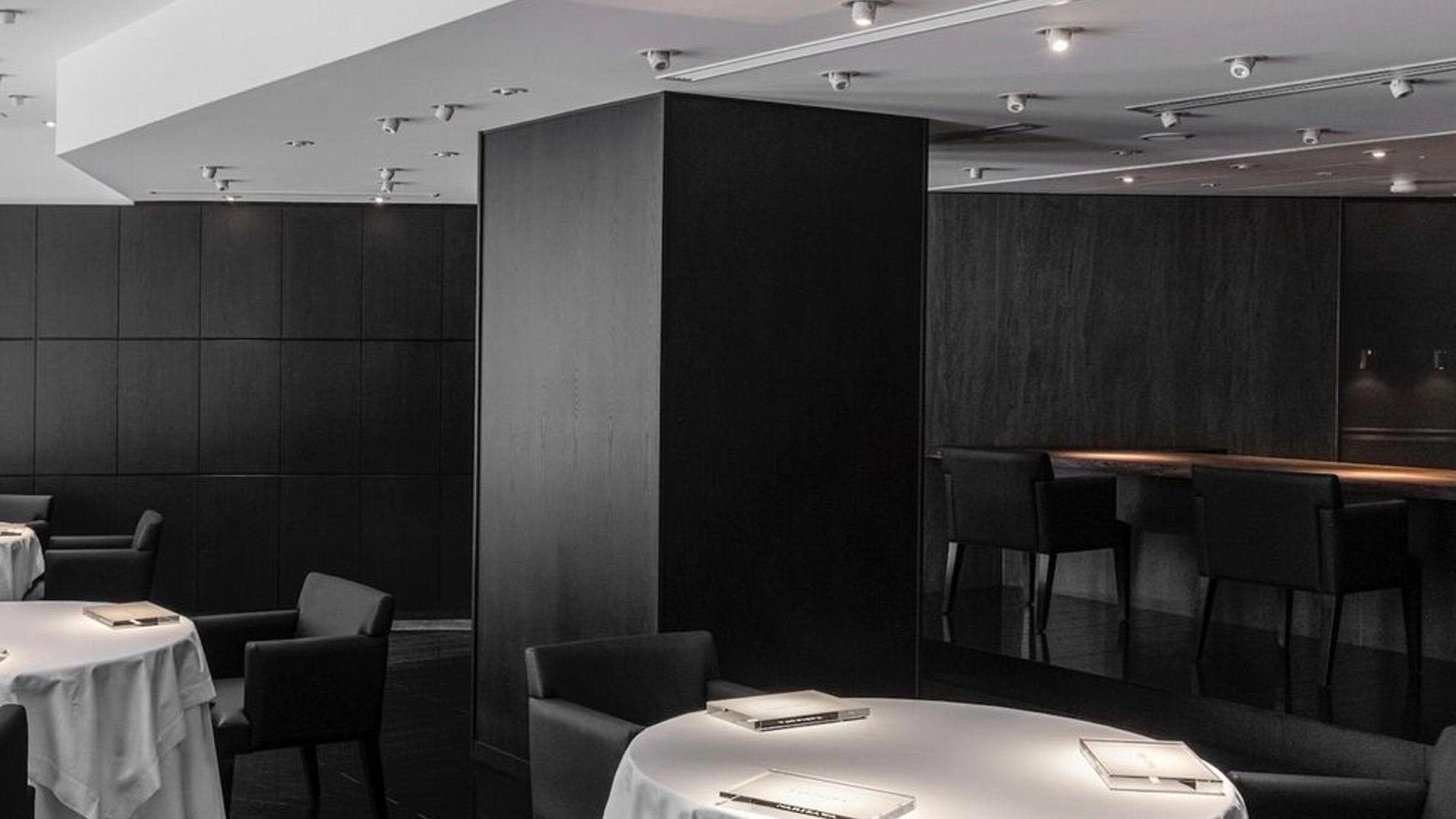
A small, relaxed and quietly bustling neighborhood soba shop down a short flight of stairs, with a simple counter and a few compact tables, non-smoking, and a low-key, traditional feel focused on the noodles rather than decor.