
Okonomiyaki Kiji Marunouchi ten brings Osaka-style okonomiyaki into Tokyo’s Marunouchi office-and-station district, where regulars value speed, heat, and consistency over ceremony. Its Tabelog Okonomiyaki 100 selection in 2025 gives it a clear quality signal in a category often judged by habit and repeat visits rather than formal fine-dining markers.
Pearl is the En Primeur Club membership app — saves, bookings, and concierge access live there. Same editors, same standards.
- Address
- 東京ビルディング 内, 千代田区丸の内2丁目7−3 東京ビル B1F, 2 Chome-7-3 Marunouchi, Chiyoda City, Tokyo 100-0005, Japan
- Phone
- +81 3-3216-3123
- Website
- o-kizi.jp
 Saves & bookings on Pearl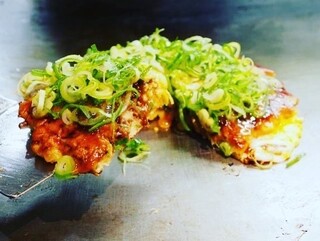
The approach is pure Marunouchi: underground concourse energy, office workers moving with purpose, travellers rolling bags through the Tokyo Station orbit, and a basement dining room built for turnover rather than theatre. Here, okonomiyaki works because it is democratic but exacting: batter discipline, cabbage balance, griddle timing, and a sauce hand that knows when to stop. Okonomiyaki Kiji Marunouchi ten sits between commuter convenience and specialist cooking, explaining why loyal customers return without a long menu speech.
Tokyo’s high-end dining conversation often tilts toward sushi counters, French tasting menus, and hotel restaurants, but the city’s everyday food intelligence is just as revealing in griddle rooms. Marunouchi compresses several dining modes into a few blocks: bakeries for station commuters, bistros for business lunches, cafes for museum traffic, and serious casual restaurants for speed without surrendering craft. Nearby comparison points such as Minna no Pan'ya, VIRON Marunouchi ten, Cafe 1894, Sézanne, and MAISON MARUNOUCHI show the district’s range, from low-spend bread runs to formal French dining. Against that spread, okonomiyaki has its own lane: filling, social, and technically dependent on repetition.
Osaka griddle culture, translated for the Tokyo Station crowd
Okonomiyaki is often treated as informal food, but informality should not mean looseness. Osaka-style versions fold cabbage and fillings into batter before cooking, unlike Hiroshima-style layering, so texture depends on the mix before it reaches the hotplate. Consistency is the test. In Tokyo, where many diners meet regional specialties through station branches and department-store dining floors, stronger versions avoid theme-park food. They give office regulars a meal that feels familiar after the second visit, with enough craft to justify repeat ordering.
The Marunouchi branch’s reputation rests on repeatable competence. It has been selected for Tabelog’s Okonomiyaki 100 in 2025, with earlier selections listed for 2024, 2022, 2019, and 2018, and carries a Tabelog score of 3.66. Those numbers matter because okonomiyaki rarely receives the global award language attached to luxury dining. Category-specific recognition is a better signal than borrowed glamour, placing the restaurant in a national conversation about specialists who handle a narrow form well.
The menu category is direct: okonomiyaki and stir-fried noodles. That pairing tells experienced diners plenty. A griddle kitchen that can handle batter-based cooking and noodle heat must manage timing across two textures: one built on internal steam and set structure, the other on surface contact and seasoning. The appeal is confidence that the same satisfying rhythm will hold at weekday lunch, after work, or during a weekend station stop.
Why regulars choose this room over Marunouchi formality
Marunouchi has dining rooms for client entertaining, hotel polish, and long wine conversations. Okonomiyaki works differently. Loyalty comes from a smaller contract between diner and kitchen: heat, pace, and a format suited to groups as easily as solo counter eating. The chef biography does not do the heavy lifting. The craft is in the system, the griddle, and the restraint to keep a popular Osaka form legible in central Tokyo.
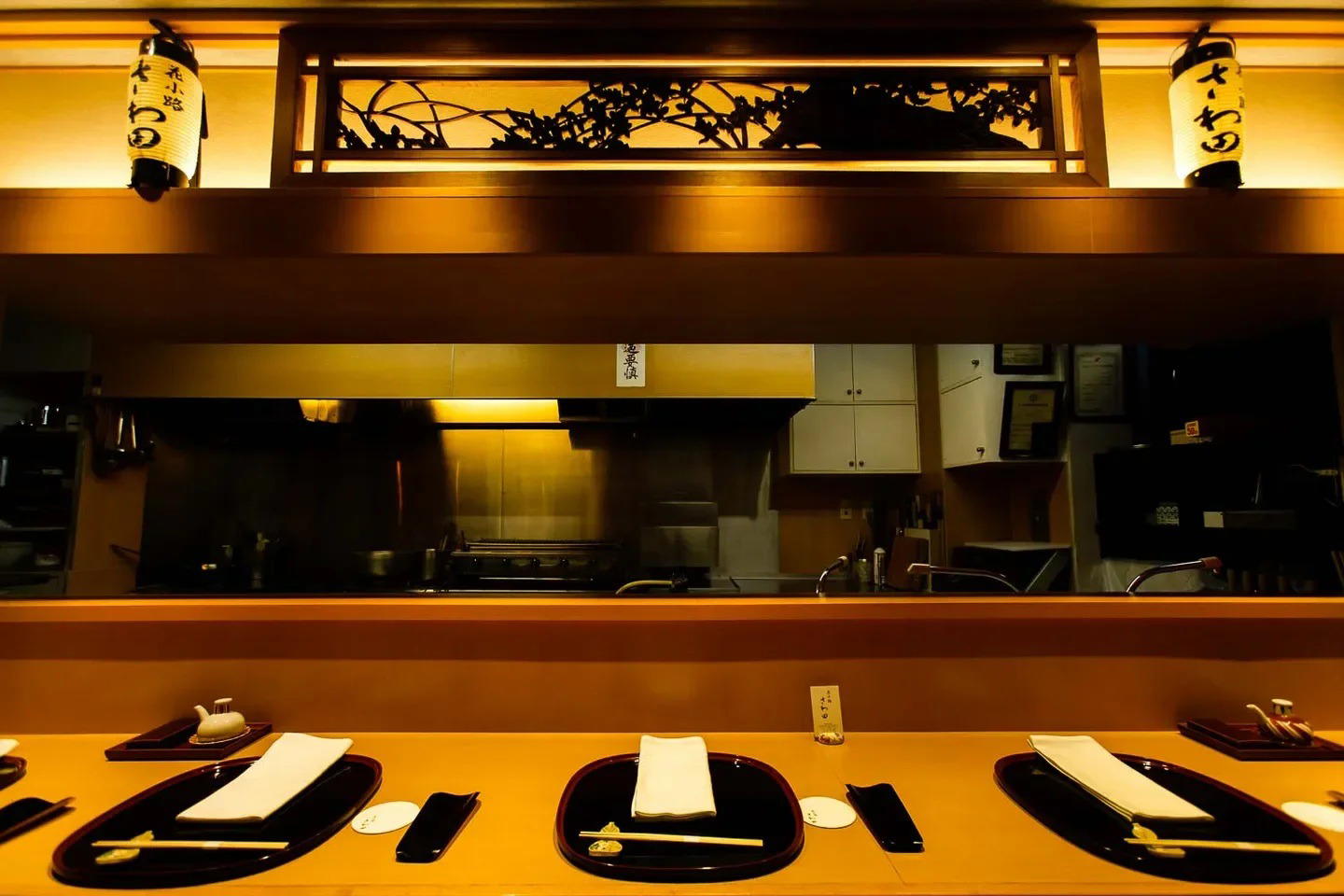
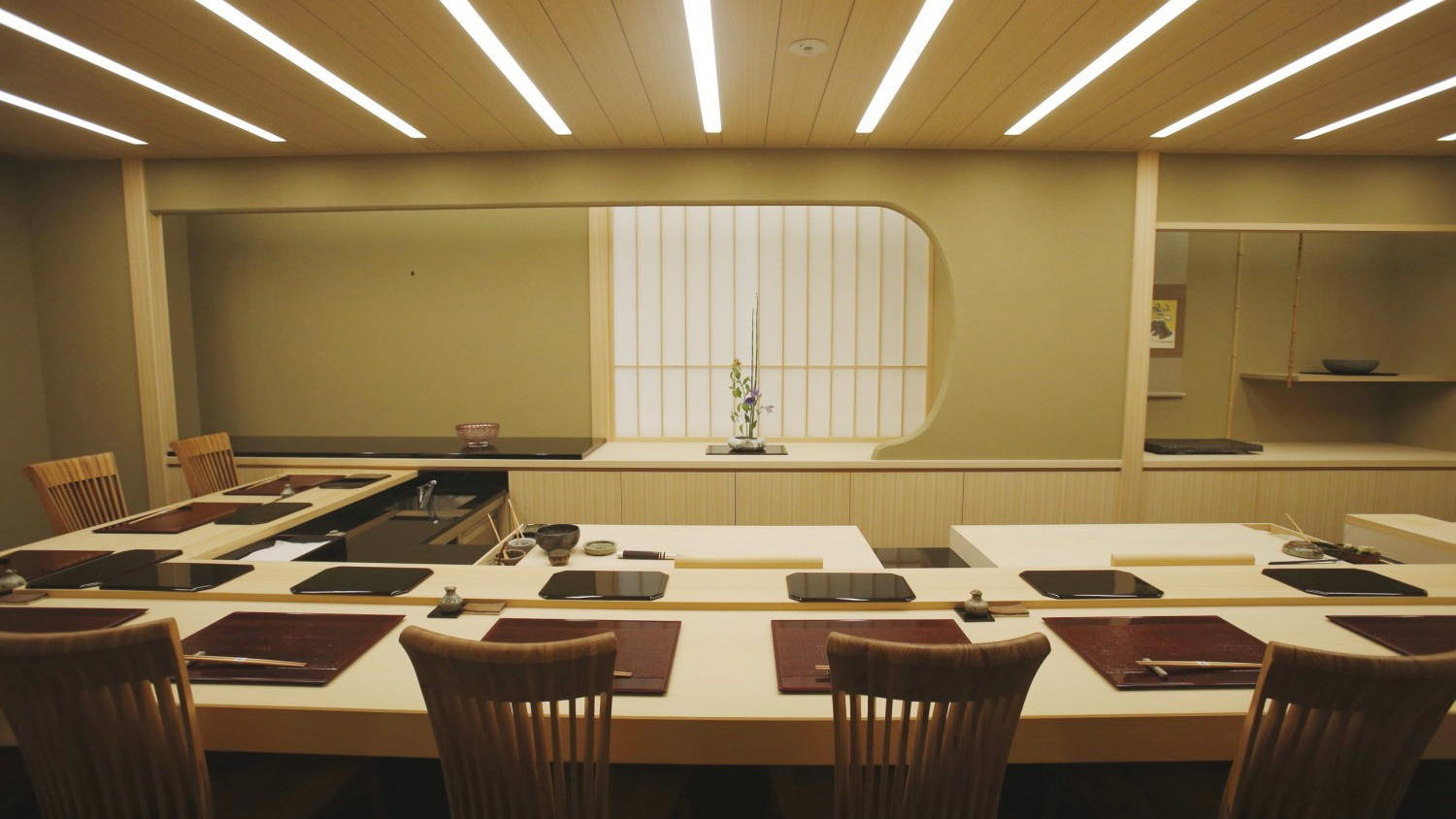
The room supports that pattern. Counter seating gives solo diners and quick meals a natural home, while table seating works for friends and families. The restaurant is non-smoking, wheelchair accessible, and set up with multilingual menus in English, Traditional Chinese, Simplified Chinese, and Korean. Those details matter in Tokyo Station’s orbit, where domestic regulars share space with visitors who may know the dish but not the ordering conventions. The result is approachable without flattening the cuisine into tourist shorthand.
The address also works for repeat customers because station-adjacent restaurants live or die by reliability. In destination dining, scarcity can be part of the appeal. In Marunouchi, a restaurant earns loyalty by making the decision easy. Okonomiyaki Kiji Marunouchi ten does not need to compete with Sézanne’s French luxury or MAISON MARUNOUCHI’s bistro polish; it competes with where to eat when time is limited and standards remain intact.
For travellers mapping Tokyo by category, the restaurant shows why the city resists simple hierarchy. A strong okonomiyaki specialist can be as revealing as a formal counter, showing how regional Japanese food enters the capital’s daily routines. Readers building a broader itinerary can compare this casual precision with seafood grill cooking at . 鮪と炭火焼き うお炭 秋葉原店, Shinjuku dining at 12/10 Shinjuku ten, yakitori at 124. KAGURAZAKA (Yakitori), visual cafe culture at 2D Cafe, and curry specialization at 3 Chome no Curry Ya San. For wider planning, use Our full Tokyo restaurants guide, alongside Our full Tokyo hotels guide, Our full Tokyo bars guide, Our full Tokyo wineries guide, and Our full Tokyo experiences guide.
How to read the meal: habit, not spectacle
The smartest approach is to judge fundamentals rather than chase novelty. In okonomiyaki, regulars notice whether the pancake holds together without becoming heavy, whether noodles arrive with enough griddle character, and whether sauce and toppings support rather than smother. Specific orders vary, but the test is balance. A restaurant relevant in a busy transport-and-office district since opening in 2005 has had to satisfy diners who return by routine, not just visitors checking off a regional dish.
That is the useful editorial read on Okonomiyaki Kiji Marunouchi ten: it belongs to the class of Tokyo restaurants where convenience and credibility overlap. The Tabelog Okonomiyaki 100 recognition gives the external signal; the Marunouchi setting explains the customer base; the format explains the loyalty. It is not a luxury detour, but a sharp example of how Osaka griddle cooking fits into central Tokyo’s working day.
Beyond Tokyo, EP Club’s restaurant coverage tracks how regional formats travel and change context: sukiyaki in Kamakura at -Grilled beef Sukiyaki- KAMAKURA TANUKIAN 鎌倉 たぬき庵 in Kamakura, cafe culture in Kansai at.cafe in Osaka, contemporary dining in Kyushu at.know in Kumamoto, Vietnamese cooking in Kanagawa at (Shoku) Vietnam in Kawasaki, curry specialization in Hokkaido at [Curry Senmon Ten] Maruyama Kyoju. in Sapporo, Kyoto dining at [ki:] in Kyoto, and Japanese drinking and comfort-food formats abroad at Jōdo Saké Bar in Los Angeles and Onigiri Time in Pasadena.
Similar Picks
Side-by-side context: comparable cuisine and price.
| Venue | Cuisine | Price | Notes |
|---|---|---|---|
| Okonomiyaki Kiji Marunouchi ten | Osaka-style okonomiyaki | $$ | Chiyoda |
| Kajitsuen Liber Tokyo ten | Fruit parlor & café with Japanese-style parfaits | $$ | Chiyoda |
| Ginza Hachigo | Modern French-inspired Ramen | $$ | Chūō |
| 花蝶 | Tonkatsu | Not listed | Chūō |
| Tonkatsu Aoki Ginza 8 chome ten | Japanese Tonkatsu | $$ | Chūō |
| Hongoku Tei | Japanese curry bar | $$ | Chūō |
Recognition history
Dated appearances from independent guides and award organizations, with the underlying list record or original source where available.
Tabelog 100 #31 · No. 31
Tabelog · Tabelog 100 - Okonomiyaki - 2025





At a Glance
- Lively
- Cozy
- Casual
- Energetic
- After Work
- Casual Hangout
- Group Dining
- Family
- Solo
- Late Night
- Standalone
- Open Kitchen
- Beer Program
Current opening hours
- Monday
- 11 AM–3 PM, 5–10 PM
- Tuesday
- 11 AM–3 PM, 5–10 PM
- Wednesday
- 11 AM–3 PM, 5–10 PM
- Thursday
- 11 AM–3 PM, 5–10 PM
- Friday
- 11 AM–3 PM, 5–10 PM
- Saturday
- 11 AM–9:30 PM
- Sunday
- 11 AM–9:30 PM
Hours can change for holidays and private events. Last verified .
Bustling and casual Osaka-style okonomiyaki joint with counter-side teppan grills, warm lighting, the sound and aroma of sizzling batter and sauce, and a relaxed, unpretentious atmosphere suited to solo diners, small groups, and families.