
Tokyo’s curry culture is often split between quick counter lunches and specialist rooms with cultish rules of engagement. Curry no Mise Udon belongs to the latter camp: an 11-seat counter in Nishigotanda known for soup curry, repeated Tabelog Curry 100 selections, and a house style that treats rice and curry as separate but interdependent parts of the meal.
Pearl is the En Primeur Club membership app — saves, bookings, and concierge access live there. Same editors, same standards.
- Address
- 2 Chome-31-5 Nishigotanda, Shinagawa City, Tokyo 141-0031, Japan
- Phone
- +81 90-9210-4267
- Website
- ameblo.jp
 Saves & bookings on Pearl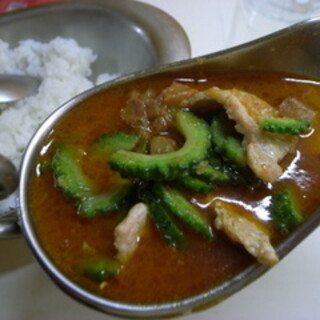
The approach to Nishigotanda’s curry counters is quieter than Ginza sushi or Aoyama French: compact frontage, red sign, counter-room choreography, and spice meeting steam before the bowl lands. Curry no Mise Udon belongs to the Tokyo category where the meal is inexpensive, the room tight, and regulars understand the format before the first spoonful.
Tokyo curry is not one tradition. It runs from old-school yōshoku gravy over rice to South Asian regional cooking, Hokkaido-linked soup curry, spice-forward modern shops, and late-night plates built for salarymen rather than critics. The city’s serious curry conversation now rewards precision as much as comfort. Repeated selection for Tabelog Curry 100, including the Tokyo 2024 list, places this Nishigotanda counter in a competitive group where small shops can carry as much authority as larger, higher-check restaurants.
Soup curry in Tokyo, stripped down to counter ritual
The point here is concentration, not luxury. Soup curry changes the rhythm of a curry meal because the liquid must be handled rather than smothered over rice. House guidance frames rice, curry, toppings, and side elements as separate roles, closer to set-meal logic than one mixed plate. The format asks diners to notice sequence, temperature, and how rice sweetness softens spice.
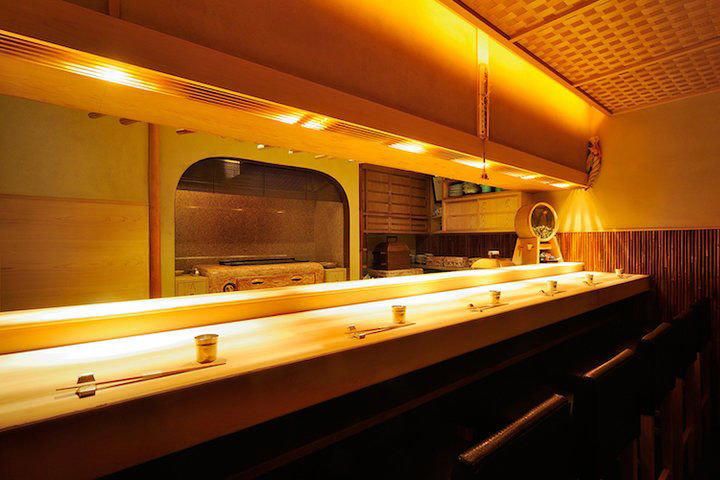
That distinction gives the counter its editorial weight. A standard curry-rice lunch in Tokyo can be functional, fast, and interchangeable. A soup curry specialist pushes the category toward ritual without ceremony. With 11 counter seats, the room forces economy: no sprawling service language, private-room cushioning, or tasting-menu architecture. The experience is built around a bowl, a seat, and a small kitchen’s pace.
Gotanda’s dining character explains the fit. The neighbourhood works hard at lunch and does not mimic central luxury polish. Nearby dining spans meat, tonkatsu, chicken, and Sri Lankan cooking, with price tiers from everyday to destination. Curry no Mise Udon is not competing with Hao Hao’s high-check Chinese dining or Tori Ryori Fuji’s more expensive poultry format. It is closer in accessibility to ARALIYA LANKA Gotanda honten, while occupying a narrower curry subcategory. For readers mapping the area, the surrounding Tokyo circuit can be widened through Our full Tokyo restaurants guide, with adjacent planning across Our full Tokyo hotels guide, Our full Tokyo bars guide, Our full Tokyo wineries guide, and Our full Tokyo experiences guide.
The reputation rests on discipline, not polish
Repeated Tabelog recognition is the useful trust signal because curry in Tokyo is crowded, with a low barrier to entry and a high ceiling for obsession. Curry no Mise Udon was selected for Tabelog Curry 100 in 2019, 2020, 2022, 2023, and 2024. That pattern matters more than one badge: it shows durability in a category where attention shifts quickly and new spice counters constantly open.
The restaurant opened in 2001, giving it another authority. Tokyo rewards novelty, but curry regulars return to shops with repeatable personal grammar. Here, the public menu language is unusually directive: eat rice and curry separately, treat soup as something to drink, and understand toppings as support rather than decoration. The tone can feel eccentric, but it reveals the seriousness behind a casual price band.
For travellers used to Japan’s tasting-menu hierarchy, this is a useful correction. Not every important Tokyo meal is omakase, kaiseki, or French-Japanese fine dining. Some sharper city experiences happen at small counters where rules are plain, spending modest, and cooking refined through repetition rather than ceremony. Comparable itinerary logic might pair it with casual Tokyo entries such as 3 Chome no Curry Ya San for curry context, or with contrasting formats like 124. KAGURAZAKA (Yakitori), 12/10 Shinjuku ten. 鮪と炭火焼き うお炭 秋葉原店, and 2D Cafe to see how Tokyo’s casual dining differs by neighbourhood, pace, and visual code.
How to read the room before ordering
The counter format rewards preparation. This is not a room for lingering through an open-ended evening or treating curry as conversational background. It is a compact specialist operation with no private rooms, no private use, and counter seating only. Payment is cash-led in practice because credit cards, electronic money, and QR code payments are not accepted. Unglamorous, but ignoring it can turn a smooth meal into an inconvenience.
The kitchen’s own remarks show how the meal should be understood. Rice is not just a base, and curry is not merely sauce. Spicy minced meat and cheese are framed as furikake-like accents; curry eggs, tomatoes, and eggplant as side dishes. The language is idiosyncratic, but the structure is clear: build contrast rather than mixing everything into one texture.
Families are not excluded, but spice tolerance matters. The mild version is described as sweet and spicy rather than neutral, so this better suits school-age children already comfortable with adult curry than young diners expecting a soft, sweet curry-rice plate. Non-smoking status and counter seating make the room legible; flavour profile is the variable.
The sensible editorial call is to treat the restaurant as a focused lunch or early evening stop within a Gotanda day, not a grand occasion. Its value lies in sharply defining a subgenre: soup curry as a disciplined, counter-based meal with house rules and long local memory. For broader Japan planning, useful contrasts include [Curry Senmon Ten] Maruyama Kyoju. in Sapporo, [ki:] in Kyoto, -Grilled beef Sukiyaki- KAMAKURA TANUKIAN 鎌倉 たぬき庵 in Kamakura.cafe in Osaka.know in Kumamoto, and (Shoku) Vietnam in Kawasaki. Readers tracking Japanese food culture abroad can set a different benchmark with Jōdo Saké Bar in Los Angeles and Onigiri Time in Pasadena, where translation, audience, and format change the meaning of casual Japanese dining.
The Essentials
Comparable venues by category and price.
| Venue | Cuisine | Price | Notes |
|---|---|---|---|
| Curry no Mise UdonThis venue — the venue you are viewing | Shinagawa, Japanese Curry House | $$ | Not listed |
| 餃子歩兵 | Ginza, Kyoto-style Gyoza | $$ | Not listed |
| Coffee Tengoku | Asakusa, Retro Japanese Pancake Cafe | $$ | Not listed |
| 根深 | Minato, Tempura Kakiage | Not listed | Not listed |
| HIGASHIYA man | Not listed | $$ | Minato, Traditional Japanese wagashi & manju shop |
| Takenoshita Soba | Shibuya, Traditional Japanese Soba | $$ | Not listed |
Recognition history
Dated appearances from independent guides and award organizations, with the underlying list record or original source where available.
Tabelog 100 #53 · No. 53
Tabelog · Tabelog 100 - Curry - TOKYO - 2024











At a Glance
- Cozy
- Classic
- Intimate
- Solo
- Casual Hangout
- Standalone
Current opening hours
- Monday
- 11:30 AM–2:30 PM, 5:30–9 PM
- Tuesday
- 11:30 AM–2:30 PM, 5:30–9 PM
- Wednesday
- Closed
- Thursday
- 11:30 AM–2:30 PM, 5:30–9 PM
- Friday
- 11:30 AM–2:30 PM, 5:30–9 PM
- Saturday
- 11:30 AM–2:30 PM, 5:30–9 PM
- Sunday
- Closed
Hours can change for holidays and private events. Last verified .
Small, counter-only, no-frills, and tightly run, with a neighborhood-house feel rather than a polished dining-room atmosphere.