
Yu De Fu on Dongzhimennei Street is a Michelin Plate-recognised hotpot address in Beijing's Dongcheng district, operating at the mid-range price tier (¥¥) in a neighbourhood where hutong history and everyday dining culture sit side by side. Two consecutive Michelin Plate listings (2024 and 2025) place it among a small group of Beijing hotpot venues earning formal recognition from the guide.
Pearl is the En Primeur Club membership app — saves, bookings, and concierge access live there. Same editors, same standards.
- Address
- 80 S Zhugan Hu Tong, Chaoyangmen, Dongcheng, Beijing, China, 100010
- Phone
- +86 10 6528 1993
- Directions
- Get directions
 Saves & bookings on Pearl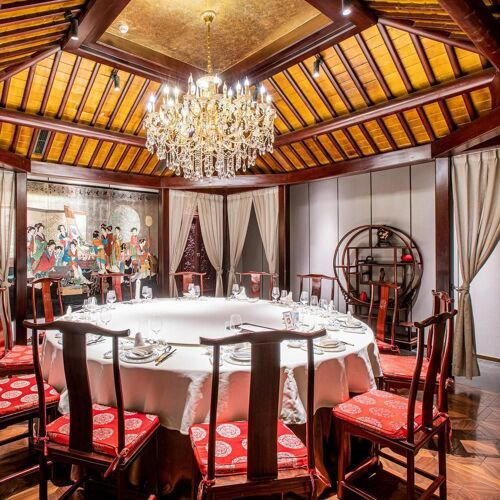
A Hutong Address With Something to Prove
Dongzhimennei Street runs through one of Beijing's older residential corridors, where grey-brick hutong lanes branch off a main artery lined with tea houses, noodle shops, and the kind of restaurants that have outlasted multiple rounds of city redevelopment. This is Dongcheng's quieter northeastern edge, a short distance from the Lama Temple and the Second Ring Road, and it draws a local crowd rather than a tourist circuit. Eating here feels less like an event and more like a neighbourhood habit, which is precisely what makes a Michelin Plate listing at this address worth paying attention to.
Yu De Fu sits at 80 South Zhugan Hutong, just off that main strip, in a location that reflects how Beijing's better casual dining has always worked: embedded in residential fabric, sustained by repeat business, not footfall. The Michelin Plate recognition in 2024 and 2025 signals a kitchen that meets a consistent baseline of quality. In the context of a mid-range hotpot house in a residential hutong, the listing places Yu De Fu in a distinct tier above the city's undifferentiated broth-and-dipping-sauce operations.
Hotpot in Beijing: What the Format Actually Means
Beijing's hotpot tradition is older and more specific than the broader Chinese hotpot category suggests. The city has its own style, historically centred on copper chafing dishes burning charcoal, thinly sliced mutton, and a sesame-paste dipping sauce that bears little resemblance to the Sichuan mala broth format that has colonised hotpot menus across China over the past two decades. That older Beijing style is increasingly difficult to find in its original form. Most hotpot venues in the city now operate hybrid menus, offering multiple broth options and competing on ingredient quality and atmosphere rather than regional fidelity.
Yu De Fu sits inside this broader hotpot market at the ¥¥¥ price tier, which in Beijing terms positions it as accessible rather than premium. Compare that to Xin Rong Ji (Xinyuan South Road) at ¥¥¥¥, or Chao Shang Chao (Chaoyang) at the same upper tier, and the pricing gap is significant. What Yu De Fu offers is Michelin-noted quality at a price point that makes it a regular rather than a special-occasion destination, a combination that explains its local following in a district not known for high-spend dining.
For a broader view of Beijing's hotpot scene, Bad Ass Lamb Hot Pot on Maizidian West Street occupies a different register entirely: louder, more street-facing, aimed at a younger Chaoyang crowd. The Dongcheng address of Yu De Fu implies a different tempo, quieter, more neighbourhood-facing, with the kind of regulars who arrive on weeknights rather than for weekend group events.
The Dongcheng Context
Dongcheng district contains some of Beijing's most historically layered neighbourhoods. The stretch around Dongzhimennei has not been redeveloped at the same pace as parts of Wangfujing or Sanlitun, which means the streetscape retains a residential density that shapes the dining culture. Restaurants here earn loyalty through consistency rather than novelty. The dining room at 80 South Zhugan Hutong exists in a neighbourhood where word-of-mouth matters more than social media presence, and where longevity in a location is itself a form of credibility.
This matters for how the Michelin Plate should be read. The guide's plate designation recognises cooking that meets quality standards without necessarily placing the restaurant in the city's fine-dining conversation. For a ¥¥¥ hotpot house in a hutong off Dongzhimennei, that recognition functions differently than it would for a white-tablecloth address. It confirms that the kitchen operates at a level worth seeking out, within a format and price tier where that is not guaranteed.
For those building a broader Dongcheng itinerary, Bao Du Jin Sheng Long is another address in the same district worth cross-referencing, as is Niujie Halal Man Heng Ji for Beijing's Muslim-quarter culinary tradition a short distance west. The neighbourhood layering in this part of the city rewards exploratory eating rather than single-destination trips.
Where It Fits in Beijing's Michelin Landscape
The 2025 Michelin Guide Beijing covers a spread of cuisines and price points. At the higher end of Chinese dining, addresses like Imperial Treasure Fine Chinese Cuisine in Guangzhou and Chef Tam's Seasons in Macau operate in a different tier altogether. Closer to Beijing's own culinary history, Yu De Fu's consecutive Plate listings place it in company with a small set of restaurants the guide considers worth tracking, even if not yet at star level.
Within the hotpot category specifically, Michelin recognition at any level is relatively uncommon. The format does not lend itself easily to the kind of technical complexity the guide traditionally rewards. A Plate at a mid-range hotpot house in a residential hutong is, in that context, more meaningful than it might appear on a checklist. It suggests the kitchen manages ingredient sourcing, broth quality, and service consistency at a level that distinguishes it from the category average.
For comparison across Chinese cities, #8 Hotpot in Chengdu and A-Yu Beef Shabu Shabu in Tainan show how hotpot venues in other Chinese-speaking cities have carved out recognised positions in their local dining ecosystems. The format rewards specificity, in broth, in cut, in sourcing, and the venues that earn external recognition tend to be those that have made clear choices rather than offering everything to everyone.
Planning Your Visit
Yu De Fu is a mid-range address in a residential district, which means it draws primarily local diners rather than the international visitor crowd that concentrates around Sanlitun or the Forbidden City perimeter. Walking into a restaurant like this as a non-Chinese speaker requires some preparation, but it is manageable with translation tools and rewards the effort with a more unmediated Beijing dining experience than tourist-facing operations provide.
| Venue | Cuisine | Price Tier | Michelin Recognition | District |
|---|---|---|---|---|
| Yu De Fu (Dongzhimennei) | Hotpot | ¥¥ | Plate 2024, 2025 | Dongcheng |
| Bad Ass Lamb Hot Pot | Hotpot | Not listed | None confirmed | Chaoyang |
| Xin Rong Ji (Xinyuan South Road) | Taizhou | ¥¥¥¥ | Michelin recognised | Chaoyang |
| Chao Shang Chao (Chaoyang) | Chao Zhou | ¥¥¥¥ | Michelin recognised | Chaoyang |
The address, 80 South Zhugan Hutong, Dongcheng, is walkable from Dongzhimen subway station. Booking ahead is advisable, particularly for evening sittings, though the format and price tier suggest a restaurant accustomed to walk-in traffic. Phone and website details are not listed here.
For Chinese dining across other cities, 102 House in Shanghai, Ru Yuan in Hangzhou, Xin Rong Ji in Chengdu, and Dai Yuet Heen in Nanjing provide useful reference points across the premium spectrum.
Awards and Standing
Comparable venues nearby, for context on price, style, and recognition.
| Venue | Cuisine | Price | Awards | Notes |
|---|---|---|---|---|
| Yu De Fu (Dongzhimennei Street)This venue — the venue you are viewing | Traditional Beijing Instant-Boiled Mutton Hotpot | $$$ | Michelin Plate | Not listed |
| Yue Jie (Qi Yang Road) | Cantonese Classics | $$$ | Michelin Plate | Dashanzi |
| Xiang Shang Xiang (Jinhe East Road) | Modern Hunanese Tasting | $$$ | Michelin Plate | Chaoyang |
| Howard's Gourmet (Beijing) | Modern Chaozhou Chinese Fine Dining | $$$ | Not listed | Zhengyilu |
| La Roba | Yunnanese | $$$ | Michelin Plate | Dongshenglu |
| Tong Chun Yuan | Traditional Jiangsu Cuisine | $$ | Michelin Plate | Dewai |
Recognition history
Dated appearances from independent guides and award organizations, with the underlying list record or original source where available.
Michelin Plate
Michelin
Michelin Plate
Michelin

At a Glance
- Intimate
- Casual Hangout
- Historic Building
Cozy and gem-like with an intimate atmosphere from only six tables.