Our verdict
On a small square between Campo de' Fiori and Piazza Navona, Ristorante Pizzeria Pasquino operates in the combined ristorante-pizzeria format that defines central Rome's everyday dining tradition. The address on Piazza di Pasquino, one of the old city's most historically layered corners, anchors it firmly in the neighbourhood-facing rather than occasion-dining category. A practical stop for visitors moving through the centro storico on foot.

Pearl is the En Primeur Club membership app, where members save venues, book tables and use the concierge.

Piazza di Pasquino and the Roman Tradition of Eating Without Ceremony
Piazza di Pasquino sits in the old city between Campo de' Fiori and Piazza Navona, a small irregular square anchored by one of Rome's oldest "talking statues", the battered torso of Pasquino, where Romans for centuries pinned anonymous satirical verses aimed at popes and politicians. The square has always been a place where the city speaks plainly, without pretension. Ristorante Pizzeria Pasquino occupies an address on that same square, which says something useful about the register it operates in: this is central Rome at its most local-facing, not its most tourist-theatrical.
The neighbourhood around here is dense with the kind of Rome that moves at its own pace regardless of foot traffic. The streets between Corso Vittorio Emanuele II and Piazza Navona are among the most walked in the city, yet they also contain trattorias and pizzerias that have fed the same families across multiple generations. That continuity matters when reading any venue on these streets. The context is not a restaurant district in the modern sense; it is a residential and civic quarter that happens to serve food well because it always has.
The Piazza Setting: What You Encounter Before You Sit
Approaching Piazza di Pasquino on foot, the square arrives almost without warning, a sudden opening in the compressed medieval street grid. The Pasquino statue, worn smooth by centuries of touch and weather, anchors one side. Tables spill toward the square where space allows, and the ambient sound is the ordinary urban noise of a Roman residential neighbourhood: scooters at a distance, the low register of conversation in Italian, the occasional chime of a nearby church. There is no theatrical arrival sequence here, no velvet rope, no curated playlist bleeding onto the pavement.
That absence of performance is itself a kind of atmosphere. Rome's centro storico has no shortage of dining rooms designed to signal occasion, and venues like La Pergola or Il Pagliaccio operate at the formal, high-investment end of that spectrum. Pasquino operates at the other register entirely: the square itself is the dining room's extension, and the setting does the work that lighting and interior design do elsewhere.
Pizza, Pasta, and the Roman Ristorante-Pizzeria Format
The combined ristorante-pizzeria format is a specific Roman institution, different from a dedicated pizzeria Napoletana and different again from a full-service restaurant with a pizza oven as an afterthought. In Rome, the wood-fired pizza tradition runs parallel to the pasta-and-secondi tradition rather than competing with it, and establishments that hold both seriously are a common feature of the centro storico. The format implies a certain flexibility: you can arrive with four people who want four different things, cacio e pepe for one, a margherita for another, a plate of supplì to share, and the kitchen accommodates all of it without awkwardness.
That flexibility is partly why the ristorante-pizzeria format has retained its hold in neighbourhoods like this one, even as more focused, concept-driven restaurants have proliferated elsewhere in the city. Venues with a narrower identity, such as Acquolina or Enoteca La Torre, serve a different purpose and a different appetite. The ristorante-pizzeria serves the city's quotidian life, and in a square with the history of Piazza di Pasquino, that quotidian function carries its own weight.
Rome in a Wider Italian Dining Frame
Italy's most formally recognised restaurants tend to cluster in the north and in specific regional pockets: Osteria Francescana in Modena, Le Calandre in Rubano, Enoteca Pinchiorri in Florence, Piazza Duomo in Alba, Enrico Bartolini in Milan. Rome has its own fine dining tier, represented by addresses like Achilli al Parlamento, but the city's deeper culinary identity has always been democratic rather than hierarchical. Cacio e pepe, carbonara, coda alla vaccinara, supplì al telefono: the Roman canon is defined by technique applied to inexpensive ingredients, not by luxury product accumulation.
Pasquino's address in the heart of that canon-defining city places it in a lineage that is worth understanding. The question for any traditional format venue in central Rome is not whether it matches the ambition of Reale or Uliassi, it is whether it executes the fundamentals with the seriousness those fundamentals deserve. The Roman ristorante-pizzeria sits in its own competitive set, evaluated on entirely different terms.
Practical Context for Visitors
The location on Piazza di Pasquino is walkable from most major centro storico points of interest. The square is equidistant, roughly, from Campo de' Fiori to the south and Piazza Navona to the north, and sits just off Via del Governo Vecchio, a street that has historically been one of the more genuinely local commercial corridors in central Rome. For visitors staying in the Trastevere, Navona, or Campo area, this part of the city is accessible on foot without requiring transport planning.
Visitors planning time across Rome's wider dining spectrum, from neighbourhood trattorias through to the city's more ambitious creative kitchens, will find our full Rome restaurants guide useful for orienting across price tiers and formats. For those with appetite for Italy's broader fine dining geography, the EP Club covers everything from Quattro Passi on the Amalfi coast to Dal Pescatore in the Po Valley to Atelier Moessmer Norbert Niederkofler in the Dolomites.
Know Before You Go
- Address: Piazza di Pasquino, 1, 00186 Roma, Italy
- Neighbourhood: Centro Storico, between Campo de' Fiori and Piazza Navona
- Format: Ristorante-Pizzeria (combined format)
- Reservations: Contact details not currently listed; walk-in likely feasible given the format and location
- Getting There: Walkable from Piazza Navona (approx. 3 minutes on foot), Campo de' Fiori (approx. 5 minutes), and Corso Vittorio Emanuele II bus stops
- Pricing: No current price data listed; the ristorante-pizzeria format in this area of Rome typically operates in the mid-range tier
- Hours: Not currently listed; confirm locally before visiting
Frequently asked questions
Where is Ristorante Pizzeria Pasquino in Rome?
Ristorante Pizzeria Pasquino is located at Piazza di Pasquino, 1, 00186 Roma RM, Italy, Rome.
Where exactly is Ristorante Pizzeria Pasquino and how does the location affect the dining experience?
Ristorante Pizzeria Pasquino is located at Piazza di Pasquino, 1 in Rome's Rione Parione, a small irregular square most visitors encounter while walking between Campo de' Fiori and Piazza Navona. The square is anchored by the Pasquino statue, one of Rome's ancient 'talking statues' historically used for anonymous political commentary, which gives the immediate surroundings a historical layer unusual even by centro storico standards. Dining here places you inside the compressed medieval street grid of old Rome rather than on a main tourist thoroughfare.
What do people recommend at Ristorante Pizzeria Pasquino?
The combined ristorante-pizzeria format means the menu runs both Roman pasta dishes and pizza under one roof, the kind of place where ordering either direction is appropriate. Roman staples like cacio e pepe, carbonara, and wood-fired pizza are the expected anchors of any kitchen operating in this tradition in Rome's centro storico.
Is Ristorante Pizzeria Pasquino reservation-only?
No reservation policy is publicly documented for Ristorante Pizzeria Pasquino. The location on Piazza di Pasquino, a small square set between Campo de' Fiori and Piazza Navona, places it in one of Rome's busiest tourist corridors, so walk-in availability can tighten during peak evening hours and summer months. Contacting the venue directly before arriving is the safest approach.
What's the signature at Ristorante Pizzeria Pasquino?
The defining characteristic of Ristorante Pizzeria Pasquino is the ristorante-pizzeria format itself, a specifically Roman institution that sits between a dedicated Neapolitan pizzeria and a full-service trattoria, offering pizza and pasta from the same kitchen without specialising entirely in either. This format is common in Rome's historic centre and signals a broader, neighbourhood-oriented menu rather than a single-dish focus. No individual dish has been documented as a formal signature.
Can Ristorante Pizzeria Pasquino handle vegetarian requests?
The ristorante-pizzeria format typical of Rome's centro storico generally accommodates vegetarian diners through pizza margherita, pasta dishes with vegetable or cheese bases, and antipasti. Confirming specific options at the time of booking or arrival is recommended.
Cuisine Lens
Comparable venues nearby, for context on price, style, and recognition.
| Venue | Cuisine | Price | Notes |
|---|---|---|---|
| Ristorante Pizzeria PasquinoThis venue (the venue you are viewing) | Traditional Roman Trattoria & Pizzeria | $20–30 | Not listed |
| Trattoria Morgana | Traditional Roman Trattoria | $20–30 | Monti |
| Le Caveau | Roman Italian Trattoria | $20–30 | Esquilino |
| Malaterra | Neapolitan Pizza | $20–30 | Nomentano |
| Piazza Menenio Agrippa, 8/A | Traditional Roman Trattoria | $20–30 | Monte Sacro |
| Fradiavolo Roma Trastevere | Contemporary Multi-Dough Pizzeria | $20–30 | Trastevere |
Continue exploring
More in Rome
Restaurants in Rome
All restaurants in Rome →
Bars in Rome
All bars in Rome →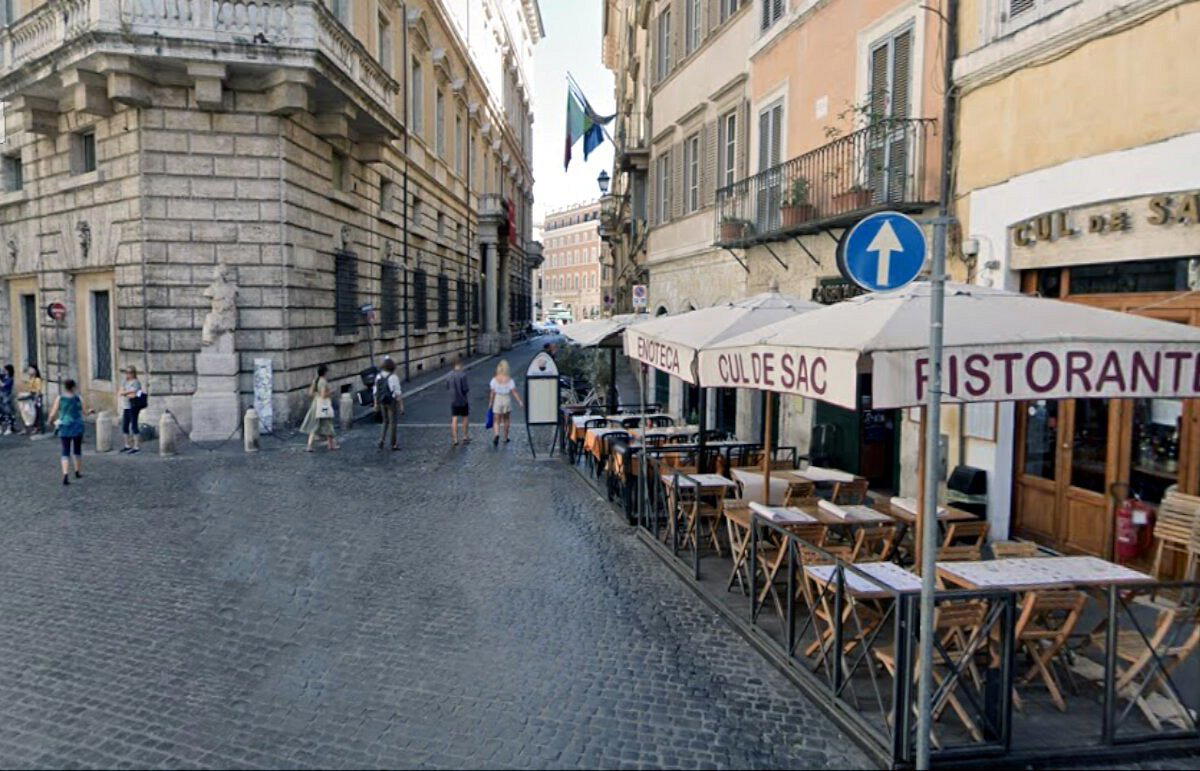

Details
- Classic
- Rustic
- Cozy
- Casual Hangout
- Family
- Terrace
- Historic Building
- Street Scene
- A La Carte
- Vegetarian Friendly
- Vegan Options
- Gluten Free Options
Current opening hours
- Monday
- 8 AM–12 AM
- Tuesday
- 8 AM–12 AM
- Wednesday
- 8 AM–12 AM
- Thursday
- 8 AM–12 AM
- Friday
- 8 AM–12 AM
- Saturday
- 8 AM–12 AM
- Sunday
- 8 AM–12 AM
Hours can change for holidays and private events. Hours as of .
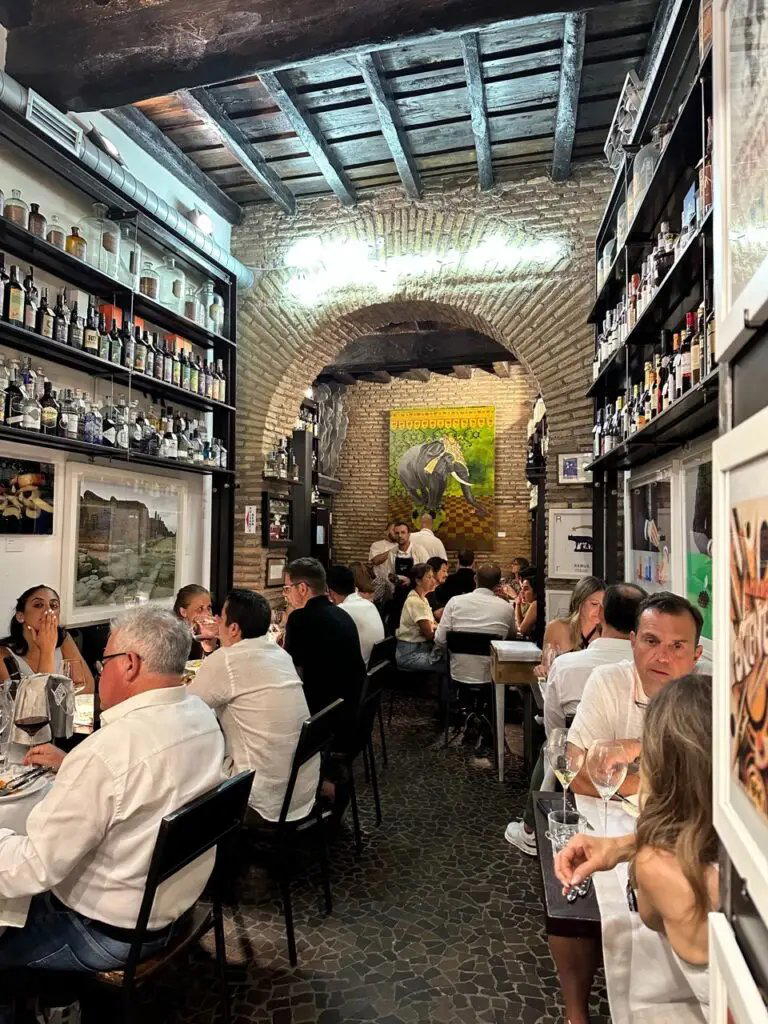
Classic tavern atmosphere with red-and-white checkered tablecloths and a welcoming vibe on a charming piazza.