
Michelin Plate
Our verdict
A Michelin Plate-recognised address on Via di Castello, Enoteca Del Duca keeps the Volterra kitchen honest: stone-walled dining room, a regional Tuscan menu anchored in classic technique, and the option of grilled steak for those who want it. It earns its place as a reliable and characterful stop in the medieval hilltop town.

Pearl is the En Primeur Club membership app — saves, bookings, and concierge access live there. Same editors, same standards.
- Address
- Via di Castello, 2, 56048 Volterra PI, Italy
- Phone
- +39 0588 81510
- Directions
- Get directions
- Booking
- Book on TheFork
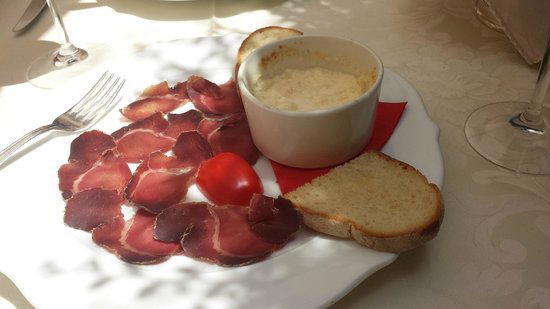
The menu
What to order
- Veal
- Burrata with truffle
- Pappardelle with wild boar
- Tagliolini al tartufo
Stone Walls and Tuscan Roots
In Volterra, a town where the Etruscan past feels closer than the next village, the dining culture reflects that same preference for continuity over novelty. The restaurants that last here are those that understand the regional kitchen rather than reimagine it. Enoteca Del Duca, positioned just behind the castle and the main square on Via di Castello, occupies that stable middle ground: a Michelin Plate-recognised address that has kept regional classical cooking at the centre of the plate through a change of ownership and across multiple Michelin cycles, earning the Plate in both 2024 and 2025.
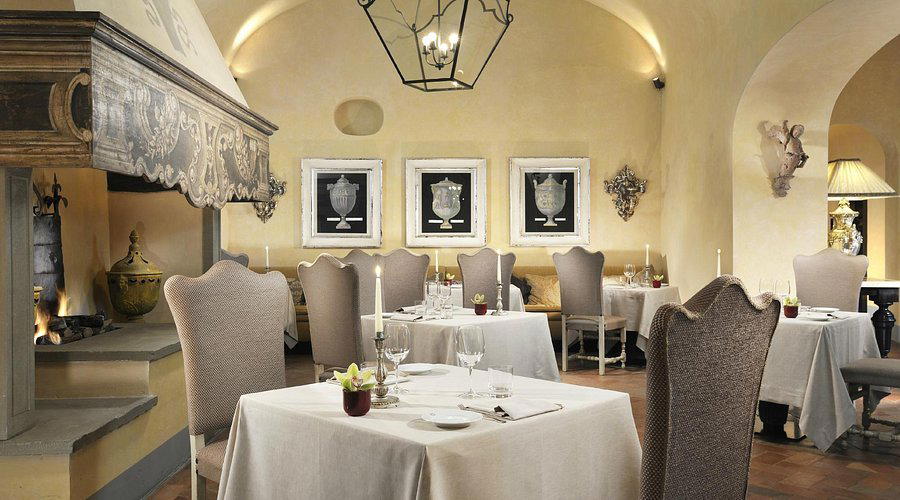
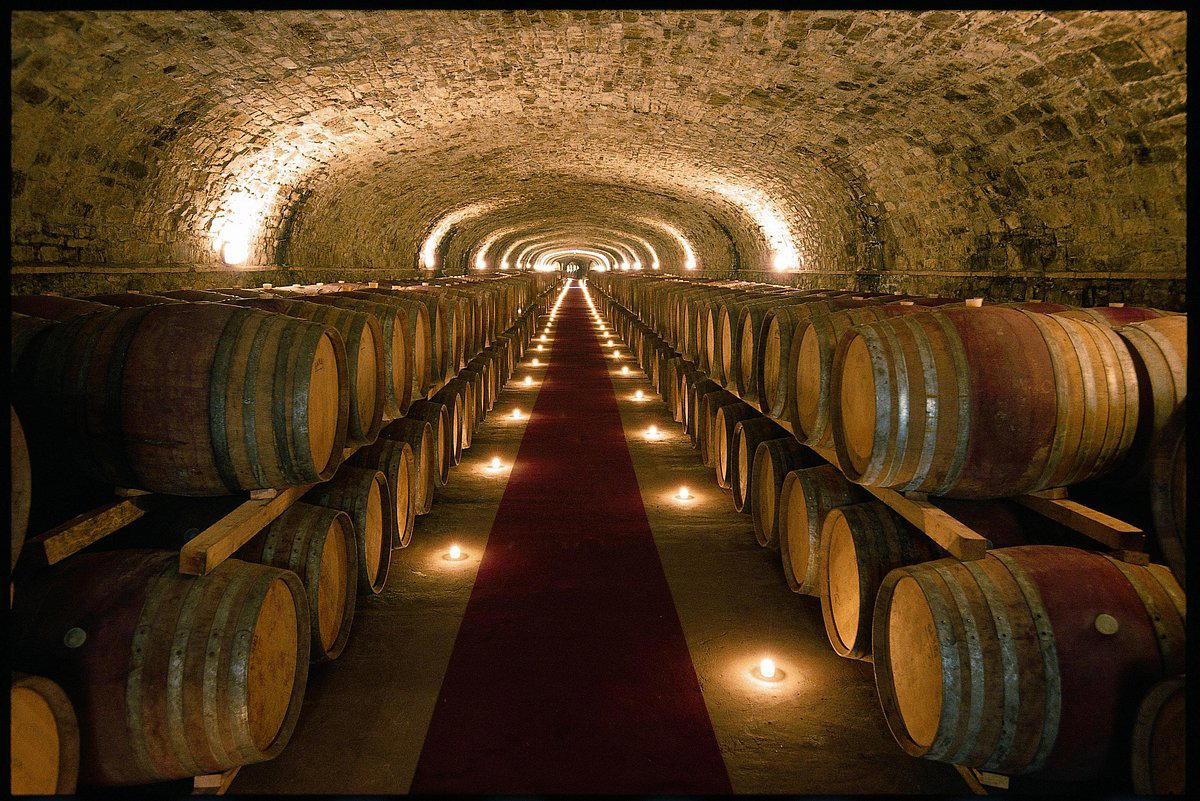
Old stone walls line the dining room, a setting that is less designed than simply accumulated, the product of a building that predates any concept of interior styling. In summer, an outdoor space opens up, offering a different register entirely. Volterra's hilltop position means evenings can stay cool well into the season, and eating outside with the town's medieval architecture framing the perimeter is the kind of experience that needs no embellishment. Neither setting is staged for the photograph; both feel consistent with the seriousness of the food.
Where the Ingredients Come From
Tuscan classical cooking at this level is, at its core, an exercise in provenance management. The cuisine that Enoteca Del Duca represents draws from a larder specific to the Valdicecina and the surrounding hill country: wild boar from the dense forests inland, legumes grown on the plateau, the sheep's milk cheeses that define the pastoral economy of inland Tuscany, and the white truffles from San Miniato that have underpinned the prestige of the broader regional table for centuries. What distinguishes this tradition from the more internationally recognised kitchens further north is its refusal to process ingredients into abstraction. A regional flavour, in this context, means recognisable sources presented without heavy mediation.
The inclusion of steak on the menu is not incidental. Chianina and other Tuscan beef breeds occupy a serious position in the regional food culture, and a bistecca in the Florentine style is one of the few dishes in Italian cooking that functions as both everyday and ceremonial. Offering it alongside the classic regional repertoire reflects a culinary pragmatism: the same cattle that define the Val d'Orcia and the Chiana Valley are relevant here too, roughly equidistant from both corridors. The quality of the ingredient does the work; preparation is minimal by design.
This approach separates the classic Tuscan model from the more interventionist kitchens you find at the top of the Italian fine dining tier. Restaurants like Osteria Francescana in Modena or Le Calandre in Rubano operate in a different register entirely, where the ingredient is often a prompt for transformation. Enoteca Pinchiorri in Florence bridges the classical and the contemporary with a French-influenced architecture that Enoteca Del Duca has no ambition to replicate. Here the mode is fidelity, not construction.
Continuity After a Change of Hands
Ownership transitions in small Italian restaurants are frequently the moment when character dissolves. New operators bring new ideas; suppliers change; the menu pivots to the fashionable. What makes Enoteca Del Duca a useful data point in understanding Volterra's dining culture is precisely that the transition here produced continuity rather than reinvention. The kitchen has held to classic dishes with a regional focus, and the Michelin recognition — a Plate in consecutive years following the ownership change — suggests the standard has held in ways that matter to outside evaluators.
Volterra is not Florence or Siena; visitors are dispersed across the year and across a narrower range of accommodation types, so a sustained rating at that level reflects a kitchen operating at reliable form rather than capitalising on tourist volume. For comparison, the more elaborate contemporary kitchens in the Italian system, places like Reale in Castel di Sangro or Piazza Duomo in Alba, occupy a different price tier and a different critical conversation. Enoteca Del Duca sits comfortably in the €€ bracket, which in the context of a Michelin-recognised address in a Tuscan hill town represents good value against the tier.
Where Enoteca Del Duca Sits in the Volterra Scene
Volterra's restaurant options skew toward the traditional, which suits a town where the visitor economy is built on archaeology, alabaster craft, and medieval architecture rather than gastronomic tourism. The contemporary Tuscan direction is better represented at Villa Pignano, which takes a more produce-led contemporary approach in a very different physical setting outside the town walls. Enoteca Del Duca is the central-town option for those who want the classic repertoire in a room that feels embedded in the place rather than imported into it.
For readers building a broader Italian itinerary, the classic cuisine format here is interesting to set against equivalents in other European cities. Maison Rostang in Paris and KOMU in Munich operate in the same classical mode but within entirely different metropolitan contexts, which illustrates how the classic restaurant category holds its ground across very different urban and cultural environments. In all three cases, the argument for the food rests on ingredient quality and technical fidelity rather than conceptual novelty.
Italy's highest-regarded addresses in the contemporary tier, Atelier Moessmer Norbert Niederkofler in Brunico, Dal Pescatore in Runate, Enrico Bartolini in Milan, Uliassi in Senigallia, and Quattro Passi in Marina del Cantone, all operate at the €€€€ level and with Michelin star recognition. Enoteca Del Duca is not in competition with that tier. It serves a different purpose in the ecosystem: classical, accessible, regionally specific, and useful to the traveller who wants to eat in Volterra rather than drive to a destination restaurant.
Planning a Visit
The address is Via di Castello, 2, directly behind the castle and the central square, which makes it walkable from essentially any point in the historic centre. Volterra is compact and the centro storico is pedestrianised in its core zones, so arrival on foot is the default for anyone staying in or near the old town. Booking is advisable in summer, particularly for the outdoor terrace, where tables fill with visitors timing the longer evenings. The €€ price point means a full dinner here sits well within reach for most budgets, and the format suits adults and older children equally. For those building a wider Volterra itinerary, the EP Club has guides covering restaurants, hotels, bars, wineries, and experiences across the town and surrounding area.
Frequently asked questions
Is Enoteca Del Duca okay with children?
The format suits families reasonably well. The menu centres on classic regional Tuscan dishes, including steak, which gives younger diners recognisable options. The outdoor terrace in summer provides additional space and a relaxed setting. At the €€ price range, the bill won't cause concern if an order goes unfinished.
What is the atmosphere like at Enoteca Del Duca?
The dining room is set within old stone walls, giving it the grounded, low-lit character typical of historic Volterra buildings. The position directly behind the castle and central square means foot traffic nearby, but the restaurant itself reads as settled rather than hurried. In summer, the outdoor space shifts the mood toward something more open and convivial.
Has Enoteca Del Duca won any awards?
Enoteca Del Duca has received recognition including: Despite the change of ownership at this centrally located restaurant right behind the castle and the main square, there’s a certain continuity to the cuisine which remains focused on classic dishes with a regional flavour (with the option o….
What do people recommend at Enoteca Del Duca?
The kitchen holds a Michelin Plate for 2024 and 2025, a recognition tied to consistent execution of classic dishes with regional flavour rather than novelty. The steak is specifically noted as a standing menu option, which in Tuscany carries weight given the region's tradition with Chianina beef. The broader draw is the classical Tuscan cooking that survived a change of ownership intact.
How much does it cost to eat at Enoteca Del Duca?
Pricing at Enoteca Del Duca is listed as €€.
Fast Comparison
| Venue | Cuisine | Price | Awards | Notes |
|---|---|---|---|---|
| Enoteca Del DucaThis venue — the venue you are viewing | Classic Tuscan Fine Dining | $50–100 | Michelin Plate | Not listed |
| Atelier Moessmer Norbert Niederkofler | Italian, Creative | Not listed | Michelin 3 Star | Not listed |
| Dal Pescatore | Italian, Italian Contemporary | Not listed | Michelin 3 Star | Not listed |
| Enoteca Pinchiorri | Contemporary Italian Fine Dining | $200–300 | 3 Michelin Stars · World's 50 Best #32 | Italian - French, Italian Contemporary |
| Enrico Bartolini | Creative | Not listed | Michelin 3 Star | Not listed |
| Osteria Francescana | Avant-Garde Italian Contemporary | $300–500 | 3 Michelin Stars · World's 50 Best #1 | Progressive Italian, Creative |
Recognition history
Dated appearances from independent guides and award organizations, with the underlying list record or original source where available.
Michelin Plate
Michelin
Full recognition history (3 entries)
Michelin Plate
Michelin
Michelin Plate
Michelin
Continue exploring
More in Volterra
Restaurants in Volterra
Browse all →
Bars in Volterra
Browse all →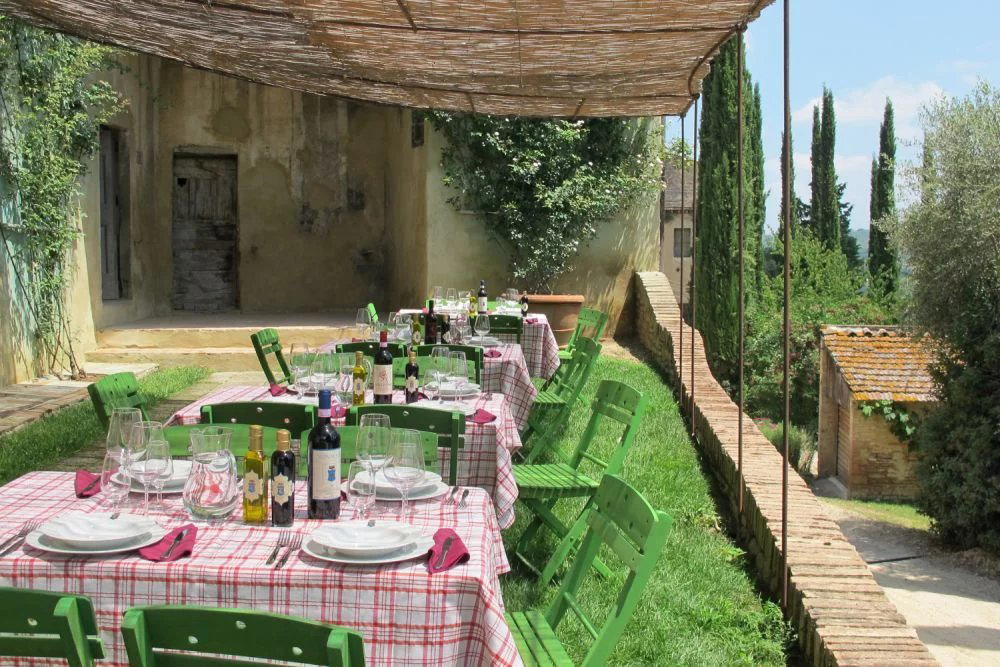
Hotels in Volterra
Browse all →
Details
- Romantic
- Cozy
- Elegant
- Rustic
- Intimate
- Date Night
- Special Occasion
- Group Dining
- Garden
- Historic Building
- Extensive Wine List
- Local Sourcing
- Garden
- Tasting Menu
- A La Carte
- Wine
- Vegetarian Friendly
Cozy with old stone walls, quiet and lovely atmosphere, charming garden for outdoor dining