On the 20th floor of the InterContinental Hotel Osaka in Kita Ward, ピエール occupies a position that places it above the Umeda skyline and within one of the city's most significant hotel addresses. The restaurant draws on the French culinary tradition that Osaka has quietly sustained for decades, operating at a price point and altitude that set it apart from the street-level dining the city is better known for.
Pearl is the En Primeur Club membership app — saves, bookings, and concierge access live there. Same editors, same standards.
- Address
- インターコンチネンタルホテル大阪, 20F, 3-60 Ofukacho, Kita Ward, Osaka, 530-0011, Japan
- Phone
- +81663745700
- Website
- icosaka.com
- Directions
- Get directions
 Saves & bookings on Pearl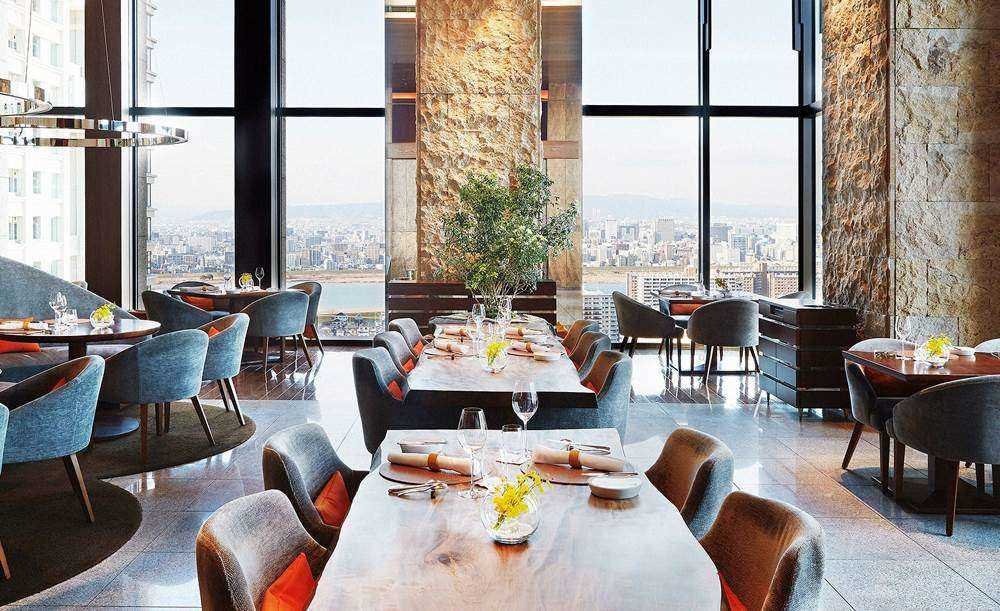
ピエール in Osaka: A 20th-Floor Modern French-Japanese Fusion Restaurant
Kita Ward is where Osaka's financial and transit infrastructure converges. Umeda Station sits beneath a web of rail lines, department store basements, and underground shopping arcades that extend for what feels like kilometres. Above all of that, the InterContinental Hotel Osaka rises on Ofukacho in Kita Ward, Osaka. By the time you reach the 20th floor, the noise and density of ground-level Osaka have resolved into a panorama, and the dining room at ピエール operates within that shift in register.
Hotel dining at altitude carries a specific set of associations across Japanese cities: formal service architecture, broad wine lists, and a clientele split between business travellers and anniversary couples. Osaka's version of this format has historically run parallel to the city's more celebrated street-level and basement restaurants, the kushikatsu counters, the kappo rooms, the standing sushi bars. ピエール sits in a different competitive set entirely, one defined by the InterContinental address and the expectations that come with it rather than by neighbourhood foot traffic or local regulars.
Osaka's French Dining Tier and Where This Address Fits
Osaka has sustained a serious French dining culture since at least the 1970s, when chef-led bistros and formal Western restaurants began appearing in Shinsaibashi and around the Umeda department stores. That tradition has since fractured into several distinct tiers. At the leading sit destination restaurants with international recognition: HAJIME in Osaka holds three Michelin stars and occupies a space where French technique and Japanese ingredient sourcing have been compressed into something close to a single language. Below that are mid-formal French rooms, often hotel-based, that serve classical menus to a professional clientele. ピエール, housed within the InterContinental Hotel Osaka on the 20th floor, fits the structure of the second tier.
For comparison, Le Bernardin in New York City shows what happens when a hotel-adjacent French format accumulates decades of critical validation and builds an identity that outlasts its physical address. The Osaka context is different: hotel restaurants here tend to anchor their identity in the property rather than in a named culinary program, which means the dining room experience is shaped more by the hotel's service standards and guest profile.
Across Japan's regional dining cities, this pattern recurs. Gion Sasaki in Kyoto represents the independently anchored end of formal dining, where the chef's identity and the restaurant's reputation are effectively inseparable. Goh in Fukuoka operates similarly. Hotel French rooms like ピエール occupy the other end of that spectrum, where the property's infrastructure, location, and brand provide the primary context for the guest experience.
The Kita Ward Address as a Dining Decision
Choosing ピエール is, in part, a choice about where you want to be in Osaka. Kita Ward contains the city's main shinkansen terminus at Shin-Osaka and the Umeda hub, which means the InterContinental is accessible from virtually any point in the Kansai region without a complicated transit transfer. For visitors arriving from Kyoto, Nara, or further afield, the hotel's position makes it a practical anchor. akordu in Nara draws a similar transit-conscious clientele, positioned for day-trippers who want a serious meal without building an entire itinerary around a single address.
The neighbourhood around Ofukacho is not the Osaka that most food-focused visitors come to experience. It lacks the compressed energy of Dotonbori or the quiet intensity of the kappo district near Fukushima. What it offers instead is proximity to major hotels, corporate offices, and convention infrastructure, which shapes the dining room's character. Expect a clientele that skews toward expense accounts and milestone occasions rather than walk-in regulars.
For visitors who want to cross-reference the city's more ingredient-led Japanese formats before or after a meal at ピエール, the Kita Ward area has its own options. Ajihei Sonezaki and Ajikitcho Bunbuan represent Osaka's formal kaiseki tradition at a level that invites direct comparison with what French hotel dining can and cannot do with local ingredients. Aka to Shiro, Az, and Calendrier occupy the more contemporary end of Osaka's dining scene, where the boundaries between French influence and Japanese structure have become deliberately porous.
Hotel Dining in Japan: The Format's Strengths and Its Limits
The strongest argument for hotel restaurant dining in Japan is service consistency. Properties affiliated with international groups operate to codified standards that independent restaurants rarely match in terms of multilingual capability, dietary accommodation, and reservation reliability. For non-Japanese speakers, that consistency has practical value. Harutaka in Tokyo is the kind of counter where language and advance research are genuinely required to extract the full experience. A hotel French room removes most of those friction points.
The corresponding limitation is that hotel dining in this format tends toward the expected. The room is designed to accommodate a range of guest profiles simultaneously, which means the kitchen rarely takes the kinds of risks that define a chef-driven room. Atomix in New York City shows what happens when a Korean fine dining format refuses to compromise on its own logic, regardless of accessibility. Hotel French rooms in Japan rarely operate that way. Their value proposition rests on reliability and comfort rather than on culinary argument.
Osaka's broader dining scene, surveyed in our full Osaka Shi restaurants guide, reflects a city that has historically prioritised flavour intensity and democratic access over formal architecture. ピエール sits at the formal end of that spectrum, in a city that does not organically produce many rooms like it. Whether that makes it an outlier or a necessary counterpoint depends on what you are looking for when you book a table in Kita Ward.
Know Before You Go
Address: InterContinental Hotel Osaka, 20F, 3-60 Ofukacho, Kita Ward, Osaka, 530-0011, Japan
Getting There: The InterContinental Hotel Osaka is directly connected to Grand Front Osaka and accessible via Osaka Station (JR) and Umeda Station (subway/Hankyu). No taxi required from the main hub.
Leading Timing: Dinner service on weekday evenings tends to see the room's business-travel demographic; weekends draw more celebratory bookings. Seasonal kaiseki-influenced menus in autumn and spring are common across Osaka's hotel French rooms, so enquire directly about current format.
Booking: Contact the InterContinental Hotel Osaka directly for reservations. As with most formal hotel restaurants in Japan, advance booking is advisable, particularly for weekend evenings and national holidays.
Dress Code: Smart casual at minimum; business formal is appropriate and common in this property's dining rooms.
Similar Picks
Comparable venues nearby, for context on price, style, and recognition.
| Venue | Cuisine | Price | Notes |
|---|---|---|---|
| ピエールThis venue — the venue you are viewing | Modern French-Japanese Fusion | $$$$ | Not listed |
| IDEAL bistro | Michelin-Starred French Bistro | $$$ | Chūō |
| オノウエ | Classical French | $$$ | Chūō |
| アドック | Modern French-Japanese Fusion | $$$$ | Fukushima |
| ラシーム | Modern French with Japanese Ingredients | $$$$ | Chūō |
| アラルデ | Modern Basque Cuisine | $$$$ | Nishi |
Continue exploring
More in Osaka
Restaurants in Osaka
Browse all →




Bars in Osaka
Browse all →




Hotels in Osaka
Browse all →




Wineries in Osaka
Browse all →
At a Glance
- Elegant
- Sophisticated
- Scenic
- Intimate
- Date Night
- Special Occasion
- Business Dinner
- Panoramic View
- Open Kitchen
- Hotel Restaurant
- Extensive Wine List
- Local Sourcing
- Skyline
Current opening hours
- Monday
- 11:30 AM–2:30 PM, 5:30–9:30 PM
- Tuesday
- 11:30 AM–2:30 PM, 5:30–9:30 PM
- Wednesday
- 11:30 AM–2:30 PM, 5:30–9:30 PM
- Thursday
- 11:30 AM–2:30 PM, 5:30–9:30 PM
- Friday
- 11:30 AM–2:30 PM, 5:30–9:30 PM
- Saturday
- 11:30 AM–2:30 PM, 5:30–9:30 PM
- Sunday
- 11:30 AM–2:30 PM, 5:30–9:30 PM
Hours can change for holidays and private events. Last verified .
Sophisticated dining room with large windows offering panoramic Umeda city skyline views, enhanced by natural midday light and evening ambiance.