In Fukushima Ward, one of Osaka's quieter dining corridors, ミチノ・ル・トゥールビヨン occupies a ground-floor address between a yakiniku restaurant and a café, a contrast that signals the neighbourhood's unhurried relationship with fine dining. The restaurant positions itself within the city's French-influenced counter-dining tier, where collaboration between the kitchen and floor carries as much weight as the menu itself.
Pearl is the En Primeur Club membership app — saves, bookings, and concierge access live there. Same editors, same standards.
- Address
- Japan, 〒553-0003 Osaka, Fukushima Ward, Fukushima, 6 Chome−9−11 神林堂ビル 1階 「焼肉 浦江亭」と「カフェ うえすたん」の間です
- Phone
- +81664516566
- Website
- michino.com
- Directions
- Get directions
 Saves & bookings on Pearl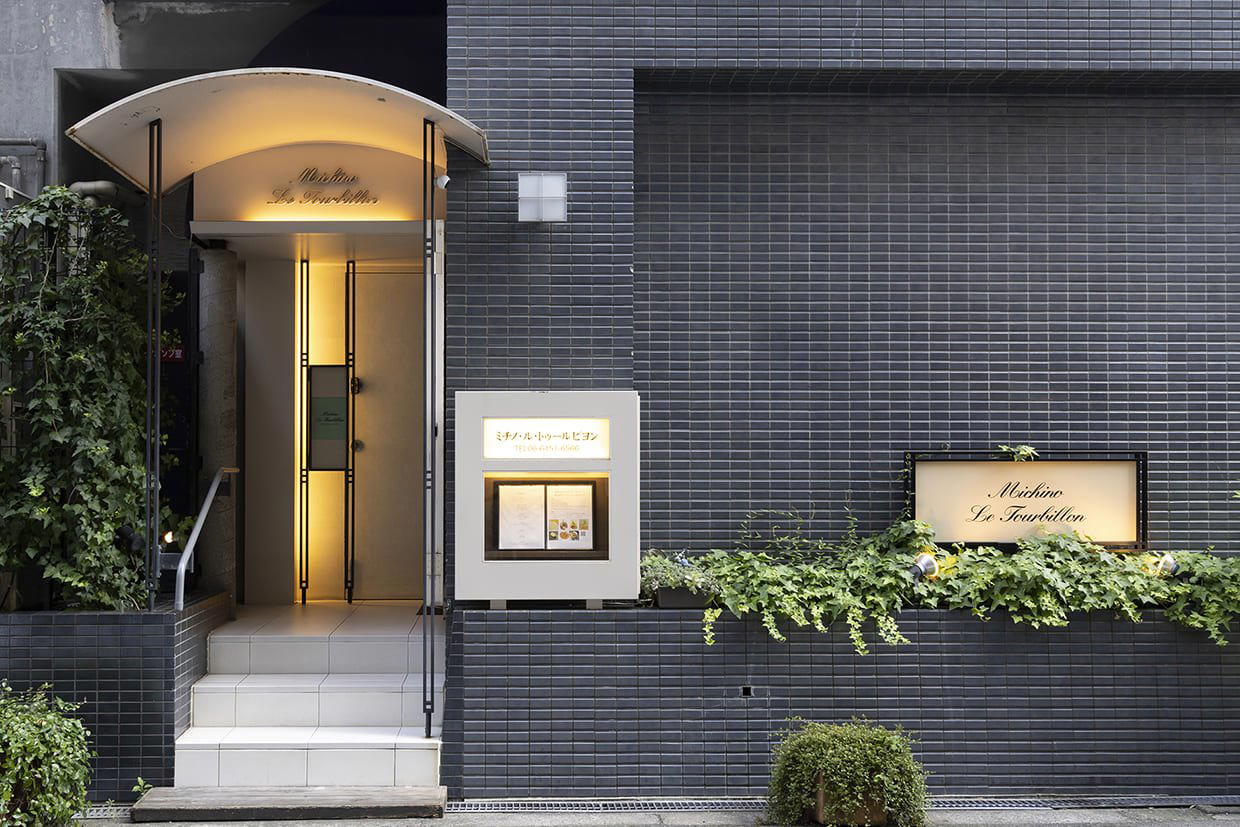
Fukushima's Counter to the Obvious
Osaka's dining reputation is built on the southern wards, Namba, Shinsaibashi, the dense restaurant blocks around Dotonbori, but the city's more considered rooms have increasingly taken root across the river in Fukushima Ward. ミチノ・ル・トゥールビヨン is a Contemporary French restaurant in Osaka, with. The neighbourhood doesn't announce itself. Streets there are residential in texture, interrupted by the occasional specialist counter or wine-forward bistro rather than tourist-facing izakayas. It is in this context that ミチノ・ル・トゥールビヨン operates: a ground-floor space in the Kambayashi Building on Fukushima 6-chome, flanked by a yakiniku house and a neighbourhood café. The address is a clue to the room's temperament. There is no marquee positioning here, no foot-traffic advantage. The clientele arrives because they already know.
That pattern, a quietly placed, reservation-led room drawing a self-selected audience, describes a specific tier within Osaka's French-inflected dining scene. In a city that produces some of Japan's most technically rigorous European-influenced cooking, that coordination is both an expectation and a genuine point of differentiation.
The Fukushima Dynamic: A Ward Redefining Osaka's Fine Dining Geography
Fukushima Ward has attracted a concentration of serious, low-profile restaurants over the past decade, partly because rents run softer than in the central Minami or Umeda corridors, and partly because the local audience, many of them Osaka business professionals with a habit of weekly restaurant visits, sustains a steady, repeat-visit economy. This is not a neighbourhood where restaurants depend on destination traffic.
Where Tokyo's leading European rooms often play to an international corporate clientele and the expectations of the Michelin inspectorate in a public way, Osaka's counterparts tend to operate with a degree of insularity, local press matters more than international coverage, and word-of-mouth across the city's tight professional networks carries weight that no review can fully replicate. Venues like HAJIME in Osaka occupy the internationally visible end of that tradition, while rooms in Fukushima tend to occupy a more intimate register.
Team Architecture as the Real Structure
In smaller European-influenced counters across Japan, the division between kitchen and floor has grown increasingly porous. The sommelier is no longer stationed behind a separate trolley awaiting a nod; in the rooms that matter, the wine director is integrated into the pacing conversation from the first course, adjusting glass selection against kitchen timing rather than simply pairing in the conventional sense. Front-of-house, in the better-functioning rooms, acts as the interpretive layer between the kitchen's intent and the guest's experience, translating decisions made during prep into moments of genuine hospitality rather than procedural service.
This model, call it team-architecture dining, is more demanding to execute than a conventional brigade structure, because it requires every service role to carry contextual intelligence rather than only technical competence. The sommelier needs to know what the kitchen is doing with acidity and fat in a given course; the front-of-house team needs to read the table's pace and communicate it back. When it works, the experience has an internal coherence that is difficult to articulate but immediately felt. When it doesn't, the seams show in small ways: a pour that arrives half a course late, an explanation delivered at the wrong moment, a transition that feels like a handoff rather than a continuation.
Osaka's better counters have developed fluency in this model, partly because the city's culture of omotenashi is specific and demanding, it expects hospitality to be almost invisible in its effort while being immediately legible in its effect. For comparison, the integrated team approach is visible at the highest registers internationally: at Le Bernardin in New York City, the floor and kitchen function as a single organism through decades of institutional refinement. At Atomix in New York City, the card-based narration system is itself a team tool, distributing explanatory load across service. In Osaka's quieter rooms, the approach is less systemised but no less intentional.
Placing ミチノ・ル・トゥールビヨン in Its comparable set
Within Osaka's French and European counter category, the restaurant sits in a tier defined by neighbourhood location, reservation-dependent access, and a format that rewards returning guests over first-time visitors. That comparable set includes rooms like Calendrier and Aka to Shiro, where the emphasis falls on intimate counter formats and a consistent relationship with a local clientele. It is a different competitive register from the high-visibility rooms that feature heavily in international press, and that distinction is by design rather than by limitation.
Gion Sasaki in Kyoto represents the kaiseki side of the same regional dining culture; akordu in Nara demonstrates how European technique reads differently when placed in a smaller, historically layered city. Closer to Fukushima's own sensibility, Ajihei Sonezaki and Ajikitcho Bunbuan represent the kaiseki tradition that shadows and informs even particularly European-facing Osaka rooms. The cross-influence is not always explicit in the menu, but it shapes how courses are paced and how ingredients are sourced.
A Tight Comparison
Comparable venues nearby, for context on price, style, and recognition.
| Venue | Cuisine | Price | Notes |
|---|---|---|---|
| ミチノ・ル・トゥールビヨンThis venue — the venue you are viewing | Fukushima, Contemporary French | $$$$ | Not listed |
| アドック | Fukushima, Modern French-Japanese Fusion | $$$$ | Not listed |
| ルイーズ | Not listed | $$$$ | Nishi, Modern French with Japanese Influences |
| La Baie | Not listed | $$$$ | Kita, Modern French Fine Dining with Seafood Focus |
| ラシーム | Not listed | $$$$ | Chūō, Modern French with Japanese Ingredients |
| アニエルドール | Not listed | $$$$ | Nishi, French-Japanese Fusion Fine Dining |
Continue exploring
More in Osaka
Restaurants in Osaka
Browse all →




Bars in Osaka
Browse all →




Hotels in Osaka
Browse all →




Wineries in Osaka
Browse all →
At a Glance
- Elegant
- Intimate
- Sophisticated
- Quiet
- Special Occasion
- Date Night
- Celebration
- Open Kitchen
- Standalone
- Extensive Wine List
- Local Sourcing
Current opening hours
- Monday
- Closed
- Tuesday
- 11:30 AM–2:30 PM, 5:30–10:30 PM
- Wednesday
- 11:30 AM–2:30 PM, 5:30–10:30 PM
- Thursday
- 11:30 AM–2:30 PM, 5:30–10:30 PM
- Friday
- 11:30 AM–2:30 PM, 5:30–10:30 PM
- Saturday
- 11:30 AM–2:30 PM, 5:30–10:30 PM
- Sunday
- 11:30 AM–2:30 PM, 5:30–10:30 PM
Hours can change for holidays and private events. Last verified .
Refined and serene atmosphere in a low-profile address location away from city noise, with spacious seating arrangements that create a relaxed yet sophisticated dining experience.