ラ・ベカス occupies a Hiranomachi address in Osaka's Chuo Ward, positioning itself within one of the city's most quietly serious dining corridors. The name translates loosely from Spanish as 'the woodcocks,' a game bird with deep European culinary tradition, signalling an intent that sits apart from the typical Osaka French canon. Regulars return for a dining rhythm that rewards familiarity.
Pearl is the En Primeur Club membership app — saves, bookings, and concierge access live there. Same editors, same standards.
- Address
- 3 Chome-3-9 Hiranomachi, Chuo Ward, Osaka, 541-0046, Japan
- Phone
- +81647070070
- Website
- labecasse1990.com
- Directions
- Get directions
 Saves & bookings on Pearl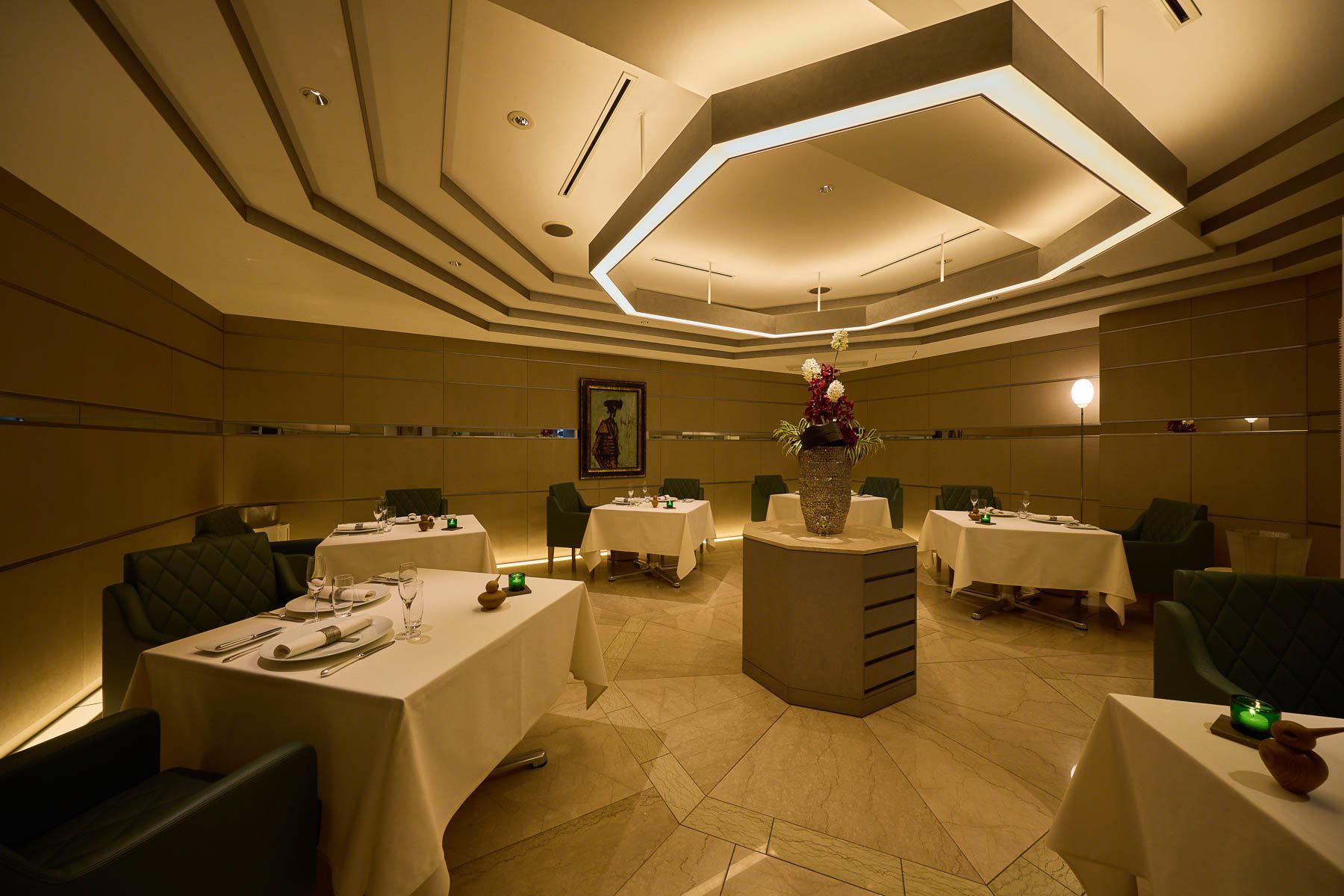
Hiranomachi After Dark: The Dining Corridor That Rewards Repeat Visits
Osaka's Chuo Ward carries a specific dining character that separates it from the louder theatre of Dotonbori or the tourist-facing clusters of Namba. Hiranomachi, the sub-district where ラ・ベカス holds its address on the 3-chome stretch, belongs to a quieter register: low-lit streets, a professional after-work clientele, and restaurants that earn loyalty through consistency rather than spectacle. This is the kind of neighbourhood where a restaurant's longevity is its own credential, and where the regulars at the bar on a Tuesday evening tend to know the rhythm of the kitchen better than any published review.
The name itself is a signal. ラ・ベカス is the phonetic rendering of La Becas, Spanish for woodcocks, a game bird that has occupied serious European kitchens for centuries precisely because it demands skill to prepare and offers no margin for approximation. Choosing that reference as the house identity places the restaurant in a tradition-conscious frame from the outset, before a single dish arrives. In a city where French and European-inflected restaurants occupy a competitive middle tier and an increasingly rarefied upper one, that kind of nomenclature tends to mark out intent.
What the Regulars Know
The guest who returns to a room like this three or four times a year develops a different relationship with it than the first-timer navigating a reservation. Osaka's most loyal dining clientele, particularly in the Chuo Ward professional corridor, tend to gravitate toward rooms where the pacing is unhurried, where the kitchen's decisions feel considered rather than performed, and where the rapport between staff and returning guest produces something the printed menu cannot.
This is the tension that defines the upper tier of Osaka's European dining scene: the gap between what a restaurant offers a stranger and what it offers someone who has been there before. Venues that sustain that gap, that give regulars a reason to return beyond novelty, occupy a more durable position in the market than those built primarily on first-impression impact. The Hiranomachi address, with its proximity to Osaka's financial and legal district, suggests a clientele built on exactly that repeat-visit logic.
Comparable dynamics show up across Kansai's serious European rooms. Calendrier in Osaka operates on a similarly intimate format, where the counter relationship between kitchen and guest accumulates meaning over time. Ajikitcho Bunbuan demonstrates how a kaiseki house in the same city can build a repeat-visitor culture through seasonal discipline rather than menu novelty. The European rooms that hold their own against that standard tend to do so through craft continuity.
Osaka's European Dining Tier: Where ラ・ベカス Fits
Osaka's French and European restaurant scene has stratified meaningfully over the past decade. At the leading sit the Michelin-bearing rooms: HAJIME, which holds three stars and occupies a category of its own in terms of conceptual ambition, and a cluster of one- and two-star addresses that draw international attention. Below that, and sometimes overlapping with it, is a denser middle tier of European restaurants where technique is serious but the format is more accessible, the booking window shorter, and the atmosphere less ceremonial.
For context on how this tier compares to the kaiseki tradition that runs parallel to it in Osaka, Ajihei Sonezaki and Aka to Shiro represent adjacent points on the city's serious-dining map.
Nationally, the comparison set for a European room at this address level extends to places like Gion Sasaki in Kyoto, where European influence inflects a Japanese structure, and akordu in Nara, which positions Spanish technique within a Japanese regional context. Both demonstrate how European culinary vocabulary can be absorbed and re-expressed in Kansai without becoming imitative.
The Hiranomachi Address and What It Implies
3 Chome-3-9 Hiranomachi, Chuo Ward, places ラ・ベカス in a specific urban grid. The Hiranomachi area sits within walking distance of Osaka's Honmachi business district, which means the surrounding restaurant ecology is calibrated to a clientele with both disposable income and time pressure. Lunch trade in this corridor tends toward speed and value; the serious money comes at dinner, when the same professionals linger. Restaurants that hold this address long-term typically do so because they have solved the dinner equation: atmosphere calibrated for conversation, a kitchen that doesn't rush, and enough flexibility in format to accommodate everything from a two-person anniversary to a four-person post-deal celebration.
For visitors arriving from outside Osaka, the neighbourhood lacks the marquee recognition of Kitashinchi or Shinsaibashi, which is precisely what makes it interesting. The dining rooms here are less likely to have been written up in international hotel concierge guides and more likely to be known by the city's own food-serious residents. That geography of attention matters when you're trying to understand what a restaurant's clientele actually looks like.
Osaka's dining scene as a whole is covered in depth in our full Osaka Shi restaurants guide, which maps the city's major dining corridors and price tiers. For comparison points beyond Japan, the European dining tradition that informs a name like ラ・ベカス connects to rooms like Le Bernardin in New York City, where classical French technique has been sustained and refined over decades, or Az in Osaka itself, which occupies a different creative register within the city's European dining spectrum.
Planning a Visit
- Address: 3 Chome-3-9 Hiranomachi, Chuo Ward, Osaka, 541-0046, Japan
- Neighbourhood: Hiranomachi, Chuo Ward, professional dining corridor adjacent to Honmachi business district
- Booking: Contact information not listed at time of writing; approach via local concierge or direct walk-in enquiry
- Nearest Transit: Honmachi Station (Midosuji and Chuo lines) serves the broader district; confirm exact walking route on arrival
- Peer context: Sits within the same serious-dining corridor as other Chuo Ward independents; not a tourist-facing address
A Credentials Check
Comparable venues nearby, for context on price, style, and recognition.
| Venue | Cuisine | Price | Notes |
|---|---|---|---|
| ラ・ベカスThis venue — the venue you are viewing | Contemporary French Fine Dining | $$$$ | Not listed |
| アドック | Modern French-Japanese Fusion | $$$$ | Fukushima |
| アニエルドール | French-Japanese Fusion Fine Dining | $$$$ | Nishi |
| フナシェフ | Modern French Tasting Counter | $$$$ | Kita |
| Presqu'île | Classic French with Japanese Influences | $$$$ | Chūō |
| Convivialité | French Bistro | $$$ | Nishi |
Continue exploring
More in Osaka
Restaurants in Osaka
Browse all →




Bars in Osaka
Browse all →

Hotels in Osaka
Browse all →




Wineries in Osaka
Browse all →
At a Glance
- Elegant
- Intimate
- Sophisticated
- Minimalist
- Date Night
- Special Occasion
- Business Dinner
- Chefs Counter
- Open Kitchen
- Private Dining
- Local Sourcing
Current opening hours
- Monday
- 12–1 PM, 6–8 PM
- Tuesday
- 12–1 PM, 6–8 PM
- Wednesday
- Closed
- Thursday
- 12–1 PM, 6–8 PM
- Friday
- 12–1 PM, 6–8 PM
- Saturday
- 12–1 PM, 6–8 PM
- Sunday
- Closed
Hours can change for holidays and private events. Last verified .
Minimalist setting decorated with bronzes and fabrics, elegant and spacious dining room with a tranquil, refined atmosphere well-suited for special occasions.