Delicias by Vera Goto
Our verdict
Delicias by Vera Goto operates in Oizumi, Ora District, Gunma — a corner of regional Japan where Western culinary influence runs deeper than most visitors expect. The name signals a deliberate cross-cultural positioning, and the Gunma agricultural belt surrounding it makes ingredient provenance a natural part of how the kitchen tells its story. Booking details are best confirmed directly with the venue.

Pearl is the En Primeur Club membership app — saves, bookings, and concierge access live there. Same editors, same standards.
- Address
- 2 chome-22-15 sakada Oizumi machi Oura gun Gunma ken, 2 Chome-22-15 Sakada, Oizumi, Ora District, Gunma 370-0532, Japan
- Phone
- +81276613888
- Hours
- Mon–Tue ClosedWed–Sun 12–10 PM
- Website
- veragoto.com
- Directions
- Get directions
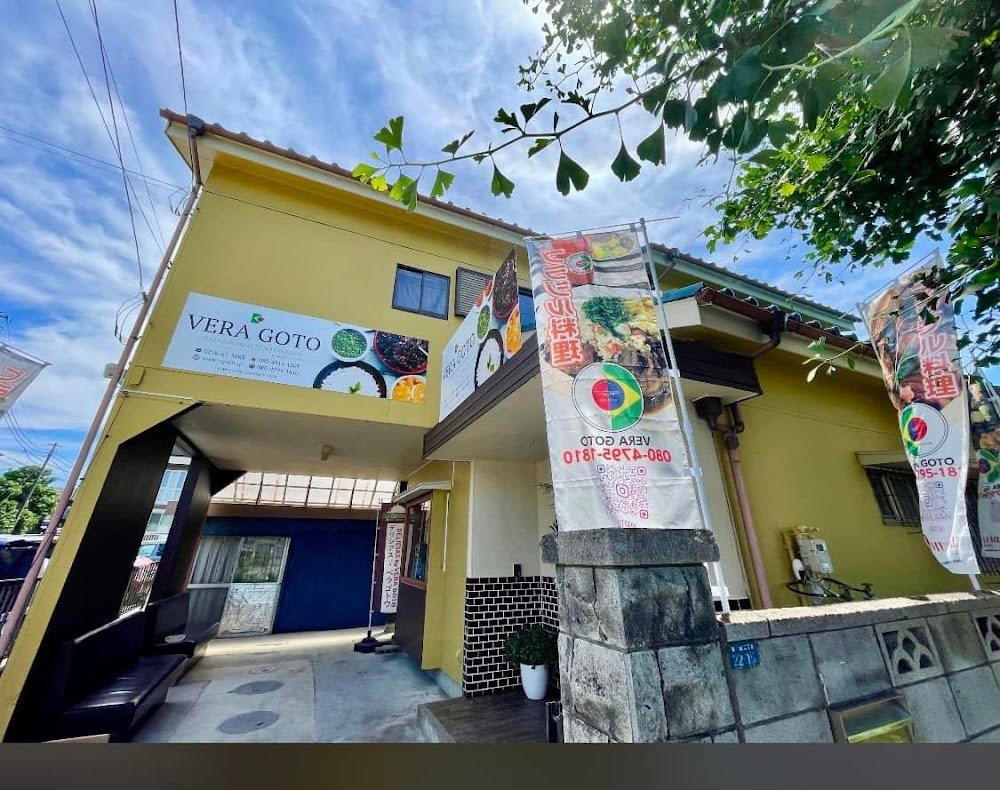
Oizumi's Quiet Cross-Cultural Table
Gunma Prefecture sits inland from Tokyo's coastal pull, bounded by mountains that channel cold winters and force farmers toward hardy, concentrated produce. Oizumi, within the Ora District, is a manufacturing town with an unusually large Brazilian-Japanese community — one of the highest concentrations in Japan — and that demographic reality has shaped what local kitchens can reach for. Restaurants here do not perform fusion for the benefit of visiting food tourists; they draw on what is actually present in the community and on the farms immediately surrounding the town. Delicias by Vera Goto is positioned squarely within that context. The name alone tells you something about the area's character: it is neither purely Japanese nor straightforwardly Western, but a vernacular that makes sense specifically here. For a fuller picture of what Ora District's dining scene offers across price points and styles, see our full Ora District restaurants guide.
What Gunma's Agricultural Belt Means at the Table
The editorial argument for ingredient sourcing in Gunma is not sentimental. Gunma is one of the Kanto region's primary vegetable-producing prefectures, known particularly for konnyaku, Japan supplies the world almost entirely from Gunma soil, as well as leeks, cabbage grown at altitude in the Agatsuma highlands, and shiitake with the kind of density that comes from cool, dry air. Any kitchen working seriously in this geography has direct access to produce that metropolitan restaurants pay premiums to import. The shorter the supply chain, the less the kitchen has to do to make an ingredient speak. That principle applies regardless of whether a restaurant's culinary register is Japanese, Italian, French, or something that borrows across all three.
Compare this with the sourcing position of restaurants at the upper tier of Japan's urban dining circuit. HAJIME in Osaka builds its innovative French menu around a philosophy of ecological sourcing that requires considerable logistical coordination from city-based kitchens. Harutaka in Tokyo sources through the Tsukiji and Toyosu networks at significant cost. A regional kitchen in Gunma with relationships to local farms operates from a structurally different position: proximity is the advantage, and it is an advantage that cannot be replicated by budget alone.
The Regional Restaurant as Cultural Interpreter
Japan's regional dining scene has developed in two broad directions over the past decade. One strand follows the kaiseki model outward from Kyoto, highly codified, seasonally precise, expensive. Gion Sasaki in Kyoto represents that tradition in its most refined metropolitan form. The other strand is less discussed internationally but arguably more interesting from a cultural standpoint: restaurants in mid-sized regional towns that reflect genuine local identity rather than a national template. akordu in Nara does this through a Basque lens; Goh in Fukuoka mines Kyushu's larder with contemporary Japanese technique. Delicias by Vera Goto operates in a third register, one shaped by Oizumi's particular demographic: a Brazilian-Japanese cultural overlap that is not a marketing angle but a lived local reality.
That kind of specificity is what separates a restaurant worth seeking out from one that simply fills a gap in a town's dining options. The restaurants that do regional identity well, whether in Ashiya (Abon), Akita (affetto akita), Oita (Aji Arai), or Imabari (Akakichi), do so because they are legible expressions of somewhere specific, not aspirational copies of a metropolitan standard.
Situating Ora District Within Japan's Broader Dining Map
Gunma does not appear on the standard itineraries that move travelers between Tokyo, Kyoto, Osaka, and Fukuoka. That absence reflects access patterns more than culinary reality. The prefecture is approximately 90 minutes from Tokyo by shinkansen to Takasaki, which makes it a plausible day trip or short-stay destination for travelers already in the Kanto region. Oizumi itself sits in the southeastern lowland of Gunma, reachable by train from Takasaki via the Ryomo Line. The town's infrastructure is utilitarian rather than scenic, which means the dining choices available there exist for residents, not for tourism. That is, in practice, a quality signal: a kitchen in Oizumi earns its custom from people who eat there regularly, not from travelers passing through once.
The contrast with destination-driven dining is instructive. Ajidocoro in Yubari District, aki nagao in Sapporo, Amaki in Aichi, and Amegen in Saga all operate in regional contexts where local patronage defines the kitchen's decisions. Internationally, the closest analog to this kind of embedded regional restaurant might be found at places like Lazy Bear in San Francisco, which built a local community dining identity before scaling, or at the fish-forward localism of Le Bernardin in New York City, which made ingredient provenance and treatment a defining editorial position. The scale and price points differ enormously, but the underlying logic, know your sourcing, honor the ingredient, speak to your actual community, transfers across contexts.
Practical Planning
Delicias by Vera Goto is located at 2 Chome-22-15 Sakada, Oizumi, Ora District, Gunma. The venue's website and phone contact are not publicly listed in the records available to EP Club at time of writing, so confirming hours, reservation availability, and current pricing requires direct outreach, arriving in Oizumi and asking locally is a reasonable fallback given the town's compact scale. Travelers arriving from Tokyo should factor in the Takasaki connection and onward Ryomo Line service to Oizumi. Further useful reference points for planning a regional Gunma or wider Kanto itinerary can be found through anchoa in Kanagawa and Arakawa in Hyogo, both of which illustrate how regional Japanese restaurants of this type position themselves relative to their local markets.
Frequently asked questions
Is Delicias by Vera Goto suitable for children?
Oizumi, in Ora District, is a community-oriented town with a notably diverse residential population, and local restaurants there tend to reflect that inclusive, family-present character. Nothing in the venue's positioning suggests a formal or ceremony-heavy format that would make children feel out of place. That said, confirmed details on seating arrangements or a dedicated children's menu are not available, so calling ahead before visiting with young children is the practical move.
What should I expect atmosphere-wise at Delicias by Vera Goto?
Oizumi carries one of the most culturally layered community profiles in Gunma — a town shaped by decades of Brazilian-Japanese settlement, which tends to produce dining rooms that feel lived-in and socially mixed rather than spare or ceremonial. Based on that local context, Delicias by Vera Goto likely operates closer to a neighbourhood gathering point than a tasting-menu destination.
How does Delicias by Vera Goto fit into Gunma's broader dining scene?
Gunma sits off the standard Tokyo-Kyoto-Osaka circuit, which means restaurants in the prefecture — including those in Ora District — operate largely for a regional rather than destination-tourist audience. Delicias by Vera Goto in Oizumi is positioned within that local fabric, in a town whose Brazilian-Japanese demographic makes it one of the more culturally specific communities in the Kanto interior. That context sets it apart from both metropolitan fine dining and rural kaiseki offshoots, placing it closer to the category of culturally embedded neighbourhood restaurant.
What should I eat at Delicias by Vera Goto?
What the setting does suggest is that produce from Gunma's agricultural belt — one of the Kanto region's primary vegetable-producing areas — may feature heavily, alongside any cross-cultural influences that Oizumi's Brazilian-Japanese community has embedded in local food culture. Asking staff directly about the day's sourcing is usually the most reliable guide in regional Japanese restaurants of this type.
| Venue | Cuisine | Price | Awards | Notes |
|---|---|---|---|---|
| Delicias by Vera GotoThis venue — the venue you are viewing | Brazilian by Weight | Not listed | Not listed | Not listed |
| HAJIME | Avant-Garde Japanese Fine Dining | $300–500 | 3 Michelin Stars · World's 50 Best #83 | French, Innovative |
| Harutaka | Edo-Style Omakase Sushi | $200–300 | 3 Michelin Stars · World's 50 Best #76 | Sushi |
| L'Effervescence | Modern French with Japanese Influences | $200–300 | 3 Michelin Stars · World's 50 Best #69 | French |
| RyuGin | Modern Kaiseki | $500+ | 3 Michelin Stars · World's 50 Best #41 | Kaiseki, Japanese |
| Crony | Modern French with Japanese Influences | $150–200 | 2 Michelin Stars · World's 50 Best #34 | Innovative, French |
Continue exploring
More in Ora District
Restaurants in Ora District
Browse all →
Bars in Ora District
Browse all →
Hotels in Ora District
Browse all →
Wineries in Ora District
Browse all →
Details
- Casual Hangout
- A La Carte
Current opening hours
- Monday
- Closed
- Tuesday
- Closed
- Wednesday
- 12–10 PM
- Thursday
- 12–10 PM
- Friday
- 12–10 PM
- Saturday
- 12–10 PM
- Sunday
- 12–10 PM
Hours can change for holidays and private events. Last verified .