
Curry Shop Fennel belongs to Tokyo’s small-counter curry culture rather than its luxury dining circuit: eight counter seats, Indian curry categorisation, and recognition on Tabelog’s Curry TOKYO 100 list for 2024. In Nishi-Ogikubo, it reads as a neighbourhood specialist with citywide credibility, the kind of place where reputation is built through repeat diners and tight execution rather than ceremony.
Pearl is the En Primeur Club membership app — saves, bookings, and concierge access live there. Same editors, same standards.
- Address
- Japan, 〒167-0054 Tokyo, Suginami City, Shoan, 3 Chome−37−22 2F
- Phone
- +81 3-5941-9835
- Website
- instagram.com
 Saves & bookings on Pearl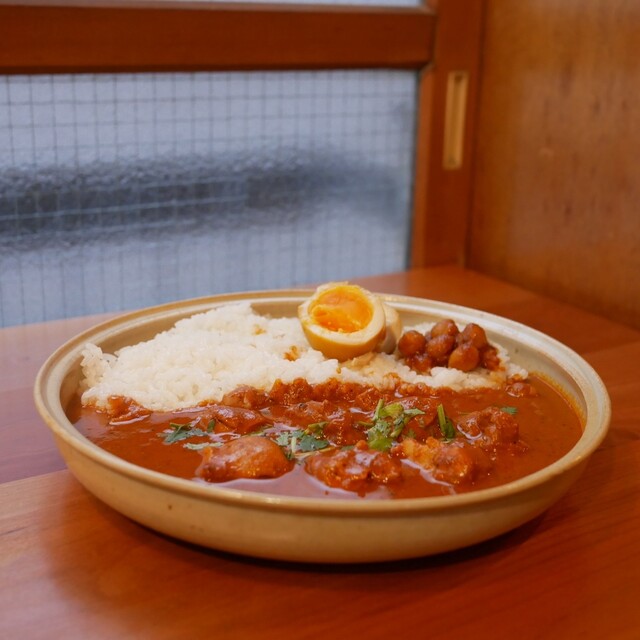
Approaching a second-floor curry counter in western Tokyo is a different proposition from entering a Ginza dining room. The cues are smaller: a stairwell, a compact room, the rhythm of counter service, and the sense that the meal has been designed for people who know exactly why they came. Curry Shop Fennel sits in that register, closer to Tokyo’s everyday specialist culture than to destination dining theatre.
Tokyo curry has long split into several camps: old-school Japanese curry rice, spice-led independent shops, Indian and South Asian formats adapted to local habits, and hybrid counters that blur those categories. The city rewards precision at every price tier, which is why a modest curry shop can carry serious reputational weight. Selection for Tabelog’s Curry TOKYO 100 in 2024 places this address inside a curated field where consistency, local following, and category credibility matter more than luxury signals.
An eight-seat curry counter with award-list gravity
The essential point is scale. An eight-seat counter changes the tempo of a curry meal: turnover, waiting etiquette, and the cook-to-serve relationship all become part of the format. In Tokyo, small counters often function as laboratories for narrow specialisation, and curry is one of the city’s strongest categories for that kind of focus. Curry Shop Fennel’s recognition by Tabelog in the 2024 Curry TOKYO 100 gives the room a public marker in a category where word-of-mouth can otherwise be opaque to visitors.
That award context matters because Tokyo curry is not a single cuisine. Indian curry labels can cover a broad range of spice structures, rice pairings, and plate formats, while Japanese dining culture tends to reward clarity and repetition. The draw here is not a long tasting progression or chef biography; it is a compact curry counter operating in a city where specialist lunch and dinner formats are judged with the same seriousness as higher-budget restaurants.
Within the broader Tokyo field, comparison should stay disciplined. FRENCH CURRY SPOON occupies a similar listed budget band, while Echigo Tsuruy and Amai Ko sit in lower or mixed price brackets. Those references show how varied the city’s casual specialist tier can be: curry, sweets, noodles, and regional formats may share an accessible spend level, but the stronger addresses separate themselves through category focus and repeatability rather than surface polish.
Nishi-Ogikubo's specialist dining logic
Nishi-Ogikubo has a different dining energy from the central wards. It is residential, independent, and comfortable with small formats that would feel fragile in heavier tourist corridors. That makes it a natural home for restaurants where the point is not breadth but conviction: a short operating model, a small number of seats, and a room built around regulars who understand the pace. For curry, that neighbourhood setting can be an advantage, because the format thrives when the audience is patient and the cooking is specific.
The counter-only setup also clarifies the kind of meal to expect. This is not a private-room restaurant, not a long drinking session, and not a broad group-dining solution. It belongs to the Tokyo genre of focused, low-friction meals where the reward is in the kitchen’s repetition. The Tabelog score of 3.81, paired with the Curry TOKYO 100 selection, gives enough external signal to treat it as more than a casual neighbourhood listing, while keeping expectations in the realm of a compact specialist shop.
Travelers building a Tokyo food itinerary often over-index on sushi, tempura, ramen, and kaiseki. Curry deserves space in that conversation because it shows another side of the city’s dining intelligence: imported spice traditions filtered through Japanese counter culture, with intense competition at everyday prices. Readers mapping that wider field can use Our full Tokyo restaurants guide for the citywide view, then compare nearby or category-adjacent addresses such as 3 Chome no Curry Ya San, 12/10 Shinjuku ten, 124. KAGURAZAKA (Yakitori), . 鮪と炭火焼き うお炭 秋葉原店, and 2D Cafe.
How to place it in a Tokyo itinerary
The smart use case is a focused western-Tokyo meal rather than a prestige dinner anchor. Nishi-Ogikubo rewards travelers who are willing to leave the central hotel circuit, and Curry Shop Fennel fits a day built around independent shops, coffee, and smaller restaurants rather than monuments. The practical rhythm is also shaped by the room: with only counter seats and no private-room format, this is better suited to solo diners or pairs than to larger parties.
Its reputation comes from category recognition, not luxury coding. That distinction is useful. Tokyo has restaurants where the experience is measured in ceremony, rare ingredients, and multi-course pacing; this sits in the counter-specialist lane, where the question is whether a narrow format has enough discipline to justify crossing town. The 2024 Tabelog Curry TOKYO 100 selection answers that question with a credible yes for curry-focused travelers, especially those already interested in the city’s less formal dining strengths.
For itinerary balance, pair this kind of meal with a broader reading of Tokyo hospitality rather than another similar counter immediately afterward. Our full Tokyo hotels guide, Our full Tokyo bars guide, Our full Tokyo wineries guide, and Our full Tokyo experiences guide help frame the city beyond restaurants. For wider Japan and diaspora context, compare the editorial spread with -Grilled beef Sukiyaki- KAMAKURA TANUKIAN 鎌倉 たぬき庵 in Kamakura.cafe in Osaka.know in Kumamoto, (Shoku) Vietnam in Kawasaki, [Curry Senmon Ten] Maruyama Kyoju. in Sapporo, [ki:] in Kyoto, Jōdo Saké Bar in Los Angeles, and Onigiri Time in Pasadena.
The verdict is narrow by design: this is for diners who value Tokyo’s specialist counters and want curry treated with the same seriousness as better-publicised genres. The appeal lies in the combination of small-room focus, Nishi-Ogikubo context, and an external award-list signal that places the restaurant inside the city’s serious curry conversation.
Cuisine-First Comparison
Comparable venues to calibrate price, style, and recognition.
| Venue | Cuisine | Price | Notes |
|---|---|---|---|
| Curry Shop FennelThis venue — the venue you are viewing | Japanese curry shop | $ | Not listed |
| Umemura | Japanese Soul Food | $ | Koto |
| Chuka Soba Nishikawa | Japanese Ramen | $ | Setagaya |
| Jun Teuchi Daruma | Handmade Noodle Ramen (Light Shoyu) | $ | Suginami |
| Uoriki | Traditional Japanese fish set-meal diner (teishoku) | $ | Shibuya |
| Higashi Shinjuku Sanrasa | Japanese Curry | $ | Shinjuku |
Recognition history
Dated appearances from independent guides and award organizations, with the underlying list record or original source where available.
Tabelog 100 #97 · No. 97
Tabelog · Tabelog 100 - Curry - TOKYO - 2024












At a Glance
- Cozy
- Solo
- Casual Hangout
- After Work
- Standalone
Current opening hours
- Monday
- Closed
- Tuesday
- Closed
- Wednesday
- 11:30 AM–7 PM
- Thursday
- 11:30 AM–7 PM
- Friday
- 11:30 AM–7 PM
- Saturday
- 11:30 AM–7 PM
- Sunday
- 11:30 AM–8:30 PM
Hours can change for holidays and private events. Last verified .
A compact, casual neighborhood curry shop with a warm, spice-filled atmosphere that feels like a cozy hideout near Nishi-Ogikubo Station.