Our verdict
Café Pushkin occupies a landmark position in Moscow's historic dining culture, translating nineteenth-century Russian aristocratic pastry and café traditions into an operating institution on Tverskoy Boulevard. The multi-floor space runs from a ground-floor confectionery to upper dining rooms furnished in period detail, making it one of the city's most recognisable addresses for Russian classical sweets and all-day dining.

Pearl is the En Primeur Club membership app — saves, bookings, and concierge access live there. Same editors, same standards.
- Address
- Moscow, Russia
- Directions
- Get directions
The menu
What to order
- Honey Cake
- Macaroons
- Truffles
- Handmade Desserts
- Creme Brulee
- Apple Pie
Moscow's Confectionery Tradition and Where Café Pushkin Sits Within It
Russian café culture was effectively erased across the Soviet decades and rebuilt almost from scratch after 1991. What replaced it was partly imported — Italian espresso bars, French patisserie formats — and partly invented from nostalgia: a romantic reconstruction of the pre-revolutionary salon, the kind of place Turgenev characters might have taken tea. Café Pushkin, on Tverskoy Boulevard, belongs firmly to the second tradition. It opened in 1999, and its central proposition has always been a staged, highly detailed evocation of nineteenth-century Moscow bourgeois and aristocratic food culture. That is not a criticism. The staging is deliberate, historically referenced, and executed at a level of material investment that separates it from the dozens of lookalike establishments that appeared in its wake.
In Moscow's current restaurant scene, that positioning is worth understanding. Restaurants like White Rabbit (Modern Russian) and Twins Garden (Modern European) represent the city's internationally oriented contemporary tier, working with fermentation, hyperlocal sourcing, and tasting menu formats that read equally well to a diner from Tokyo or Copenhagen. Café Pushkin operates in a completely different register: it is not trying to be contemporary, and that clarity of purpose gives it a coherence that purely nostalgic restaurants often lack. The confectionery floor, in particular, functions as an anchor, a space where the Russian tradition of afternoon pastry and sweetened tea is treated not as a period curiosity but as a live, maintained practice.
The Architecture of the Space
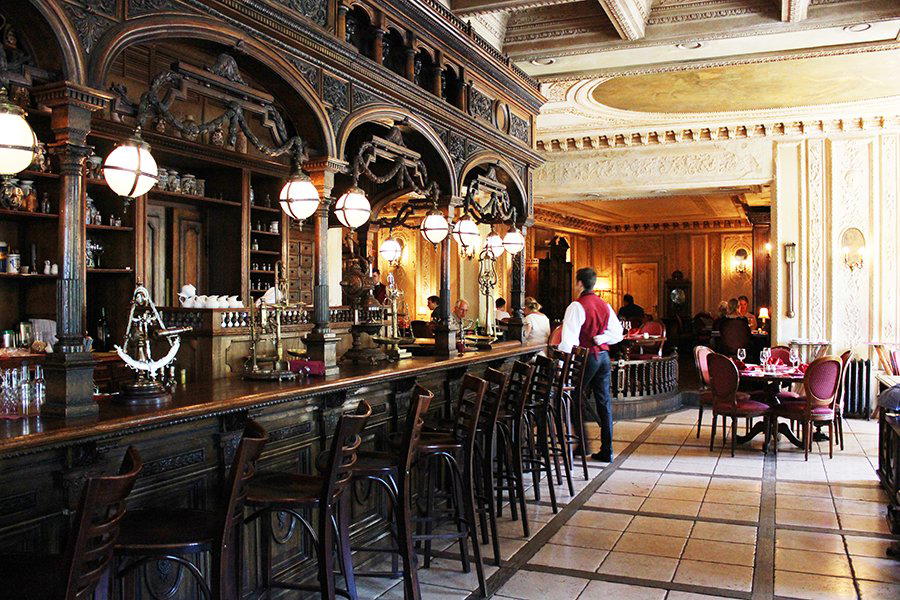
The building presents itself across several floors, each with a distinct character. The ground level is the confectionery proper: glass cases, pastries, cakes, and the kind of old-pharmacy-meets-salon aesthetic that defines the venue's visual register. Dark wood, gilt lettering, periodical displays arranged as props, the design communicates a specific era and class position without ambiguity. Upper floors carry library rooms, more formal dining, and a rooftop terrace active during Moscow's compressed warm season, roughly May through September. The attention to period detail across all of these spaces, the furniture, the staff dress, the printed menus, is sustained throughout rather than concentrated in a single hero room, which is the more common approach at comparable Moscow addresses.
This kind of interior investment has a meaningful effect on the dining experience. Russian classical café culture historically centred the pastry counter as a social institution, not merely a retail point. That tradition, the confectionery as a place of duration, conversation, and deliberate slowness, is what Café Pushkin reconstructs. Whether the reader finds that reconstruction charming or theatrical will depend on their relationship with historical pastiche, but the execution is disciplined enough that the question becomes genuine rather than rhetorical.
Russian Confectionery as a Culinary Tradition
It is worth placing Russian confectionery in context, because it is less well-documented internationally than French or Austrian traditions with which it shares certain overlaps. The Russian imperial pastry tradition drew heavily on French techniques, many of the leading confectioners in nineteenth-century Moscow and Saint Petersburg were French-trained or French-born, while incorporating local ingredients: buckwheat, honey, sour cream, preserved fruits, and dried berries. The result was a distinctive hybrid that emphasised richness and sweetness calibrated to the Russian palate, which historically ran sweeter than Western European norms. Honey cake (medovik), Napoleon layered pastry, and vatrushka cheese pastries are among the forms that came through that period and remain canonical.
Café Pushkin's confectionery floor operates as one of Moscow's more serious addresses for this tradition. For comparison, the confectionery culture being maintained here sits in a different register from the experimental or contemporary Russian cuisine found at Varvary (Russian Cuisine), the former reconstructs a classical form, the latter pushes at what Russian ingredients can do in a contemporary idiom. Both approaches are legitimate; they serve different purposes for a visitor trying to map the city's food culture.
Across Russia, regional approaches to pastry and sweetened hospitality vary considerably. The Georgian-influenced sweet traditions present in places like Khmeli Suneli in Yekaterinburg or Alanskaya Kukhnya in Krasnodar reflect the Caucasian thread in Russian food culture, while confectionery establishments in Siberian cities like Grisha in Omsk work from entirely different regional ingredient sets. The centralised, imperial-era Moscow tradition that Café Pushkin references is only one strand of a much wider practice.
The Dining Rooms and Full Menu
Beyond the confectionery, the upper dining rooms carry a full Russian and European menu across lunch and dinner. The scope is broad: soups, game dishes, cold appetisers, and the kind of menu length that reflects a pre-contemporary European grand-café format rather than the focused, shorter menus that have become standard at ambitious modern restaurants. Accenti and Aist represent Moscow's European-facing dining in a more contemporary key; Café Pushkin is deliberately not competing on that axis.
The price positioning reflects the venue's status rather than its category. This is not budget dining: the full dining room operates at mid-to-upper Moscow pricing, with the confectionery floor more accessible for standalone pastry and coffee visits. For visitors whose primary interest is the confectionery tradition rather than a full dinner, the ground floor is the more focused choice.
Planning Your Visit
Café Pushkin operates on Tverskoy Boulevard in central Moscow, within walking distance of the main tourist and cultural corridor. The venue runs across extended hours, covering breakfast through late evening, which makes it one of the more flexible addresses in the city for fitting around a varied itinerary. The confectionery is accessible without a booking; the upper dining rooms, particularly on weekend evenings, are worth reserving in advance. The rooftop terrace, when open, books faster than the interior rooms. Dress code sits in the smart-casual to smart range; the period aesthetic of the interior sets an implicit expectation that most visitors naturally meet. For those building a broader Moscow itinerary, our full Moscow restaurants guide maps the city's dining across categories and price points.
Russian confectionery and café culture has its counterparts elsewhere across the country's cities. 1913 in Saint Petersburg works a similar historical register in a city whose European architectural fabric makes the comparison instructive. Konditerskaya Kuzina in Syktyvkar shows how the confectionery format translates to smaller Russian cities far from the imperial centre. Further afield, Dzhani Restorani in Nizhny Novgorod and Lev I Ptichka in Saint Petersburg represent the more contemporary end of Russian hospitality, useful reference points for understanding what Café Pushkin is choosing not to be.
Frequently asked questions
Does Café Pushkin in Moscow serve traditional Russian confectionery alongside its full dining menu, or are they separate experiences?
The two are architecturally separated: the ground floor houses the confectionery proper with glass display cases and pastries rooted in Russian tradition, while the upper floors carry a distinct Russian and European menu covering soups, game dishes, and broader lunch and dinner service. Most visitors treat them as separate occasions rather than a single sitting. The building on Tverskoy Boulevard is designed to support both formats independently.
What do people recommend at Confectionary Pushkin?
The confectionery counter on the ground floor draws the most consistent attention, with its display cases of Russian-style pastries representing a tradition less documented internationally than French or Austrian equivalents. The upper dining rooms carry a broader Russian and European menu, including soups and game dishes, which regulars treat as a separate visit from the pastry counter entirely.
Do I need a reservation for Confectionary Pushkin?
The ground-floor confectionery operates as a walk-in space, so no booking is needed to access the pastry counter. The upper dining rooms, which serve a full lunch and dinner menu, are more structured and reservations are advisable, particularly for dinner sittings in a venue that sits on central Moscow's main tourist and cultural corridor.
What makes Confectionary Pushkin worth seeking out?
Café Pushkin occupies a specific position in Moscow's post-Soviet café revival: a multi-floor building on Tverskoy Boulevard where the confectionery tradition is treated as serious culinary territory rather than an afterthought. Russian confectionery as a formal category remains poorly represented outside Russia, which gives the ground-floor counter genuine documentary interest for anyone tracking European pastry traditions.
How does Confectionary Pushkin handle allergies?
Given the full-menu scope across the upper dining rooms, including soups, game, and pastry production, it is advisable to check the venue's official channels before visiting if allergies are a concern.
What's the best season to visit Confectionary Pushkin?
Moscow's winters are severe enough to make a warm, multi-floor building with a confectionery counter and full dining menu particularly functional from November through February. That said, the venue runs across all seasons, and the proximity to Tverskoy Boulevard's cultural corridor means summer visits align naturally with the city's theatre and museum circuit.
Cost Snapshot
A compact comparison to help you place this venue among nearby peers.
| Venue | Cuisine | Price | Awards | Notes |
|---|---|---|---|---|
| Confectionary PushkinThis venue — the venue you are viewing | French Patisserie & Confectionery | $30–50 | Not listed | Not listed |
| White Rabbit | Modern Russian Fine Dining | $100–150 | World's 50 Best #25 · La Liste Top Restaurants | Modern Russian |
| Selfie | Modern European Fusion with Russian Influences | $50–100 | La Liste Top Restaurants | Modern European |
| Twins Garden | Modern Russian Fine Dining | $150–200 | World's 50 Best #30 · La Liste Top Restaurants | Modern European |
| Artest | Modern European Fine Dining | $50–100 | La Liste Top Restaurants | Russian Cuisine |
| САВВА - Savva - Hotel Metropol | Russian European | Not listed | Not listed | Not listed |

Details
- Elegant
- Classic
- Ornate
- Well Known
- Sophisticated
- Celebration
- Special Occasion
- Date Night
- Casual Hangout
- Historic Building
- Design Destination
- Standalone
- Craft Cocktails
- Organic
- A La Carte
- Small Plates
- Tea
- Coffee
- Vegetarian Friendly
- Gluten Free Options
- Vegan Options
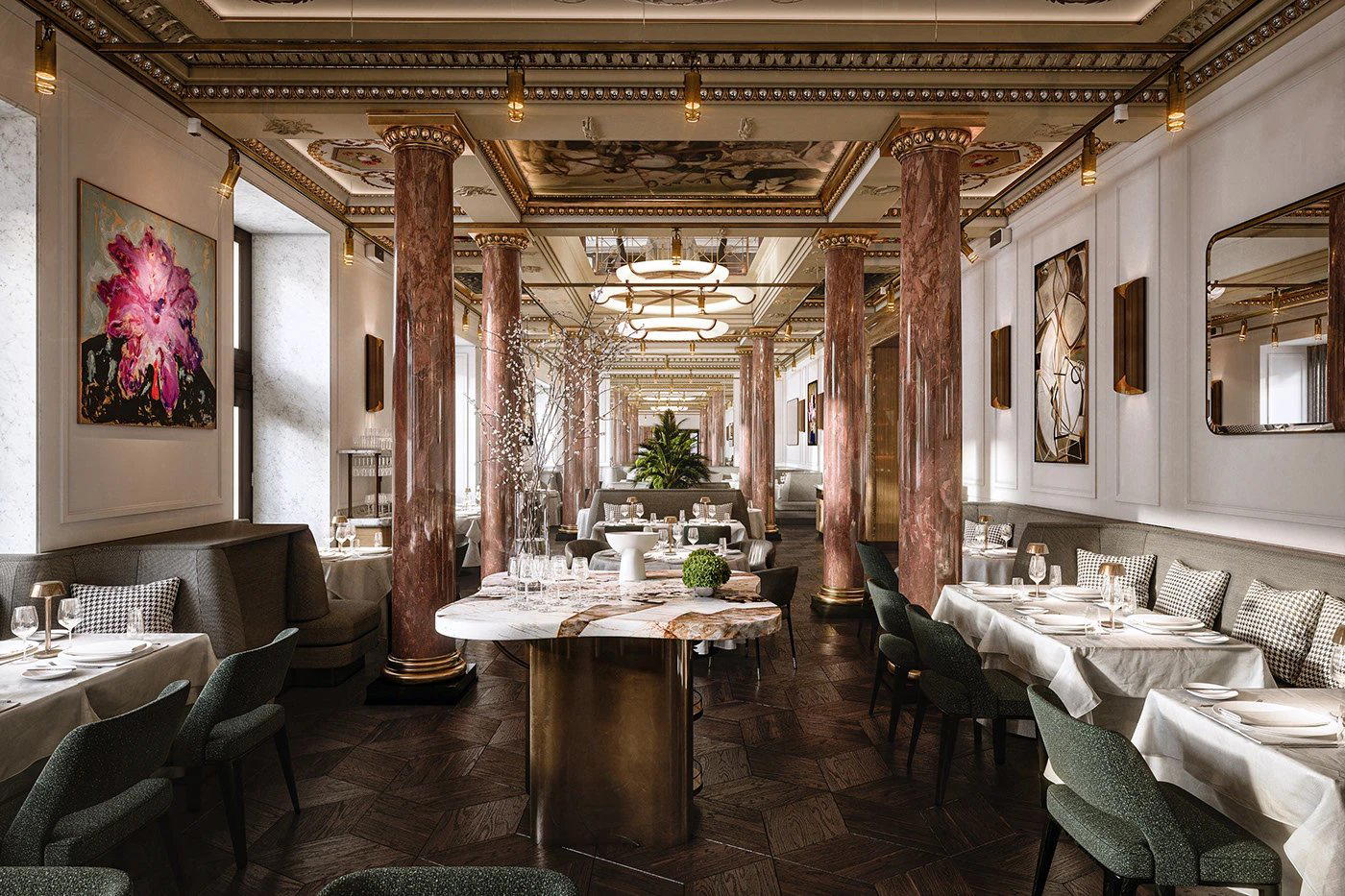
Luxurious baroque interior with antique Chinese porcelain, silvery-grey and pastel-blue furniture, gilt and cut glass creating a magical atmosphere reminiscent of a distant era of kings and emperors.