Our verdict
On a narrow street in Hanoi's Old Quarter, Chả Cá Thăng Long has spent decades serving a single dish: the turmeric-marinated fish known as chả cá. That singular focus places it at the centre of one of Vietnamese cuisine's most debated traditions, where cooking method, condiment order, and dill-to-fish ratio are points of genuine local disagreement. For visitors, it is a rare chance to eat a dish that defines an entire street.

Pearl is the En Primeur Club membership app — saves, bookings, and concierge access live there. Same editors, same standards.
- Address
- 17B P. Chả Cá, Phố cổ Hà Nội, Hoàn Kiếm, Hà Nội 100000, Vietnam
- Phone
- +84795463644
- Hours
- Daily 9 AM–11 PM
- Directions
- Get directions
The menu
What to order
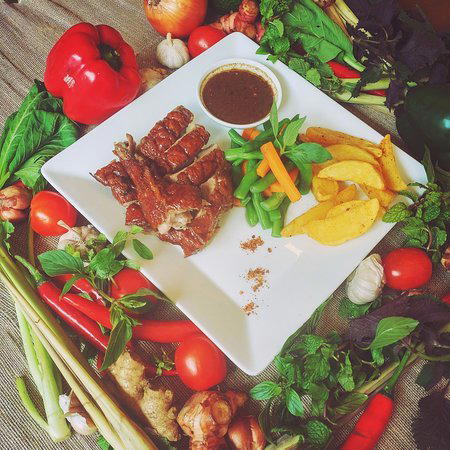
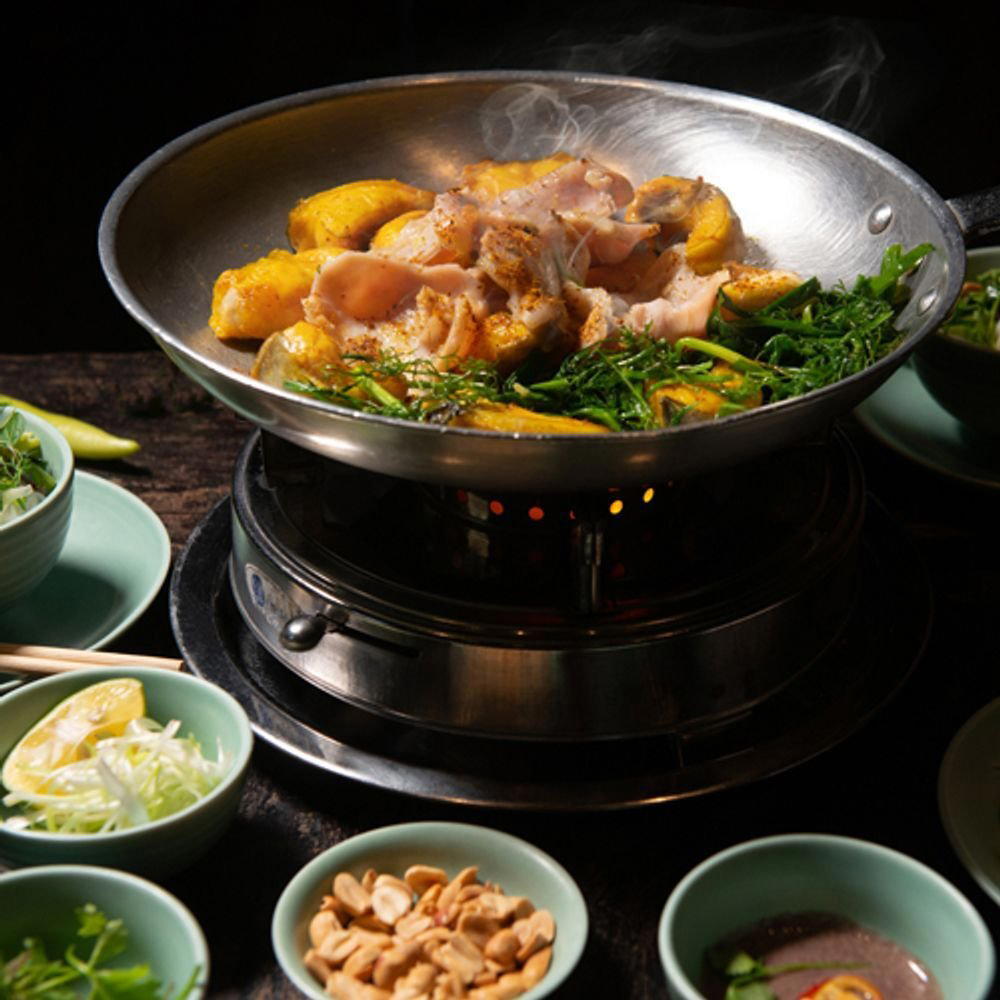
- Chả Cá (turmeric-marinated catfish with dill)
- Vermicelli noodles with peanuts
A Street Named After a Dish
Phố Chả Cá, in Hanoi's Hoàn Kiếm district, is one of the few streets in the world named after the food sold on it. The dish in question — chả cá, turmeric-marinated freshwater fish cooked at the table over a charcoal brazier, finished with dill, shrimp paste, and rice vermicelli — arrived in the Old Quarter during the nineteenth century and became so associated with a particular stretch of buildings that the street eventually took its name. Chả Cá Thăng Long sits at 17B on that street, operating within a tradition that long predates it and will likely outlast any single establishment.
Understanding Chả Cá Thăng Long means understanding what chả cá is in Hanoi's culinary memory. This is not a street food that evolved across regions. It is a dish with a fixed address, a fixed technique, and a fiercely local sense of ownership. Hanoians argue about which house does it right the way Neapolitans argue about pizza: the debate is not about innovation but about fidelity. The fish must be snakehead or catfish, marinated in turmeric and galangal, seared until the edges crisp, then finished tableside in oil with quantities of fresh dill that would seem excessive in any other context. The shrimp paste, mắm tôm, arrives on the side, sharp and fermented, cutting through the richness of the oil. Visitors who reach for the fish sauce instead are, by local reckoning, doing it wrong.
The Tableside Format and What It Teaches
The cooking format at Chả Cá Thăng Long follows the template that defines the category across the street. A small brazier sits at the centre of each table. The fish arrives partially cooked, already fragrant with turmeric, and the job of the diner is to finish it in the pan, adding dill and spring onion in batches as the fish crisps. The vermicelli comes separately, along with roasted peanuts and the mắm tôm. Assembly is a matter of proportion, and getting it right takes a few attempts: too much paste and the shrimp flavour overwhelms the fish; too little and the dish loses its edge entirely.
This interactive format is not theatre. It reflects a culinary logic in which the diner participates in the final texture of the dish. The dill, added in large handfuls at the end, wilts just enough to soften without losing its anise bite. The peanuts add resistance. The result is a plate in which every element plays a structural role, which is why the dish has resisted modification while much of Hanoi's dining scene has moved toward contemporary reinvention. For a contrasting view of where Vietnamese cooking is heading, Gia (Vietnamese Contemporary) in Hanoi demonstrates what happens when the same culinary heritage is reframed through a modern fine-dining lens.
Where Chả Cá Sits in Hanoi's Dining Tiers
Hanoi's dining scene now spans a wider price and format range than it did even a decade ago. At one end, single-dish specialists in the Old Quarter operate on volume and tradition, with bills that rarely trouble the mid-range. At the other, restaurants like Hibana by Koki (Teppanyaki) and Gia sit in the ₫₫₫₫ tier, drawing international visitors willing to pay premium prices for a contemporary Vietnamese or international format. Chả Cá Thăng Long occupies a different position: a destination within the traditional tier, where the value is cultural density rather than tasting-menu ambition.
For visitors structuring a Hanoi itinerary, this distinction matters. A meal at Tầm Vị (Vietnamese) or at 1946 Cua Bac (Vietnamese) covers different ground, regional breadth versus the studied specificity of a single recipe. Chả Cá Thăng Long's role in any considered dining week is as a fixed point of reference, a dish so thoroughly embedded in Hanoian identity that skipping it in favour of more internationally legible options would leave a gap in understanding what northern Vietnamese cooking is actually built on.
Across Vietnam more broadly, single-dish institutions operate in every major city. Saffron in Hue City anchors itself to the court cooking traditions of central Vietnam, while Cargo Club Cafe and Restaurant in Hoi An draws on the fusion character of a trading-port town. The north has always maintained a more austere, less sweetened palate, and chả cá, fermented, oily, dill-heavy, is one of the clearest expressions of that difference.
Planning a Visit: Practical Notes
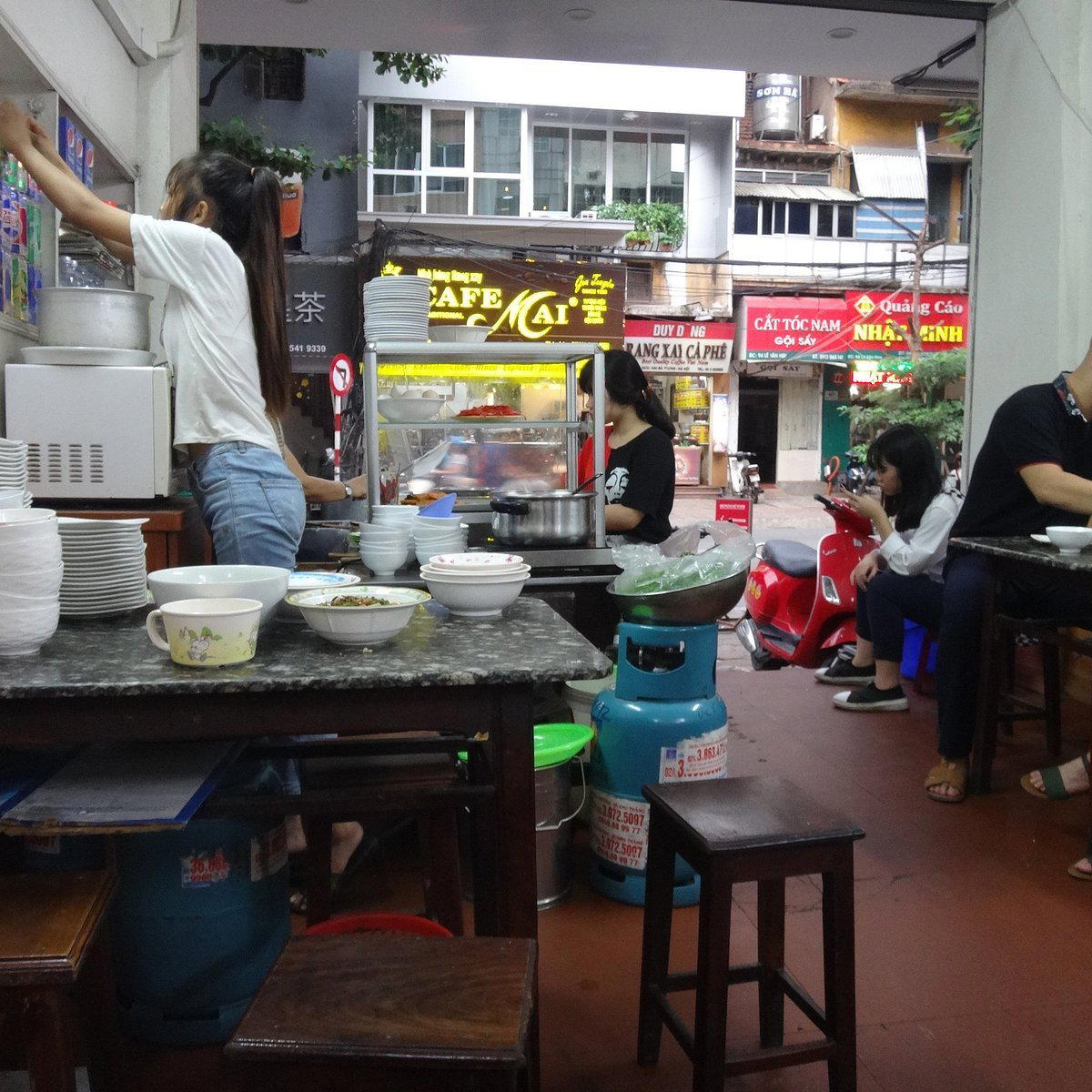
Phố Chả Cá is a short walk from Hoan Kiem Lake, placing it within the natural circuit of Old Quarter exploration. The street is compact, and Chả Cá Thăng Long at 17B is one of several establishments on the same block offering near-identical dishes, a fact that generates its own local debate about which house is the original and which is the most faithful. Visiting at lunch, when the neighbourhood runs cooler and less crowded than the evening tourist peak, makes the tableside cooking format more comfortable and the dining room easier to navigate. The meal moves quickly: chả cá is a single-dish format, not a multi-course progression, and most tables turn in under an hour.
For visitors building a wider Hanoi dining programme, our full Hanoi restaurants guide maps the city's dining tiers across neighbourhoods and cuisine types. Further afield, 19 P. Ngũ Xã covers different Old Quarter ground, and those extending their Vietnam itinerary will find reference points at La Maison 1888 in Da Nang, Akuna in Ho Chi Minh City, and Le Pont Club in Hai Phong. For coastal seafood in the north, Phuong Nhung Restaurant in Cat Hai and Bau Troi Do in Son Tra represent the region's fishing-village dining tradition. In central Vietnam, Duyên Anh Restaurant in Phu Vang and Nhà hàng Madame Lân in Hai Chau offer regional context. For readers curious how single-focus cooking formats operate at the international fine-dining tier, Le Bernardin in New York City and Lazy Bear in San Francisco provide instructive comparison points, kitchens built around disciplined constraint rather than menu breadth, though operating in an entirely different price register. Mi Quang Ba Vi in Thanh Khe rounds out the picture with a central Vietnamese noodle tradition that shares chả cá's single-dish logic but belongs to a different culinary lineage.
Frequently asked questions
Where is Chả Cá Thăng Long located?
Chả Cá Thăng Long is located at 17B P. Chả Cá, Phố cổ Hà Nội, Hoàn Kiếm, Hà Nội 100000, Vietnam, Hanoi.
Is Chả Cá Thăng Long a good option for first-time visitors to Hanoi's Old Quarter?
It functions as a useful reference point for understanding how Hanoi's Old Quarter specialist restaurants work: one dish, one format, served to everyone at the table. Located at 17B Phố Chả Cá in Hoàn Kiếm, the restaurant is a short walk from Hoan Kiem Lake and sits within the natural circuit of Old Quarter exploration. First-time visitors should note that the mắm tôm dipping paste is an acquired taste — asking for nước chấm as an alternative is a practical option.
What dish is Chả Cá Thăng Long famous for?
The restaurant serves one dish: chả cá, white fish marinated in turmeric and galangal, cooked tableside on a charcoal brazier with dill and spring onions. It is served alongside vermicelli, roasted peanuts, and mắm tôm (fermented shrimp paste). The dish gives its name to the street — Phố Chả Cá in Hanoi's Hoàn Kiếm district — one of the rare cases where a single preparation defines an entire block of the city.
How far ahead should I plan for Chả Cá Thăng Long?
Chả Cá Thăng Long sits on Phố Chả Cá, a compact street in Hanoi's Old Quarter that draws consistent foot traffic from visitors and locals alike. Walk-ins are common at this format of Old Quarter specialist, though peak evening hours — particularly during holiday periods and weekends — can fill tables quickly. Arriving before 6:30 pm is a practical way to avoid a wait.
What makes Chả Cá Thăng Long worth seeking out?
The address at 17B Phố Chả Cá places it directly on the street that Hanoi effectively named after the dish — a context that few restaurants anywhere can claim. The tableside cooking format means the food arrives as a live process rather than a finished plate, which changes how you engage with it. For visitors working through the Old Quarter near Hoan Kiem Lake, this is a single-dish specialist anchored in a specific culinary tradition rather than a general Vietnamese menu.
Quick Comparison
Comparable venues nearby, for context on price, style, and recognition.
| Venue | Cuisine | Price | Awards | Notes |
|---|---|---|---|---|
| Chả Cá Thăng LongThis venue — the venue you are viewing | Traditional Hanoi Turmeric Fish (Chả Cá) | $1–10 | Not listed | Not listed |
| Bánh Cuốn Gia Truyền Thanh Vân | Traditional Vietnamese Banh Cuon | $1–10 | Michelin Bib Gourmand | Hoan Kiem |
| Hanoi Cuisine 1925 | Traditional Vietnamese | $10–20 | Not listed | Hoan Kiem |
| Cau Go Vietnamese Cuisine | Authentic Regional Vietnamese Cuisine | $10–20 | Michelin Plate | Hoan Kiem |
| Phở 10 Lý Quốc Sư | Authentic Hanoi Beef Phở | Not listed | Not listed | Hoan Kiem |
| Bia Hải Xồm | Hanoi Bia Hoi with Vietnamese Snacks | $1–10 | Not listed | Ba Dinh |