のとめぐり serves Hokuriku Conveyor Belt Sushi with a sake program at Cross Gate Kanazawa. Casual, conversational pacing fits lunch or dinner.
Pearl is the En Primeur Club membership app — saves, bookings, and concierge access live there. Same editors, same standards.
- Address
- 広岡1-5-3 (クロスゲート金沢 2F), 金沢市, 石川県, 920-0031
- Directions
- Get directions
 Saves & bookings on Pearl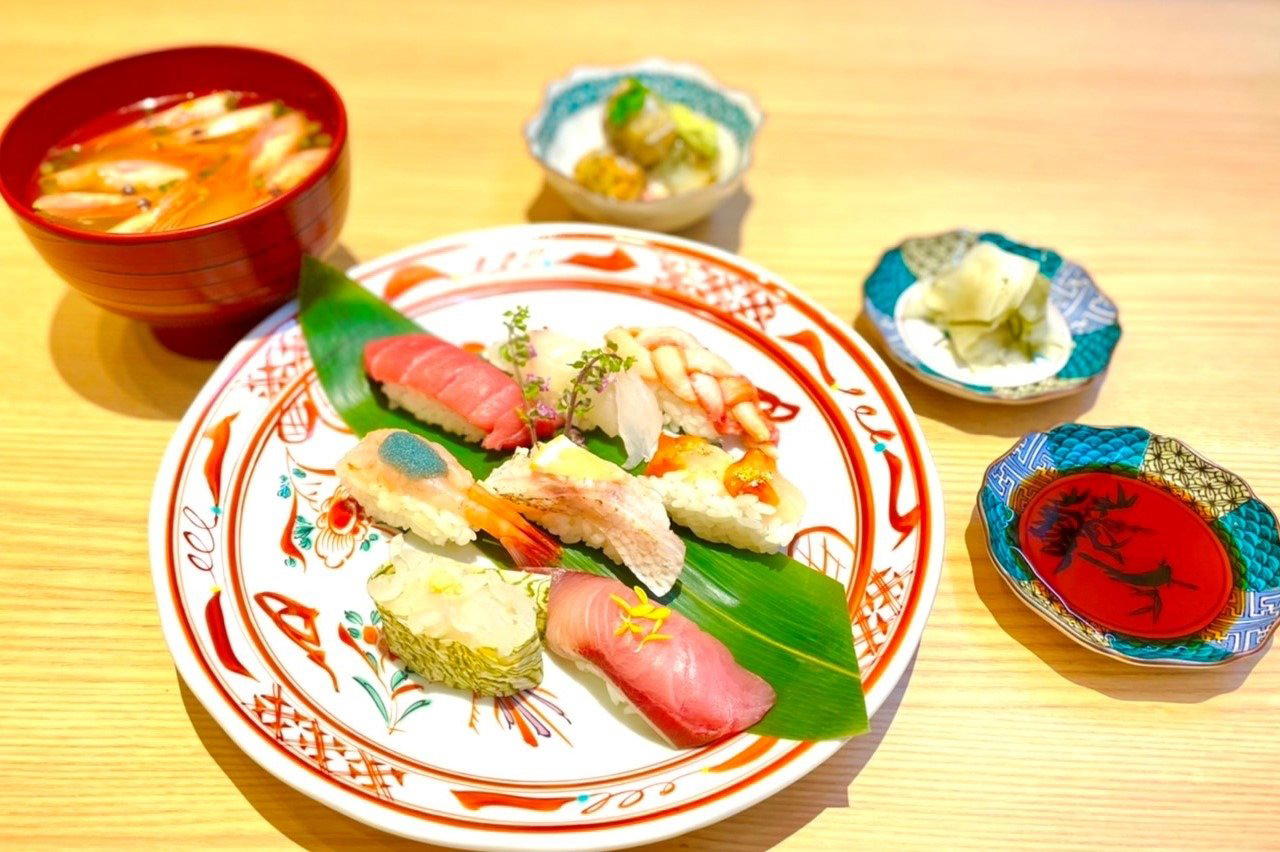
Noto on a Plate: The Cultural Weight Behind のとめぐり
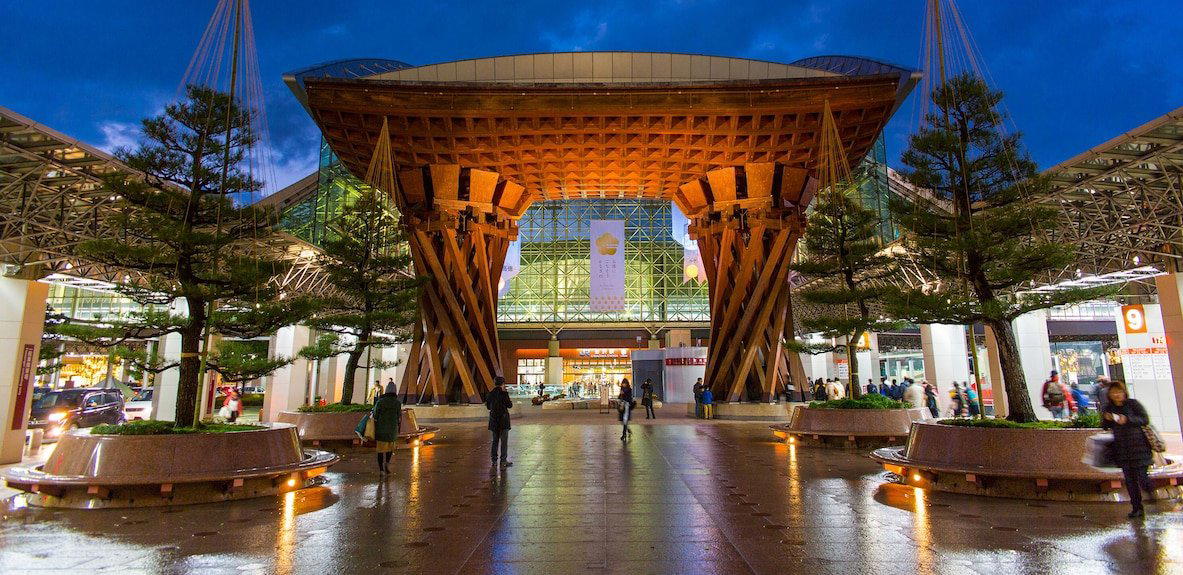
Cross Gate Kanazawa — the mixed-use transit building straddling Kanazawa Station's Higashi-guchi exit — is not where most visitors expect to find a restaurant worth pausing over. The station-adjacent complex draws commuters and shoppers, and its second floor reads, at first glance, like a standard dining floor. のとめぐり occupies a corner of that space with an address, 広岡1-5-3, 2F, that places it inside one of the most transit-convenient buildings in Ishikawa Prefecture. For anyone arriving by shinkansen from Tokyo or Osaka, the implication is practical and pointed: you can eat here before your bags have cleared the taxi rank.
But convenience alone does not explain why のとめぐり carries editorial weight. The name, which translates roughly as "touring Noto" or "a journey through Noto", signals something more specific: a curatorial commitment to the Noto Peninsula, the narrow finger of land extending north into the Sea of Japan that defines much of Ishikawa Prefecture's culinary identity. In a city like Kanazawa, where kaiseki traditions run deep and venues such as Dokkan and the rigorous kaiseki rooms associated with Kenrokuen-adjacent dining have long set the benchmark, a restaurant that plants its flag in Noto regionalism is making a distinct editorial choice.
What the Noto Peninsula Means for Ishikawa Cuisine
The Noto Peninsula has a food culture that operates on different terms from Kanazawa's urban refinement. Its coastline supplies yellowtail (buri), red snow crab (zuwaigani), and surf clams through Sea of Japan fisheries that run cold and productive. Its interior produces a suite of fermented and preserved ingredients, among them Ishiru fish sauce, one of Japan's three major fish sauces, that give Noto-origin cooking a depth and salinity not easily replicated with substitutes. Rice grown in the peninsula's terraced paddies carries a regional designation. Even salt, harvested by traditional methods along the Suzu coast, carries a provenance story that chefs in Kanazawa increasingly treat as a finishing ingredient rather than a background element.
This is the context in which のとめぐり's positioning makes sense. Kanazawa functions as Ishikawa's commercial and cultural capital, and restaurants like Amanatto Kawamura and Hakuichi reflect the city's appetite for artisanal local product. But the Noto Peninsula itself remains less accessible to most visitors, a day trip at minimum, more comfortably an overnight. A restaurant that compresses Noto's larder into a Kanazawa address is, in structural terms, performing the role of a regional curator.
Across Japan, this curatorial model has become one of the more interesting restaurant typologies of the past decade. At venues like Goh in Fukuoka, the chef's commitment to Kyushu-origin ingredients gives the tasting counter a regional coherence that functions almost as a travel argument. Gion Sasaki in Kyoto uses its kaiseki format to interrogate Kansai seasonality. What のとめぐり appears to do, within a more accessible, station-adjacent format, is bring that same geographic focus to bear on Noto specifically, at a moment when the peninsula has drawn significant attention following the January 2024 Noto earthquake and the ongoing recovery of its food-producing communities.
Seasonality as Structure
Winter is when the Noto Peninsula's marine produce reaches its peak. Buri yellowtail, fattened through the cold months, carries the richest flavor between December and February, Ishikawa fishermen refer to it as "kan-buri," the cold-season yellowtail, and it commands a premium across local markets. Red snow crab season runs from November through March along this coastline. Anyone planning a visit to のとめぐり during these months is arriving at the point of maximum Noto ingredient alignment, when the raw material the restaurant is named for is at its most expressive.
Spring and autumn bring their own Noto signatures: sansai mountain vegetables from the peninsula's interior forests in April and May, and autumn mushrooms, including matsutake from Ishikawa's wooded hillsides, from September into November. Summer is the thinner season for cold-water seafood, though Noto's agricultural produce, including its distinctive rice harvest, fills a different part of the menu logic. Timing a visit to Cross Gate Kanazawa's second floor around these seasonal windows is the most direct way to ensure the restaurant is performing at the caliber its name implies.
For visitors arriving in winter and working through our full Kanazawa restaurants guide, のとめぐり slots into an itinerary as a high-convenience, high-regional-specificity option, a first meal after arriving by shinkansen, or a final stop before departure. The Cross Gate Kanazawa location means zero transit overhead.
Kanazawa's Regional Dining Scene and Where のとめぐり Sits Within It
Kanazawa's restaurant culture is unusually dense for a city of its size. The comparison venues active in similar territory, kaiseki rooms like Kataori and Zeniya, the inventive yakitori of Hamagurizaka Maekawa, the Spanish-inflected cooking at Respiracion, each reflect a different dimension of how Ishikawa's food culture has evolved. In this environment, a Noto-focused restaurant at a transit hub occupies a specific gap: accessible price positioning (by implication of its station-complex location), broad daytime or evening utility, and a regional narrative that the formal kaiseki rooms rarely foreground so explicitly.
The comparison extends beyond Kanazawa. Nationally, the pattern of regionally-branded restaurants attached to transit infrastructure is well-established in Japan, "antenna shops" and their culinary equivalents exist in Tokyo's Yurakucho and elsewhere, presenting prefecture-specific products to a traveler audience. のとめぐり, positioned at one of the main entry points into Ishikawa, fits that structural category while operating in Noto's home prefecture rather than as a distant outpost. That proximity to the source is the argument for authenticity that out-of-prefecture equivalents cannot make. Compare this model with places like akordu in Nara or Budoonomori Les Tonnelles in Kanazawa itself, where geographic rootedness informs the entire culinary proposition.
Planning a Visit
Cross Gate Kanazawa sits directly adjacent to Kanazawa Station's east exit, making のとめぐり the most logistically frictionless dining option for any traveler arriving or departing by rail. The building is walkable from the station in under two minutes. Specific booking details, hours, and pricing are not confirmed in current records, contacting the venue directly or checking current listings before arrival is advisable, particularly given the regional and seasonal nature of the menu, which may operate on different schedules across the year. Visitors combining Kanazawa with wider Hokuriku itineraries should note that the Hokuriku Shinkansen extension to Tsuruga, completed in March 2024, has increased rail connectivity to the region from both Tokyo and Osaka.
For context on how のとめぐり sits within Kanazawa's broader dining tier, comparing notes with venues like Go! Go! Curry, a Kanazawa institution in an entirely different register, helps map the full range of what the city offers. For Japan-wide reference points in serious regional cooking, HAJIME in Osaka, Harutaka in Tokyo, and comparable precision-driven venues elsewhere in the country set the national conversation against which Kanazawa's regional specialists are measured.
Peers You’d Cross-Shop
Comparable venues nearby, for context on price, style, and recognition.
| Venue | Cuisine | Price | Notes |
|---|---|---|---|
| のとめぐりThis venue — the venue you are viewing | Hokuriku Conveyor Belt Sushi | $$ | Not listed |
| Kureha | Traditional Japanese cafe & wagashi tea house | $$ | Kanazawa |
| 鮨ä¸èª | japanese | Not listed | Kanazawa |
| Medicinal Food Café Cien Gallery | Medicinal Japanese Café | $$$ | Kanazawa |
| 料亭 穂濤 | Japanese Fine Dining Seafood | $$$ | Kanazawa |
| HUNI | Modern Japanese Izakaya Fusion | $$ | Kanazawa |
Continue exploring
More in Kanazawa
Restaurants in Kanazawa
Browse all →
Bars in Kanazawa
Browse all →
Hotels in Kanazawa
Browse all →
Wineries in Kanazawa
Browse all →
At a Glance
- Casual
- Casual Hangout
- Family
- Sake Program
- Local Sourcing
- Sustainable Seafood
Casual and lively atmosphere typical of conveyor belt sushi with focus on fresh fish presentation.
Know Before You Go
- Getting there
- 広岡1-5-3 (クロスゲート金沢 2F), 金沢市, 石川県, 920-0031