One of Venice's oldest bacari, Cantina Do Spade occupies a narrow San Polo address that has been feeding the city's working population since the fifteenth century. The format is cicchetti and ombra, small plates and small glasses, consumed standing at a zinc counter, the way Venetians have always eaten between markets and appointments. It is the anti-restaurant, and in a city increasingly shaped by tourist expectations, that carries real editorial weight.
Pearl is the En Primeur Club membership app — saves, bookings, and concierge access live there. Same editors, same standards.
- Address
- S. Polo, 859, 30125 Venezia VE, Italy
- Phone
- +39415210583
- Website
- cantinadospade.com
- Directions
- Get directions
 Saves & bookings on Pearl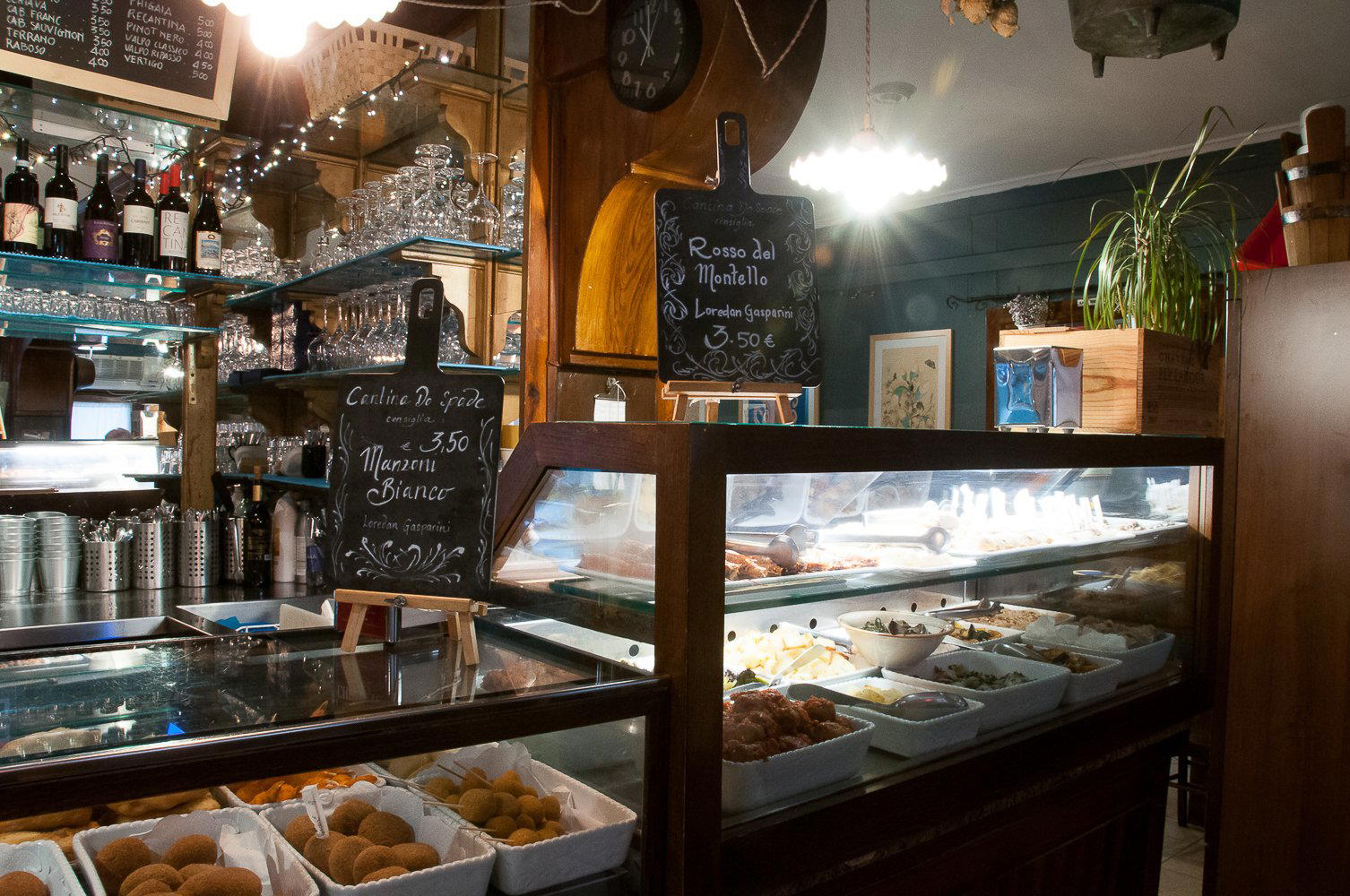
What a Fifteenth-Century Bacaro Teaches You About Venetian Eating
Cantina Do Spade is a traditional Venetian osteria in Venice, casual and recommended for reservations, with about. Approach Cantina Do Spade through the calli of San Polo and you understand immediately why Venice developed a food culture unlike anywhere else on the Italian peninsula. The streets are too narrow for large deliveries, the canals too unpredictable for rigid supply chains, and the working population too pragmatic for long midday meals. What evolved instead was the bacaro: a standing-room wine bar where cicchetti, small preparations of whatever was available, priced to move quickly, fuelled dockhands, merchants, and fishmongers alike. Cantina Do Spade, at San Polo 859, sits inside that tradition with a documented history stretching back to the 1400s, making it one of the oldest continuously operating bacari in the city.
That kind of temporal anchor matters in Venice, where the word "traditional" is applied to restaurants that opened in 1985. Do Spade's address is the credential: it operated when the Rialto market beside it was the commercial engine of the Mediterranean, when the fish arriving each morning came from the same lagoon boats they do today, and when the social contract of eating was collective and rapid rather than private and leisurely.
The Bacaro Model and What It Actually Means for Sustainability
Venice's bacaro tradition pre-dates contemporary sustainability discourse by several centuries, but it maps onto it almost perfectly. The cicchetti format is structurally anti-waste: preparations are small, made in batches calibrated to daily footfall, and built around whatever the Rialto market delivers that morning. There is no à la carte menu demanding year-round availability of ingredients that don't belong to the season. The proximity to the Rialto, one of Europe's longest-running fresh markets, operating on the same site for over nine hundred years, means sourcing chains are short by design, not by marketing decision.
This is worth holding against the broader conversation happening in Italian fine dining, where restaurants like Atelier Moessmer Norbert Niederkofler in Brunico and Uliassi in Senigallia have built explicit sustainability frameworks into their tasting menu formats. Do Spade's version of the same principle is structural rather than programmatic: the bacaro model doesn't permit the kind of long-haul supply that fine dining historically required. Whole fish, lagoon shellfish, seasonal vegetables from the terraferma, these aren't talking points, they're operational constraints that happen to produce an ethical sourcing profile.
Compare this to the higher end of Venice's restaurant scene. Local and Oro Restaurant have both engaged with local sourcing at the €€€€ tier, where the story of provenance becomes part of the dining proposition. At Do Spade, provenance is invisible because it was never the alternative, it was always the default.
The Counter, the Ombra, and the Social Grammar of the Bacaro
Walking into Do Spade, the zinc counter runs along one side and cicchetti are arranged behind glass or on plates at eye level. The ombra, Venice's traditional small pour of wine, the name derived from the shade sought by market traders avoiding direct sun, is ordered by gesture as much as by word. The social grammar here is efficient and unsentimental: you choose, you stand, you eat, you leave or you order another round. There is no theatre of arrival, no choreographed service sequence.
That format places Do Spade in a different tier than Venice's formal dining rooms. Ristorante Quadri on Piazza San Marco and Glam Restaurant by Enrico Bartolini operate at the summit of the city's formal register, with tasting menus, sommelier service, and room rates that underwrite the experience. Do Spade operates at the opposite end without apology. The price point is accessible by design, cicchetti are priced individually and ombra portions are small, which means the economics favour high turnover and low margin rather than the reverse. This is not a flaw in the model. It is the model.
Do Spade in the Context of Italian Culinary Heritage
The bacaro as a category sits apart from the trattoria and the osteria, even when those formats also claim deep roots. Osteria alle Testiere and Al Covo both operate in the Venetian-seafood register with table service and a proper menu; they represent a more constructed dining experience than Do Spade's counter format permits. Corte Sconta occupies a similar trattoria-seafood position with a reputation built over decades. All three carry a price tier that signals intention and duration. The bacaro signals neither: it is interstitial eating, designed to fit between other activities.
Within the wider Italian fine dining conversation, the world of Osteria Francescana in Modena, Dal Pescatore in Runate, or Piazza Duomo in Alba, Do Spade doesn't compete. It operates in a different register entirely, one where the metric is cultural authenticity and neighbourhood utility rather than critical recognition. The same is broadly true of Wistèria, which sits in Venice's contemporary tier while Do Spade anchors its historical one.
Internationally, the standing-counter wine bar format has found second lives in cities like San Francisco, where Lazy Bear represents a different approach to communal eating, and New York, where Le Bernardin operates at the formal seafood extreme. The bacaro sits at neither pole, it is neither communal dining as cultural event nor seafood as fine art. It is seafood as daily fuel, which is a harder thing to sustain over five centuries.
Planning a Visit: What to Know Before You Go
Cantina Do Spade is located at San Polo 859, in the sestiere that houses the Rialto market and some of Venice's densest cicchetti culture. The sensible approach is to visit mid-morning or around noon, when the market is either finishing or recently done and the cicchetti selection is freshest. Late afternoon also works, when the aperitivo window opens and the counter fills with a mix of Venetians heading home and visitors who have found their way off the main tourist circuit. Evening visits are possible but the selection typically narrows as the day's preparations are consumed. For anyone building a longer Italy itinerary, Reale in Castel di Sangro, Quattro Passi in Marina del Cantone, Le Calandre in Rubano, and Enoteca Pinchiorri in Florence represent the formal-dining anchors worth pairing with bacaro visits in between. Enrico Bartolini in Milan rounds out a northern Italy circuit that moves between registers. Reservations are recommended.
Cuisine and Credentials
Comparable venues nearby, for context on price, style, and recognition.
| Venue | Cuisine | Price | Notes |
|---|---|---|---|
| Cantina Do SpadeThis venue — the venue you are viewing | Traditional Venetian Osteria | $$ | Not listed |
| Hosteria Al Vecio Bragosso | Venetian Seafood Osteria | $$ | Santa Croce |
| Do Farai | Traditional Venetian Seafood Osteria | $$ | Dorsoduro |
| Antico Forno | Authentic Venetian Pizza al Taglio | $$ | San Polo |
| Osottoosopra | Venetian Italian Seafood | $$ | Santa Croce |
| Trattoria da Romano | Traditional Venetian Seafood Trattoria | $$ | Burano |
Continue exploring
More in Venice
Restaurants in Venice
Browse all →
Bars in Venice
Browse all →
Hotels in Venice
Browse all →
At a Glance
- Rustic
- Classic
- Cozy
- Historic
- Intimate
- Casual Hangout
- Date Night
- Historic Building
- Standalone
Current opening hours
- Monday
- 10 AM–3 PM, 6–10 PM
- Tuesday
- 10 AM–3 PM, 6–10 PM
- Wednesday
- 10 AM–3 PM, 6–10 PM
- Thursday
- 10 AM–3 PM, 6–10 PM
- Friday
- 10 AM–3 PM, 6–10 PM
- Saturday
- 10 AM–3 PM, 6–10 PM
- Sunday
- 10 AM–3 PM, 6–10 PM
Hours can change for holidays and private events. Last verified .
Rustic tavern atmosphere with dimly lit alleys, friendly service, and a lively bacaro feel blending centuries-old charm with fresh, seasonal Venetian cuisine.