Negroni Antica Distilleria
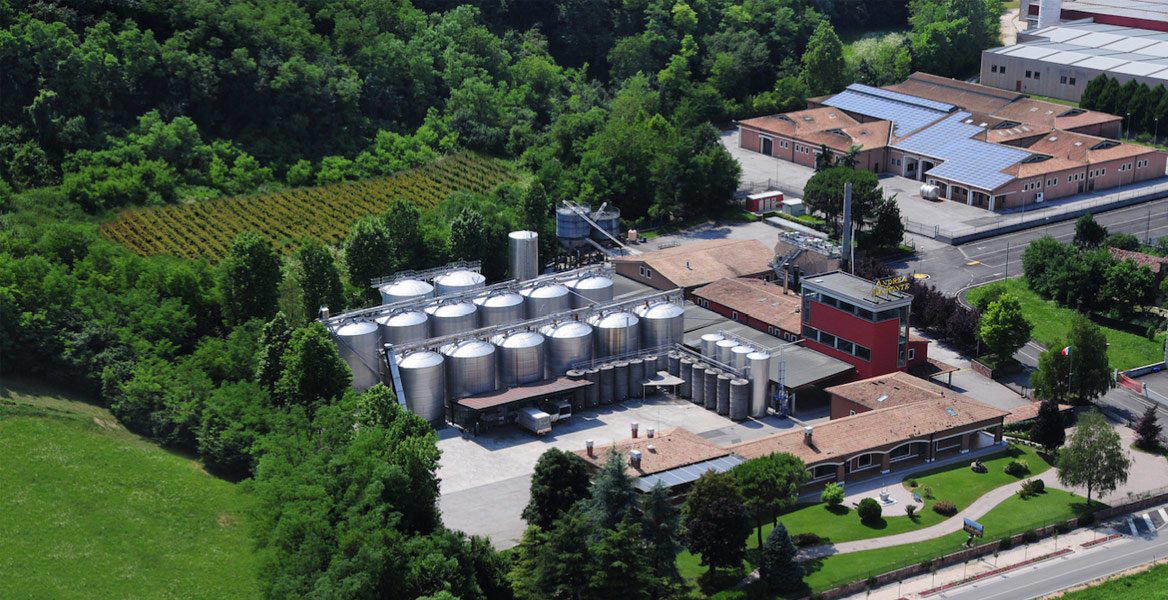
Negroni Antica Distilleria sits in Mareno di Piave, in the Treviso province of Veneto, where the Piave river plain shapes both the agricultural character of the land and the traditions of production that have defined this corner of northeastern Italy for generations..
Pearl is the En Primeur Club membership app — saves, bookings, and concierge access live there. Same editors, same standards.
- Address
- Via Ungheresca Sud, 64, 31010 Mareno di Piave TV
- Phone
- +39 0438 492250
- Website
- distillerianegroni.it
- Directions
- Get directions
 Saves & bookings on Pearl
Where the Piave Plain Meets the Still
The Treviso province rarely announces itself loudly. The flat agricultural land between the Dolomite foothills and the Adriatic coast, crossed by the Piave river and its tributaries, is the kind of terrain that rewards attention rather than spectacle. Viticulture and distillation have been woven into this plain for centuries, partly because the alluvial soils favour aromatic grape varieties, partly because the proximity to both mountain and sea creates a diurnal temperature range that concentrates flavour in ways that flatter the distiller's craft. Negroni Antica Distilleria, addressed at Via Ungheresca Sud in Mareno di Piave, sits inside that tradition rather than at a remove from it.
This is grappa country in a literal sense. The Veneto and its neighbouring Friuli are responsible for the vast majority of Italy's recognised grappa production, and the discipline of transforming vinacce, grape pomace, into a spirit with genuine regional character has produced some of the country's most technically serious distilleries.
Terroir and the Distiller's Equation
Terroir is often discussed in wine, where the relationship between soil composition, microclimate, and finished product is well documented. Distillation complicates that relationship without erasing it. When the raw material is pomace from grapes grown on the Piave plain, Prosecco-adjacent country where Glera, Raboso, and other varieties carry the mineral signature of river-deposited soils, what arrives at the still already carries geographical information. Whether and how much of that information survives into the finished spirit is one of the more technically contested questions in Italian distilling, but it is precisely this question that separates serious regional producers from generic ones.
The Veneto distillery tradition has several reference points. Poli Distillerie in Schiavon (Vicenza) has long been cited as a benchmark for the region's craft orientation. Distilleria Marzadro in Nogaredo operates further west but within the same northeastern Italian arc. Nonino Distillery in Pavia di Udine holds a different position, having shaped the national and international perception of premium grappa over several decades. And Distilleria Romano Levi in Neive represents the Piedmontese variant of the tradition, where Nebbiolo pomace imparts a different tannin and aromatic baseline than the Veneto's predominantly white-grape raw materials.
The Broader Italian Spirits Context
Italy's premium spirits conversation has broadened considerably over the past two decades. Grappa, once dismissed outside Italy as a rough agricultural by-product, has been reframed through the work of producers willing to invest in continuous and discontinuous still technology, extended aging in small barrels, and varietal single-grape expressions. Campari in Milan represents a different axis of Italian spirits culture, the aperitivo tradition built on bittersweet liqueurs rather than distilled pomace, but both traditions share an insistence on regional raw materials and recipe integrity as the basis for any serious claim to quality.
The Treviso province, sitting between Venice and Belluno, has the particular advantage of proximity to Prosecco DOC and DOCG production zones. The volume of Glera pomace generated by that industry creates a supply chain that regional distilleries can draw on, though the quality differential between pomace from single-estate, slow-press production and bulk commercial pressing is significant and directly audible in the final spirit. The distilleries that have built reputations in this area tend to work close to the source.
Mareno di Piave as a Place
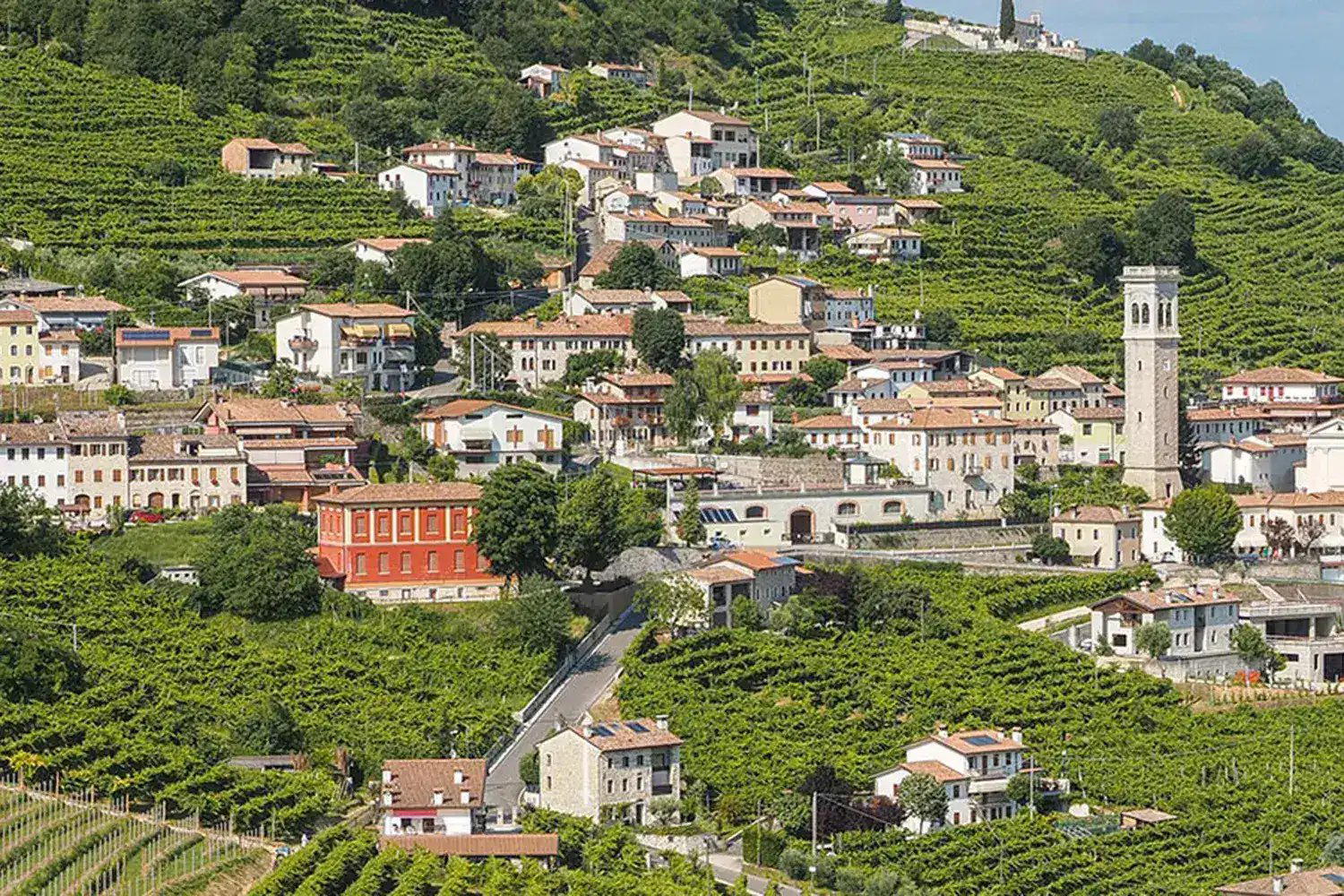
Mareno di Piave is a small municipality in the Treviso province, approximately midway between Treviso city and the wine-producing hills of Conegliano-Valdobbiadene. That positioning is geographically telling: it places the distillery within reach of the Prosecco Superiore DOCG production zone while remaining on the flat alluvial plain rather than the steep hillside terraces that characterise the Valdobbiadene landscape proper. The area is agricultural in character, with the kind of quiet, working-landscape quality that marks much of the Veneto interior away from its better-known destinations.
For visitors coming from Venice, the Treviso province is accessible via regional train or road without the tourist congestion that affects the Dolomites or the Lake Garda corridor during peak periods. Treviso itself has a compact historic centre that makes a sensible base for exploring the wider province, and the town's own food and wine character, which runs more toward traditional Veneto cooking than international restaurant formats, complements a visit to producers in the surrounding area. Our full Mareno di Piave restaurants guide covers the broader options in the area for visitors planning time in the province.
How This Fits a Broader Italy Itinerary
Italy's serious wine and spirits producers are rarely clustered in one place, and any itinerary that takes them seriously tends to cover considerable ground. A northeastern Veneto and Friuli focus, taking in producers like Nonino alongside Treviso-province distilleries, offers one coherent regional arc. A broader Italian spirits and wine route might extend south to Lungarotti in Torgiano in Umbria, or into Tuscany to properties like Castello di Volpaia in Radda in Chianti, or further into Piemonte to Aldo Conterno in Monforte d'Alba. For those with an interest in Franciacorta rather than grappa, Ca' del Bosco in Erbusco sits further west in Lombardy. Further afield, Planeta in Menfi represents the Sicilian contribution to Italy's premium producer tier. And for those whose reference points extend beyond Italy, Aberlour in Aberlour and Accendo Cellars in St. Helena offer useful comparisons across the Atlantic, where distillery and winery visitor experiences have developed along different but instructive lines.
Planning a Visit
Negroni Antica Distilleria operates by appointment only, so advance contact is essential before traveling. This is standard practice for smaller Italian producers, many of whom operate visits by appointment rather than on a walk-in basis.
Comparable Spots, Quickly
Comparable venues nearby, for context on price, style, and recognition.
| Venue | Cuisine | Price | Notes |
|---|---|---|---|
| Negroni Antica DistilleriaThis venue — the venue you are viewing | Glera, Corvina | $$$ | Not listed |
| Tenuta Brancalupo | Sagrantino, Trebbiano Spoletino | $$$ | Montefalco |
| Amaro Santa Maria al Monte | Winery | Not listed | Chiavari |
| San Leonardo | Cabernet Sauvignon, Carmenère | $$$ | Vallagarina |
| Masi Agricola S.p.A. | Corvina, Rondinella | $$$ | Valpolicella Classica |
| Gruppo Campari | Winery | Not listed | Milan |
Continue exploring
More in Mareno di Piave
Wineries in Mareno di Piave
Browse all →
Bars in Mareno di Piave
Browse all →

Restaurants in Mareno di Piave
Browse all →
At a Glance
- Classic
- Rustic
- Wine Education
- Barrel Room
- Vineyard
- Marca Trevigiana
- Glera
- Corvina
- Rondinella
- Cave Tasting