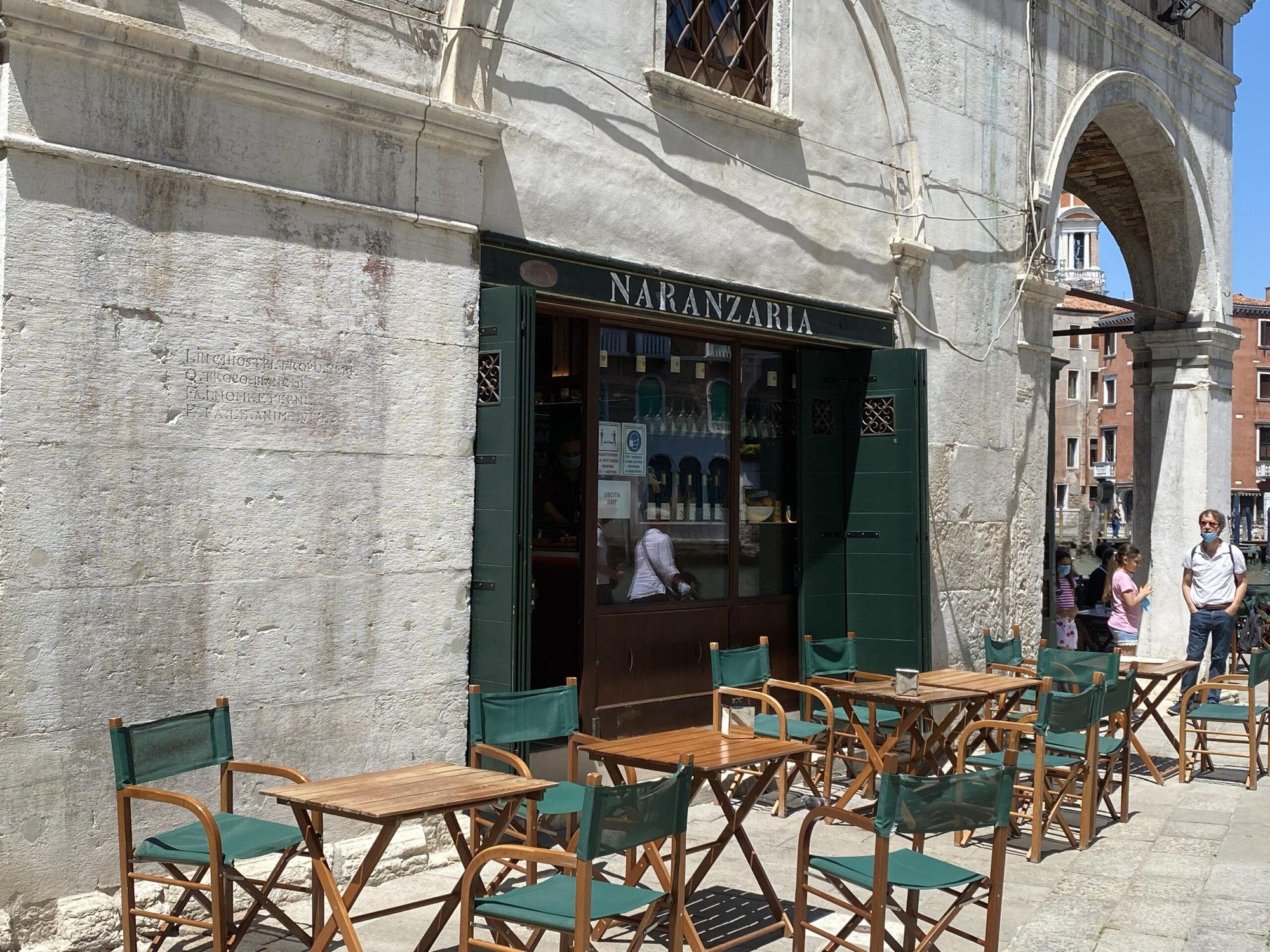
Positioned along the Rialto's ancient trading canal, Naranzaria occupies one of Venice's most historically charged addresses. The former spice and citrus trading post now operates as a bacaro-style wine bar where the Grand Canal's foot traffic sets the rhythm. For visitors working through the city's cicchetti circuit, it belongs on the same planning list as the Rialto market and its surrounding osterie.

Pearl is the En Primeur Club membership app — saves, bookings, and concierge access live there. Same editors, same standards.
- Address
- Sotoportego del Bancogiro, 130, 30125 Venezia VE, Italy
- Phone
- +39 041 724 1035
- Hours
- Mon 9 AM–5 PMTue 9 AM–11 PMWed ClosedThu–Sun 9 AM–11 PM
- Website
- naranzaria.it
- Directions
- Get directions
The Rialto Counter and How to Read It
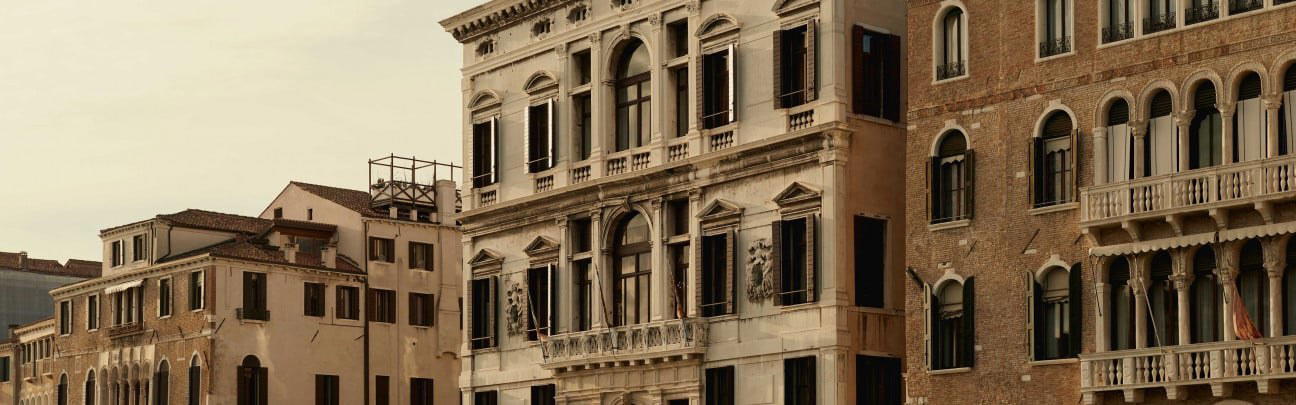
The stretch of canal-facing addresses around the Rialto market represents the densest concentration of serious drinking culture in Venice. This is not the lagoon city of hotel bars and glass-of-prosecco-with-a-view tourism, though that version of Venice exists a hundred metres in every direction. The Rialto's bacaro tradition is older, less polished, and considerably more instructive about how Venetians have eaten and drunk for several centuries. Naranzaria sits inside that tradition, at Sotoportego del Bancogiro 130, a position that tells you something before you've ordered anything: the building's history as a citrus and spice trading post places it at the commercial and social heart of a city that once organised its identity around the movement of goods.
Understanding where Naranzaria sits within the Rialto's current eating and drinking options is the first useful thing a visitor can do. The canal-side zone has split into two fairly distinct categories: the high-volume, tourist-oriented spots that turn tables quickly on Campo San Giacomo di Rialto, and the smaller, more considered bacari and enoteca formats where the emphasis falls on wine selection and cicchetti quality rather than throughput. Naranzaria belongs to the second category. Its outdoor terrace facing the canal has made it a recognisable address on the cicchetti map, but the format remains grounded in the bacaro model rather than the restaurant model, which has practical implications for how you should plan your visit.
Planning the Visit: What the Booking Reality Looks Like
Venice's bacaro circuit operates differently from the reservation-dependent restaurant culture most international visitors are used to. The bacaro format is built on walk-in hospitality, small bites served at the counter or on standing room outside, and a wine-forward approach where the list matters more than a structured menu. Naranzaria fits this model, which means the planning logic differs from, say, booking a tasting menu counter three months in advance. The practical challenge here is not securing a reservation but timing your arrival intelligently.
The canal-side terrace at Naranzaria draws a predictable crowd during aperitivo hours, roughly from late afternoon through early evening, when the Rialto market's footfall transitions from daytime shoppers to the pre-dinner drinking circuit. Arriving at the outer edges of that window, either before the peak or later into the evening, gives you a clearer read on what's available and a less pressured experience at the bar. Venice's tourist concentration makes this a city where timing is the primary logistical variable for casual drinking venues, and the Rialto canal-side is among the higher-traffic zones. That said, the Sotoportego del Bancogiro address also benefits from a physical configuration that accommodates reasonable numbers without losing the character of the space.
For visitors building a broader evening around the area, the Rialto bacaro circuit is walkable and logistically efficient. Al Mercà operates a few steps away on Campo Bella Vienna as a high-density, standing-only format that represents the stripped-back end of the same tradition. Al Covino near the Ponte dei Sospiri covers more of the serious wine-bar register. These three addresses together sketch the range of what the Rialto and wider sestiere offer anyone working through the cicchetti tradition systematically. For the full picture of where each fits, the EP Club Venice guide maps the drinking circuit across all six sestieri.
The Cicchetti Context
The cicchetti format is worth understanding on its own terms before treating it as a cheap lunch option or an afternoon snack category. In Venice's bacari, cicchetti function as the primary expression of the kitchen's point of view: small preparations, often on bread or served on small plates, that demonstrate the range and quality of what a given address does. The Venetian kitchen draws heavily on the lagoon's seafood, cured meats from the Veneto hinterland, and a tradition of preserving and pickling that reflects the city's historical relationship with the sea trade. At a wine bar in the Rialto zone, the cicchetti selection is inseparable from the wine programme, and the two are expected to work together.
This is the competitive terrain Naranzaria operates in, and it is a demanding one. The Rialto area's reputation means that visitors arrive with a calibrated set of expectations, and the comparison set is immediate and walkable. The canal-side position, the building's historical freight, and the evening terrace are the kinds of contextual advantages that draw an initial audience; what keeps any bacaro address in the conversation is the quality of what's poured and what's placed on the counter. Within the broader Italian bar and wine-bar circuit, Venice's bacaro model has a specificity that sets it apart from, for instance, the cocktail-forward programming at Drink Kong in Rome, the natural wine focus at Enoteca Storica Faccioli in Bologna, or the aperitivo culture at 1930 in Milan. Each city has its own logic, and Venice's is the counter, the glass of local white, and the cicchetti plate.
Where Naranzaria Sits in Venice's Wider Drinking Scene
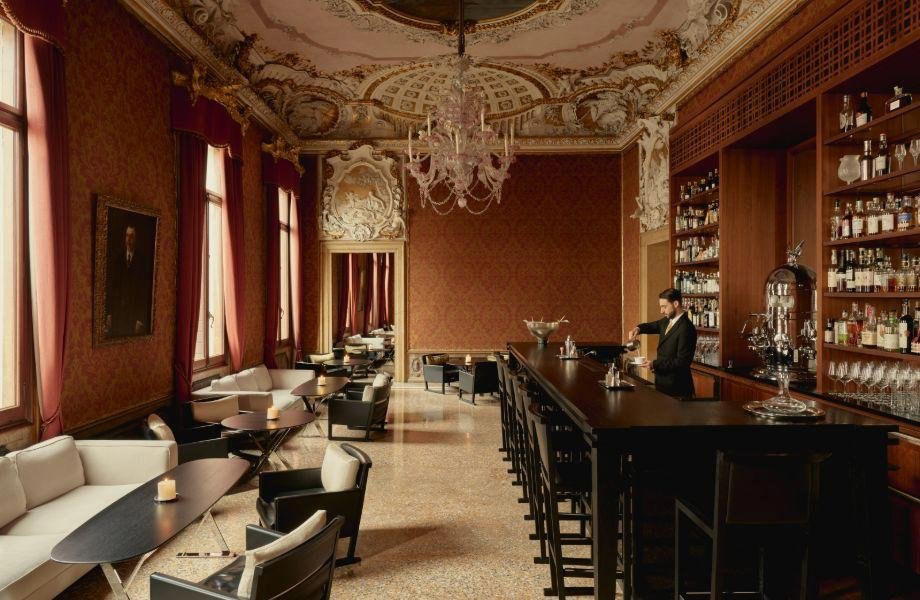
Venice's drinking addresses divide roughly along a line between the bacaro tradition and the hotel-anchored luxury bar circuit. The Aman Bar, operating from the Aman Venice palazzo on the Grand Canal, represents the latter cohort: a high-design, high-cost format aimed at guests and visitors for whom the setting is as much the product as what's in the glass. Al Covo in the Castello sestiere occupies a middle register, with a kitchen emphasis that pushes it toward the restaurant end of the spectrum. Naranzaria, by contrast, stays firmly in the bacaro register: the address, the format, and the canal-side setting position it as part of Venice's working drinking culture rather than its luxury hospitality offer.
That positioning is not a limitation. For visitors who have covered the obvious landmark experiences and want to understand how the city actually eats and drinks, the Rialto canal-side bacaro circuit is the relevant destination. Naranzaria's address at the historic Bancogiro loggia gives it a physical setting with more accumulated character than most bars in any European city. The planning effort required is minimal, the format is accessible, and the location is central enough to anchor an evening without requiring much logistical engineering. For reference points elsewhere in the Mediterranean and beyond, the contrast in scale and informality is instructive: the immersive format programmes at Lost & Found in Nicosia, the craft precision at Bar Leather Apron in Honolulu, or the historic depth at L'Antiquario in Naples each represent a different philosophy. Venice's bacaro model is its own distinct answer to the question of what a drinking venue is for.
Practical Notes for the Visit
Naranzaria is located at Sotoportego del Bancogiro 130, in the San Polo sestiere, a short walk from the Rialto market and accessible on foot from the Rialto Mercato vaporetto stop on the Grand Canal. No reservation is needed for the standing or terrace format, though the canal-side tables attract competition during peak aperitivo hours. The area around Campo San Giacomo di Rialto is dense with competing bacari, which works in the visitor's favour: if the terrace is full, the circuit continues naturally in either direction. Dress code expectations are relaxed in line with the format. Contact details and current hours are best confirmed directly or via the venue's current online presence, as bacaro operating schedules can shift seasonally. For anyone planning a fuller Venice itinerary around food and drink, the EP Club Venice guide provides neighbourhood-level context and a structured approach to the city's eating and drinking circuit. Comparable aperitivo-forward destinations outside Venice, such as Gucci Giardino in Florence, operate in a more designed and reservation-aware format, which underlines how distinctly Venetian the bacaro walk-in model remains.
| Venue | Cuisine | Price | Awards |
|---|---|---|---|
| NaranzariaThis venue — the venue you are viewing | This venue | $10–20 | Not listed |
| Aman Bar | Not listed | Not listed | Top 500 Bars Best Bars #315 |
| Arts Bar | Not listed | Not listed | Pinnacle Guide 1 Pin · Top 500 Bars Best Bars #204 |
| Il Mercante | Not listed | Not listed | Top 500 Bars Best Bars #407 |
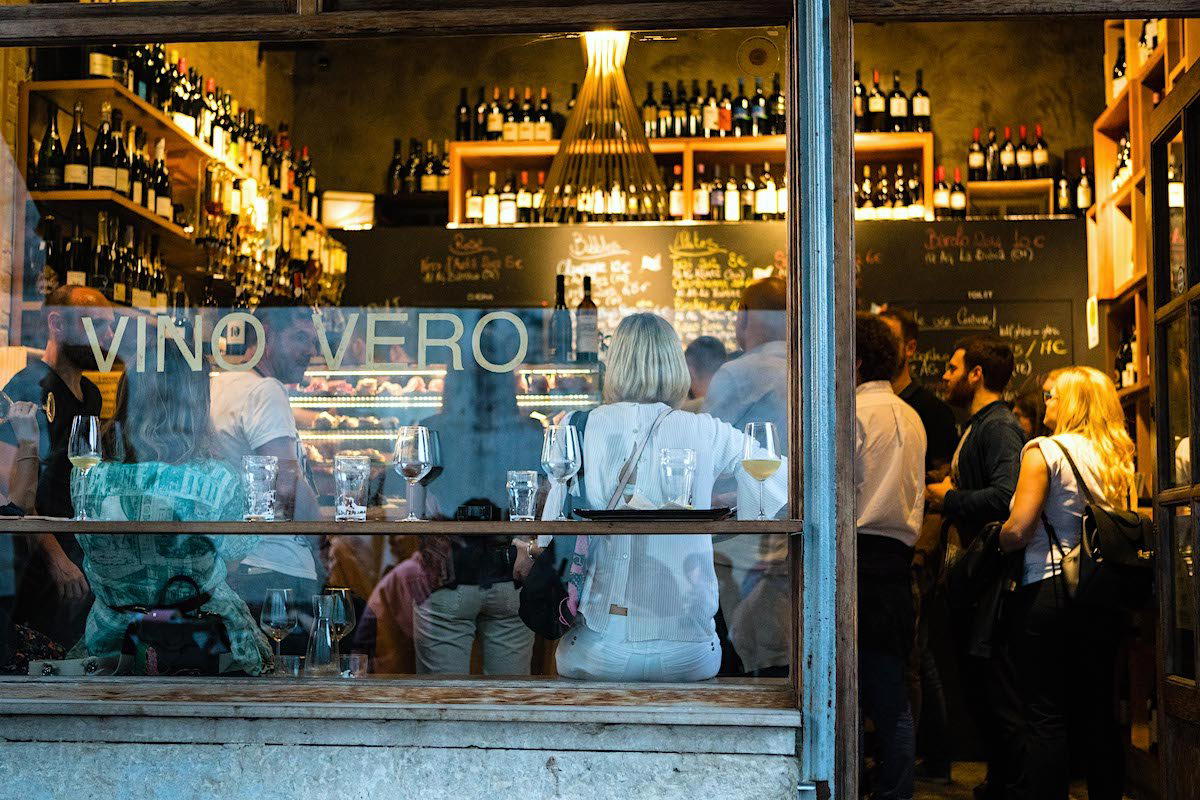
| Vino Vero | Not listed | $20–30 | Star Wine List · Falstaff Wine Bar - Listed |
| Al Covino | Not listed | $30–50 | Not listed |
Continue exploring
More in Venice
Bars in Venice
Browse all →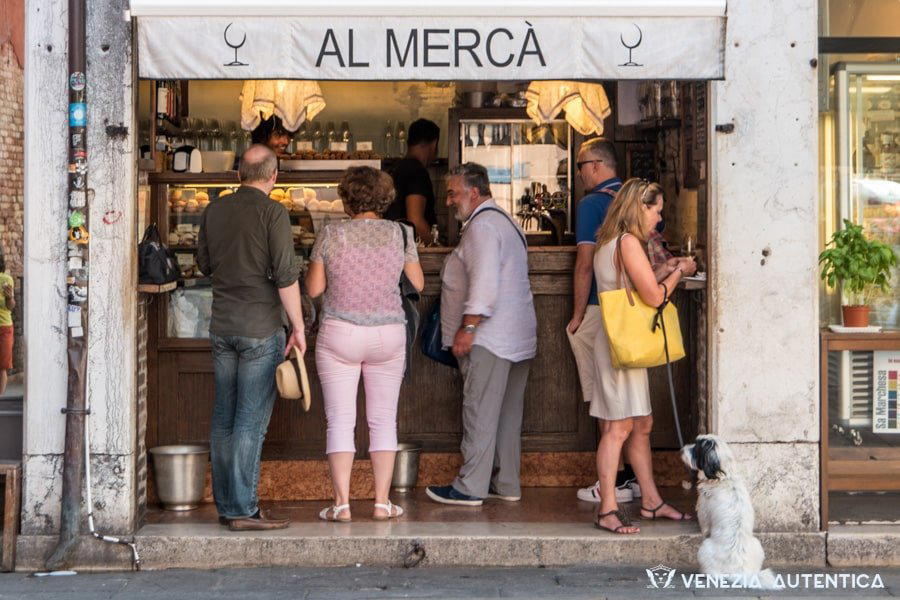
Restaurants in Venice
Browse all →
Hotels in Venice
Browse all →

Details
- Trendy
- Romantic
- Lively
- Date Night
- Casual Hangout
- Waterfront
- Terrace
- Outdoor Terrace
- Seated Bar
- Waterfront
Current opening hours
- Monday
- 9 AM–5 PM
- Tuesday
- 9 AM–11 PM
- Wednesday
- Closed
- Thursday
- 9 AM–11 PM
- Friday
- 9 AM–11 PM
- Saturday
- 9 AM–11 PM
- Sunday
- 9 AM–11 PM
Hours can change for holidays and private events. Last verified .
Lively and stylish atmosphere on a charming terrace overlooking gondolas and the Grand Canal.