Michelin Plate · World's 50 Best #24
Our verdict
One of Venice's most consistently recognised small-room restaurants, Osteria alle Testiere began as a bacaro on Calle del Mondo Novo and has since earned a Michelin Plate and Opinionated About Dining recognition for its market-driven Venetian seafood. With very few tables and a menu that changes with the Rialto catch, reservations must be secured well in advance.

Pearl is the En Primeur Club membership app, where members save venues, book tables and use the concierge.
The menu
What to order
- Potato gnocchetti with small calamari and cinnamon scent
- Turbot fillet with citrus, spices and fine herbs sauce
- Spaghetti with clams
- Grilled razor clams
- Scallops with orange and leeks
A Narrow Room in Castello, and What It Tells You About Venetian Dining
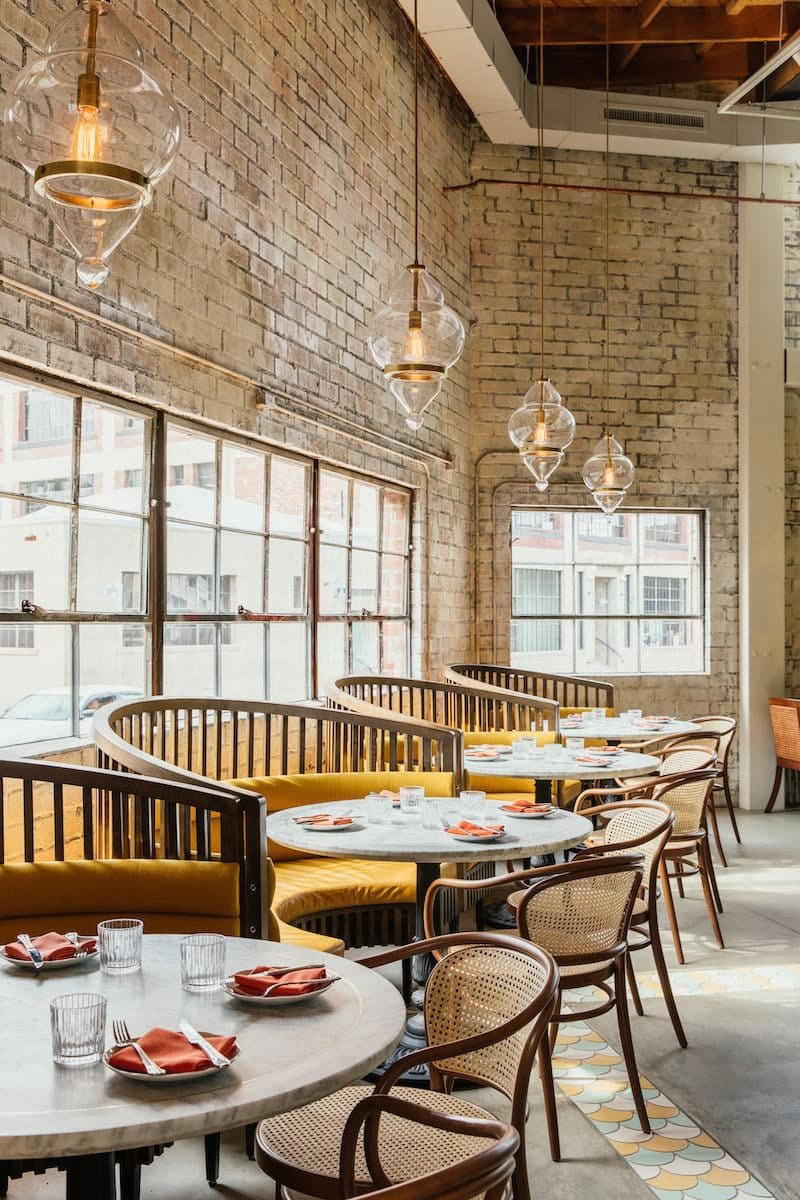
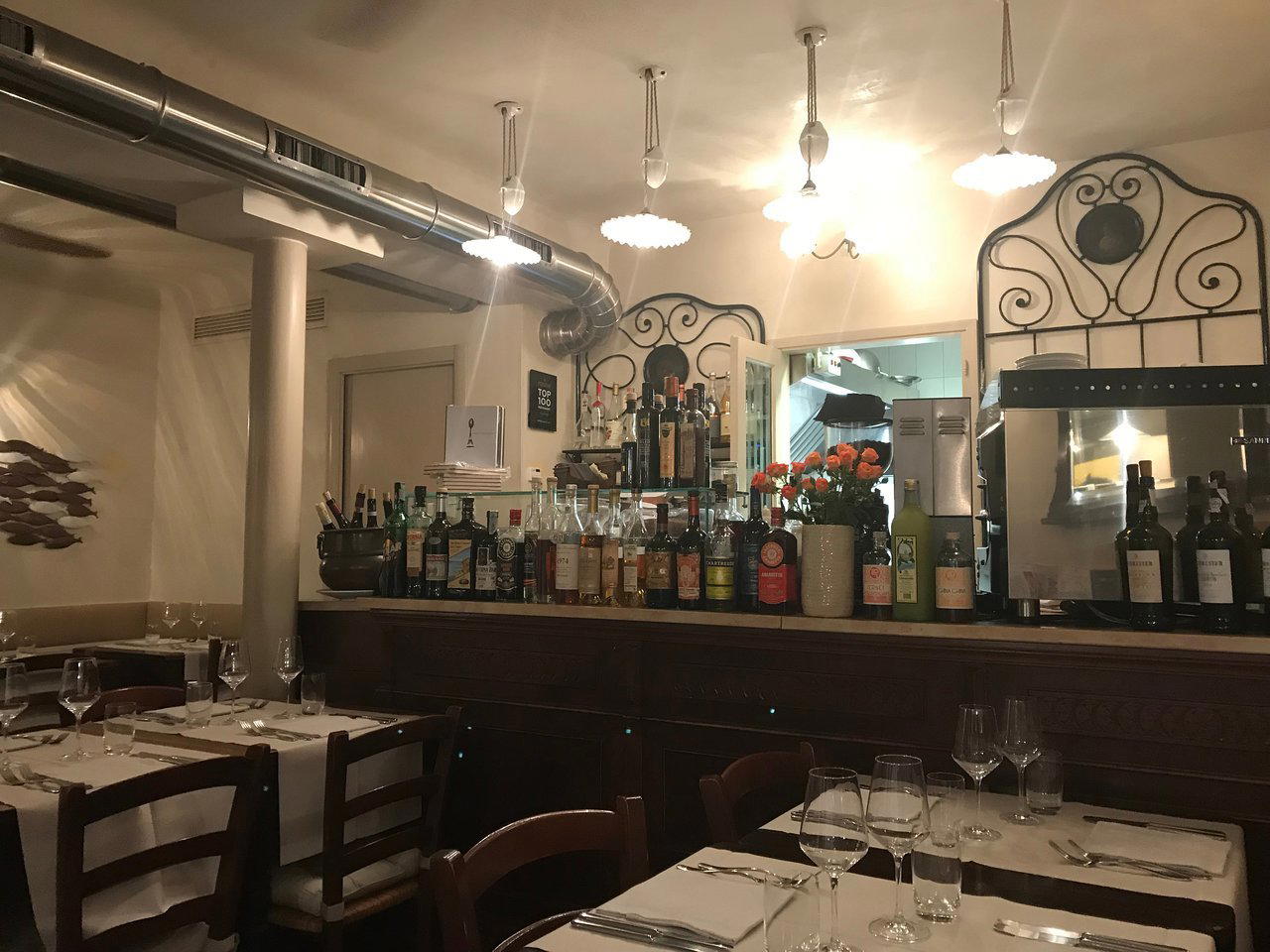
Calle del Mondo Novo runs through the Castello sestiere at a width that forces two people to walk single-file past the locals. The street has no particular monument to recommend it; the draw is entirely about what is cooked inside one small room. Osteria alle Testiere is the kind of place that makes Venice's restaurant scene legible: unpretentious in format, serious in sourcing, and unambiguous in its refusal to expand beyond a handful of covers. It opened as a typical Venetian bacaro and has held to that modest chassis ever since, even as its reputation has moved decisively into a different bracket.
For context on where Testiere sits in Venice's dining order, the city's most-reviewed addresses divide roughly into three tiers: the grand-canal hotel dining rooms and historic restaurants at the leading (Ristorante Quadri, for instance), the mid-tier seafood trattorias with some critical traction (Al Covo, Antiche Carampane), and a smaller cohort of tight-format rooms where the value proposition rests almost entirely on sourcing and repetition of craft. Testiere belongs firmly to that last group, and within it, the consistent OAD recognition year-on-year marks it as the reference point rather than a contender.
The Logic of the Menu: Market Timing and Collective Sourcing
What actually distinguishes Testiere's approach is structural, not just stylistic. The menu changes in line with market availability at the Rialto, which in practice means the room operates on the kind of daily discipline that larger restaurants simply cannot sustain. More specifically, the kitchen is part of Osti in Orto, a collective initiative in which a group of small Venice restaurants jointly cultivate and share produce from a kitchen garden on Sant'Erasmo island. Sant'Erasmo, the elongated island on the northern edge of the lagoon, has historically been Venice's vegetable garden; it grows the purple artichokes (carciofi di Sant'Erasmo) that appear on menus across the city each spring. Participating in a shared growing arrangement connects Testiere to a supply chain that pre-dates industrial distribution by several centuries, which is a meaningful credential in a city where provenance claims are easy to make and harder to verify.
This sourcing model also explains the restaurant's menu cadence. Rather than a fixed list with seasonal variations, the kitchen works with what arrives. The result is a menu with Mediterranean underpinning and a distinctly Venetian accent: fish from the Adriatic, shellfish from the lagoon, vegetables from the island garden. The cuisine is traditional in idiom without being static in execution, a balance that other restaurants in Venice's €€€ tier Anice Stellato, Bistrot de Venise, handle with varying degrees of success.
Team Dynamics in a Small Room
In any restaurant of this scale, the collaboration between kitchen and front-of-house is not a management structure, it is the actual product. There are no buffers: the service team works in direct proximity to the kitchen and to guests at all times. At Testiere, Chef Bruno Cavagni leads the kitchen, and the success of any given evening depends on the alignment between what he has sourced that morning, how the front-of-house communicates the day's menu, and whether the pacing holds across what are, at most, a few seatings in a room of very limited capacity.
This kind of operational tightness is worth naming as a category, because it produces a dining rhythm that differs from what you find at, say, Alessandro Borghese or the more formal end of the Venice dining spectrum. There is no sommelier theatrics, no extended amuse-bouche parade. What there is instead is a front-of-house team that must be genuinely conversant with the sourcing decisions made that morning, because the menu explanation is effectively the mise en place for the entire guest experience. When that alignment works, it reads as effortless. When it does not, the gaps are immediately visible in a small room.
The comparison with other trattorias in the same price tier reinforces the point. Corte Sconta and Antiche Carampane operate on a somewhat looser, more rustic model. Testiere's sustained award presence implies a front-of-house discipline that is calibrated rather than casual, even if the room itself feels anything but formal.
Awards and Trajectory: What the Recognitions Actually Mean
Two award streams are worth separating here. The Michelin Plate, held in both 2024 and 2025, signals a kitchen that meets the guide's baseline for quality without the ambition of a starred format. In Venice, Michelin stars concentrate at the upper end of the price tier; a Plate at the €€€ level places Testiere in good company without overstating the register. The OAD ranking tells a different story. OAD's Casual Europe list, which ranked Testiere at #125 in 2023, #90 in 2024, and #87 in 2025, is a directional signal: the venue is moving up a peer list that critics and frequent restaurant travellers take seriously. The trajectory matters as much as the position. Compare that with the World's 50 Best appearance at #24 in 2002, which locates the restaurant's moment of maximum international visibility more than two decades ago, and you get a picture of a place that weathered the post-peak years and rebuilt its reputation through consistency rather than reinvention.
For readers calibrating Testiere against Italy's broader fine dining conversation, the relevant comparison set is not Osteria Francescana in Modena, Enoteca Pinchiorri in Florence, or Enrico Bartolini in Milan. Those restaurants operate in a formally plated, high-investment register. Testiere's comparison set is closer to places like Quattro Passi in Marina del Cantone, coastal Italian kitchens where sourcing intelligence and restraint define the value, not production scale. And for readers interested in where Venetian cuisine translates across other contexts, La Caravella on the Amalfi Coast and March in Houston offer instructive reference points on how that tradition travels. Closer to home, Atelier Moessmer Norbert Niederkofler in Brunico and Dal Pescatore in Runate represent the northern Italian registers that share some of Testiere's sourcing rigour within a very different price and format architecture.
Planning a Visit: What to Know Before You Book
Osteria alle Testiere is at Calle del Mondo Novo, 5801, in the Castello sestiere, a short walk from Campo Santa Maria Formosa. The restaurant opens Tuesday through Saturday for both lunch (12:30 to 2:00 pm) and dinner (7:00 to 11:00 pm); it is closed Sunday and Monday. Given the room's limited capacity, booking well in advance is a practical requirement rather than a suggestion. This is a small bacaro-format room, not a flexible booking operation; late requests, particularly for dinner, are routinely turned away. The price range is €€€, which in Venice's current market positions it as a serious meal at a price point below the grand hotel restaurants but above the casual cicchetti bars. For a broader overview of where Testiere sits in Venice's dining scene, our full Venice restaurants guide maps the full range of options by neighbourhood and style. Those planning a longer stay will also find useful orientation in our Venice hotels guide, our Venice bars guide, our Venice wineries guide, and our Venice experiences guide.
Frequently asked questions
What's the cuisine at Osteria alle Testiere?
Where is Osteria alle Testiere in Venice?
Osteria alle Testiere is located at Calle del Mondo Novo, 5801, 30122 Venezia VE, Italy, Venice.
Has Osteria alle Testiere won any awards?
Osteria alle Testiere has received recognition including: This restaurant, now one of the most popular bistros in Venice, started out as a typical Venetian “bacaro”. The cuisine focuses on traditional Mediterranean and Venetian dishes, including vegetables, many of which are grown in a kitchen gar….
What's the must-try dish at Osteria alle Testiere?
The menu at Testiere changes daily according to what Bruno Cavagni sources from the Rialto market, which means no single dish is guaranteed on any given visit. Seafood dominates, drawing on classic Venetian technique, and vegetables from the Osti in Orto kitchen garden on Sant'Erasmo island appear as a consistent thread. The practical approach is to arrive with no fixed expectations and defer to what the kitchen is running that day.
Comparable Spots, Quickly
| Venue | Cuisine | Price | Awards | Notes |
|---|---|---|---|---|
| Osteria alle TestiereThis venue (the venue you are viewing) | Traditional Venetian Seafood | $50–100 | Michelin Plate · World's 50 Best #24 | Not listed |
| Local | Modern Italian Fine Dining | $50–100 | 1 Michelin Star · Falstaff Restaurant - 93 Falstaff Points | Modern Italian, Contemporary |
| Ristorante Quadri | Modern Venetian Fine Dining | $200–300 | 1 Michelin Star · La Liste Top Restaurants | Modern Cuisine |
| Al Covo | Authentic Venetian Seafood | $100–150 | Michelin Plate | Trattoria, Venetian |
| Antiche Carampane | Traditional Venetian Seafood Trattoria | $50–100 | Michelin Plate | Venetian |
| Corte Sconta | Traditional Venetian Seafood | $100–150 | Michelin Plate · Star Wine List | Trattoria, Seafood |
Recognition history
Dated appearances from independent guides and award organizations, with the underlying list record or original source where available.
Michelin Plate
Michelin
World's 50 Best Restaurants #24
World's 50 Best
Opinionated About Dining Casual in Europe Ranked #139
Opinionated About Dining
Full recognition history (8 entries)
Michelin Plate
Michelin
Opinionated About Dining Casual in Europe Ranked #87
Opinionated About Dining
Michelin Plate
Michelin
Opinionated About Dining Casual in Europe Ranked #90
Opinionated About Dining
Opinionated About Dining Casual in Europe Ranked #125
Opinionated About Dining