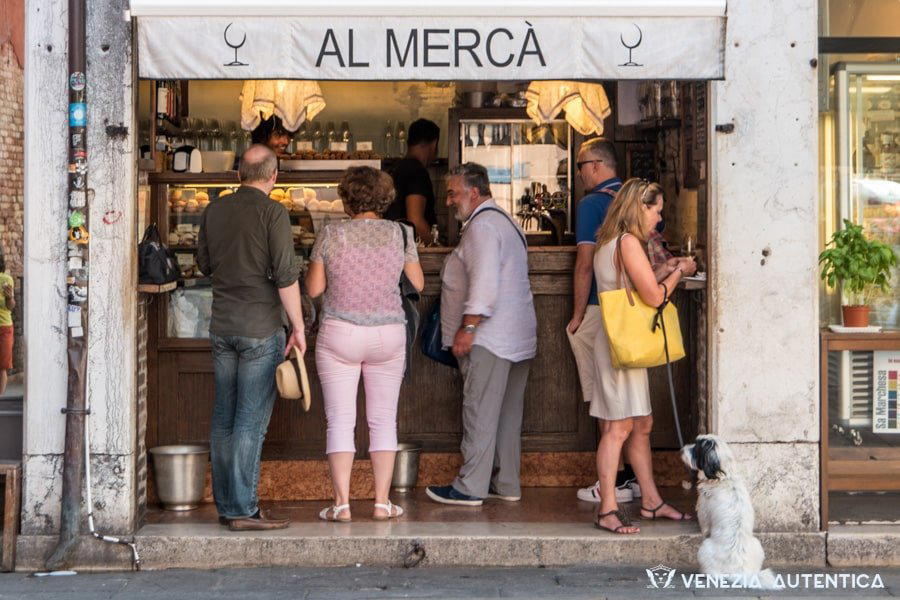
Al Mercà occupies a small square in the San Polo sestiere, operating in the tradition of Venice's cicchetti bars where the counter dictates the pace and the glass of ombra dictates the mood. It draws a neighbourhood crowd alongside visitors who have moved past the tourist circuit, positioning it squarely within the city's working bar culture rather than its showpiece dining tier. For those tracking where Venetians actually drink, it belongs on the shortlist.

Pearl is the En Primeur Club membership app, where members save venues, book tables and use the concierge.
Campo Bella Vienna, and the Logic of the Venetian Bacaro
Arrive at Campo Bella Vienna on a weekday afternoon and you will find people standing at a zinc counter with a glass of wine and a small plate of food, talking without particular urgency. The square itself is modest, off the tourist circuits that clog the Rialto and the Accademia. Al Mercà belongs to a tradition that predates the restaurant as a concept in this city. The bacaro, Venice's answer to the tavern, the wine bar, and the snack counter rolled into one, has long been a central social institution in Venice. Al Mercà belongs to that tradition.
Sourcing as Structure: What the Venetian Market Means Here
"Al Mercà" is Venetian dialect for "at the market," and the reference is to the Rialto Market, a short walk from the campo. That proximity reflects how bacari in this part of the city have long worked: the morning market sets the afternoon menu. Whole categories of Venetian cicchetti, the small, counter-served bites that define bacaro culture, exist because of what fishermen and farmers brought to the Rialto that day. Soft-shell crab when the season allows, baby cuttlefish in ink, cured meats from the Veneto hinterland. It is the operating logic inherited from a pre-industrial food system that the city never fully abandoned.
This matters for understanding how Al Mercà fits into the broader Venetian drinking and eating scene. The city has two distinct registers: the restaurant proper, where you sit, order from a menu, and pay a cover charge, and the bacaro circuit, where you move, stand, point at things, and drink Veneto wine by the small glass. Al Mercà works in the second register. The comparison set is places like Al Covino and Al Covo, venues that treat local wine and what accompanies it with care.
The Cicchetti Counter and What It Requires of the Visitor
Bacaro culture rewards a particular kind of attention. You look at what is behind the glass, you ask what came in that morning, and you order incrementally rather than all at once. This format does not work well if you approach it as a restaurant. There is no set menu, no tasting progression, no sommelier to walk you through pairings. What there is, typically at a bacaro near the Rialto, is a counter loaded with preparations that reflect the morning's supply and the cook's decisions. The wine, almost always from the Veneto or the Friuli-Venezia Giulia region, arrives in a small glass called an ombra, a measure calibrated for standing, talking, and moving on.
The ombra is itself a piece of local intelligence. The name, meaning shadow, is said to derive from the practice of moving with the shade of the campanile in Piazza San Marco to keep wine cool. What is not disputed is that the measure is specific to Venice and that ordering it correctly, rather than asking for a glass of wine as a tourist might, marks you immediately as someone who understands the format. That legibility matters in a bacaro. The cicchetti at a market-adjacent counter often go quickly, and a confident, direct approach to ordering helps.
Al Mercà in the Context of Venice's Bar Scene
Venice's drinking culture has fragmented along lines visible in other Italian cities. There is a cocktail bar tier, represented locally by venues like Aman Bar and Arts Bar, that operates with a different vocabulary entirely: Italian spirits programs, technical bartending, reservation systems. Then there is the bacaro tier, which remains largely resistant to that formalization. Al Mercà sits firmly in the latter. Its value is not in ceremony or curation as performance; it is in proximity to source, speed of service, and integration into a neighbourhood that functions as a food supply chain as much as a destination.
This places it in a different category from the technically ambitious bars that have emerged in Italian cities over the past decade. Programs like 1930 in Milan, Drink Kong in Rome, and Gucci Giardino in Florence represent a strain of Italian hospitality that is internationally oriented, awards-facing, and built around a defined format. The bacaro circuit, by contrast, is locally oriented, resistant to formalization, and defined by accumulated habit rather than programmatic intent. Neither is superior as a category; they serve different moments and different needs. A visitor to Venice who spends time only in the hotel bar tier will understand the city less than one who also stands at a counter in the Rialto quarter with a glass of local Soave.
Planning Your Visit
Al Mercà occupies Campo Bella Vienna, 213, in the San Polo district, within walking distance of the Rialto Market. The bacaro format means there are no reservations to make and no dress code to consider. The practical advice is about timing: arrive in the late morning, when the cicchetti are freshest and the crowd has not yet thickened, or in the early evening for the traditional Venice aperitivo window, which runs roughly from 6pm to 8pm and draws a local crowd. Midday on weekends compresses the campo considerably. For a broader read on where Al Mercà sits relative to the city's full range of options, the EP Club Venice guide maps the drinking and eating scene across all tiers and neighbourhoods. Those building an Italian itinerary with stops beyond Venice will find reference points in Enoteca Storica Faccioli in Bologna and L'Antiquario in Naples, both of which reflect regional approaches to wine and small plates that illuminate how different Italy's drinking cultures remain from city to city. For contrast further afield, Lost & Found in Nicosia and Bar Leather Apron in Honolulu show how the standing-bar-with-serious-drinks format translates across entirely different culinary contexts.
Comparison Snapshot
| Venue | Cuisine | Price | Awards |
|---|---|---|---|
| Al MercàThis venue (the venue you are viewing) | This venue | $10–20 | Not listed |
| Aman Bar | Not listed | Not listed | Top 500 Bars Best Bars #315 |
| Arts Bar | Not listed | Not listed | Pinnacle Guide 1 Pin · Top 500 Bars Best Bars #204 |
| Il Mercante | Not listed | Not listed | Top 500 Bars Best Bars #407 |
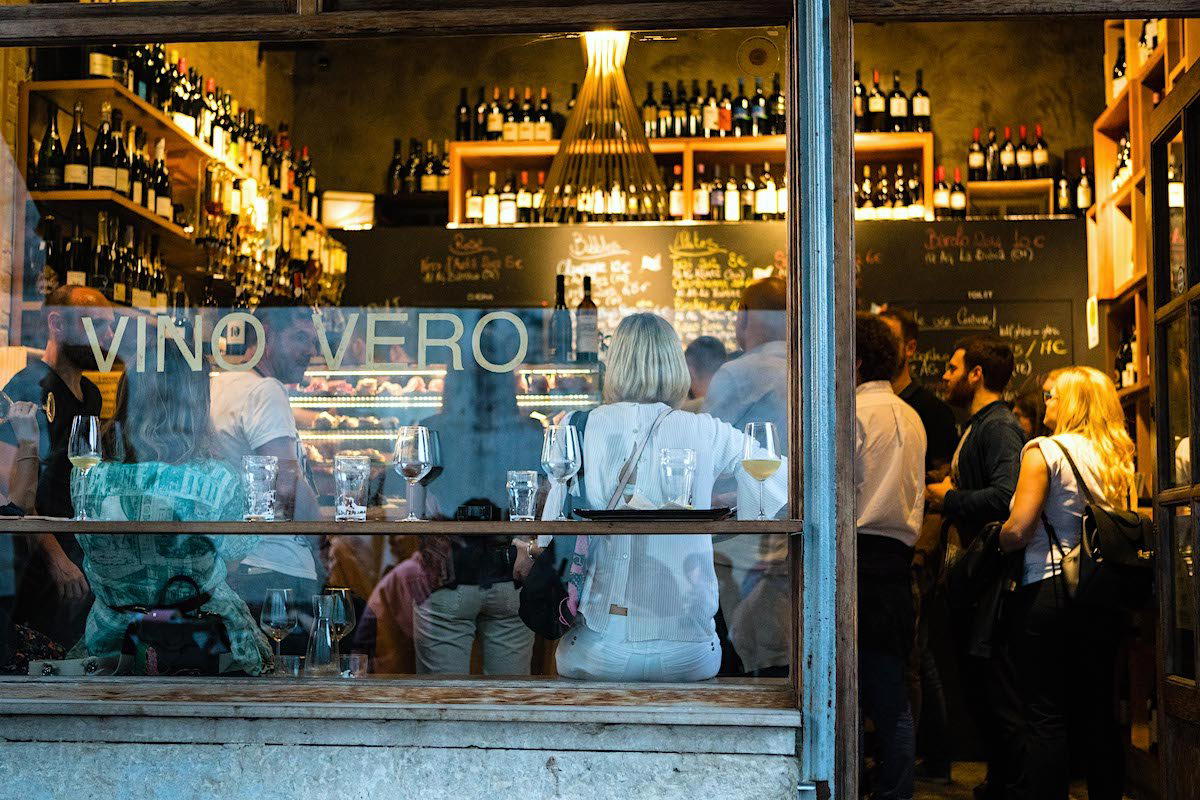
| Vino Vero | Not listed | $20–30 | Star Wine List · Falstaff Wine Bar - Listed |
| Al Covino | Not listed | $30–50 | Not listed |
Continue exploring
More in Venice
Bars in Venice
All bars in Venice →
Restaurants in Venice
All restaurants in Venice →
Details
- Lively
- Rustic
- Cozy
- Casual Hangout
- After Work
- Historic Building
- Standing Room
- Outdoor Terrace
- Conventional Wine
- Street Scene
Current opening hours
- Monday
- 10 AM–2:30 PM, 6–9 PM
- Tuesday
- 10 AM–2:30 PM, 6–9 PM
- Wednesday
- 10 AM–2:30 PM, 6–9 PM
- Thursday
- 10 AM–2:30 PM, 6–9 PM
- Friday
- 10 AM–2:30 PM, 6–9:30 PM
- Saturday
- 10 AM–2:30 PM, 6–9:30 PM
- Sunday
- Closed
Hours can change for holidays and private events. Hours as of .
Rustic with wooden shelves, chalkboard menu, lively and bustling atmosphere outdoors near Rialto.