Café Anna Blume on Kollwitzstraße sits at the quieter, more residential end of Prenzlauer Berg's café culture, a neighbourhood where the morning pastry ritual carries as much social weight as any tasting menu across town. Where Berlin's marquee dining addresses lean on tasting formats and Michelin credentials, this address trades in the kind of unhurried, layered café menu that treats breakfast and afternoon cake with the same seriousness as a lunch carte. It is a counterpoint worth understanding.
Pearl is the En Primeur Club membership app — saves, bookings, and concierge access live there. Same editors, same standards.
- Address
- Kollwitzstraße 83, 10435 Berlin, Germany
- Phone
- +49 30 44048749
- Website
- cafe-anna-blume.de
- Directions
- Get directions
 Saves & bookings on Pearl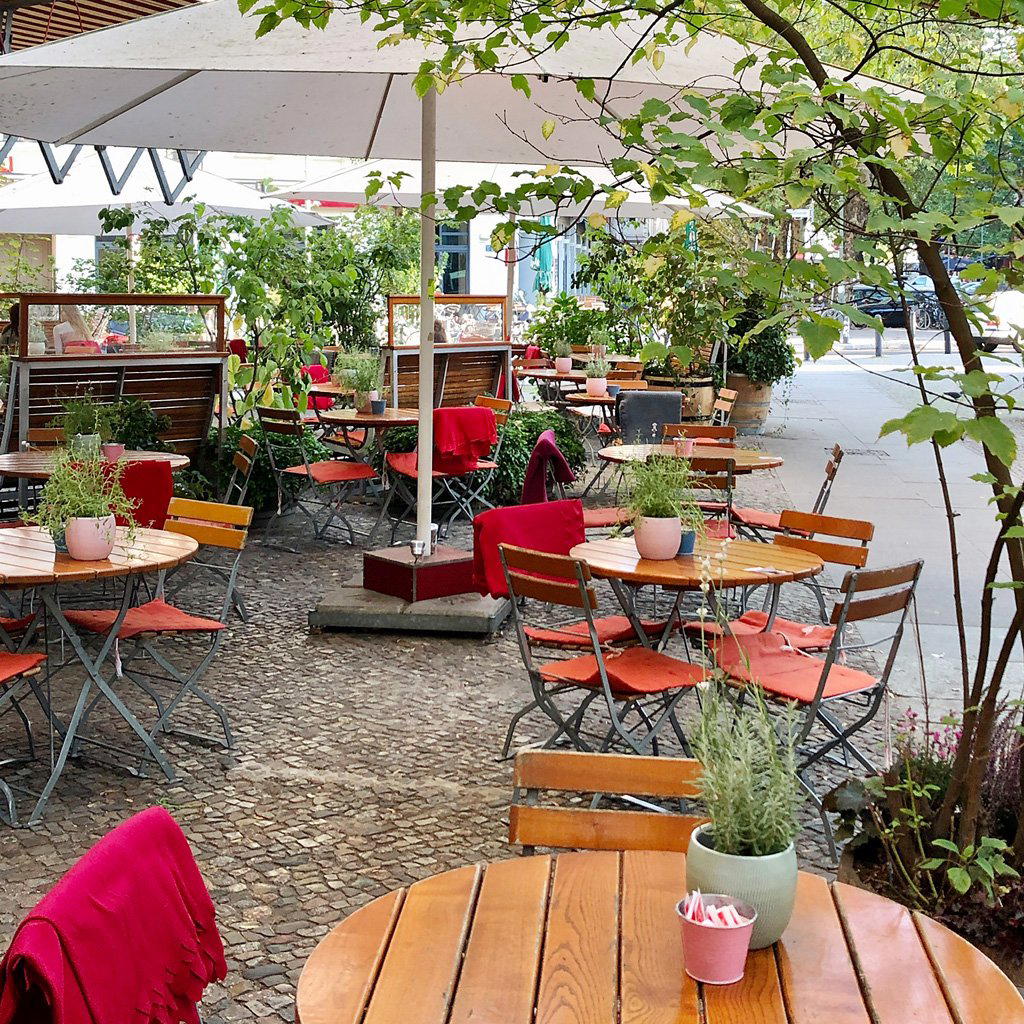
Prenzlauer Berg's Café Register
Berlin's café culture has always operated on a different axis from its restaurant scene. While the city's fine-dining addresses, from Rutz and Nobelhart & Schmutzig to FACIL and CODA Dessert Dining, compete on tasting menus and Michelin recognition, the city's neighbourhood cafés have developed their own parallel hierarchy, one measured in pastry quality, the depth of a cake display, and the willingness to linger without pressure. Prenzlauer Berg is the district where that hierarchy is most legible. The neighbourhood's post-reunification gentrification brought with it a café density that rewards specificity: the places that endure here do so because they have a clear point of view about what they serve and how.
Café Anna Blume on Kollwitzstraße 83 occupies a position in that local register that goes beyond mere presence on a residential street. Kollwitzstraße is one of Prenzlauer Berg's more characterful addresses, anchored by Kollwitzplatz to the north and lined with a mix of independent retail, low-key bars, and the kind of lived-in apartment buildings that define the district's appeal. A café on this street competes not with Restaurant Tim Raue or the city's Michelin tier, but with the accumulated expectations of a neighbourhood that takes its morning ritual seriously.
How the Menu Is Structured, and What That Signals
The architecture of a café menu tells you more about a venue's ambitions than almost any other single indicator. A place that offers a perfunctory pastry case alongside coffee is signalling convenience. A place that builds a menu across multiple dayparts, from morning pastry through cake and afternoon Kaffee und Kuchen to a light lunch or brunch carte, is making a different argument: that the act of sitting down and eating at intervals throughout the day is worth supporting with genuine range and kitchen attention.
Café Anna Blume belongs to the latter tradition. The café format in this part of Berlin draws on a Central European café culture that treats the afternoon cake stop as a distinct ritual, separate from and equal in social function to the lunch or dinner reservation. The cake display in places like this is not an afterthought; it is the editorial statement. The breadth of what is offered, and the consistency with which it is executed across the day, is what separates a neighbourhood institution from a transient coffee stop. Germany's café tradition, particularly in cities with strong Konditorei heritage, places the display case at the centre of the hospitality proposition. Berlin cafés that maintain this tradition in a neighbourhood as trend-sensitive as Prenzlauer Berg do so because the regulars hold them to it.
For comparison, the formal dining end of the German market, represented by addresses like Schwarzwaldstube in Baiersbronn, Aqua in Wolfsburg, or Vendôme in Bergisch Gladbach, operates on tasting menu logic where every course is sequenced and the meal has a clear beginning and end. The café format inverts this entirely: the menu is open-ended, the entry point is self-selected, and the guest determines the pace and scope of what they eat. That structural openness is the point. It is a hospitality format that requires different discipline from the kitchen, because there is no fixed arc to manage.
Placing Anna Blume in Berlin's Wider Eating Context
Berlin's serious eating options for visitors tend to cluster around two poles: the high-commitment tasting menu format, where addresses like Restaurant Tim Raue and Nobelhart & Schmutzig operate, and the informal-but-opinionated end, where the café, the street food market, and the natural wine bar coexist. Café Anna Blume sits in the second category, but within that category it occupies a more considered position than a casual drop-in café. The address on Kollwitzstraße has a reputation that draws visitors from outside the immediate neighbourhood, which in Prenzlauer Berg terms means it has graduated from local fixture to modest destination.
That distinction matters when planning a Berlin visit. The city's full restaurant and café context makes clear that the informal tier here is not monolithic. There is a meaningful difference between a café that happens to sell cake and one that treats its pastry and cake programme as a primary expression of what it does. Anna Blume sits closer to the latter. For travellers building a Berlin itinerary around eating, the café functions as a counterweight to the evening tasting format, the kind of address that makes a morning or afternoon in Prenzlauer Berg feel purposeful rather than merely transitional.
Germany's broader fine-dining circuit, anchored by addresses like JAN in Munich, Victor's Fine Dining by Christian Bau in Perl, ES:SENZ in Grassau, Schanz in Piesport, Waldhotel Sonnora in Dreis, Restaurant Haerlin in Hamburg, and Bagatelle in Trier, operates at a remove from the café format. But the café tradition and the fine-dining tradition in Germany share a common foundation: both take the act of sitting down to eat and drink seriously, and both expect the kitchen to back that seriousness with technical consistency. The scale and price point differ; the underlying discipline does not.
For international visitors accustomed to benchmark café formats, the reference points are instructive. The kind of precision and range that separates a notable café from a generic one in cities like New York, where Le Bernardin anchors one end of the eating spectrum, or San Francisco, where Lazy Bear represents the tasting-dinner format, is replicated at a different register in Berlin's café tier. The metrics shift, but the logic of differentiation through consistency and range applies equally.
Planning a Visit
Kollwitzstraße 83 is reachable on foot from the Senefelderplatz U-Bahn station (U2 line), a walk of around five to eight minutes through the residential grid of Prenzlauer Berg. The address sits in the part of the neighbourhood that feels less trafficked than the Kastanienallee corridor to the west, which makes the approach feel more local. Berlin café mornings on weekends attract queues at the more visible addresses; arriving on a weekday or in the mid-afternoon reduces that variable. Walk-in is the working assumption for this café format, though weekend mornings in Prenzlauer Berg are reliably busy across the neighbourhood regardless of the specific address.
Just the Basics
Comparable venues nearby, for context on price, style, and recognition.
| Venue | Cuisine | Price | Notes |
|---|---|---|---|
| Café Anna BlumeThis venue — the venue you are viewing | Not listed | $$ | Not listed |
| Knödelwirtschaft NORD | Prenzlauer Berg, German Knödel Dumplings | $$ | Not listed |
| 3 Sisters | Kreuzberg, German Regional Seasonal | $$ | Not listed |
| Mirabelle | Pankow, Traditional German | $$ | Not listed |
| Restaurant Hackescher Hof | Mitte, Modern German Regional | $$ | Not listed |
| Paulaner | Not listed | $$ | Moabit, Traditional Bavarian Beer Hall Cuisine |
Continue exploring
More in Berlin
Restaurants in Berlin
Browse all →
Bars in Berlin
Browse all →
Hotels in Berlin
Browse all →
Wineries in Berlin
Browse all →
At a Glance
- Romantic
- Cozy
- Classic
- Elegant
- Brunch
- Casual Hangout
- Date Night
- Historic Building
- Street Scene
Current opening hours
- Monday
- 9 AM–9 PM
- Tuesday
- 9 AM–9 PM
- Wednesday
- 9 AM–9 PM
- Thursday
- 9 AM–9 PM
- Friday
- 9 AM–9 PM
- Saturday
- 9 AM–9 PM
- Sunday
- 9 AM–9 PM
Hours can change for holidays and private events. Last verified .
Classic art deco interior with red leather banquettes, marble tables, red curtains, and a Mucha-inspired mural, creating a romantic and timeless brasserie atmosphere.