Bar 3 on Weydingerstraße sits in Berlin's Mitte district, a neighbourhood where the city's bar scene has consolidated around venues that reward regulars over tourists. The address places it within walking distance of the Hackescher Markt corridor, where craft-focused drinking culture has taken firmer root over the past decade. Details on pricing and booking are best confirmed directly with the venue.

Pearl is the En Primeur Club membership app — saves, bookings, and concierge access live there. Same editors, same standards.
- Address
- Weydingerstraße 20, 10178 Berlin, Germany
- Phone
- +49 30 97005106
- Hours
- Mon ClosedTue–Thu 8 PM–2 AMFri–Sat 8 PM–3 AMSun Closed
- Directions
- Get directions
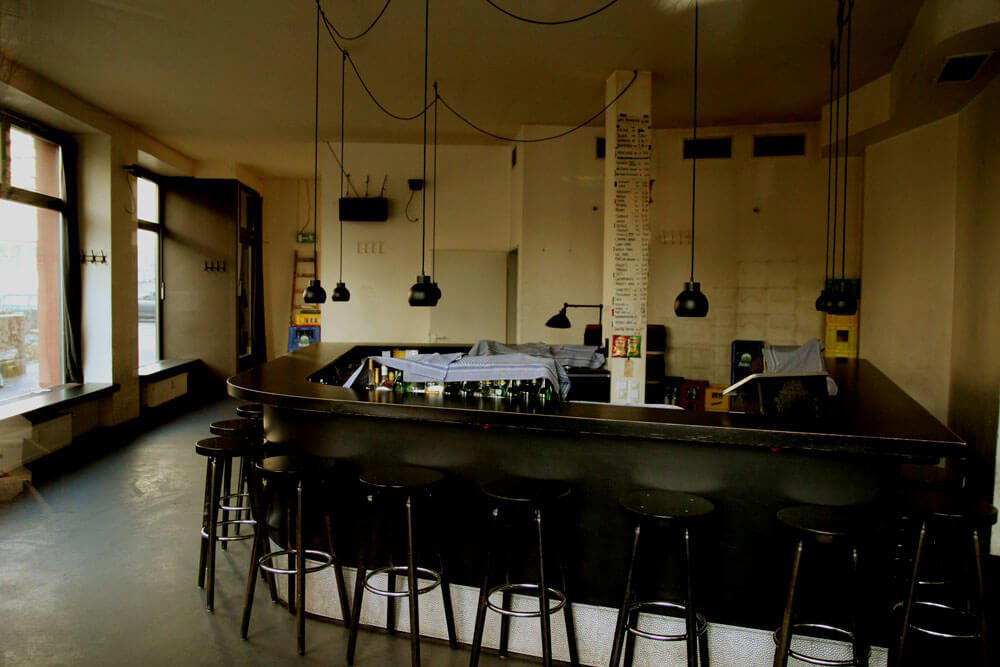
Mitte's Drinking Culture and Where Bar 3 Sits Within It
Berlin's bar scene does not operate on a single register. The city has, over roughly fifteen years, developed distinct layers: the high-volume cocktail venues near tourist corridors, the technically focused craft bars that attract an international bartending crowd, and a quieter middle tier of neighbourhood-anchored spots where the regulars know the bartenders by name and the drinks reflect accumulated taste rather than trend cycles. Weydingerstraße 20 puts Bar 3 squarely in Mitte, a district that has shifted considerably since the early 2000s. What was once dominated by gallery openings and transient creative energy has matured into a more settled residential and dining character, and the bars that have lasted here tend to reflect that shift.
The Hackescher Markt corridor, a short walk from this address, functions as a kind of pressure test for any drinking venue in the area. Foot traffic is high, expectations from an international crowd are varied, and the venues that find a consistent identity tend to do so by building something that locals return to independent of the tourist calendar. Bar 3's position on Weydingerstraße places it just far enough from the main drag to attract a deliberate visitor rather than a passing one.
The Collaboration Model Behind the Counter
In Berlin's better bar rooms, the dynamic between bartender, floor, and kitchen (where food is served) tends to define the experience more than any single signature drink. The city's cocktail bars that have built lasting reputations, whether the reservation-required intimacy of Buck & Breck or the more accessible format of Lebensstern, have generally succeeded because front-of-house and bar programs operate as a coherent unit rather than parallel tracks.
This collaborative framing matters because it determines how a guest moves through an evening. A bar where the person taking your order understands the drink list as well as the person making it produces a different kind of hospitality: recommendations land with precision, pacing is managed rather than left to the guest, and the overall experience feels authored rather than assembled. The leading versions of this in Berlin feel closer to a considered dining room than a conventional bar, even when the space itself is compact and informal.
For Bar 3, the Weydingerstraße address and the broader Mitte context suggest a venue operating within that collaborative tradition, though specific program details, including the current drink list, team composition, and format, are leading verified directly with the venue before visiting.
Berlin's bar tier has a few distinct reference points. At one end, venues like Stagger Lee have built a following around strong visual identity and a particular musical sensibility. At another, Velvet represents the kind of programme-led bar that attracts industry attention. Between these poles, there is a meaningful category of bars that do not fit neatly into either the concept-heavy or the award-circuit end of the spectrum, and these are often the places where the drinking is most consistent.
Mitte's concentration of bars means that competition is genuine and that venues which survive more than a few years have typically found a repeatable reason for return visits. The neighbourhood filters out novelty-dependent formats fairly quickly. Price point, accessibility, and the quality of the team on any given night all factor into whether a Mitte bar builds a durable following or cycles through a tourist-adjacent clientele.
For context on how Berlin fits into Germany's wider bar culture, the country's drinking scene has produced a number of distinct regional characters: Hamburg's Le Lion Bar de Paris operates at the higher-formality end, Frankfurt's The Parlour occupies a considered mid-register, and Munich's Goldene Bar brings an institution-scale presence to the Haus der Kunst. Berlin, by contrast, rewards informality and iteration: the bars that resonate here tend to do so through accumulated credibility rather than polished concept launches. Venues further afield, such as Bar Trattoria Celentano in Cologne, Uerige in Dusseldorf, and Kieler Brauerei am Alten Markt in Kiel each illustrate how differently German bar culture expresses itself by city, and Berlin's version remains the most resistant to easy categorisation.
Planning Your Visit
Weydingerstraße 20 is direct to reach from central Mitte: the Hackescher Markt S-Bahn station is within comfortable walking distance, making Bar 3 a natural stop in an evening that might include dinner in the surrounding streets before moving to a later drink. For a fuller picture of what Berlin's drinking scene currently offers, the EP Club Berlin guide maps the city's bars, restaurants, and hotels across neighbourhoods. For visitors travelling further, Bar Leather Apron in Honolulu represents the kind of craft-focused bar programme that shares a certain sensibility with Berlin's better rooms, even across considerable distance.
Price and Recognition
| Venue | Price | Awards |
|---|---|---|
| Bar 3This venue — the venue you are viewing | Not listed | Not listed |
| Buck & Breck | $50–100 | World's 50 Best #37 · Top 500 Bars Best Bars #400 |
| Velvet | $10–20 | World's 50 Best #77 · Top 500 Bars Best Bars #430 |
| Wax On | $20–30 | World's 50 Best #17 · Falstaff Bar - 95 Falstaff Points |
| Lebensstern | Not listed | World's 50 Best #36 |
| Stagger Lee | $20–30 | World's 50 Best #48 · Falstaff Bar - 91 Falstaff Points |
Continue exploring
More in Berlin
Bars in Berlin
Browse all →
Restaurants in Berlin
Browse all →
Hotels in Berlin
Browse all →
Wineries in Berlin
Browse all →
Details
- Late Night
- Standalone
- Lounge Seating
- Craft Cocktails
Current opening hours
- Monday
- Closed
- Tuesday
- 8 PM–2 AM
- Wednesday
- 8 PM–2 AM
- Thursday
- 8 PM–2 AM
- Friday
- 8 PM–3 AM
- Saturday
- 8 PM–3 AM
- Sunday
- Closed
Hours can change for holidays and private events. Last verified .