Knödelwirtschaft NORD on Stargarder Strasse in Prenzlauer Berg makes a case for the Knödel as a serious culinary subject rather than a side dish afterthought. The kitchen focuses on the Austrian and Bavarian dumpling tradition and reframes it for a Berlin neighbourhood accustomed to ambitious, ingredient-led cooking. For visitors looking beyond the city's Michelin tier, this is a genuinely useful address.
Pearl is the En Primeur Club membership app — saves, bookings, and concierge access live there. Same editors, same standards.
- Address
- Stargarder Str. 3, 10437 Berlin, Germany
- Phone
- +493030642829
- Website
- knoedelwirtschaft.de
- Directions
- Get directions
 Saves & bookings on Pearl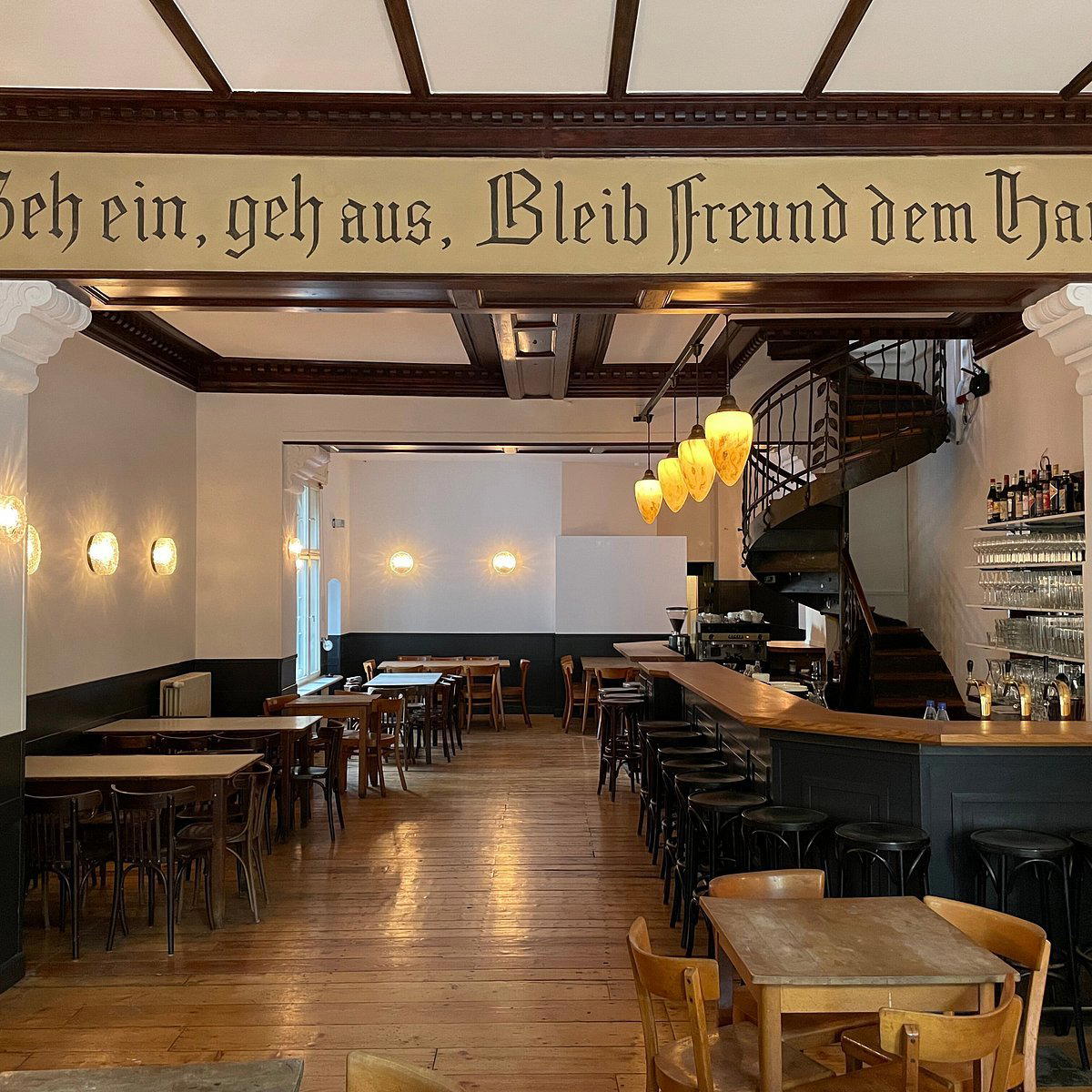
Dumplings as a Dining Argument: The Knödel Tradition in Berlin
There is a particular kind of restaurant that Berlin does well and rarely gets credit for: the single-subject specialist that takes one unfashionable ingredient or format and treats it with the seriousness usually reserved for tasting menus. Knödelwirtschaft NORD, a casual German Knödel Dumplings restaurant at Stargarder Str. 3, 10437 Berlin, Germany, belongs to that category. The address is not a novelty act. It is a working argument that the Knödel, the bread or potato dumpling at the heart of Austrian and Bavarian home cooking, deserves a room of its own.
The surrounding neighbourhood sets the tone before you step inside. Stargarder Strasse sits in the lower stretch of Prenzlauer Berg, a few minutes from Schönhauser Allee, where the area's post-reunification restaurant density is highest. The streets here are residential and low-key, and the restaurants that survive on them tend to do so because the food justifies repeat visits from locals rather than tourist foot traffic. That dynamic matters: a dumpling-focused kitchen on this block is writing for an audience that eats out often and expects something considered.
The Cultural Weight of a Dumpling
The Knödel occupies a complicated position in German-speaking food culture. It is simultaneously humble and technically demanding. The bread Knödel of Tyrol, the Semmelknödel of Bavaria, the Serviettenknödel eaten across Austria with roast meats: each version reflects a regional logic, a specific relationship between stale bread or potato starch and the braised dishes or sauces they were designed to accompany. In the southern German and Austrian tradition, the dumpling is not a side dish in the dismissive sense. It is the structural element of the plate, the thing that absorbs cooking liquids and completes the dish.
What Knödelwirtschaft NORD does, by choosing to centre this tradition in a Berlin context, is make an editorial decision as much as a culinary one. Berlin's food culture has spent the better part of two decades oriented toward the international, from Restaurant Tim Raue's Chinese-influenced framework to the hyper-local sourcing discipline at Nobelhart & Schmutzig. A kitchen that plants a flag for regional German dumpling culture is operating against that grain deliberately.
Where This Sits in the Berlin Dining Picture
Berlin's higher end is occupied by a cluster of kitchens working in the creative European mode: Rutz, FACIL, and CODA Dessert Dining each hold Michelin recognition and work at price points that place them in a different competitive set entirely. Knödelwirtschaft NORD operates outside that tier, in the neighbourhood-restaurant register where format and honesty of concept matter more than formality or ceremony.
That positioning is not a compromise. Across Germany, interesting regional cooking has often happened below the starred tier, in places where the constraint of a single tradition produces more discipline than an open-ended menu ever could. The comparison venues worth thinking about are less the Berlin fine-dining addresses and more the Bavarian and Austrian specialists that have built their identities around a single preparation: the kind of focused kitchen that makes visiting Schwarzwaldstube in Baiersbronn or Waldhotel Sonnora in Dreis feel like encounters with a specific culinary argument rather than a general restaurant experience.
Germany's serious regional food moment is well-documented at the starred level, from Aqua in Wolfsburg to Victor's Fine Dining by Christian Bau in Perl and Vendôme in Bergisch Gladbach. But the conversation about what German food actually is, day-to-day and region-by-region, happens at addresses like Knödelwirtschaft NORD just as much as at any three-star table.
Prenzlauer Berg as Context
The neighbourhood is relevant to how the restaurant functions. Prenzlauer Berg drew its post-reunification identity from a combination of creative migration and the preservation of pre-war building stock, and it has retained a denser residential character than the more tourist-saturated parts of Mitte. Restaurants here tend to be local institutions first, destination addresses second. That order of priority produces a particular dining atmosphere: less performed, more consistent, oriented around the food rather than the occasion.
Stargarder Strasse 3 is a short walk from the Schönhauser Allee U-Bahn station on the U2 line, which connects directly to central Berlin and makes the address accessible without requiring a taxi or significant planning. For visitors staying in Mitte or at hotels near Rosenthaler Platz, the journey is under fifteen minutes. The informality of the neighbourhood means there is no dress expectation, and the format of a dumpling-focused kitchen suggests a meal that is relaxed in structure if not in ambition.
Making a Booking Decision
Reservation is recommended. Prenzlauer Berg restaurants of this type tend to fill on weekend evenings, particularly in the autumn months when hearty cooking draws more demand.
Visitors planning a longer German itinerary who want to understand the regional contrasts might also look at JAN in Munich, Restaurant Haerlin in Hamburg, ES:SENZ in Grassau, Schanz in Piesport, and Bagatelle in Trier. Each of those addresses represents a different register of German regional cooking, and the restaurant sits at the informal, tradition-first end of that spectrum, which is its own kind of argument.
Side-by-Side Snapshot
Comparable venues nearby, for context on price, style, and recognition.
| Venue | Cuisine | Price | Notes |
|---|---|---|---|
| Knödelwirtschaft NORDThis venue — the venue you are viewing | German Knödel Dumplings | $$ | Not listed |
| Dicke Wirtin | Traditional Alt-Berliner Cuisine | $$ | Charlottenburg |
| The Dining Room' | Sophisticated German Cuisine | Not listed | Baumschulenweg |
| Gaumenfreund | International with German influences | $$ | Mitte |
| Café Liebig | Classic German Bistro | $$ | Grünau |
| Restauration 1840 | Traditional German Cuisine | $$ | Mitte |
Continue exploring
More in Berlin
Restaurants in Berlin
Browse all →
Bars in Berlin
Browse all →
Hotels in Berlin
Browse all →
Wineries in Berlin
Browse all →
At a Glance
- Cozy
- Rustic
- Casual Hangout
- Group Dining
Current opening hours
- Monday
- 5 PM–12 AM
- Tuesday
- 5 PM–12 AM
- Wednesday
- 5 PM–12 AM
- Thursday
- 5 PM–12 AM
- Friday
- 5 PM–12 AM
- Saturday
- 12 PM–12 AM
- Sunday
- 12 PM–12 AM
Hours can change for holidays and private events. Last verified .
Cozy atmosphere with spacious interior focused on hearty, dumpling-centric dining.