
Omotesando’s bakery-cafe culture rewards precision at low spend: early hours, takeout, terrace seating and breads treated as a full eating format rather than a side act. breadworks Omotesando sits in that lane with Tabelog Bread TOKYO 100 recognition in 2022, a sub-¥1,000 average spend, scratch baking, sweets and cafe service near Omotesando Station.
Pearl is the En Primeur Club membership app — saves, bookings, and concierge access live there. Same editors, same standards.
- Address
- 東京都港区南青山5-7-28
- Phone
- +81364341244
- Website
- tysons.jp
 Saves & bookings on Pearl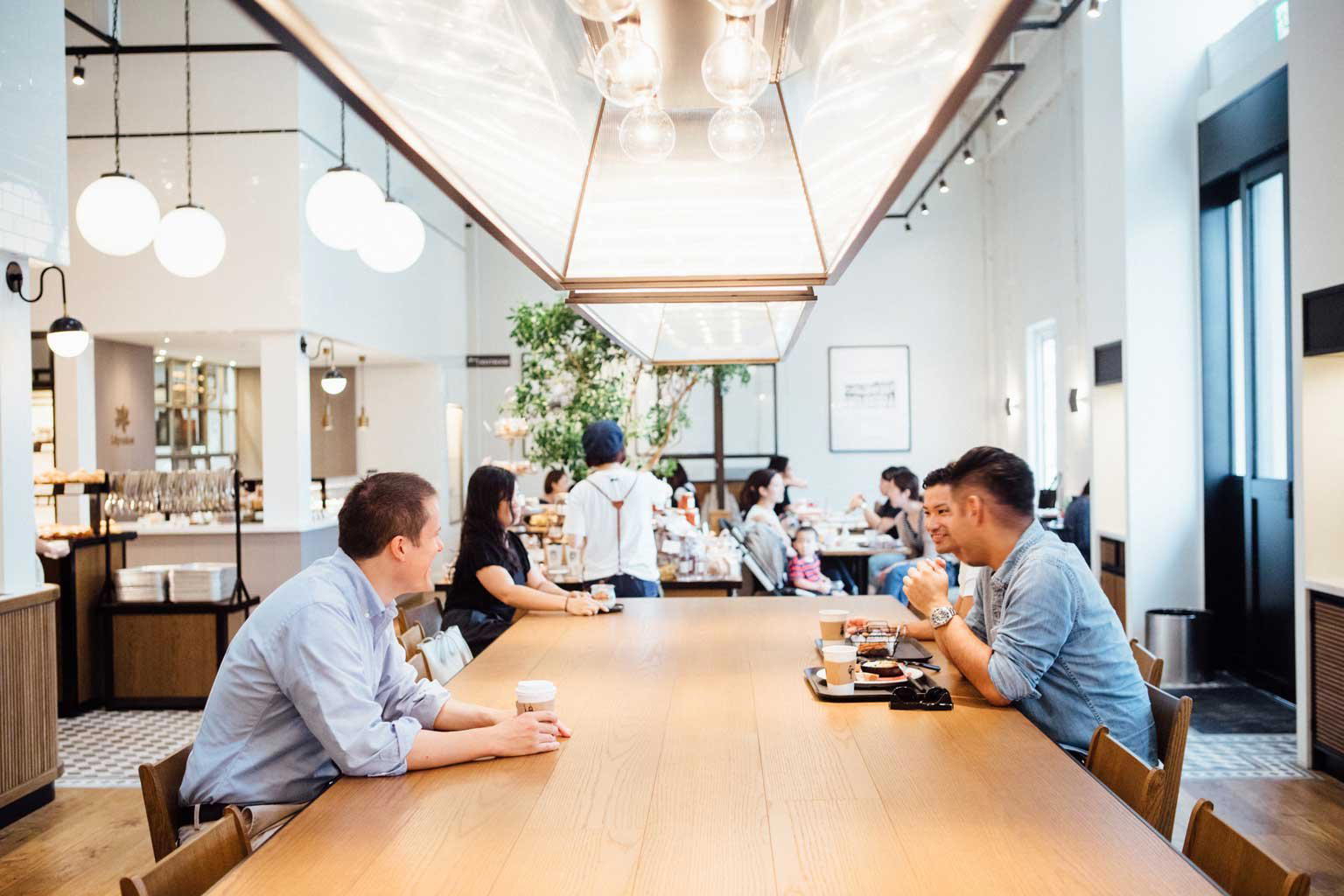
Minami-Aoyama changes pace quickly around breakfast: fashion traffic, office commuters and gallery-bound visitors all pass through streets where a coffee and bread stop can function as a full meal rather than a pause between appointments. In that setting, breadworks Omotesando belongs to a Tokyo bakery tier where the counter matters as much as the cafe table. The format is casual, but the expectations are not; Tabelog selected it for Bread TOKYO 100 in 2022, which places it inside a crowded city category where technical consistency is judged daily, not ceremonially.
The useful way to read the place is as a progression rather than a single order. Tokyo’s stronger bakery-cafes move from morning bread and coffee into sweets, takeout and light daytime eating without asking the guest to change venue. Here, that sequence is built into the category mix: bread, cafe and sweets, with scratch baking at the center and a reported range of roughly 50 to 70 varieties across simple and seasonal styles. That breadth matters in Omotesando, where a bakery has to serve several audiences at once: the early solo customer, the parent with children, the shopper carrying bags, the visitor looking for an English-friendly stop and the local who wants bread to take home.
Omotesando's bakery-cafe rhythm, from first bread to late-day sweets
Tokyo’s bread culture is often discussed through French technique, convenience-store polish or hotel patisserie, but the bakery-cafe is its own genre. It asks for sequencing: something plain enough for breakfast, something richer for a mid-morning break, something portable, something sweet and a room that does not turn every seat into a formal dining commitment. breadworks Omotesando fits that modern pattern more than the old neighborhood pan-ya model. The average spend sits below JPY 999, which keeps it in a different decision category from nearby sit-down dining.
That price context is important in Aoyama. crisscross, listed nearby in the comparison set, runs higher for a cafe meal, while Nicolai Bergmann NOMU Aoyama sits in a more design-led cafe bracket. SITAARA Aoyama ten and Ristorante Hiro Aoyama occupy restaurant territory at much higher dinner budgets. The bakery-cafe proposition is leaner: spend less, choose faster, and build the meal by increments. The appeal is not luxury signaling; it is control over timing, portion and appetite in a neighborhood where many meals are shaped by shopping routes and short windows between meetings.
The tasting arc starts with the bread case, but it need not end there. Sweets, homemade jams and smoked nuts extend the shop beyond breakfast utility, while takeout gives the format a second life outside the room. This is where Tokyo bakery culture becomes especially efficient. A visitor can treat the stop as a quick cafe meal, then leave with bread for a hotel breakfast or train snack, avoiding the heavy itinerary logic that often surrounds restaurant reservations in the city.
Aoyama practicality without the reservation theater
Reservations are unavailable, which suits the category. The better strategy is to treat the visit as a timed walk-in rather than a scheduled meal. The shop is around two minutes on foot from Omotesando Station, and the daily 8:00 a.m. to 8:00 p.m. rhythm gives it a broader window than many specialist bakeries. Open year-round, non-smoking and wheelchair-accessible, it also has the kind of practical profile that matters when dining plans involve children, pets or mixed-language groups. English menu support, takeout service, pet-friendly notes and terrace seating make it easier to fold into a day in Minami-Aoyama without treating it as a destination meal.
The 80-seat figure is unusually generous for a Tokyo bread stop, though the terrace arrangement is tied to the sister cafe crisscross for customers who purchase bread. That relationship helps explain the feel of the area: this pocket of Aoyama is less about a single room than a cluster of casual, design-conscious daytime addresses. In a district where premium dining can quickly become formal, the bakery-cafe gives travelers a lower-friction option with a real credential behind it.
For a broader Tokyo food day, this kind of stop pairs well with a more structured evening elsewhere. EP Club’s restaurant coverage ranges from casual and specialist formats such as 2D Cafe, 3 Chome no Curry Ya San and 12/10 Shinjuku ten to meat and counter-led options including . 鮪と炭火焼き うお炭 秋葉原店 and 124. KAGURAZAKA (Yakitori). For city planning beyond one bakery, use Our full Tokyo restaurants guide, Our full Tokyo hotels guide, Our full Tokyo bars guide, Our full Tokyo wineries guide and Our full Tokyo experiences guide.
Where it sits in a Japan-wide casual dining map
What separates a serious bakery-cafe from a generic coffee stop is range discipline. A long case can become noise if it lacks a clear backbone; a small case can feel precious if it cannot cover breakfast, snack and takeaway needs. This address works in the middle, using volume and accessibility rather than formality. The Tabelog Bread TOKYO 100 selection is the main trust signal, but the logistical signals matter nearly as much: broad daily hours, low average spend, multilingual support and family-friendly facilities.
That makes it useful in an itinerary built around contrasts. Tokyo can absorb a morning bakery stop, a specialist lunch and a late bar without forcing every choice into the same price tier. The same logic applies across Japan and beyond: casual formats can be editorially serious when they solve a specific city problem. For comparison across categories, EP Club also covers places such as -Grilled beef Sukiyaki- KAMAKURA TANUKIAN 鎌倉 たぬき庵 in Kamakura.cafe in Osaka.know in Kumamoto, (Shoku) Vietnam in Kawasaki, [Curry Senmon Ten] Maruyama Kyoju. in Sapporo, [ki:] in Kyoto, Jōdo Saké Bar in Los Angeles and Onigiri Time in Pasadena. The through-line is not scale; it is whether the format answers a real dining need with enough clarity to justify the stop.
Price Lens
Comparable venues for orientation by cuisine and category.
| Venue | Cuisine | Price | Notes |
|---|---|---|---|
| breadworks OmotesandoThis venue — the venue you are viewing | Minato, Bakery-Cafe | $$ | Not listed |
| Muromachi Sunaba (室町砂場) | Not listed | $$ | Nihonbashi Muromachi, Traditional Edo-style Soba |
| Hirugao (ひるがお) | Marunouchi, Shio Ramen Specialist | $$ | Not listed |
| Teuchi Shimada | Not listed | $$ | Minato, Udon & soba izakaya with handmade noodles |
| Okonomiyaki Imari Ebisu | Not listed | $$ | Shibuya, Okonomiyaki & Teppanyaki Izakaya |
| 甚六 | Shibuya, Shinjuku Private Room Izakaya | Not listed | Not listed |
Recognition history
Dated appearances from independent guides and award organizations, with the underlying list record or original source where available.
Tabelog 100 #85 · No. 85
Tabelog · Tabelog 100 - Bread - TOKYO - 2022












At a Glance
- Cozy
- Modern
- Trendy
- Casual Hangout
- Family
- Solo
- Brunch
- Terrace
- Design Destination
- Standalone
- Beer Program
- Street Scene
Stylish and calm, with a relaxed bakery-cafe feel and terrace seating that adds a leafy, airy atmosphere.