Below the Street, Inside the Bowl
Basement dining in Tokyo operates by its own logic. Street-level visibility is not the metric by which these rooms are judged. What matters is whether the offer is strong enough to pull people down a flight of stairs and past a door that reveals nothing from the outside. In Uchikanda, a ward of Chiyoda City that runs on salaryman lunch traffic and the quiet rhythm of small professional offices, Biryani Osawa occupies the B1F of the Sato Building at 1-15-12, a below-ground room that places it in a long tradition of Tokyo's most committed specialty restaurants hiding in plain sight beneath unremarkable facades.
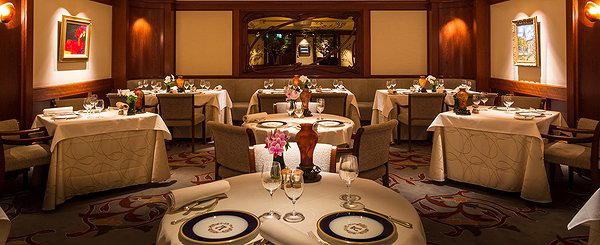
Chiyoda is not where Tokyo's premium dining scene concentrates. That bracket — the three-Michelin-star omakase counters, the French tasting menus running north of ¥40,000 per head, the kaiseki rooms where seats are allocated months in advance — is largely a story of Ginza, Minami-Aoyama, and Nishi-Azabu. Venues like Harutaka, L'Effervescence, RyuGin, Sézanne, and Crony operate in that refined register, where design investment, chef pedigree, and award recognition drive the reservation queue. Uchikanda signals something different: specificity over spectacle, and a format built around a single dish tradition rather than a full tasting architecture.
The Space as an Argument
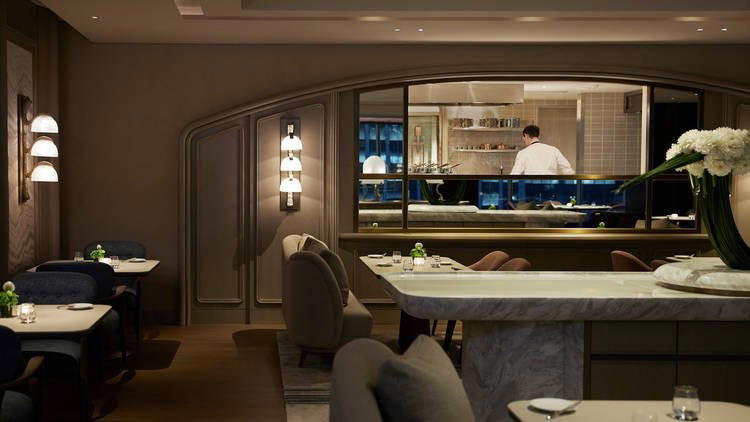
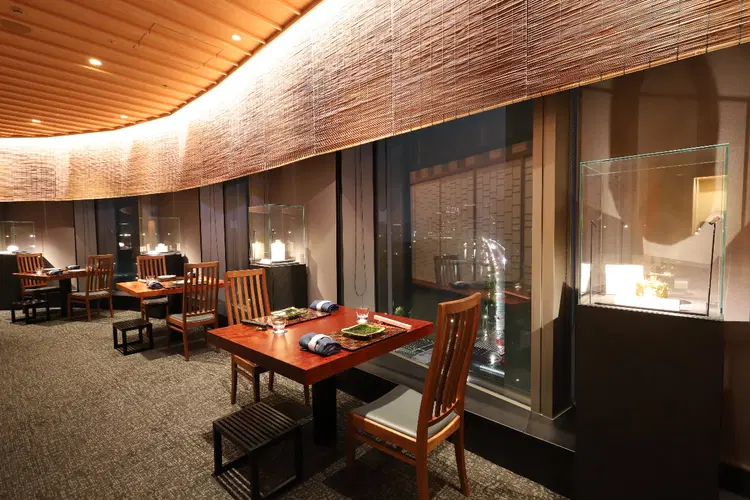
Basement rooms in Tokyo specialty restaurants tend to make the same architectural statement: the cooking is the point, not the view. Without a streetside window or a terrace, the interior has to hold its own as the entire sensory context. In Biryani Osawa's case, the Sato Building address places it in a part of Chiyoda where building stock runs old and practical, the kind of mid-century commercial fabric that has housed thousands of small Tokyo businesses across decades. B1F spaces in these buildings are typically low-ceilinged and compact, built for function rather than atmosphere, which means any restaurant operating in that footprint is working with constraints that force discipline: the menu has to anchor the room because the room will not anchor itself.
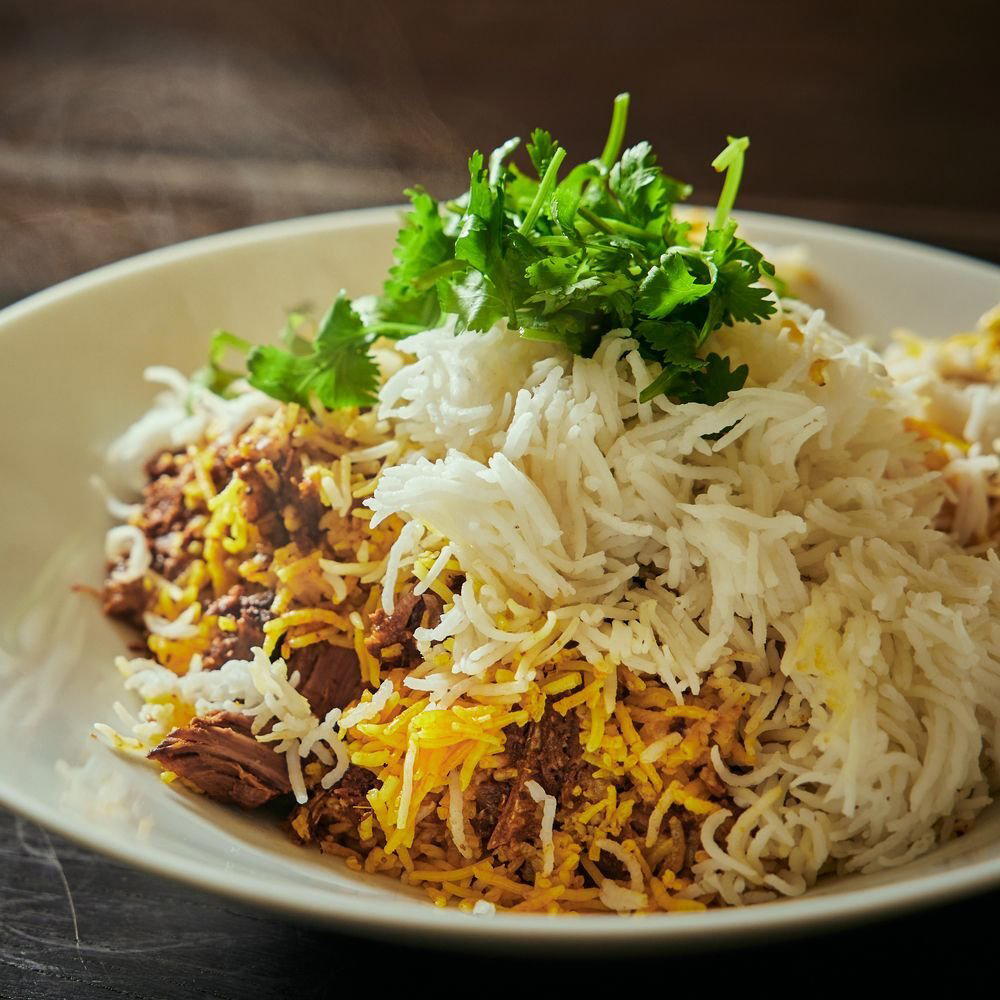
This is, in some respects, the ideal physical container for biryani as a genre. The dish , a layered rice preparation with deep roots in Mughal court cooking and South Asian regional traditions , is not architecture-dependent. It arrives as its own event: the sealed pot opened tableside in some traditions, the aroma released as a first announcement of what follows. In Tokyo, where South Asian cooking occupies a smaller footprint than in London or New York, a basement room that concentrates entirely on this one tradition is a deliberate position. It is not trying to be a comprehensive South Asian restaurant. It is making a case for one dish category in a city that does not have many rooms doing so with this degree of focus.
Biryani in Tokyo's Specialist Dining Culture
Tokyo rewards specialism. The city's dining culture, which has produced more Michelin stars than any other on earth, is built on the principle that doing one thing with absolute commitment is a higher form of cooking than doing many things competently. The ramen shop that has served a single broth for forty years, the tempura counter that will fry nothing outside its narrow seasonal repertoire, the soba restaurant that mills its own buckwheat and closes when the noodles run out , these are not curiosities. They are expressions of a culinary philosophy that values depth over breadth.
Biryani, as a specialist subject, fits that frame. The dish has enough internal complexity to sustain the kind of concentrated attention Tokyo's dining culture respects: regional variations from Hyderabadi dum to Kolkata kathi-adjacent styles, protein choices that shift the rice-to-spice calculus, the technical question of how rice cooks through steam versus direct heat, the balance of whole spice against ground, caramelised onion against fresh herb. A restaurant that focuses here has as much to work with as a soba or tempura specialist, and the barrier to meaningful differentiation is just as high.
Japan's broader dining geography maps this kind of focus across every prefecture. HAJIME in Osaka and Gion Sasaki in Kyoto represent the leading of the formal Japanese dining register. At the other end of the scale, restaurants like akordu in Nara, Goh in Fukuoka, and Abon in Ashiya demonstrate how specialist culinary identity operates at the local and regional level. In that context, a focused biryani room in Chiyoda reads not as a novelty but as a logical continuation of how Japan's restaurant culture organises itself around conviction. Further afield, affetto akita in Akita, Aji Arai in Oita, Ajidocoro in Yubari District, Akakichi in Imabari, and aki nagao in Sapporo each illustrate that Japan's appetite for genre-specific restaurants is not confined to its major cities.
Uchikanda as Context
The ward of Uchikanda sits within Chiyoda, Tokyo's central administrative and commercial district. The area around Jimbocho, a short walk from this address, is one of Tokyo's most characterful neighbourhood identities: a concentration of secondhand bookshops, curry restaurants, and the kind of lunch culture sustained by the publishing houses and universities that have historically occupied the area. Jimbocho's curry tradition is well-documented locally, and the neighbourhood has developed a reputation over decades as one of the more receptive pockets of Tokyo for South Asian food. Biryani Osawa's position in Uchikanda places it within reasonable distance of that context, even if it is not technically inside the Jimbocho cluster itself.
This is relevant because it suggests an audience that already has a frame of reference. Curry and rice as a category are not unfamiliar to this part of Tokyo. A restaurant that takes the next step, arguing for biryani as a distinct and more technically specific tradition rather than a subset of generic curry culture, is making a legible argument to a neighbourhood with some existing literacy on the subject.
For a broader read on where Biryani Osawa sits within Tokyo's full dining picture, our full Tokyo restaurants guide maps the city's major categories and neighbourhoods. For international comparison , restaurants in other cities that operate with similar specialist conviction , Le Bernardin in New York City and Lazy Bear in San Francisco represent how deep-focus restaurant formats perform across different markets.
Know Before You Go
- Address: 1-15-12 Uchikanda, Chiyoda City, Tokyo 101-0047, Sato Building B1F
- Floor: Basement level (B1F) , access via building entrance on street level
- Neighbourhood: Uchikanda, Chiyoda ward, within walking distance of Jimbocho's established South Asian food corridor
- Booking: No booking method confirmed in available data , visiting directly or checking local reservation platforms is advised
- Price range: Not confirmed in available data
- Hours: Not confirmed in available data , verify before travelling
- Contact: No phone or website on record at time of publication

 Discover on Pearl