On Knesebeckstraße in Charlottenburg, Belmondo occupies a corner of Berlin's dining scene where European technique meets the seasonal rhythms of German produce. The address places it within walking distance of the Ku'damm corridor, yet the room reads closer to a neighbourhood restaurant than a destination dining event. Visitors approaching from the west side of the street will find a setting that rewards curiosity over spectacle.
Pearl is the En Primeur Club membership app — saves, bookings, and concierge access live there. Same editors, same standards.
- Address
- Knesebeckstraße 93, 10623 Berlin, Germany
- Phone
- +493036287261
- Website
- belmondo-berlin.de
- Directions
- Get directions
 Saves & bookings on Pearl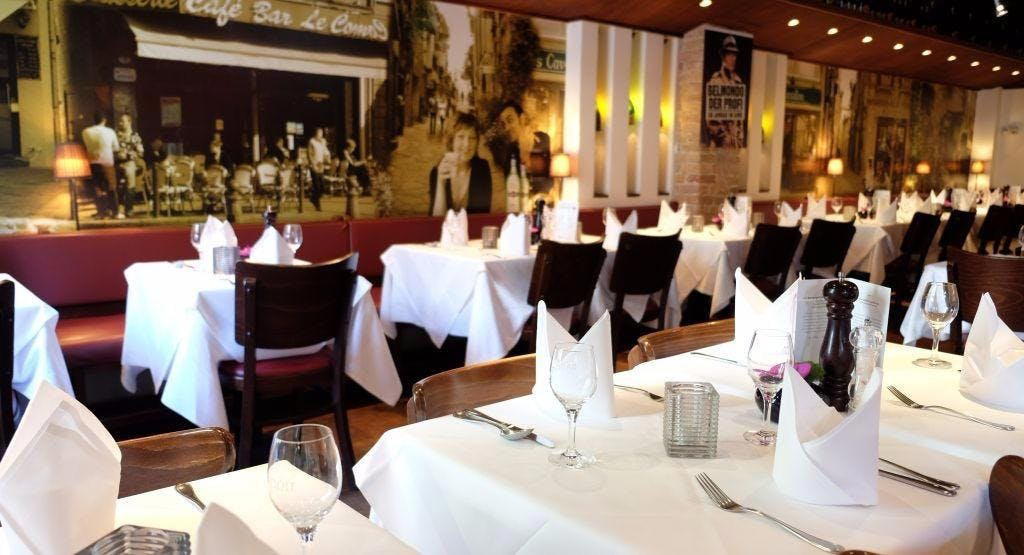
Charlottenburg and the Question of Technique
Berlin's fine dining scene has spent the last decade splitting into two distinct camps. One side, represented by addresses like Nobelhart & Schmutzig and Rutz, pursues a self-consciously German identity, built around regional produce and an almost polemical restraint in the use of foreign influence. The other draws on classical European training, French ratios, and pan-continental sourcing to produce a more internationalist plate. Belmondo, on Knesebeckstraße 93 in Charlottenburg, sits somewhere in the productive tension between those two poles. The address is telling: Charlottenburg carries the memory of West Berlin's pre-reunification cultural weight, a neighbourhood that has always been more comfortable with European cosmopolitanism than with the raw-edge creativity of Mitte or Prenzlauer Berg.
That geographic context matters when assessing what Belmondo is trying to do. The intersection of imported culinary method and local German product is not distinctive to this address, it defines a generation of European restaurants that trained through French classical kitchens and then returned to cook with the ingredients immediately around them. What varies is the emphasis: whether the technique serves the produce or the produce decorates the technique. The better rooms in this mode, including several across Germany like Schwarzwaldstube in Baiersbronn and Schanz in Piesport, resolve that tension by making the produce the point and the technique invisible. Belmondo occupies a comparable address in Berlin's own version of that conversation.
The Room and the Experience
Knesebeckstraße runs between Savignyplatz and the Ku'damm, a stretch of the city that has resisted the more aggressive gentrification of other quarters. The street has independent booksellers, wine bars, and restaurants that have been operating for years without needing to perform novelty. A dining room in this context earns its reputation through consistency rather than concept launches. Belmondo fits the register of the street: the kind of room where the light in the evening is warm and the pace is set by the kitchen rather than by the front of house's desire to turn tables.
Berlin's upper-tier restaurant scene has moved toward high-ticket tasting menus, CODA Dessert Dining and FACIL both operate in that register, with structured multi-course formats and price points to match. Belmondo's positioning is slightly different: a room that serves serious food without requiring the full ceremony of a destination-dining ritual. That is a distinct and valuable niche in a city where the gap between a €15 schnitzel and a €200 tasting menu has historically been wider than in Paris or Copenhagen.
Local Ingredients, European Grammar
The editorial angle worth examining at Belmondo is the one that runs through much of Germany's most interesting cooking right now: what happens when technique imported from France, Italy, or Japan is applied to ingredients that are resolutely local. Brandenburg produces some of the leading root vegetables and game in Central Europe. Berlin's wholesale markets receive fish from both the North Sea and the Baltic. Dairy from the surrounding region is serious enough to anchor a cheese course without apology.
The strongest rooms in this mode, JAN in Munich, Restaurant Haerlin in Hamburg, and further afield Victor's Fine Dining by Christian Bau in Perl, use European classical structure as a grammar and German produce as the vocabulary. The result is neither fusion nor nostalgia, but something more functional: a plate that reads clearly to a well-travelled diner without requiring a decoder. Belmondo operates in this same tradition, where the skill of the kitchen is measured by how seamlessly the method disappears behind the ingredient.
For comparison, consider what Restaurant Tim Raue does in Berlin with Asian technique and European product, the deliberate collision is the point. Belmondo appears to work in the opposite direction: the technique is classical and largely European, the product is local, and the goal is coherence rather than contrast. Neither approach is inherently superior, but they serve different readers and different moods.
Berlin in the Wider German Context
Germany's three-star addresses, Aqua in Wolfsburg, Vendôme in Bergisch Gladbach, Waldhotel Sonnora in Dreis, and ES:SENZ in Grassau, are distributed across smaller cities and resort towns rather than concentrated in the capital. Berlin has historically punched below its weight in formal recognition relative to its size and culinary ambition, a fact that makes the mid-tier of serious Charlottenburg restaurants more significant than it might first appear. These rooms absorb demand from diners who want cooking of genuine substance but are not chasing Michelin architecture.
That dynamic also sets the pricing logic. A room on Knesebeckstraße serving food of real quality, without the overhead of a hotel dining room or a celebrity chef brand, operates in a more sustainable middle ground. The restaurants that survive longest in Berlin's Charlottenburg tend to be those with regulars rather than tourists, which implies a quality floor that listing-driven venues often fail to maintain. Bagatelle in Trier offers a comparable case study in a smaller German city: a room that earns repeat visits through consistency rather than spectacle.
Planning a Visit
Knesebeckstraße 93 is accessible from Savignyplatz S-Bahn station, a four-minute walk south along the street. The neighbourhood has enough before and after options, wine bars on Savignyplatz itself, the Literaturhaus café nearby, to structure a fuller evening without forcing the meal to carry all the weight. Booking ahead is recommended, and the restaurant's hours should be checked before a visit. Internationally, rooms that operate in a similar register of classical-technique-meets-local-produce include Le Bernardin in New York City and Lazy Bear in San Francisco, both useful reference points for the type of serious but unstuffy evening Belmondo appears to offer.
The Short List
Comparable venues nearby, for context on price, style, and recognition.
| Venue | Cuisine | Price | Notes |
|---|---|---|---|
| BelmondoThis venue — the venue you are viewing | Charlottenburg, Classic French Bistro | $$$ | Not listed |
| Cafe Frida | Kreuzberg, Modern Neighborhood Bistro | $$$ | Not listed |
| The Post Brasserie | Kreuzberg, Modern French Brasserie | $$$ | Not listed |
| DAS KÖSTLICH-Berlin Charlottenburg | Charlottenburg, Modern German | $$$ | Not listed |
| Fleischerei | Not listed | $$$ | Prenzlauer Berg, Modern German Meat Cuisine |
| Caravaggi Bistro | Not listed | $$$ | Prenzlauer Berg, Contemporary Italian Bistro with Natural Wines |
Continue exploring
More in Berlin
Restaurants in Berlin
Browse all →
Bars in Berlin
Browse all →
Hotels in Berlin
Browse all →

At a Glance
- Elegant
- Romantic
- Cozy
- Classic
- Sophisticated
- Date Night
- Business Dinner
- Special Occasion
- Standalone
- Extensive Wine List
Current opening hours
- Monday
- 5–11 PM
- Tuesday
- 5–11 PM
- Wednesday
- 5–11 PM
- Thursday
- 5–11 PM
- Friday
- 5–11 PM
- Saturday
- 12–11 PM
- Sunday
- 12–11 PM
Hours can change for holidays and private events. Last verified .
Elegant and romantic with warm, cozy decor reminiscent of French brasserie style, though tables are close together making it somewhat lively.