
1 Michelin Key
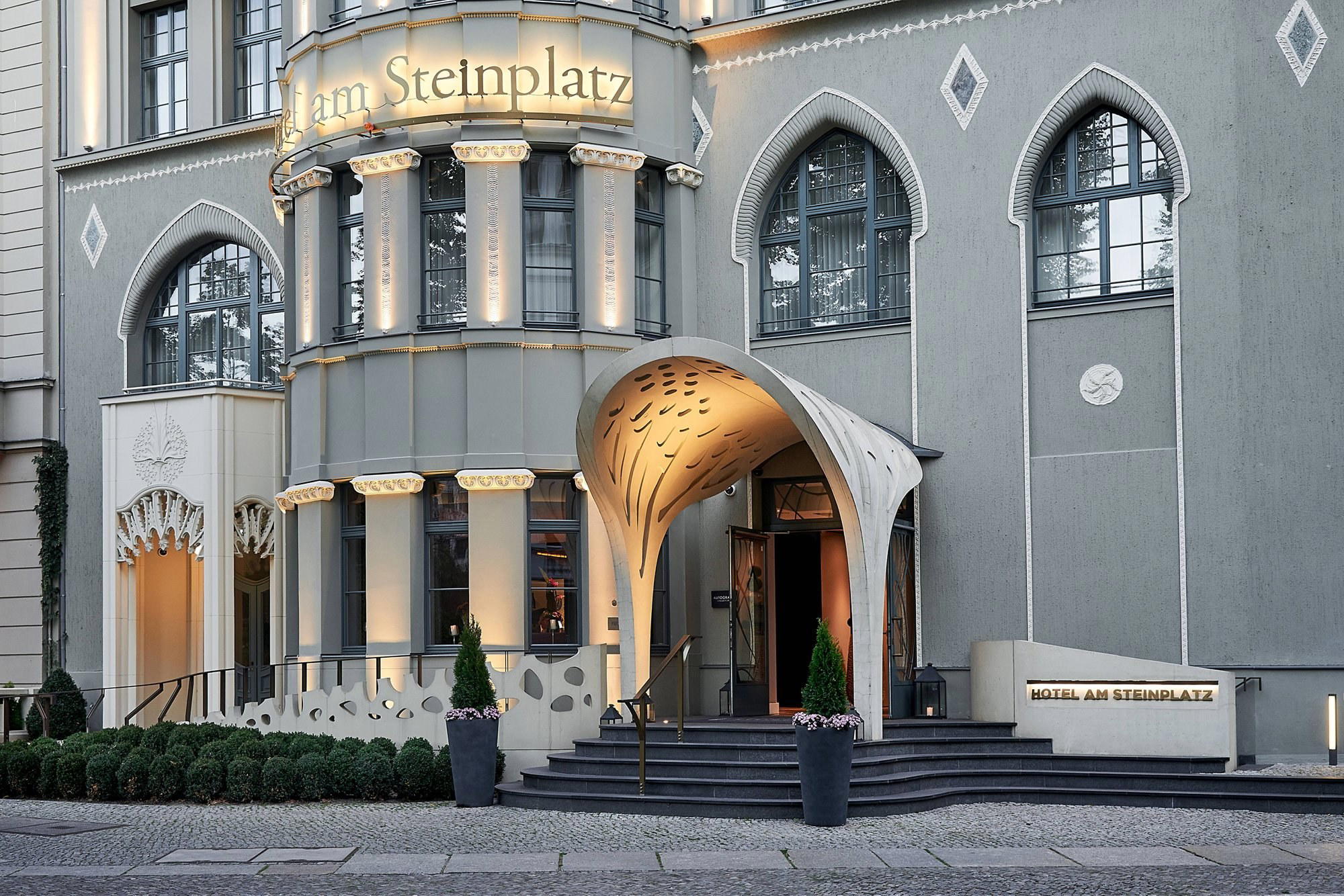
A century-old Art Nouveau address on Steinplatz, Roomers Berlin earned two Michelin Keys in 2024 and draws guests willing to trade Mitte proximity for Charlottenburg's quieter, residential rhythm. Eighty-four rooms spread across six restored floors carry the building's 1913 bones, dark wood paneling, curved walls, deep soaking tubs, into a thoroughly modern operation, with a garden-herb kitchen and classic cocktail bar to match.

Pearl is the En Primeur Club membership app, where members save venues, book tables and use the concierge.
Charlottenburg's Case Against Mitte
Berlin's hotel conversation has long defaulted to Mitte, where the city's grandest addresses Hotel de Rome, Telegraphenamt, and The Ritz-Carlton, Berlin, anchor a well-worn luxury corridor. Charlottenburg, by contrast, runs quieter. The neighbourhood's grid of Wilhelminian apartment blocks and independent shopfronts sits west of the Tiergarten, a twenty-minute S-Bahn ride from Alexanderplatz but a different register entirely: more residential, less trafficked by short-break tourism, and increasingly compelling to travellers who treat a hotel stay as immersion in a city rather than a base for monument-ticking. Roomers Berlin Steinplatz sits at the centre of that shift, occupying a 1913 Art Nouveau building whose corners and cornices give it the kind of street presence that no amount of contemporary design budget can replicate from scratch.
A Building That Has Always Had an Audience
The history here is genuine. The address predates the Weimar Republic, has absorbed every chapter of the city's twentieth century, and carried a glamorous reputation through multiple eras, Vladimir Nabokov and Brigitte Bardot each spent time within these walls. That kind of provenance places the hotel in a different category from the design-led newcomers that populate Berlin's boutique tier: the bones are real, the renovation challenge was archaeological as much as aesthetic. After a long dormancy, the building reopened as a 84-room, three-suite boutique hotel with Marriott's Autograph Collection providing the corporate infrastructure. The Collection's model is deliberate, independent-feeling properties with chain-level booking depth, and Steinplatz fits the brief. Rooms start at approximately $278 per night, positioning the hotel in the upper-midrange bracket where it competes less with the full-service luxury flagships and more with character-led properties like Château Royal Berlin and Casa Camper Berlin.
The Interior Logic
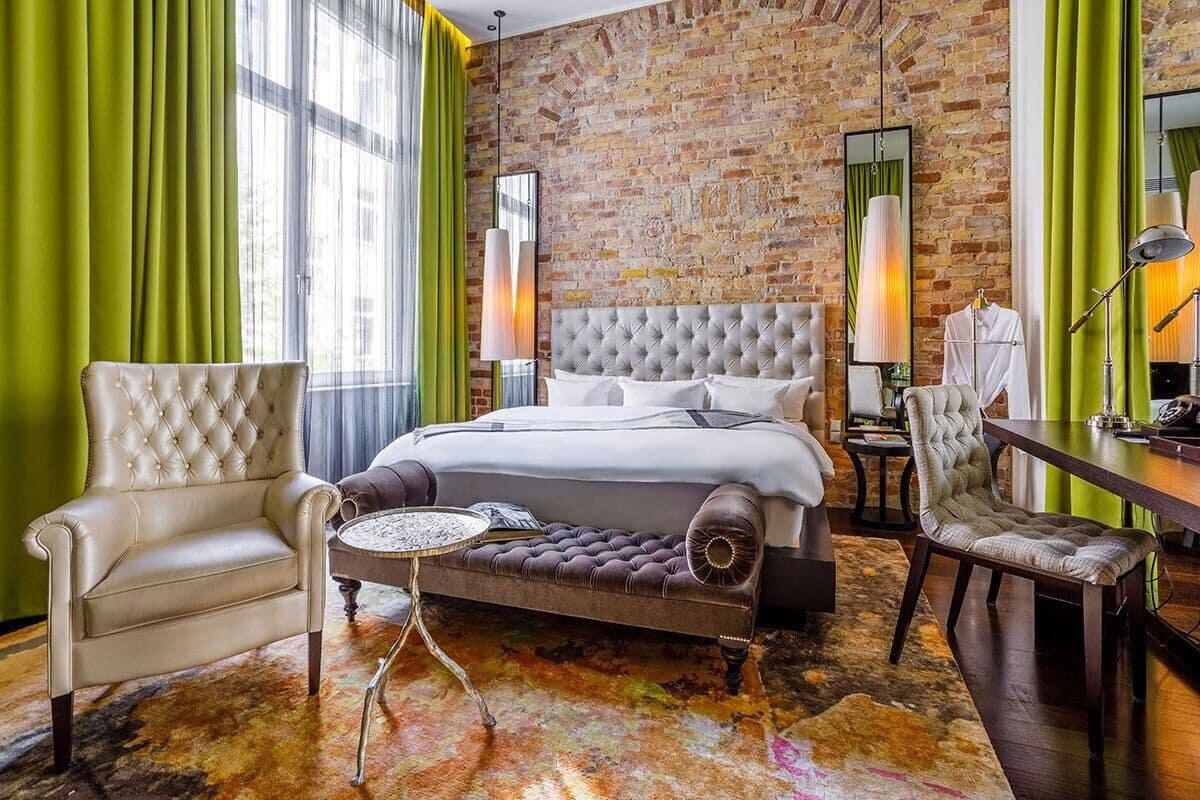
Six restored floors contain the hotel's 84 rooms and three suites. The design reads as a careful negotiation between preservation and update: shiny dark wood paneling, curved walls, and fanciful vanities speak to the building's original heyday, while the floor-to-ceiling drapery and deep soaking tubs carry a cinematic register, the kind of room a French director would have had in mind when casting a star's hotel scene. The lobby anchors the ground floor with a marble fireplace and a piano that suggest the deliberate pace of a place that has been receiving guests for over a century. What saves the property from becoming a period-piece exercise is the spa and fitness floor at the top of the building, where high-spec treadmills and city skyline views make the contemporary context unmistakable. The contrast between floors is knowing rather than incoherent: the hotel presents its history without being trapped in it.
Within the Charlottenburg market, this spatial approach places Steinplatz alongside properties that use neighbourhood character as an asset rather than an obstacle. The Patrick Hellmann Schlosshotel takes a similar stance in Grunewald, doubling down on a specific architectural and cultural identity rather than chasing the broadest possible appeal. The 25hours Hotel Bikini Berlin, a few streets away on Budapester Strasse, targets a younger design-forward demographic, the contrast helps define Steinplatz's register, which skews older, quieter, and more architecturally serious.
The Kitchen and Bar as Editorial Positions
In Berlin's mid-market hotel dining tier, the default is a breakfast buffet and a lobby bar operating on hotel hours. Steinplatz departs from that pattern in two ways that matter. The restaurant, under chef Oliver Fritz, works from a menu of modern Berlin dishes with herbs grown in the hotel's own garden. That garden-to-plate sourcing approach is not incidental: in a city where restaurants increasingly cite local supply chains and waste-reduction as part of their positioning, a hotel kitchen that grows its own herbs and centres the menu on regional produce is making a statement about values as much as flavour. The supply chain is short, the ingredient provenance is transparent, and the menu's Berlin-dish orientation means the kitchen isn't importing flavour profiles that have no connection to place.
The adjacent bar narrows its focus further, specialising in classic cocktails with a preference for locally produced spirits. The emphasis on local distillation connects to a broader Berlin movement that has seen a generation of small-batch producers, gin, aquavit, fruit spirits, establish the city as a credible alternative to Hamburg and Munich on the craft spirits map. A bar program that channels that production into classic formats (rather than using local spirits as a novelty garnish on otherwise conventional drinks) signals genuine engagement with the city's current food and drink moment. The Michelin Guide awarded Steinplatz two Keys in 2024, a designation that evaluates the whole hotel experience rather than the restaurant alone, and the kitchen and bar programs are clearly part of the argument.
Sustainability as Operational Stance
The herb garden and local-spirits program are the most visible expressions of an approach that runs through several operational decisions. Growing produce on-site reduces the transport footprint of the kitchen's daily sourcing. Sourcing spirits from Berlin's craft producers supports a local economy of small producers whose environmental footprint per bottle is generally lower than multinational alternatives. These are not grand gestures, a hotel herb garden is a modest intervention, but they reflect a consistent orientation rather than a single green credential deployed for marketing purposes. For travellers who weigh environmental positioning when choosing accommodation, the property's choices hold together under scrutiny in a way that isolated carbon-offset claims do not. Germany's broader hospitality sector has moved toward more granular sustainability reporting, and Berlin's boutique tier has been among the more active participants in that shift. Steinplatz's approach fits the pattern without requiring the hotel to overstate its scale of impact.
Planning a Stay
Charlottenburg is served by S-Bahn and U-Bahn connections that make the rest of the city direct to reach, with Zoologischer Garten station a short walk from Steinplatz. Booking through the Autograph Collection gives access to Marriott Bonvoy rates and points, which is a practical consideration for frequent Marriott guests. With 84 rooms at the $278 entry-point, the hotel is not filling at the pace of a 20-room property, but Charlottenburg's growing appeal means availability narrows during peak seasons, spring and autumn are the city's busiest hotel periods, and the neighbourhood's reputation is spreading. Travellers comparing options in the west of the city should also consider the full range of German stays available through EP Club: Althoff Seehotel Überfahrt in Rottach-Egern, Fairmont Hotel Vier Jahreszeiten in Hamburg, Schloss Elmau in Elmau, and Hotel Bareiss in Baiersbronn represent the range of the country's top-tier hotel stock. For the full Berlin picture, see our full Berlin restaurants and hotels guide. Those extending to other European capitals will find comparable boutique-with-history propositions at Aman Venice and more design-forward American equivalents at The Fifth Avenue Hotel in New York City and Aman New York. Additional German references worth tracking: Breidenbacher Hof in Düsseldorf, Excelsior Hotel Ernst in Cologne, Bülow Palais in Dresden, BUDERSAND Hotel in Hörnum, Das Kranzbach in Kranzbach, Der Öschberghof in Donaueschingen, Esplanade Saarbrücken, Gut Steinbach in Reit im Winkl, Hotel Ketschauer Hof in Deidesheim, and Adina Apartment Hotel Berlin Hackescher Markt for apartment-format stays in the city's east.
Side-by-Side Snapshot
Comparable venues nearby, for context on price, style, and recognition.
| Venue | Cuisine | Price | Awards | Notes |
|---|---|---|---|---|
| Roomers Berlin Steinplatz, Autograph CollectionThis venue (the venue you are viewing) | Historic Art Nouveau landmark reimagined as a contemporary luxury boutique hotel blending 1920s-inspired design with modern amenities. | $300–500 | 1 Michelin Key | Not listed |
| Telegraphenamt | Historic telegraph office transformed into luxury boutique hotel | $300–500 | 2 Michelin Keys | Mitte |
| Patrick Hellmann Schlosshotel | Historic palace with fashion-forward interiors | $100–200 | 2 Michelin Keys · La Liste Top Hotels | Grunewald |
| The Ritz-Carlton, Berlin | Art Deco-inspired luxury hotel evoking Berlin's glamorous golden era | $300–500 | 2 Michelin Keys · La Liste Top Hotels | Tiergarten |
| The Mandala Hotel | Contemporary luxury suites with kitchenettes in central Berlin. | Not listed | 1 Michelin Key · La Liste Top Hotels | Tiergarten |
| Hotel de Rome | Luxury heritage hotel blending historic Prussian banking architecture with contemporary Italian design sensibility and minimalist interiors. | $750–1,000 | 2 Michelin Keys · La Liste Top Hotels | Mitte |
Recognition history
Dated appearances from independent guides and award organizations, with the underlying list record or original source where available.
Michelin 1 Key
Michelin
Full recognition history (3 entries)
Michelin 1 Key
Michelin
Michelin 2 Keys
Michelin
Continue exploring
More in Berlin
Hotels in Berlin
All hotels in Berlin →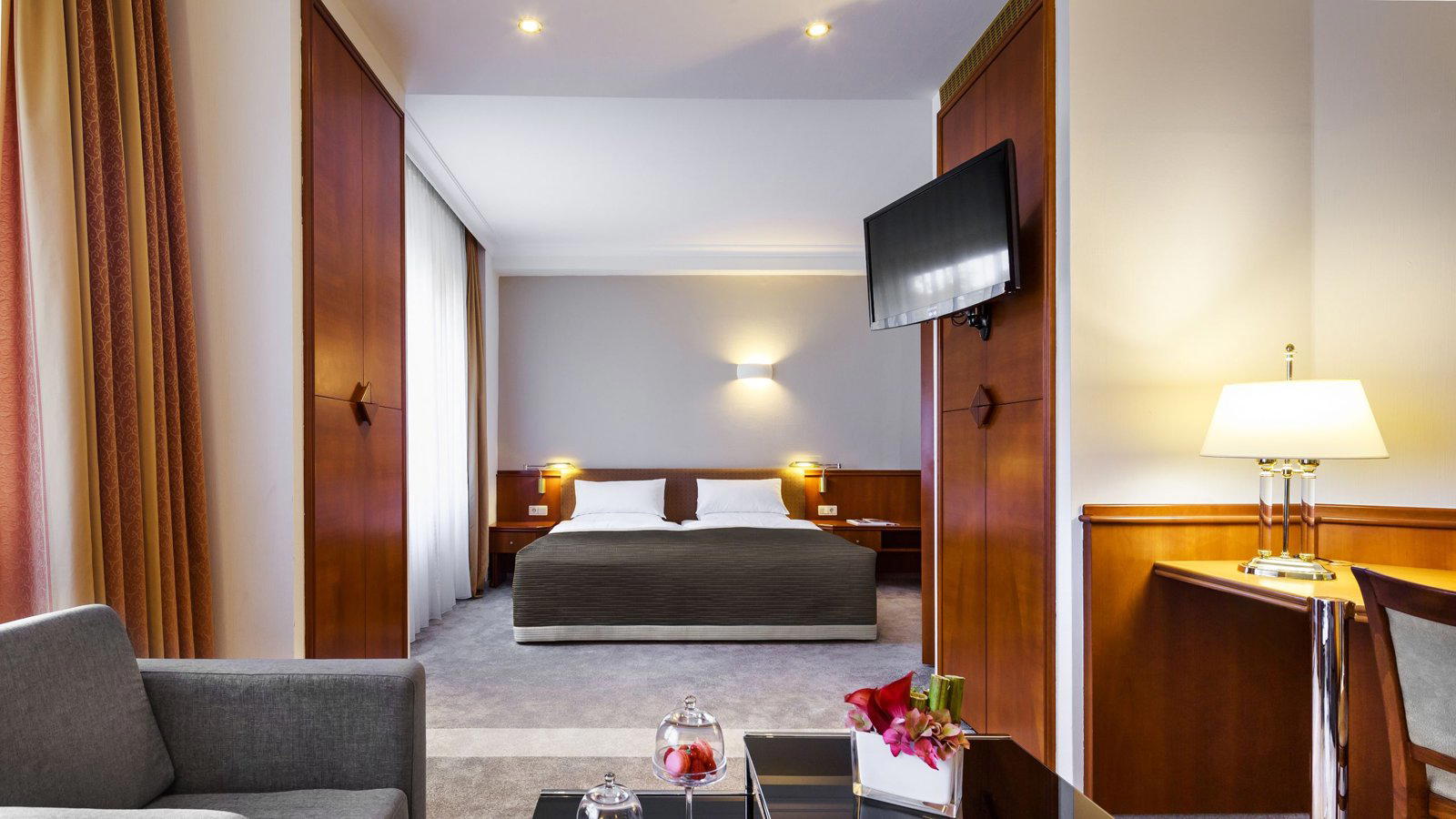
Bars in Berlin
All bars in Berlin →
Restaurants in Berlin
All restaurants in Berlin →

Details
- Elegant
- Sophisticated
- Classic
- Romantic
- Romantic Getaway
- Business Trip
- Anniversary
- Weekend Escape
- Historic Building
- Garden
- Terrace
- Panoramic View
- Destination Spa
- Wi Fi
- Spa
- Fitness Center
- Restaurant
- Bar
- Room Service
- Concierge
- Business Center
- Valet Parking
- EV Charging
- Skyline
- Garden
- Wheelchair Accessible
- Elevator
- Accessible Restroom
- Accessible Parking
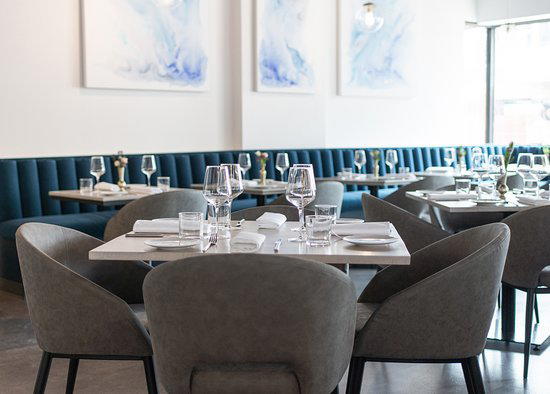
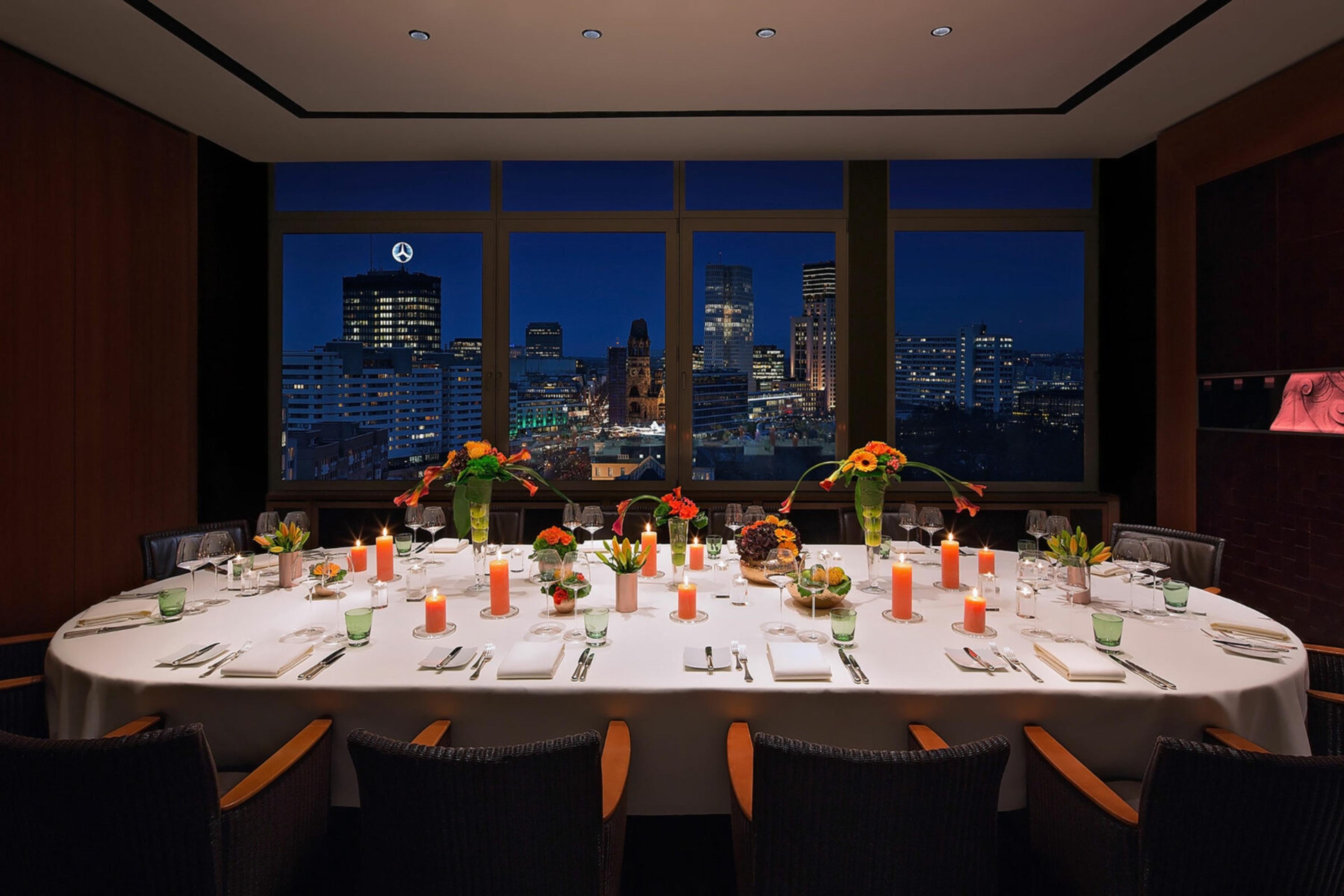
Elegant and refined with marble fireplaces and period details downstairs; contemporary and sleek upstairs with high-tech fitness facilities overlooking the city skyline.