On Schlesische Strasse in Kreuzberg, Cafe Frida occupies the kind of address that draws comparisons to Berlin's broader wave of neighbourhood restaurants where cultural specificity does more work than fine-dining ambition. Named after the Mexican artist whose image carries weight far beyond her native country, the cafe sits in a district known for layered immigrant foodways and an appetite for the informal and the genuine.
Pearl is the En Primeur Club membership app — saves, bookings, and concierge access live there. Same editors, same standards.
- Address
- Schlesische Str. 28, 10997 Berlin, Germany
- Phone
- +4917647665901
- Website
- cafefrieda.de
- Directions
- Get directions
 Saves & bookings on Pearl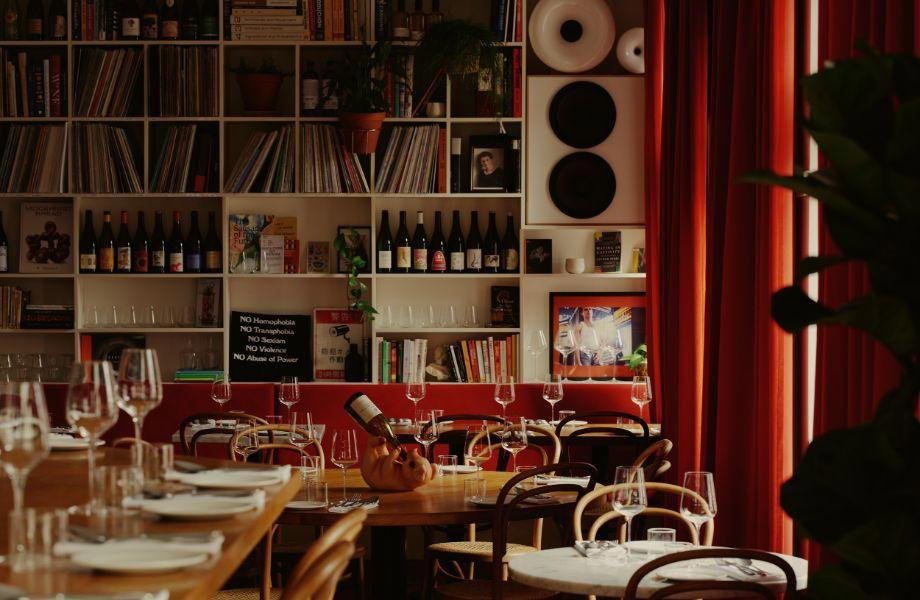
Kreuzberg's Appetite for the Genuine
Schlesische Strasse runs through a part of Kreuzberg that has spent decades absorbing influences from across Europe, the Middle East, and Latin America, producing a food culture that rewards specificity over polish. This is not the Berlin of Rutz or FACIL, where tasting menus and wine programs carry formal recognition. The restaurants that hold ground on these streets tend to earn loyalty through consistency, cultural authenticity, and a room that feels inhabited rather than designed. Cafe Frida, at number 28, belongs to that tradition.
The name alone signals a position. Frida Kahlo is among the more reproduced figures in twentieth-century Mexican culture, and invoking her in a Berlin neighbourhood cafe is a deliberate act of cultural anchoring. It places the venue in conversation with Mexican identity in diaspora, a subject that carries real weight in European cities where Mexican food has historically been flattened into Tex-Mex approximations or fast-casual formats. Kreuzberg, with its history of immigrant communities and its ongoing resistance to gentrification's more homogenising effects, is a coherent setting for that conversation.
Mexican Food in Berlin: What the Category Actually Looks Like
Berlin's Mexican food scene has matured over the past decade in ways that separate it from the pan-European Tex-Mex wave of the 1990s and early 2000s. Regional Mexican cooking, with its distinct traditions across Oaxaca, the Yucatan, and central Mexico, has found an audience in a city that responds well to culinary specificity. That audience is different from the one that fills the Nobelhart and Schmutzig counter or the dessert-focused tasting format at CODA Dessert Dining. It is looking for something that reads as honest rather than ambitious, informal rather than choreographed.
Mexican cooking in this context carries a cultural burden that most European cuisines do not. The ingredients that define it, dried chiles, corn in its many preparations, fresh herbs like epazote and hierba santa, are difficult to source at volume outside Mexico, which means a restaurant's proximity to reliable supply networks is a practical marker of seriousness. In Germany, where that supply chain is less developed than in the United States or the United Kingdom, the gap between a kitchen that compromises on ingredients and one that does not is visible on the plate. This is the terrain Cafe Frida occupies, and the address on Schlesische Strasse places it within walking distance of the markets and specialist suppliers that Kreuzberg's food culture has accumulated over decades.
The Room and the Street
Approaching along Schlesische Strasse, the building sits in a stretch that mixes residential blocks with small independent operators, a configuration common to the Kreuzberg sections that have resisted the more aggressive commercial development visible further west. The cafe format suits the neighbourhood's mixed demographic of long-term residents, younger arrivals, and visitors who navigate Kreuzberg by word of mouth.
In Berlin's broader dining structure, the cafe format occupies a distinct tier. It signals accessibility in both price and social register, without necessarily signalling a reduction in care. Some of the city's most culturally specific food comes through cafe-scale operations, where the economics favour a focused menu and a high repeat-visit rate over the covers-per-night pressure of a full restaurant. That structure suits cuisines like Mexican, where a tight menu executed with genuine ingredients will consistently outperform an expansive one built around substitution.
Where Cafe Frida Sits in Berlin's Current Picture
Berlin's fine-dining tier is well documented. Restaurants like Restaurant Tim Raue, which applies Asian structural logic to a German kitchen context, and the hyper-regional sourcing discipline of Nobelhart and Schmutzig, represent one end of the city's ambition. Further afield in Germany, the Michelin-decorated rooms at Schwarzwaldstube in Baiersbronn, Aqua in Wolfsburg, and Vendôme in Bergisch Gladbach define what formal German dining ambition looks like at its upper register. The restaurant does not compete in that register and does not try to.
Its peers are the neighbourhood restaurants and cafes of Kreuzberg and Neukölln that compete on cultural specificity, regular-customer loyalty, and the kind of cooking that improves with local knowledge. Within that set, Mexican food has a smaller footprint than Turkish, Vietnamese, or pan-Arab cooking, which means the competition for the specific audience that seeks it out is different in character. A cafe that does it with genuine attention to cultural origin is not competing against volume; it is competing for the repeat visitor who has already decided that generic approximation is not acceptable.
For visitors mapping Berlin's food culture, the city rewards a reading that moves between tiers. The concentrated technical ambition of Rutz or FACIL, and the international frame of reference applied at restaurants comparable to Le Bernardin in New York or Lazy Bear in San Francisco, exist alongside neighbourhood operations that carry their own kind of seriousness. The restaurant is a case study in the latter.
Know Before You Go
| Address | Schlesische Str. 28, 10997 Berlin, Germany |
|---|---|
| Neighbourhood | Kreuzberg, Berlin |
| Format | Cafe (daytime and evening service implied by format) |
| Phone | not listed |
| Website | not listed |
| Booking | Reservation recommended |
| Price Range | About €70 per person |
Compact Comparison
Comparable venues nearby, for context on price, style, and recognition.
| Venue | Cuisine | Price | Notes |
|---|---|---|---|
| Cafe FridaThis venue — the venue you are viewing | Kreuzberg, Modern Neighborhood Bistro | $$$ | Not listed |
| Louis Laurent | Charlottenburg, Classic French Bistro | $$$ | Not listed |
| Jolie Bistrot | Prenzlauer Berg, Modern French Bistro | $$$ | Not listed |
| Restaurant Pastis | Wilmersdorf, Classic French Bistro | $$ | Not listed |
| Hauptstadtrestaurant Gendarmerie | Not listed | $$$ | Mitte, French Brasserie with German Accents |
| KochRaum Instinct | Kreuzberg, Modern European Fine Dining | $$$ | Not listed |
Continue exploring
More in Berlin
Restaurants in Berlin
Browse all →
Bars in Berlin
Browse all →
Hotels in Berlin
Browse all →

Wineries in Berlin
Browse all →
At a Glance
- Retro
- Cozy
- Lively
- Modern
- Casual Hangout
- Date Night
- Brunch
- Open Kitchen
- Natural Wine
- Local Sourcing
- Sustainable
Current opening hours
- Monday
- 7 AM–6 PM
- Tuesday
- 7 AM–6 PM
- Wednesday
- 7 AM–6 PM
- Thursday
- 7 AM–6 PM
- Friday
- 7 AM–6 PM
- Saturday
- Closed
- Sunday
- Closed
Hours can change for holidays and private events. Last verified .
Retro Parisian-inspired bistro with warm lighting, open kitchen counter, shelves of books and records, and vintage vinyl playing.