Our verdict
Babi Guling Ibu Oka 1 is one of Ubud's most referenced addresses for spit-roasted suckling pig, a dish that anchors Balinese ceremonial cooking and here finds one of its most direct civilian expressions. The warung sits on Jalan Suweta in central Ubud, drawing a queue that forms before the kitchen opens and typically sells out by early afternoon. It operates as a single-dish institution rather than a full-menu restaurant.

Pearl is the En Primeur Club membership app, where members save venues, book tables and use the concierge.
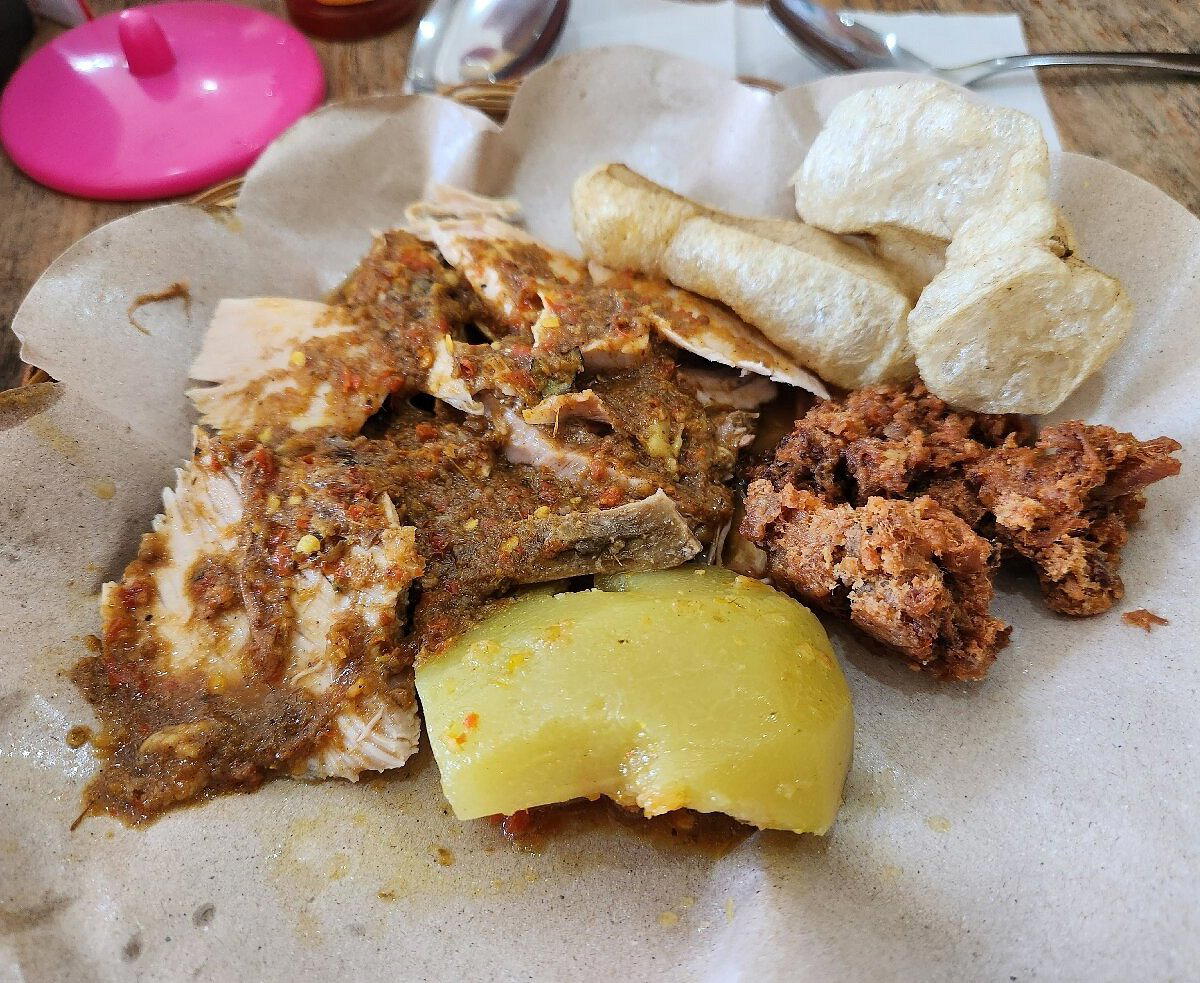
The menu
What to order
- Nasi Campur Spesial Babi Guling
- Babi Guling
Where the Queue Tells You Everything
By mid-morning on any given day, Jalan Suweta in central Ubud already has a rhythm to it: motorbikes threading past temple walls, offerings being arranged on stone steps, and, outside a modest warung with plastic chairs and open-air service, a line of people waiting for pork. The queue at Babi Guling Ibu Oka 1 is not incidental, it is part of the experience. It signals, more reliably than any award plaque, that the kitchen is producing something the local population and informed visitors have decided is worth standing for. In Bali's warung culture, sustained demand of that kind is its own form of credential.
Ubud sits at the cultural and culinary centre of Balinese life in a way that the resort towns to the south do not. The regency of Gianyar, which surrounds it, is the island's artistic heartland, and its food reflects that ceremonial seriousness. Babi guling, spit-roasted suckling pig, rubbed with a paste of turmeric, galangal, lemongrass, chilli, and shrimp paste before slow rotation over coconut-husk fire, is not an everyday dish in traditional Balinese households. It belongs to temple festivals, tooth-filing ceremonies, and communal celebrations. The warung format democratises access to it, pulling a ritual food into daily commerce without entirely shedding its ceremonial weight.
The Ritual Structure of the Meal
Eating babi guling at a warung like Ibu Oka 1 follows a protocol that has more in common with ceremony than with restaurant dining. There is no menu to deliberate over. You arrive, you state how many portions, and the kitchen assembles a plate from the pig that came off the spit that morning. The components are fixed: slices of roasted skin, meat pulled from the carcass, lawar (a chopped mixture of vegetables, coconut, and minced pork or chicken bound with spices), urutan (Balinese sausage), and steamed rice soaked in the braising juices. A cup of thin pork broth typically arrives alongside.
The pacing is not slow. This is not a tasting menu format where anticipation is manufactured through courses. It is direct, purposeful, and communal in the way that market eating across Southeast Asia tends to be: benches fill up, plates arrive quickly, conversation competes with the sound of the street. The ritual is in the specificity of the dish itself, not in the theatre of service. At the tier of Indonesian dining where ceremony and formality are designed into the experience, places like BLANCO par Mandif in Ubud or Four Seasons Bali at Sayan, the tradition of Balinese cooking arrives through a different lens entirely. Ibu Oka 1 makes no concessions in that direction. The lens here is the dish.
This single-dish discipline places Ibu Oka 1 in a specific bracket of Indonesian warung culture: the specialist, not the generalist. It sits alongside duck specialists like Bebek Bengil (Dirty Duck Diner), though Bebek Bengil operates with a fuller menu and a more structured restaurant format. The comparison is instructive. Ubud's dining scene ranges from that kind of destination-restaurant tier, which also includes Locavore NXT and Beduur Restaurant, down to the warung level, where price and format drop away and the cooking itself carries the entire argument. Ibu Oka 1 belongs firmly to the latter.
The Tradition Behind the Pig
Babi guling's ceremonial origins shape how seriously Balinese cooks approach the spice paste. The base, called base genep in its fullest form, can involve more than a dozen components: candlenut, white turmeric, greater galangal, lesser galangal, ginger, kencur, lemongrass, shallots, garlic, dried shrimp paste, long pepper, coriander, and palm sugar. Proportions vary by region and family. The pig itself is typically young, under 15 kilograms, which keeps the fat-to-meat ratio appropriate for the roasting time. The skin, which should shatter rather than chew, is the benchmark by which any babi guling kitchen is judged locally.
Across the wider Indonesian archipelago, the regional specificity of spice-forward roasted and stewed meats is a defining characteristic of the cuisine. The rendang tradition in West Sumatra, the ayam taliwang of Lombok, the coto makassar of Sulawesi, each reflects a particular range of spice availability and ceremonial function. Babi guling occupies that same niche within Hindu-majority Bali, distinct from the Muslim-majority food culture that governs most of Indonesia. For visitors arriving from Jakarta's more cosmopolitan restaurant scene, where places like August or Kahyangan in Gondangdia represent a very different register, the warung encounter with Balinese ceremonial food is a substantive shift in culinary grammar.
Context Within Ubud's Food Scene
Ubud's dining options now span a range wide enough to confuse a first visit. Plant-forward restaurants like Moksa sit a few kilometres from pork specialists. Resort dining at properties like Buahan, a Banyan Tree Escape operates in a different price tier and with a different set of ambitions. Across Bali more broadly, the premium end now includes internationally-recognised addresses: Sarong Bali in Canggu, Cuca Restaurant in Badung, and Rumari in Jimbaran. None of these are the point of comparison for Ibu Oka 1.
A warung that relied only on tourist traffic would have a different operational pattern: longer hours, a more varied menu, an English-language sign. Ibu Oka 1's profile suggests something closer to a specialist that happens to have been noticed, rather than one that has engineered its own discoverability. For broader context on where this sits in the Gianyar dining picture, see our full Gianyar restaurants guide.
Planning Your Visit
The operational logic of a babi guling warung determines the visit more than any booking system could. The pig comes off the spit once per day, and when it is gone, the kitchen closes. Arriving before noon is the practical rule; arriving before 11am is safer if you want to eat without the risk of finding the kitchen sold out. There is no reservation process and no website to check. The address, Jl. Suweta No.1, Ubud, puts the warung directly adjacent to the Ubud Palace on the main road, which makes it direct to locate on any mapping application. Payment is cash-based at this tier of warung. Dress code is non-existent. The meal itself is priced at the lower end of the Ubud dining spectrum, which is part of why the queue forms in the first place.
For visitors whose Bali itinerary already includes higher-format dining, a table at BLANCO par Mandif, perhaps, or an evening at The Legian in Seminyak, the contrast is worth building in deliberately. The warung meal at Ibu Oka 1 is not a lesser version of Balinese cuisine; it is a different register of the same tradition, one that connects the cooking to its ceremonial origins more directly than any tasting menu format can.
Frequently asked questions
Where do I go for Babi Guling Ibu Oka 1?
Babi Guling Ibu Oka 1 is located at Jl. Suweta No.1, Ubud, Kecamatan Ubud, Kabupaten Gianyar, Bali 80571, Indonesia, Gianyar.
How early should I arrive at Babi Guling Ibu Oka 1 to guarantee a plate?
Because the kitchen at Jl. Suweta No.1 works from a single pig roasted once daily, supply is fixed and non-replenishable once it runs out. Arriving by mid-morning gives the most reliable chance of a full plate with crackling intact; later arrivals in Ubud's babi guling warungs typically find reduced cuts or a closed sign. There is no reservation system to fall back on.
What should I eat at Babi Guling Ibu Oka 1?
The meal centres on spit-roasted pork seasoned with base genep, a Balinese spice paste that can include upwards of a dozen aromatics. A standard plate arrives with sliced meat, crackling, lawar, and rice. There is no printed menu: you take what the day's pig yields, and the crackling is the detail most diners come specifically for.
Do they take walk-ins at Babi Guling Ibu Oka 1?
Ibu Oka 1 operates as a walk-in warung at Jl. Suweta No.1 in Ubud, but the operational reality makes timing the actual booking system. One pig comes off the spit per day, and when it sells out, service ends, arriving by late morning is the standard local approach to securing a plate.
What is Babi Guling Ibu Oka 1 known for?
Ibu Oka 1 is the reference point in Ubud for babi guling, the Balinese spit-roasted pork dish with deep ceremonial roots. Its location on Jl. Suweta in central Gianyar has made it a fixture in conversations about where to find the most direct version of the dish in the region. The queue that forms before the pig is ready each day functions as its own credential.
Cuisine-First Comparison
Comparable venues nearby, for context on price, style, and recognition.
| Venue | Cuisine | Price | Notes |
|---|---|---|---|
| Babi Guling Ibu Oka 1This venue (the venue you are viewing) | Balinese Babi Guling (Roast Suckling Pig) | $1–10 | Not listed |
| Jungle Fish Bali | Mediterranean-Inspired Indonesian | $20–30 | Keliki |
| This Is Bali | Authentic Balinese Food & Desserts | $10–20 | Ubud |
| Four Seasons Bali at Sayan | Modern Balinese with Mediterranean Influences | $50–100 | Sayan |
| Bebek Bengil (Dirty Duck Diner) | Balinese & Indonesian | $10–20 | Padang Tegal, Ubud |
| Sage | Vegan Fusion | $10–20 | Nyuh Kuning |
Continue exploring
More in Gianyar
Restaurants in Gianyar
All restaurants in Gianyar →
Bars in Gianyar
All bars in Gianyar →







Details
- Rustic
- Well Known
- Cozy
- Casual Hangout
- Standalone
- A La Carte
Current opening hours
- Monday
- 11 AM–7 PM
- Tuesday
- 11 AM–7 PM
- Wednesday
- 11 AM–7 PM
- Thursday
- 11 AM–7 PM
- Friday
- 11 AM–7 PM
- Saturday
- 11 AM–7 PM
- Sunday
- 11 AM–7 PM
Hours can change for holidays and private events. Last verified .
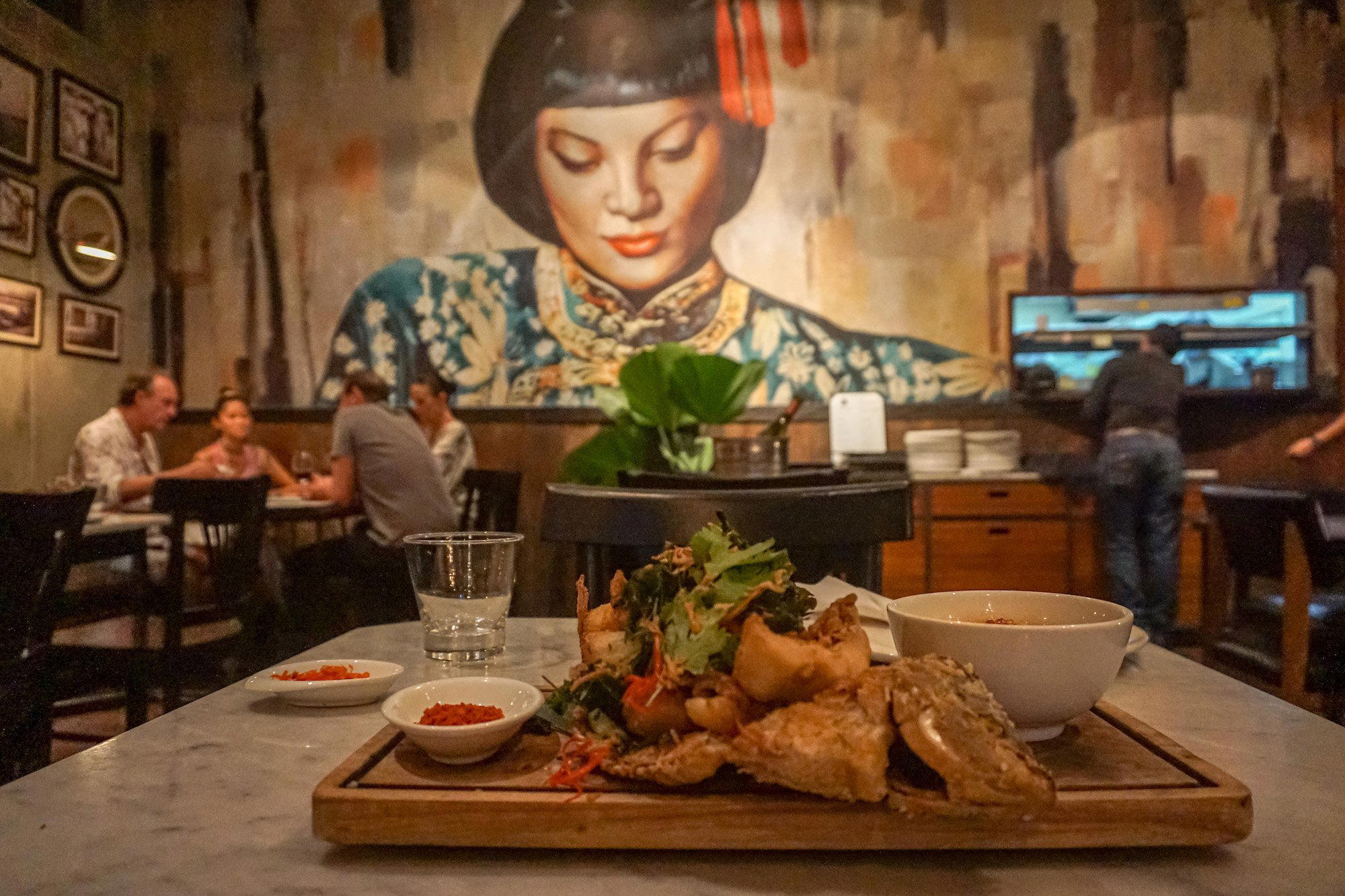
Casual, bustling local eatery with a simple, authentic Balinese warung atmosphere.