



The only Bali hotel on the 2020 Condé Nast Traveller Gold List and Travel + Leisure's number-one hotel in the world in 2018, Four Seasons Resort Bali at Sayan occupies a river valley above Ubud with 60 suites and villas, three distinct dining venues, and a spa embedded in jungle alongside UNESCO-listed rice paddies. Rates from approximately $1,023 per night.
Pearl is the En Primeur Club membership app — saves, bookings, and concierge access live there. Same editors, same standards.
- Address
- Jl. Raya Sayan, Sayan, Kecamatan Ubud, Kabupaten Gianyar, Bali 80571
- Phone
- +62 361 2016000
- Website
- fourseasons.com
- Directions
- Get directions
 Saves & bookings on Pearl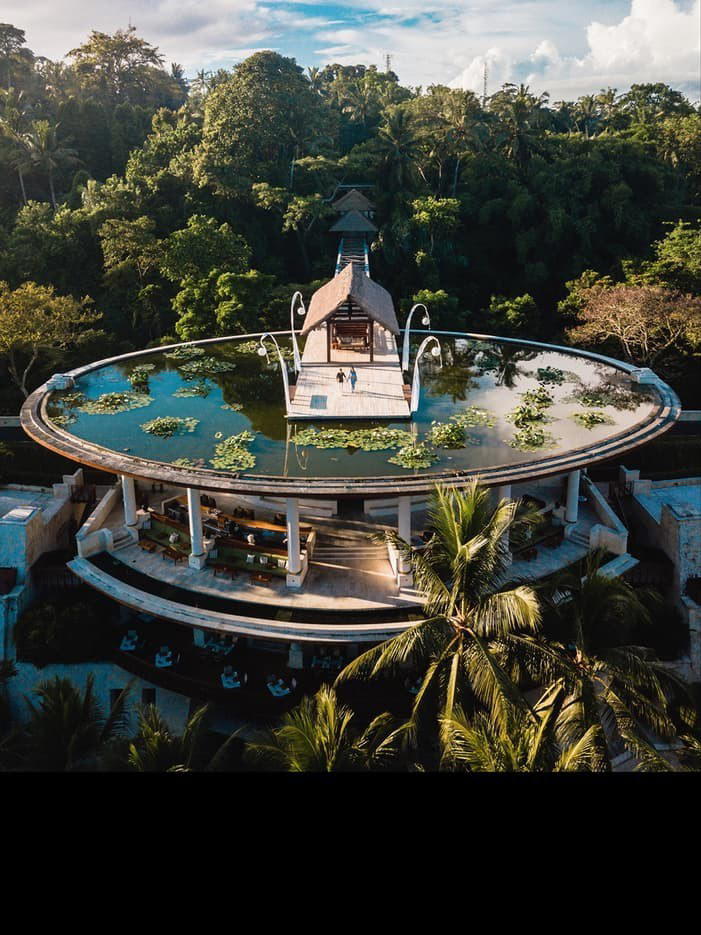
Where the Ayung River Sets the Terms
Ubud's rise as a counterpoint to Bali's coast is now well established. The shift from surf-and-sand to the island's central hills has drawn a particular traveller: one less interested in beach clubs and more attuned to landscape, craft, and ritual. The accommodation market that developed around that shift split early into two camps: large-scale resorts adapting beach-resort formulas to a hillside setting, and a smaller cohort of properties that treated the river valley itself as the architectural brief. Four Seasons Resort Bali at Sayan belongs firmly to the second camp.
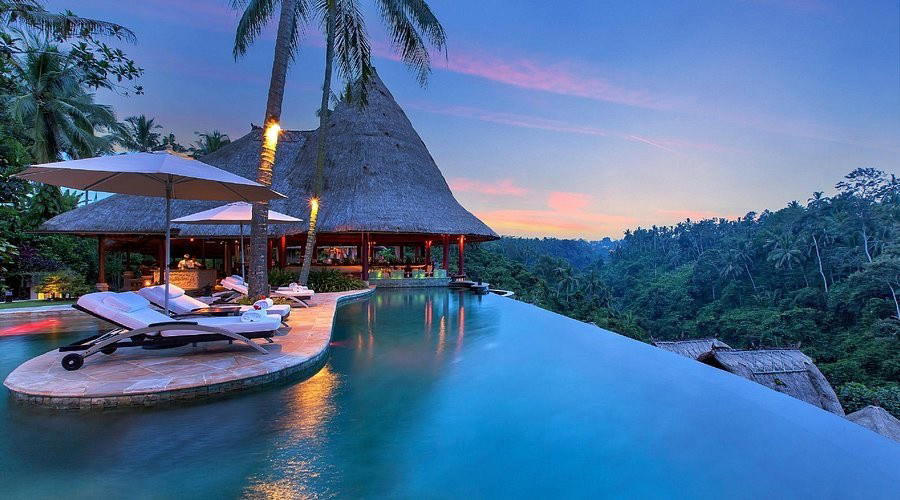
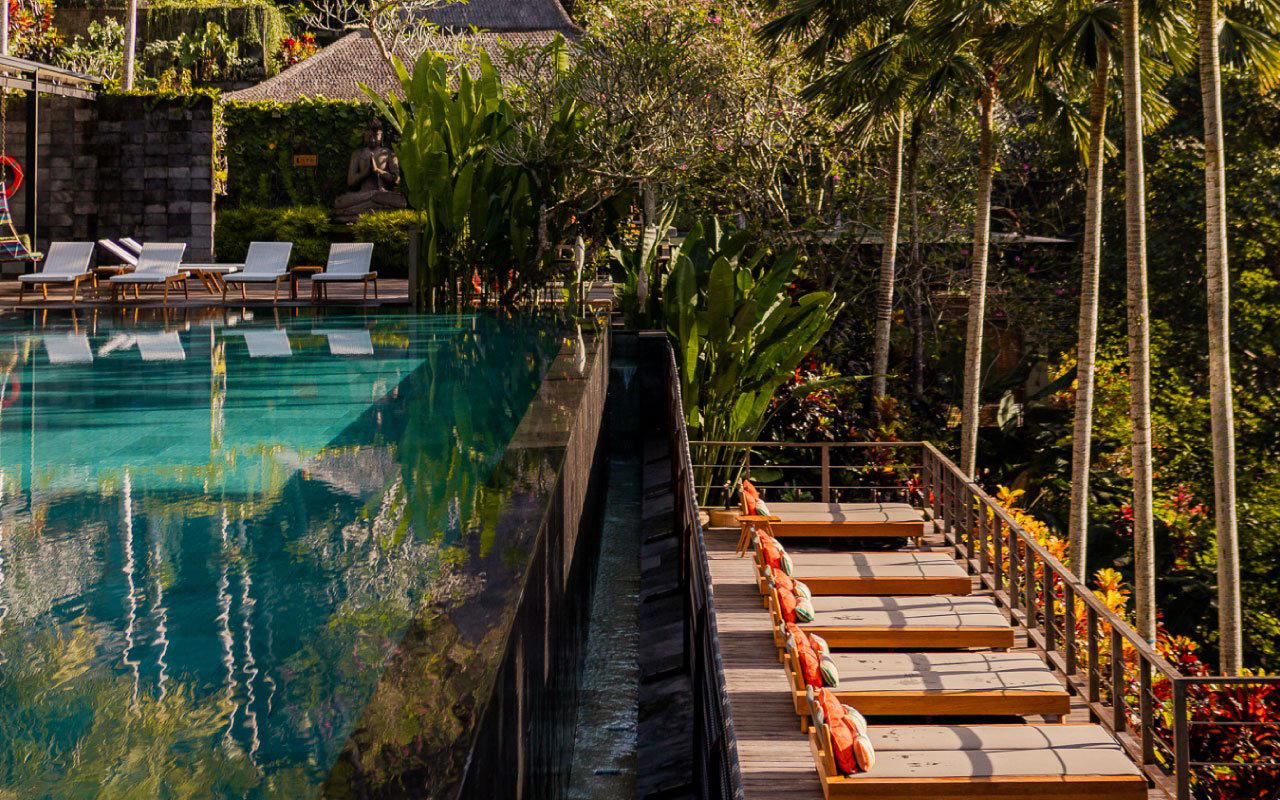
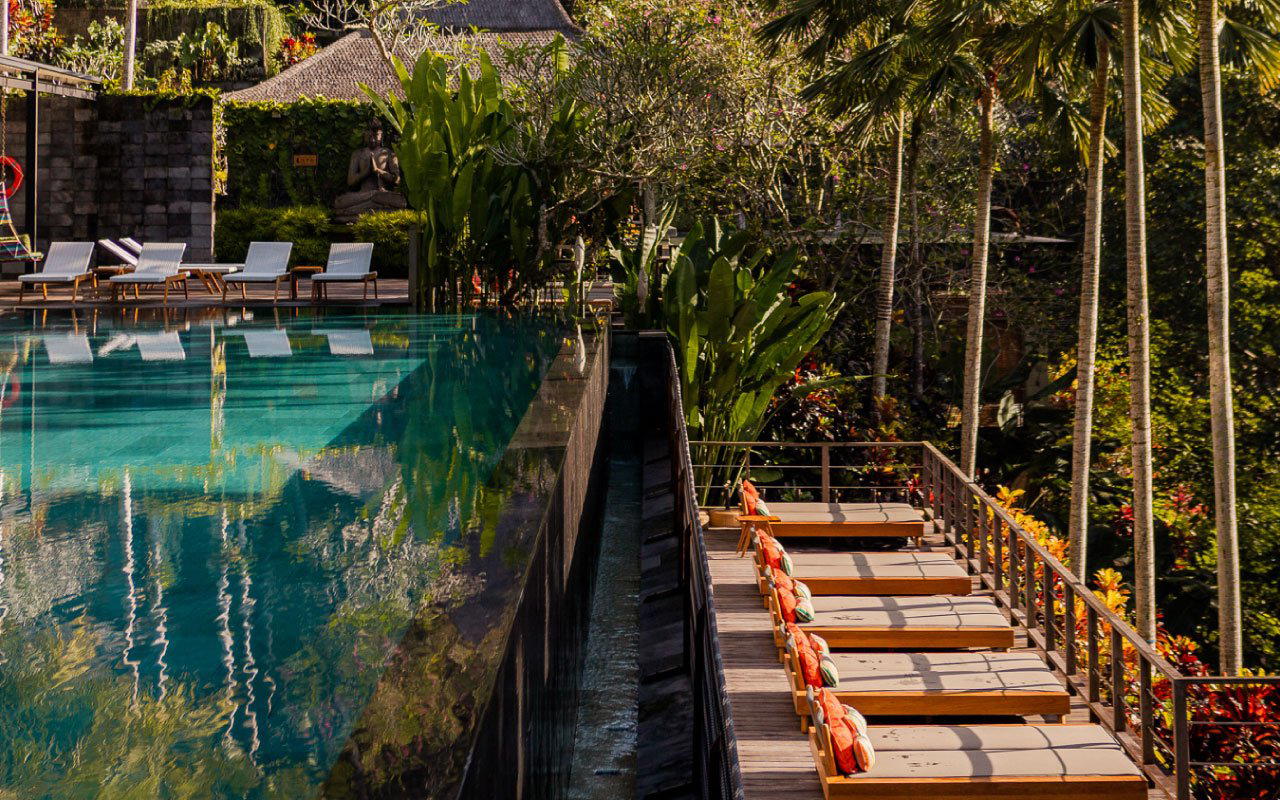
The approach to the property signals its intentions before a single room is seen. A suspended walkway crosses to a lotus pond at roof level; below it, the lobby and public spaces cascade down the hillside toward the Ayung River. The architecture is deliberately modern, using traditional materials kept low to the terrain so that the structure reads as part of the valley rather than imposed upon it. Restaurants seat around thirty, the pool follows the river's curve, and the 60 suites and villas are distributed across the slope in a configuration that preserves sightlines and acoustic privacy. The Ayung's sound carries through much of the property, a detail that is harder to engineer than it appears.
Sayan's Position in the Ubud Luxury Tier
Ubud's upper-end hotel market is competitive and increasingly well-defined. Properties like Mandapa, a Ritz-Carlton Reserve and Amandari occupy the same valley corridor, each with a distinct positioning. Capella Ubud has carved space in the tented-camp format, while COMO Shambhala Estate anchors the wellness-residential end of the spectrum. Sayan's credential stack places it in the awards-validated tier: the sole Bali property on the 2020 Condé Nast Traveller Gold List, the number-one hotel in the world according to Travel + Leisure World's Leading Awards in 2018, and a consistent Forbes Travel Guide five-star rating across 2017 through 2021. La Liste's 2026 Leading Hotels ranking awarded the property 96 points. These are not brochure claims; they reflect sustained independent assessment across multiple editorial and consumer platforms over several years.
At 60 keys, it is small by Four Seasons standards, a scale that shapes everything from service ratios to the intimacy of the dining rooms. Properties like Bisma Eight Ubud and COMO Uma Ubud operate at comparable scale, but Sayan's river-valley site and award depth place it in a narrower comparable set.
Responsible Luxury Along a UNESCO-Listed Waterway
The subak irrigation system that feeds Bali's rice terraces is UNESCO Heritage-listed, and the Ayung River corridor that runs through Sayan is part of that network. Staying here places guests in direct relationship with a living agricultural system, not as passive observers but as potential participants. The property runs rice-planting sessions with local farmers on the adjacent terraces, a program that connects guests to the labour and knowledge behind Bali's staple crop. This is a meaningful distinction from properties that treat the surrounding landscape as scenery.
The Sacred River Spa extends this orientation. Treatments use locally sourced organic products formulated exclusively for this property, including a scrub built from temu lawak ginger root, fenugreek, cloves, and turmeric. Three spa villas supplement the main treatment building, all furnished with teak and decorated with batik. The spa holds recognition in the Tatler Spa Guide 2020 and received a top-ten placement in the Organic Spa Media Wellness Travel Awards in the same year. Properties like Gdas Bali Health and Wellness Resort and Chapung Sebali also anchor wellness programming in the Ubud hills, but Sayan's combination of spa awards, resident wellness mentor credentials, and UNESCO-adjacent site gives the offer a depth that most properties in the category cannot match.
Resident wellness mentor, a former Buddhist nun, runs meditation sessions, Life Talks, and a practice called Sacred Nap alongside the standard spa programming. Guest yoga instructors rotate through the property on one-to-two-week residencies, keeping the yoga program from becoming static. Arrangements can also be made for visits to Balians, Bali's traditional healers, accompanied by a translator.
Three Dining Rooms, Three Registers
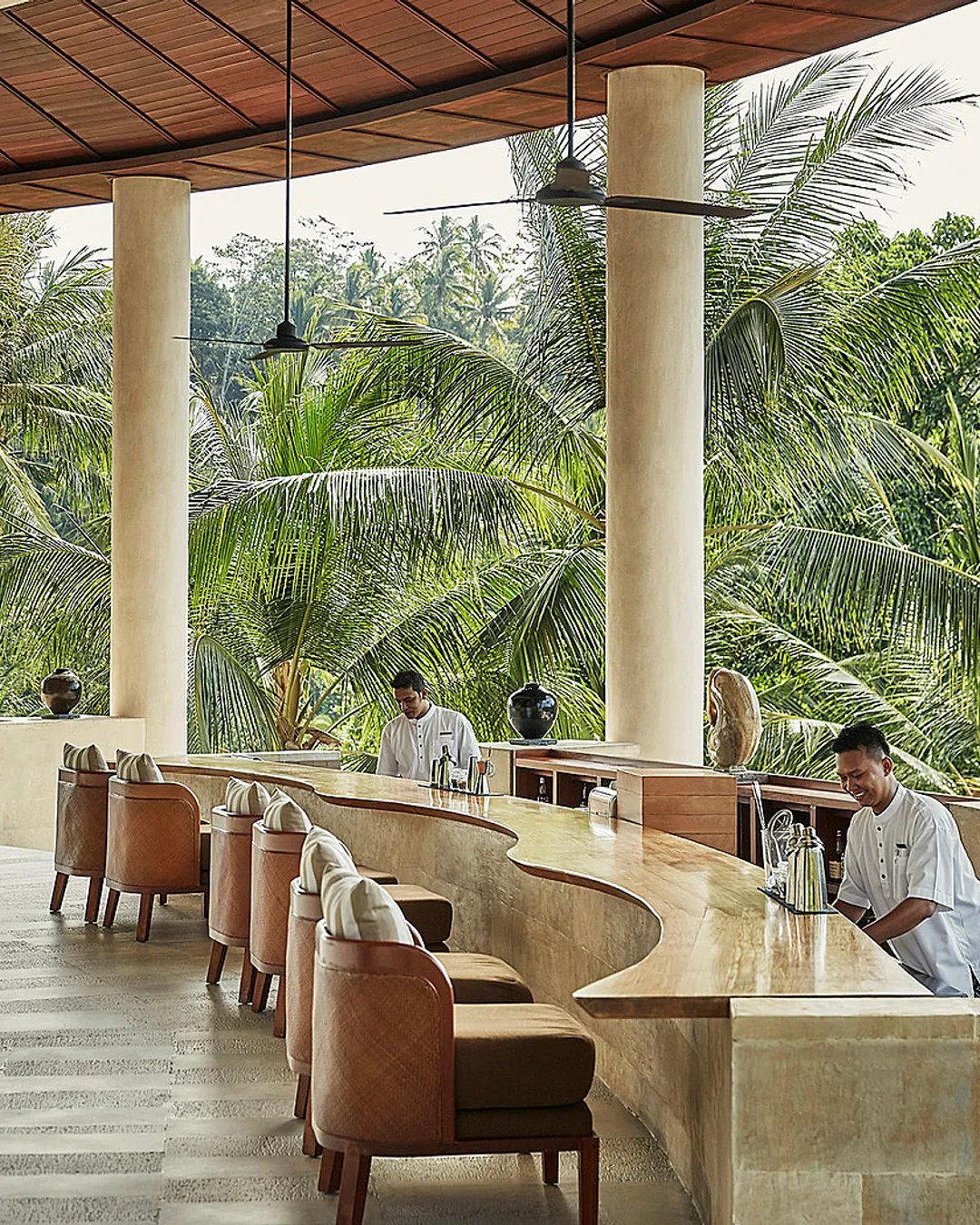
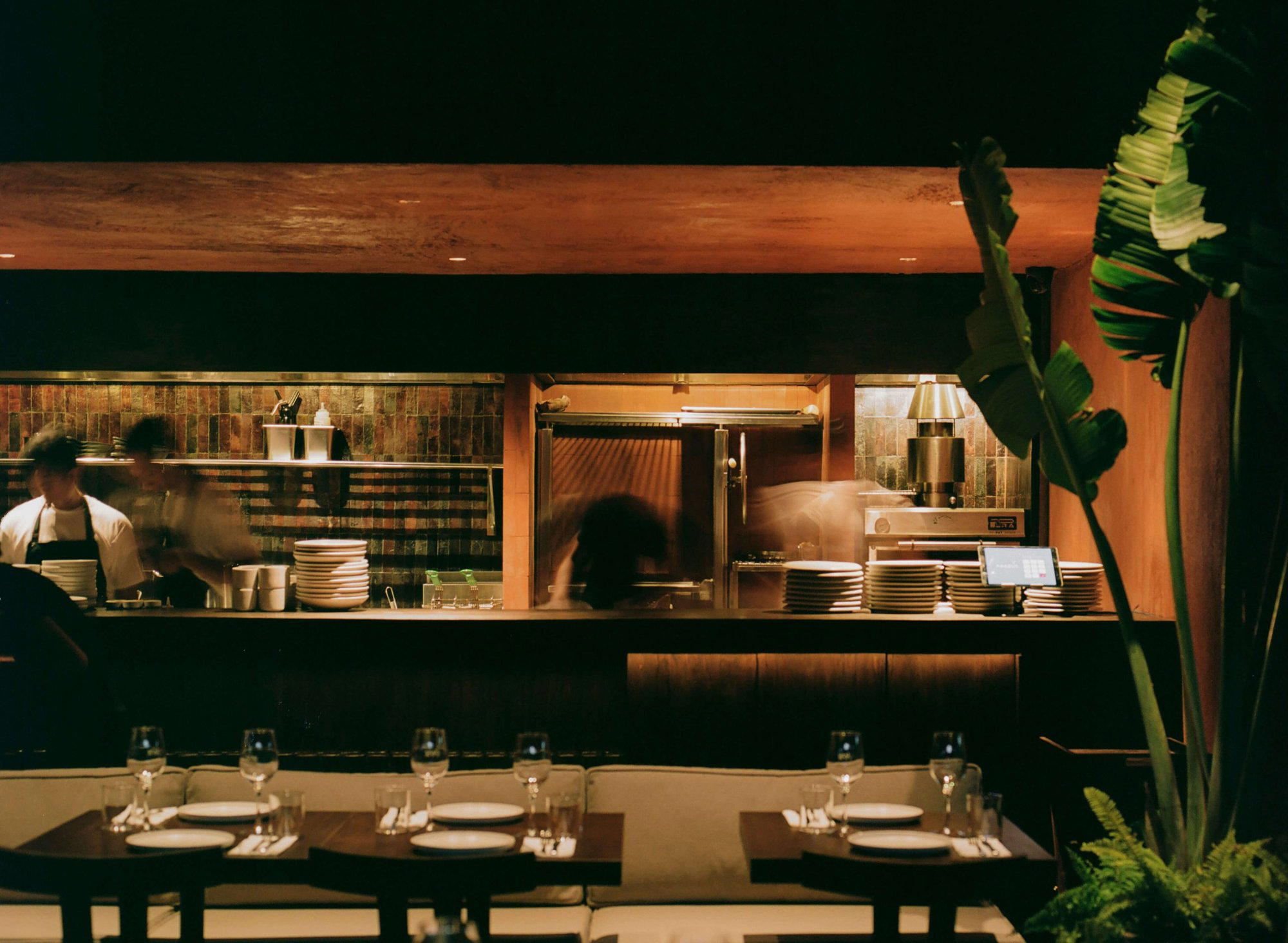
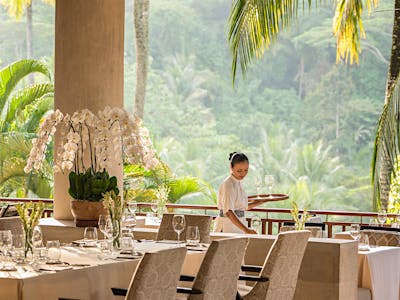
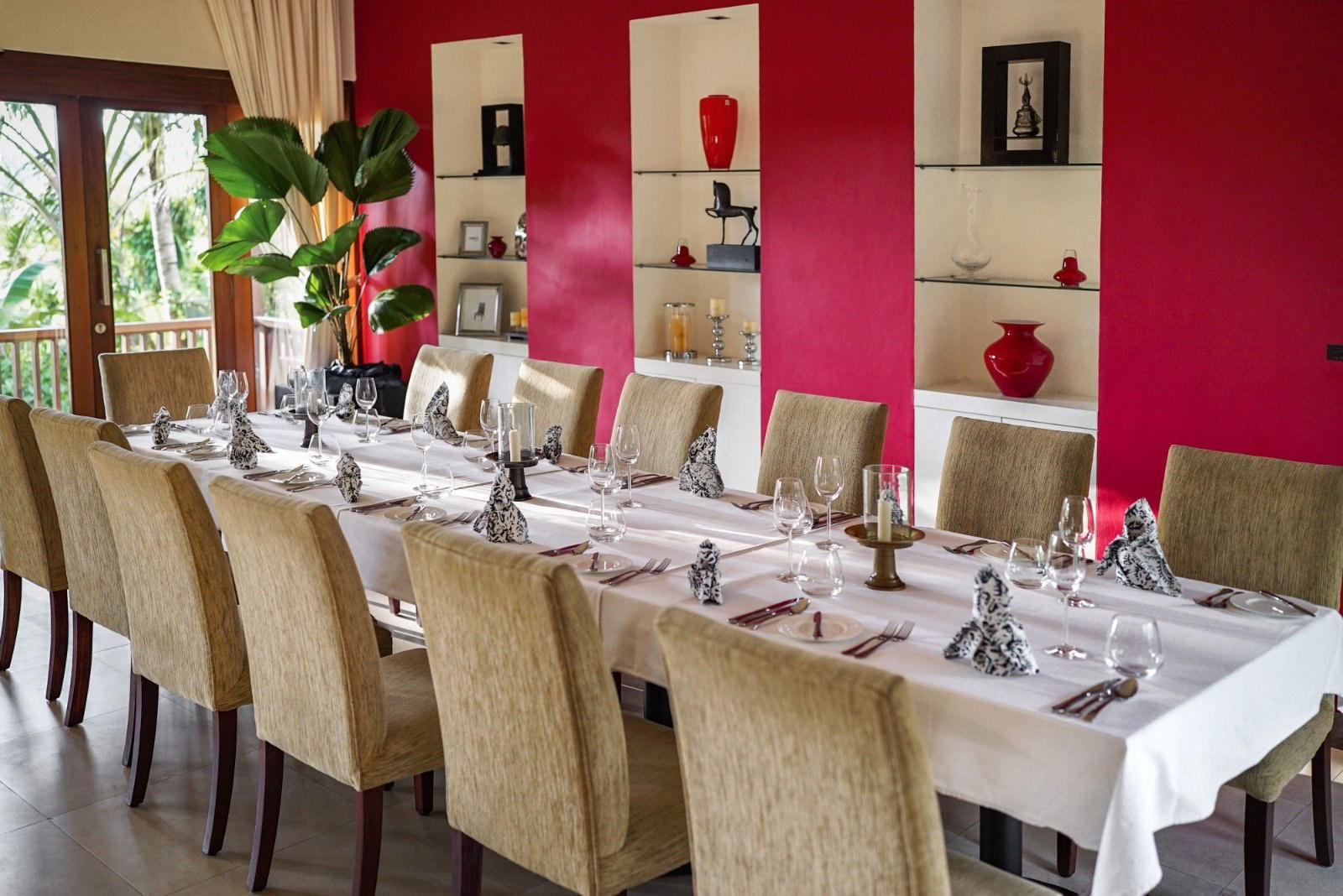
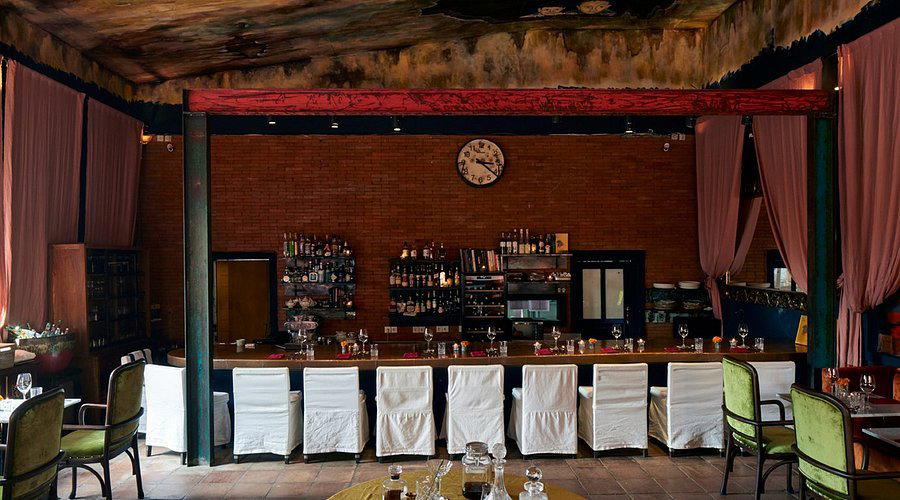
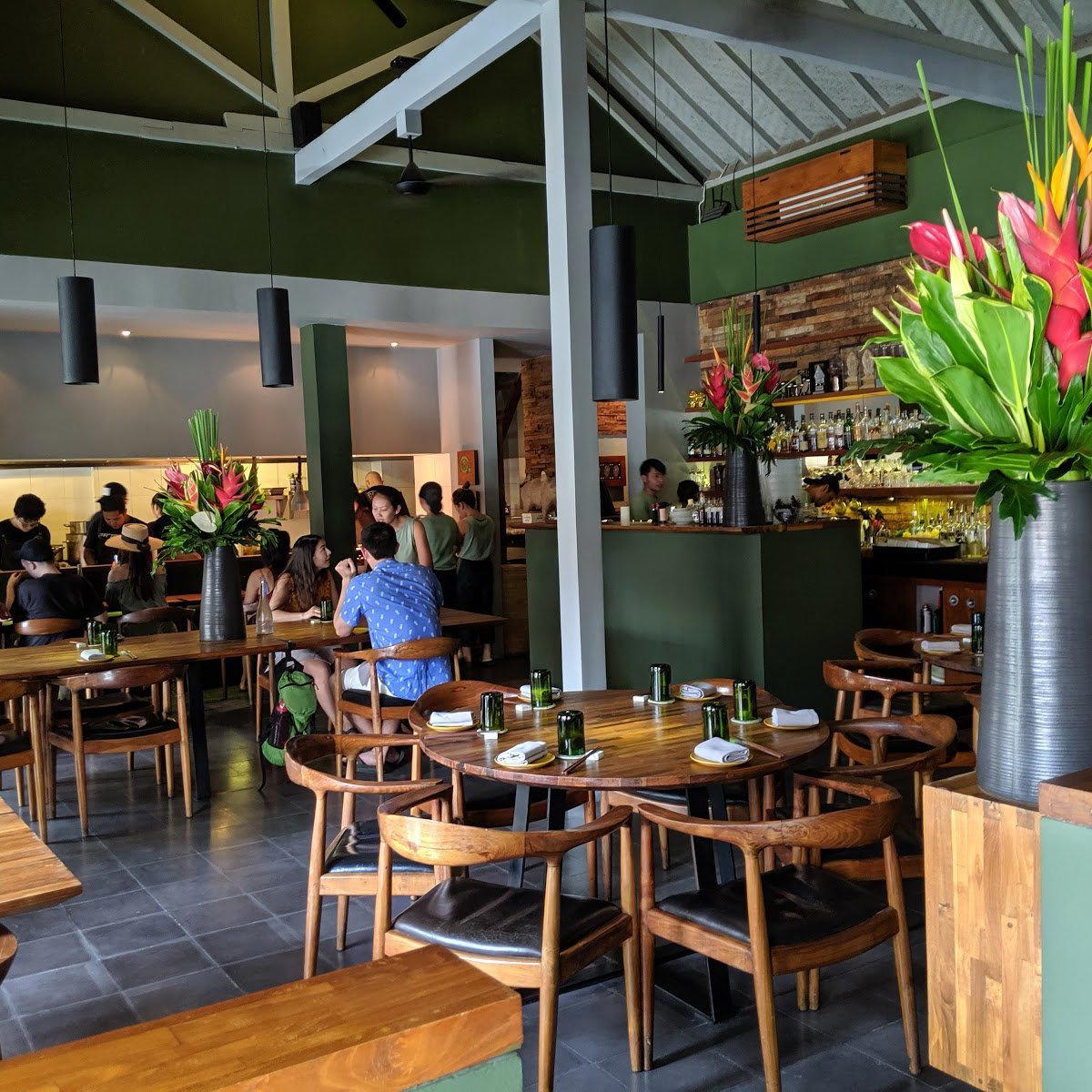
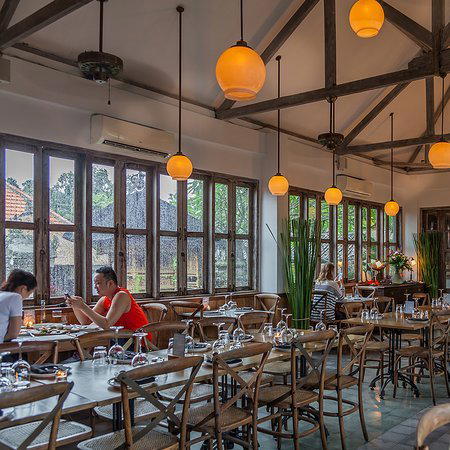
Dining program at Sayan covers three distinct formats without attempting to consolidate them. Ayung Terrace delivers Indonesian flavours above the river valley, the views as deliberate as the food. Riverside handles French bistronomy and BBQ at a lower elevation closer to the water. Sokasi is structured around Balinese culinary education, where the focus is technique and context rather than simply the meal. Restaurants seat approximately thirty, which keeps the dining rooms from tipping into banquet-hall scale. This intimate format is consistent with properties in the same tier: at Bambu Indah and Desa Seni Baturiti, smaller dining formats are similarly used to keep the guest experience from fragmenting.
Rooms, Villas, and the Logic of the Site
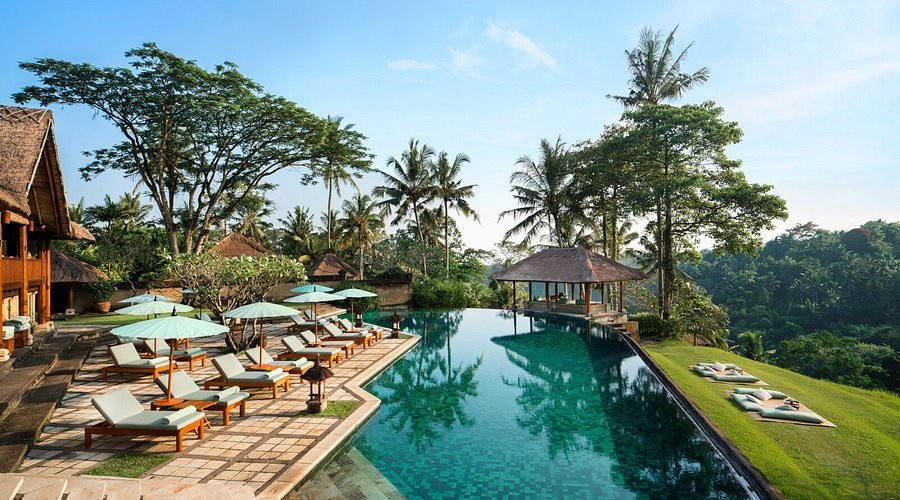
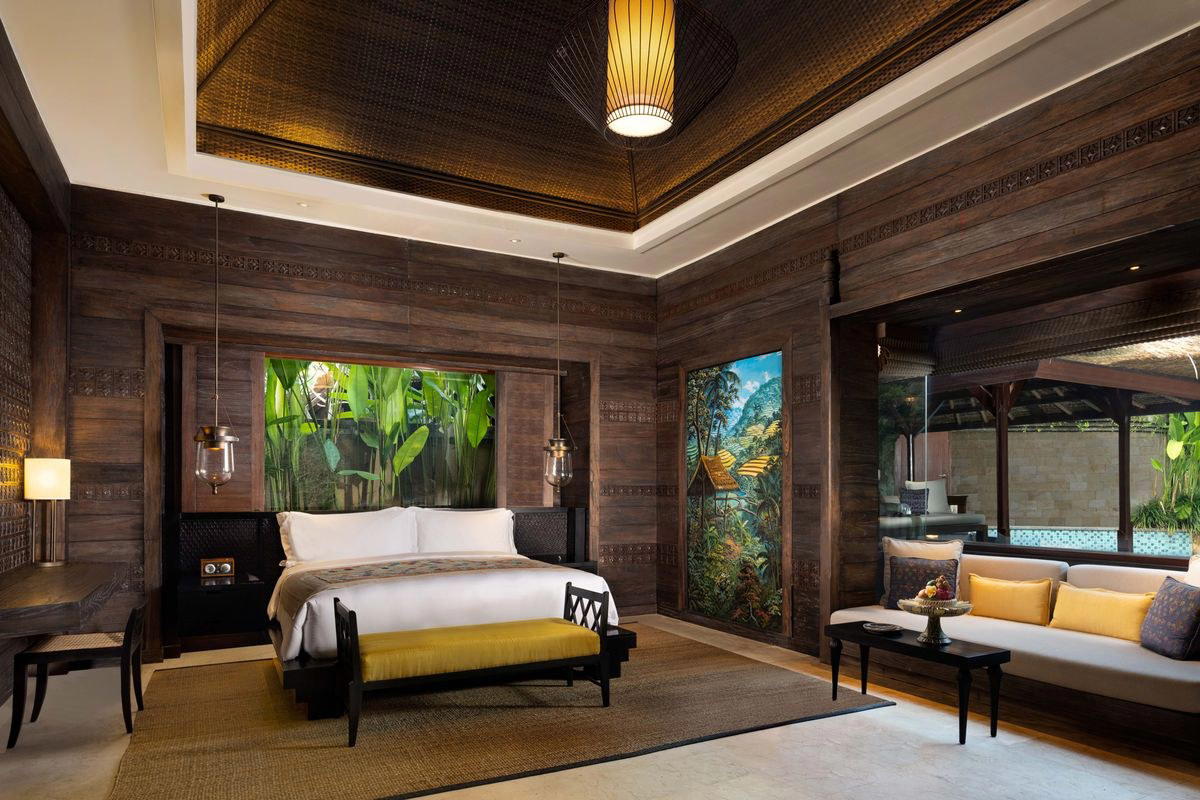
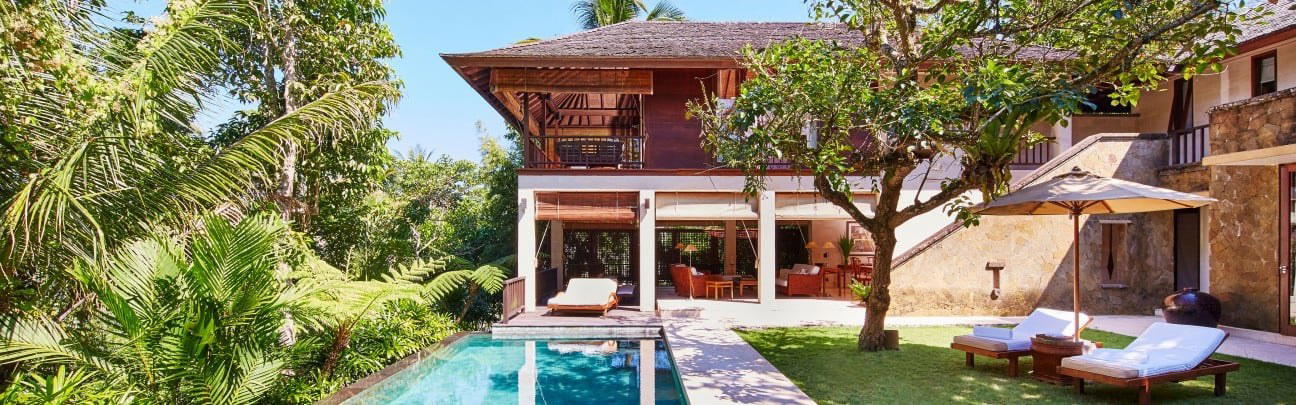
18 suites occupy the main building, positioned close to the restaurants and the bi-level pool. The 42 villas are distributed across the slope, some reachable on foot and others accessed by electric buggy. Each villa includes a plunge pool and outdoor shower; the suites have terraces. Materials throughout favour teak furniture and woodwork, with tile-work in the bathrooms and a mix of contemporary and traditional Balinese design registers. Bathrooms include deep soaking tubs and separate dressing areas. Nihi Sumba and at a comparable level to properties such as Alila Villas Uluwatu further south.
Getting There and Getting Around
Four Seasons Resort Bali at Sayan is approximately one hour by road from Ngurah Rai International Airport in Denpasar. A complimentary shuttle runs throughout the day between the resort and central Ubud, a journey of roughly fifteen minutes. The shuttles carry bottled water, umbrellas (rain and sun both arrive without much notice in this part of Bali), and onboard Wi-Fi. Bottled water, cold towels, and sun umbrellas are also placed at points across the resort grounds. Complimentary on-site programming includes yoga and meditation classes, Balinese dance performances, and village, resort, and temple tours, as well as a Kids Club. River rafting, local market tours, Balinese cooking classes, and visits to traditional healer homes can be arranged through the property. Hotel Komune and Beach Club Bali in Gianyar and Batur Natural Hot Spring in Kintamani offer different Bali entry points, while Villa Waru Nusa Lembongan represents the outer-island alternative. Those seeking urban luxury benchmarks for comparison might look at Aman New York or The Fifth Avenue Hotel in New York City, while Aman Venice offers a useful European reference for how a prestige property can anchor itself to a listed heritage site in a comparable way.
Budget and Context
Comparable venues nearby, for context on price, style, and recognition.
| Venue | Price | Awards | Notes |
|---|---|---|---|
| Four Seasons Resort Bali at SayanThis venue — the venue you are viewing | $$$$ | Michelin 1 Key | Not listed |
| Bisma Eight Ubud | $$$$ | Michelin 1 Key | Ubud, Luxury boutique hotel blending contemporary Balinese craftsmanship with natural surroundings. |
| Samsara Ubud | $$$$ | Michelin 1 Key | Payangan, Contemporary Balinese luxury resort blending traditional architecture with modern amenities in a secluded rainforest setting. |
| Viceroy Bali | $$$$ | Michelin 1 Key | Ubud, luxury villa resort with Balinese architecture and modern comforts |
| COMO Shambhala Estate | $$$$ | Michelin 1 Key | Ubud, Wellness-focused residential retreat with private villas and suites |
| Chapung Sebali | $$$$ | Michelin 1 Key | Ubud, Eclectic fusion of traditional Indonesian architecture and contemporary Scandinavian styling with sustainability focus. |
Recognition history
Dated appearances from independent guides and award organizations, with the underlying list record or original source where available.
Forbes 5-Star
Forbes
La Liste Top Hotels
La Liste
Virtuoso Luxury Hotel Partner
Virtuoso
Forbes 5-Star
Forbes
Michelin 1 Key
Michelin
At a Glance
- Scenic
- Elegant
- Sophisticated
- Quiet
- Romantic
- Honeymoon
- Romantic Getaway
- Wellness Retreat
- Family Vacation
- Infinity Pool
- Private Villa
- Panoramic View
- Destination Spa
- Pool
- Spa
- Fitness Center
- Room Service
- Concierge
- Kids Club
- Wi Fi
- Garden
- Mountain
- Pool
- Spa
- Fitness Center
- Room Service
- Concierge
- Kids Club
- Wi Fi
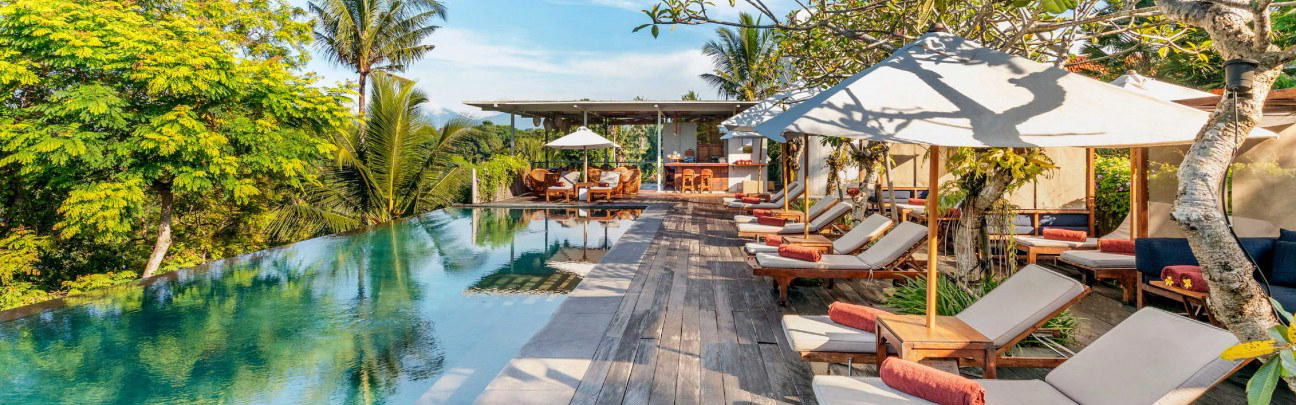
Tranquil and lush atmosphere with natural lighting from open-air designs, rice terraces, and riverfront settings, evoking serenity and immersion in Bali's rainforest.