



Opened in 1989 as Bali's first village-style resort, Amandari occupies a dramatic position above the Ayung River gorge in Kedewatan, five minutes from Ubud. Its 30 thatched-roof suites, scored 90 points by La Liste in 2026, are arranged around private walled gardens and set along sacred land still used for Balinese ritual processions. Starting from $995 per night, it remains the foundational reference point for luxury resort design in Bali.
Pearl is the En Primeur Club membership app — saves, bookings, and concierge access live there. Same editors, same standards.
- Address
- Jl. Raya Kedewatan, Kedewatan, Kecamatan Ubud, Kabupaten Gianyar, Bali 80571
- Phone
- +62 361 975333
- Website
- aman.com
- Directions
- Get directions
 Saves & bookings on Pearl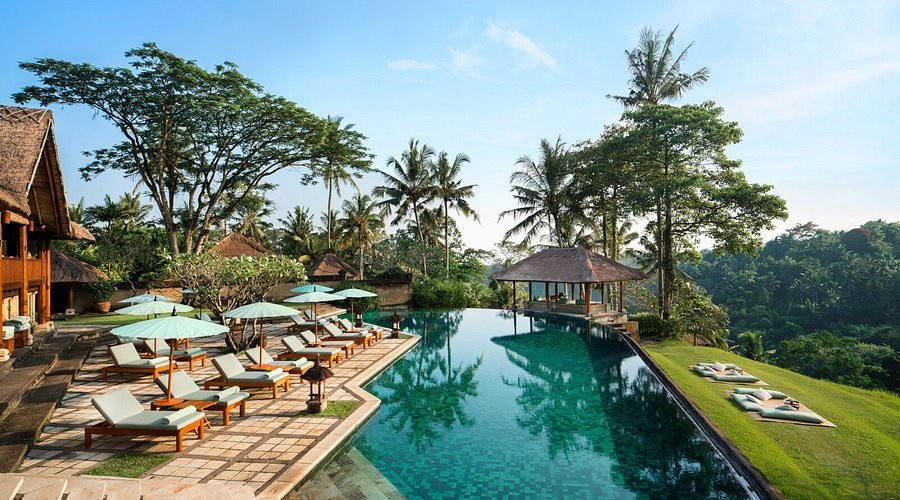
The Approach That Sets the Tone
The transition from Ubud's arterial roads to Amandari's driveway is one of those rare moments in travel where the shift is both physical and psychological. The noise of motorbikes drops away. A canopy of trees closes overhead. By the time the open-air lobby comes into view, its silhouette modelled on a wantilan, the traditional Balinese village meeting pavilion, the resort has already made its argument without saying a word. Amandari opened in 1989 as Bali's first village-style resort, and while that origin story is now well-documented, what matters more for the traveller considering a stay is that the design logic has aged with unusual integrity. The river-stone walkways, the high paras-stone walls, the thatched-roof suites entered through Balinese stone gateways: none of it has been renovated into blandness.
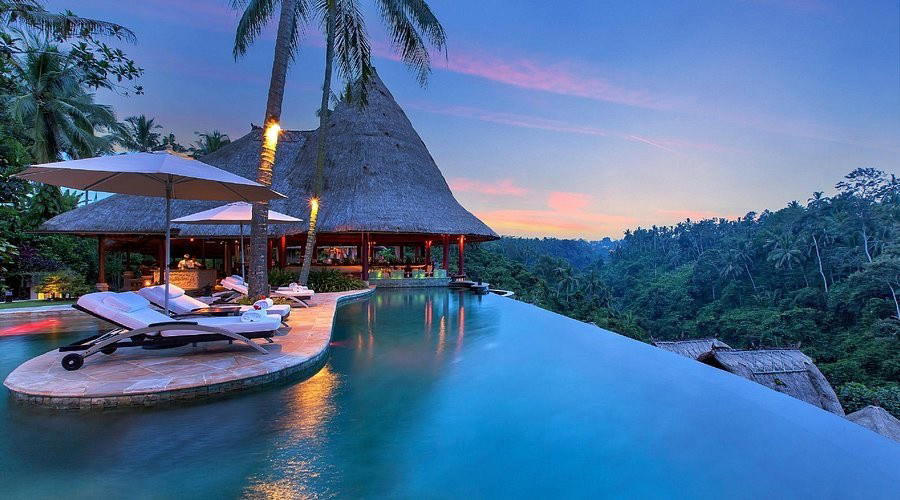
This is Aman at its most distilled. The group's properties, from Aman New York to Aman Venice, rely on disciplined architecture and setting. At Amandari, that discipline is visible in what is absent as much as what is present: no overscaled grand staircase, no lobby bar positioned for spectacle, no architectural gestures competing with the Ayung River gorge dropping away beyond the pool terrace.
Ubud's Luxury Tier and Where Amandari Sits Within It
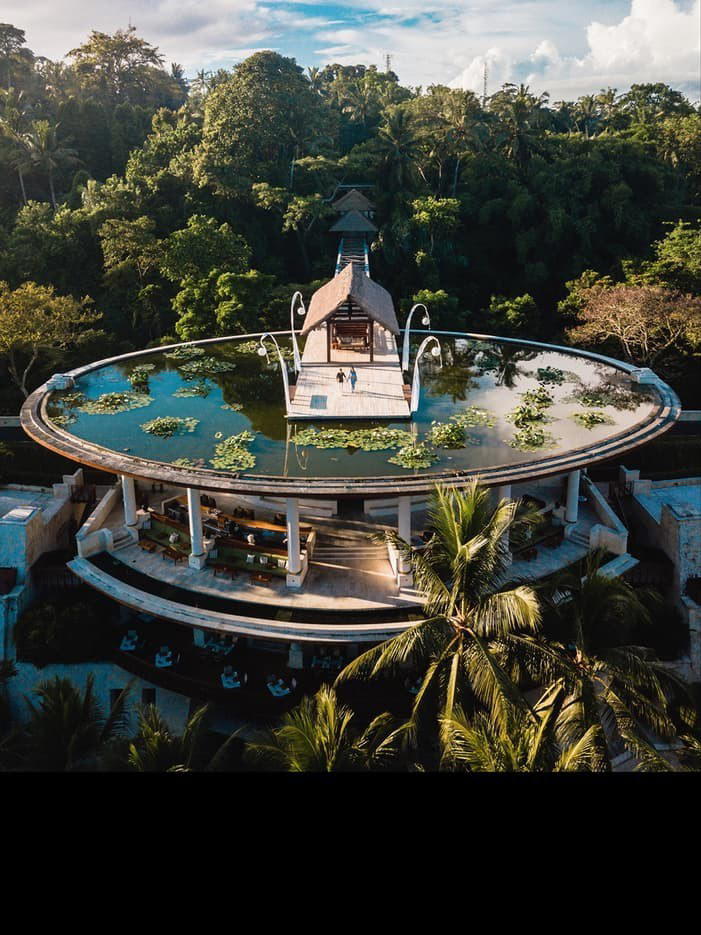
Ubud now carries a dense competitive set at the upper end of resort accommodation. Mandapa, a Ritz-Carlton Reserve has positioned itself on Ayung River access and a wellness-forward program. Four Seasons Resort Bali at Sayan occupies a dramatic lotus-pond promontory. Capella Ubud, Bali delivers a tented camp format, and COMO Shambhala Estate competes on a therapeutic wellness identity. Into this field, Amandari brings one claim no competitor can replicate: precedence. It is the original, scored 90 points by La Liste in its 2026 Leading Hotels ranking, and its pricing from $995 per night places it in the same bracket as its nearest peers while carrying the additional weight of being the property that, in many respects, defined what the bracket looks like.
Amandari's comparative position is not simply about heritage. At 30 suites, it is one of the more intimate properties in the Ubud luxury tier, a restraint that directly affects the quality of service density. Properties that have chased scale tend to absorb that intimacy into operational complexity. Amandari has not. For travellers comparing it against larger-footprint competitors, that ratio of staff attention to room count is a functional differentiator.
Across Bali more broadly, properties like Alila Villas Uluwatu in Uluwatu and Nihi Sumba in Sumba occupy the same general price tier with distinct geographic and experiential identities. Amandari's position is rooted specifically in Ubud's cultural density: the temples, rice terraces, and ceremony cycles that make central Bali a different proposition from the coastal south.
The Dining Programme
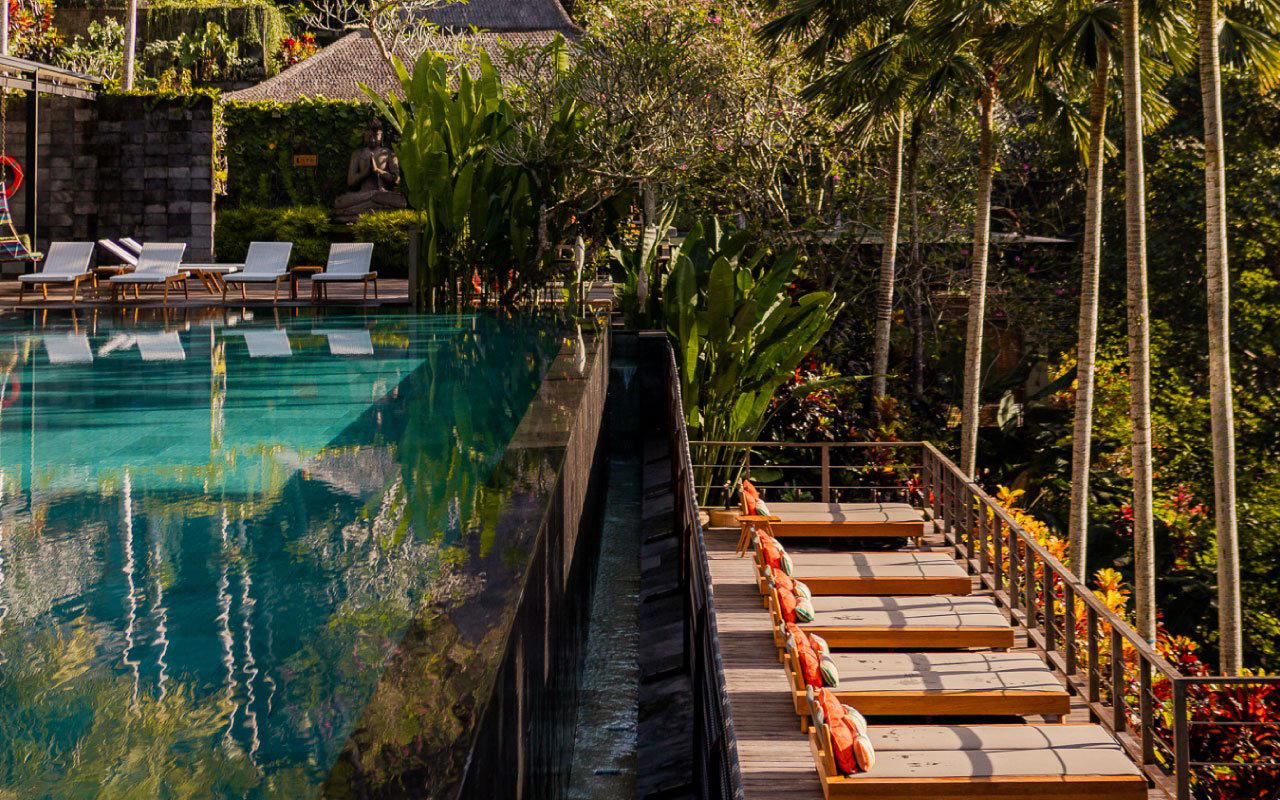
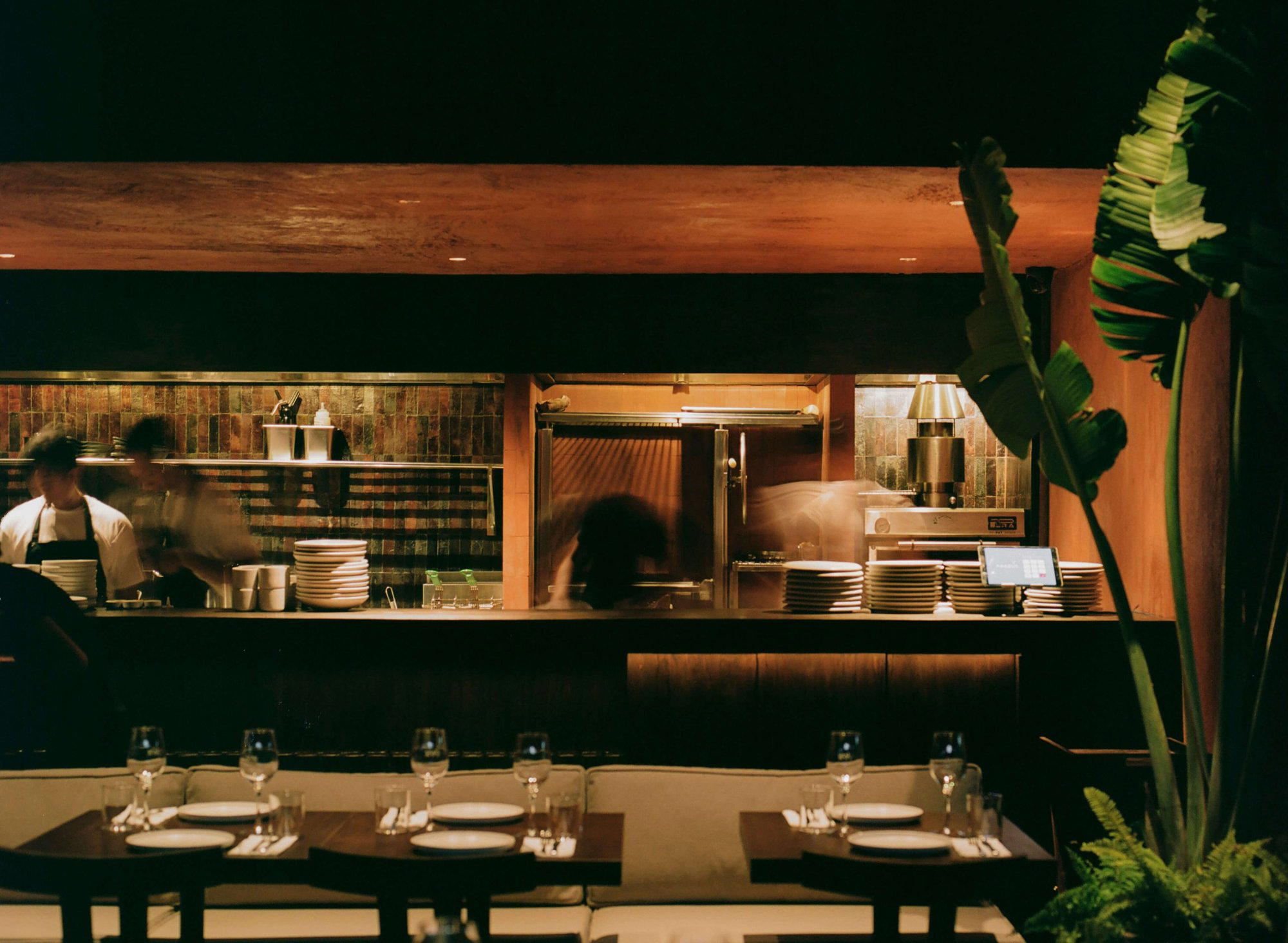
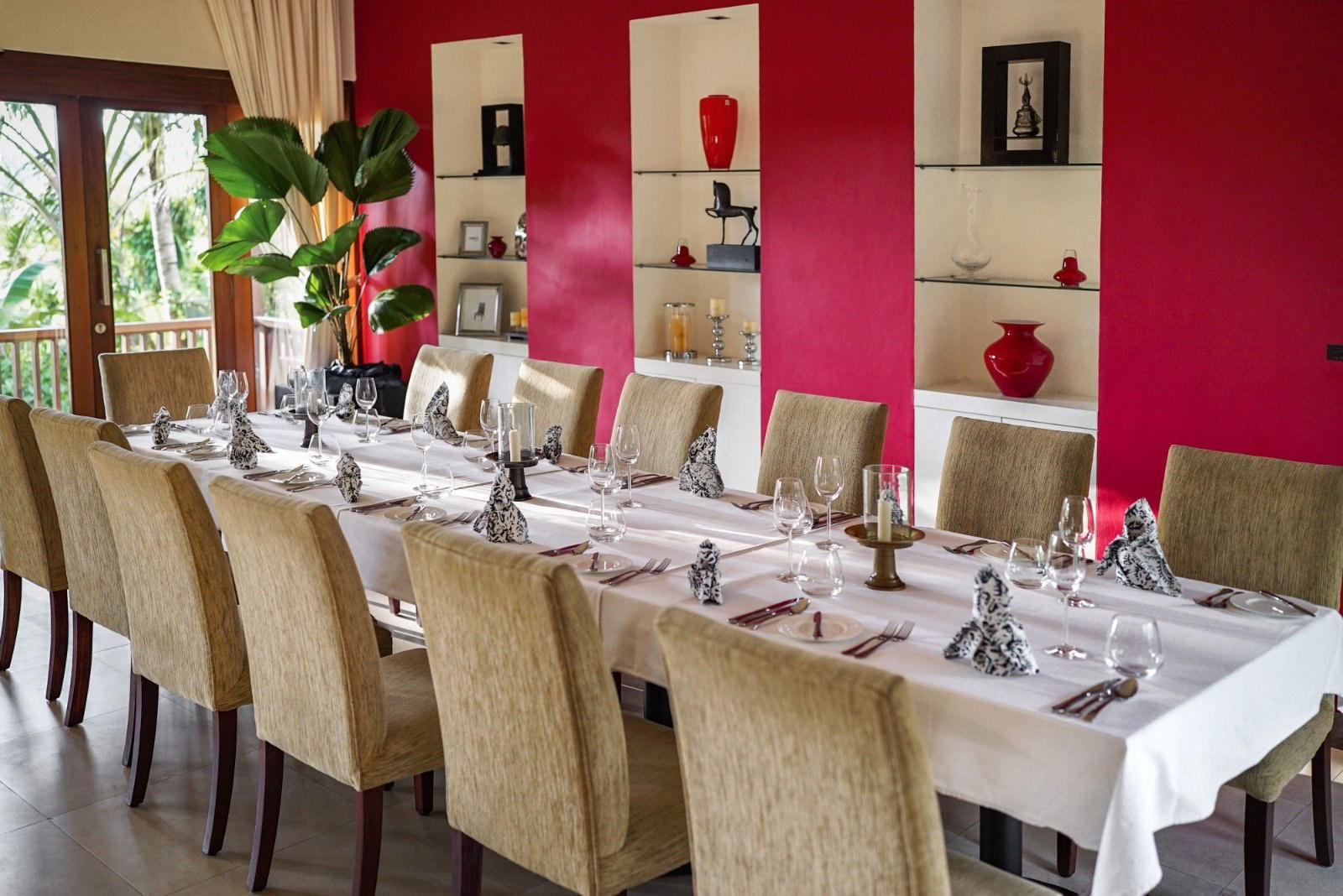
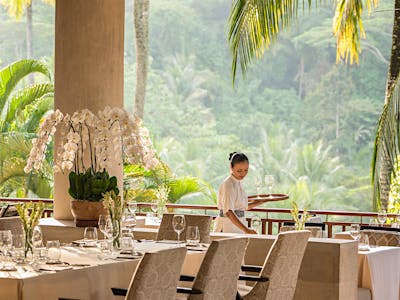
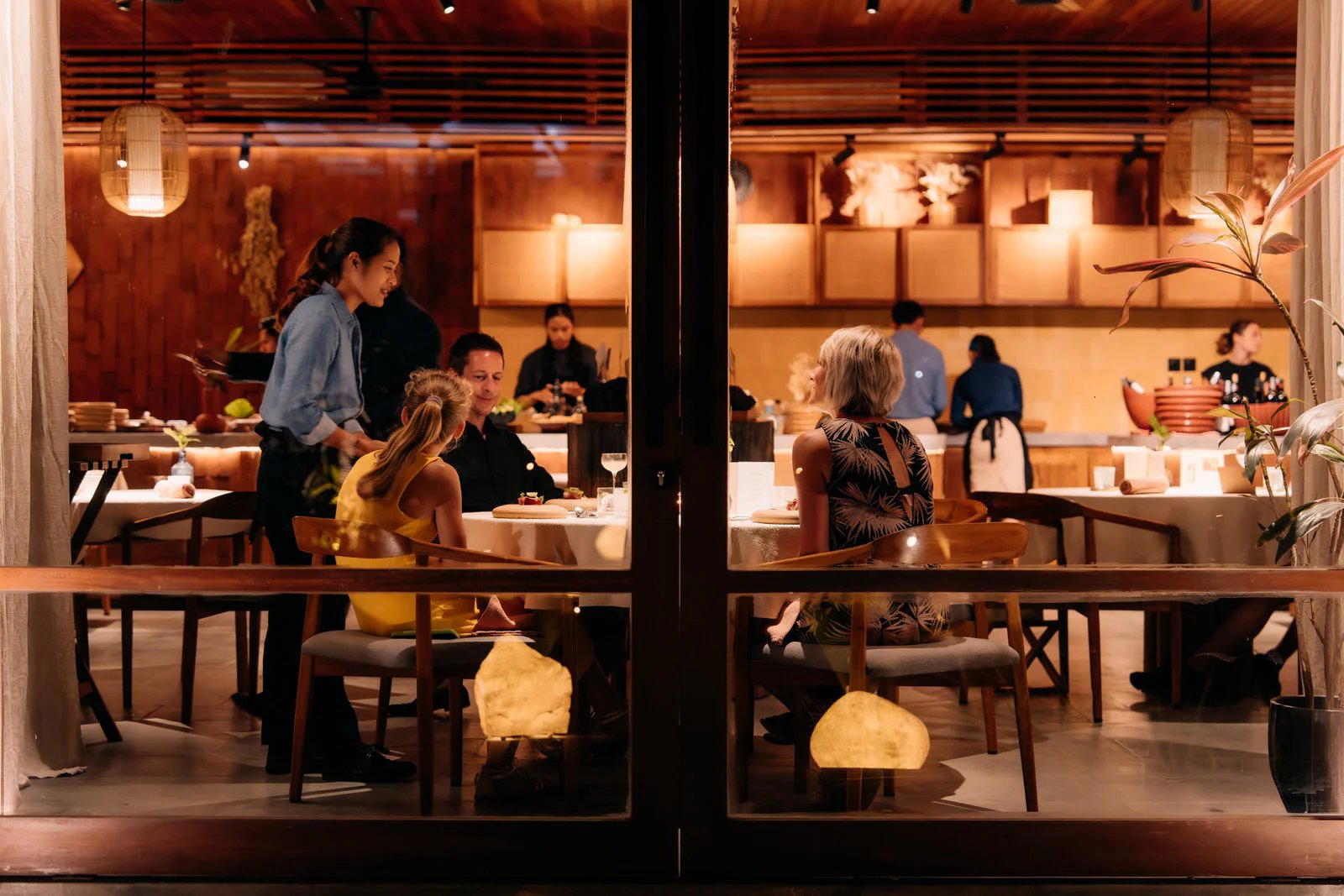
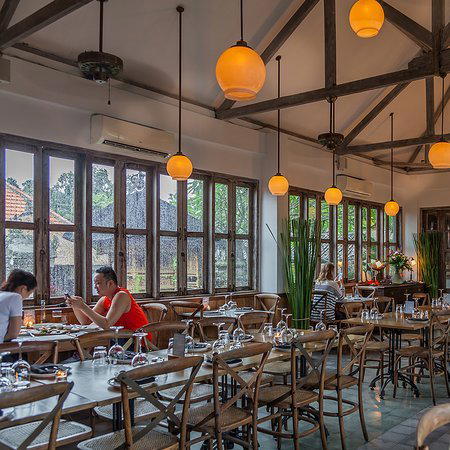
Amandari's restaurant occupies a teak-framed open-air pavilion that looks across the 32-metre infinity pool and out over the Ayung Gorge. The format is all-day, covering breakfast through dinner, with a menu that moves between Western preparations and Indonesian dishes, Balinese favourites included. This dual-register approach is consistent with Aman's broader dining philosophy at its Southeast Asian properties: neither fully destination-dining in the chef-tasting-menu sense, nor a generic international buffer. It is, instead, a programme calibrated around the guest who wants to eat well without leaving the property, with the landscape doing as much work as the kitchen.
The sourcing is locally anchored. Produce, free-range poultry, and pigs come from organic farms in the surrounding region, a detail that matters less as a marketing claim and more as a function of what arrives on the plate: ingredients at the right altitude, in the right season, without the degradation that comes from long supply chains. The inspector's notation of baked goods from the minibar and a fruit platter on arrival reads as part of the same logic, a property that treats food as ambient hospitality rather than an upsell category.
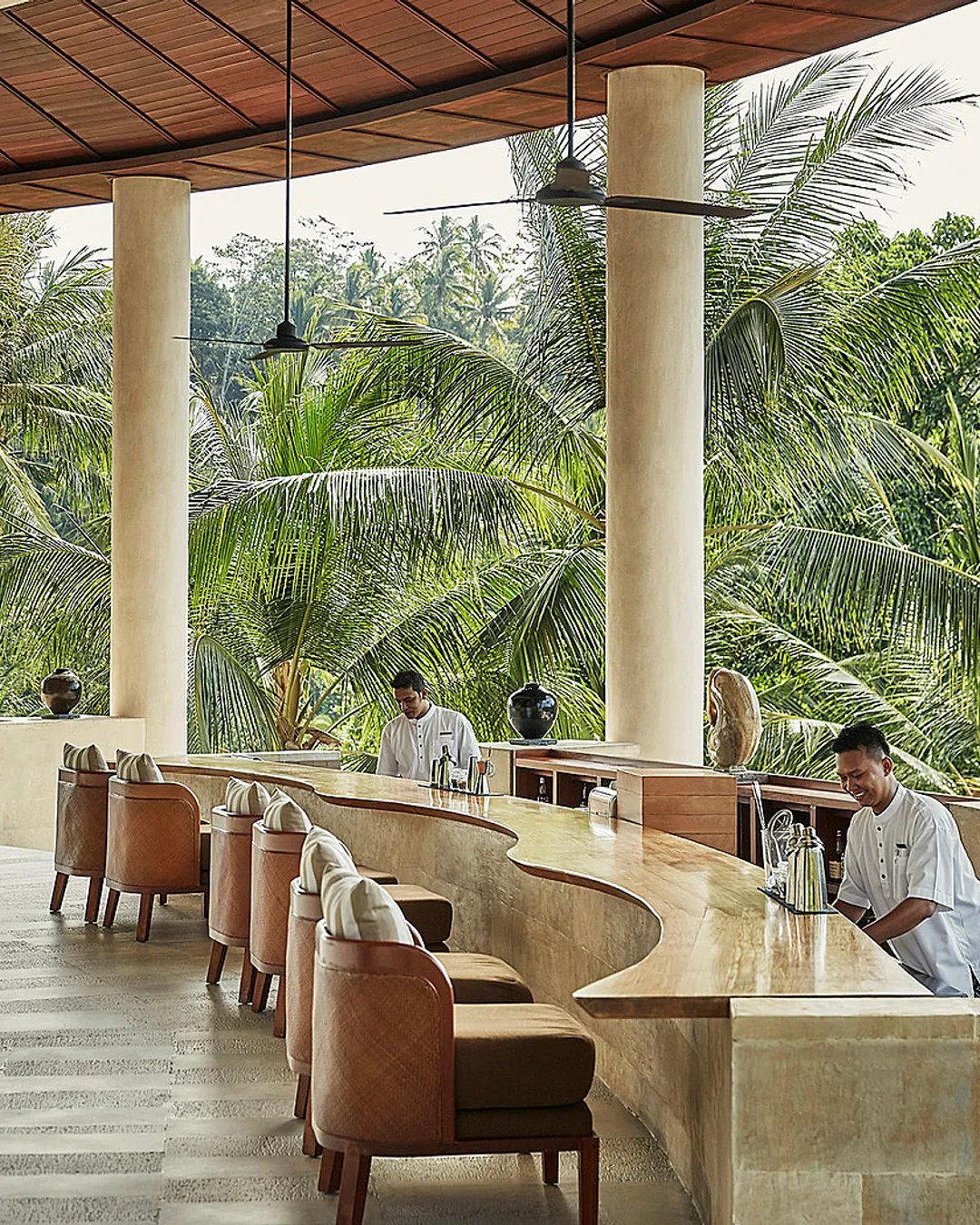
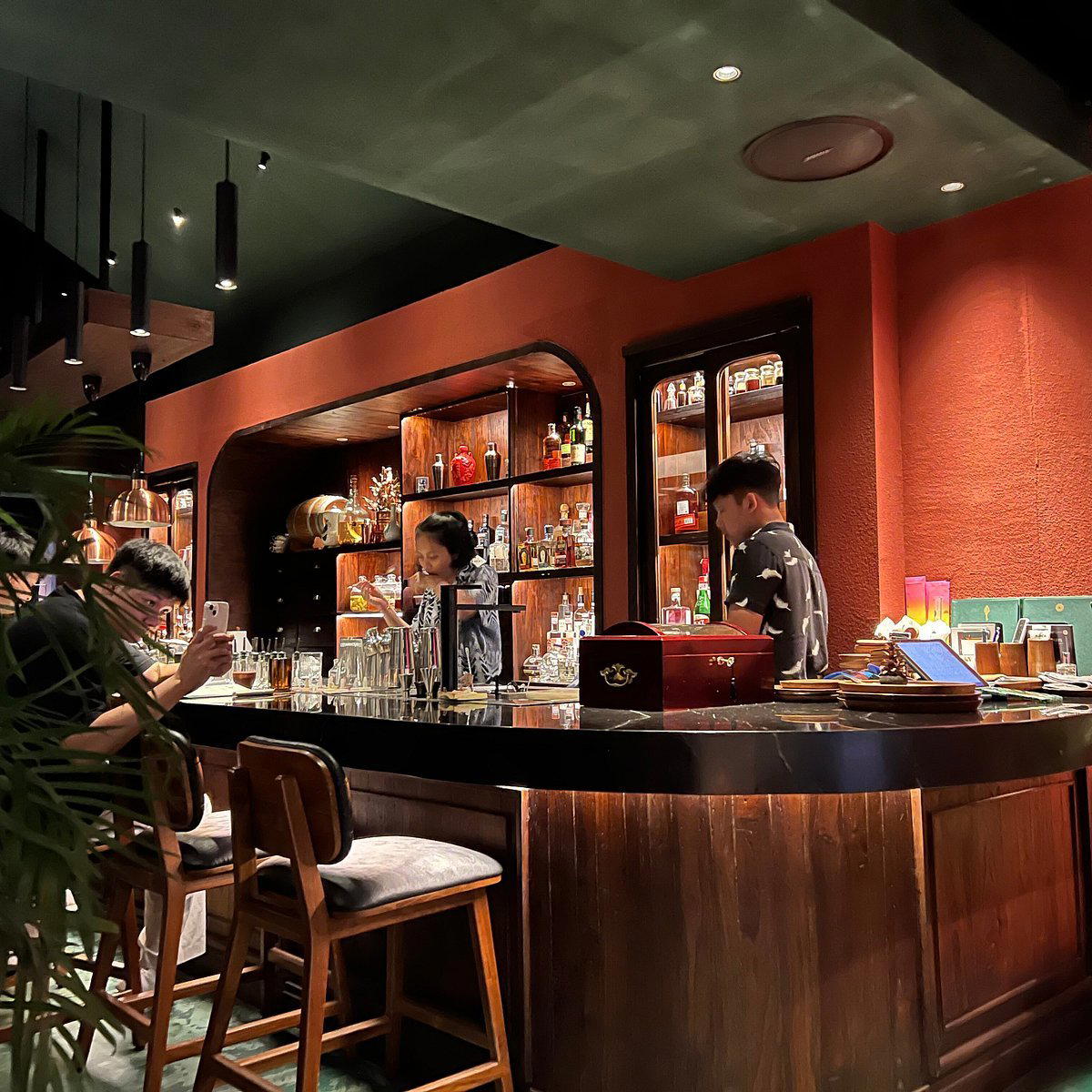
The Bar, positioned with terrace seating, carries a broad drinks selection and functions as the social counterpoint to the restaurant's more settled atmosphere. In the evenings, it provides a natural transition point between time at the pool and dinner, without requiring the resort guest to recalibrate for a different kind of venue.
Amandari's proximity to the art community, five minutes by road, means day excursions and evening dining in town are straightforwardly accessible.
Spa, Wellness, and the Sacred Pathway
The wellness infrastructure here runs deeper than the standard spa menu. A pathway that cuts through the resort and descends to the Ayung River valley below has been used for Balinese ritual processions for hundreds of years, a procession route that predates the resort by centuries. The path leads to a spring-fed pool flanked by three shrines and a seventh-century tiger carved into rock. The resort does not stage this as an amenity. It is simply there, and guests who take the 129 steps down encounter it on its own terms.
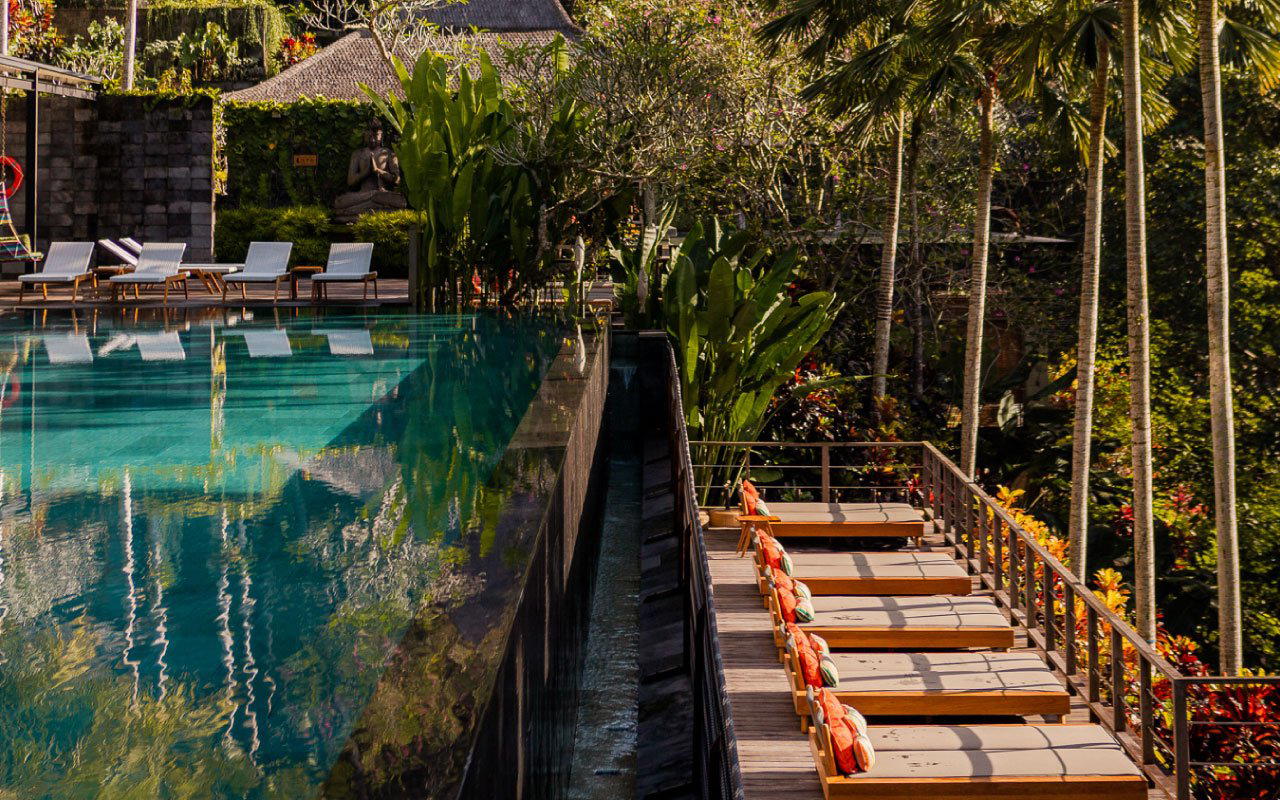
Amandari's spa sits surrounded by water with two open-air massage bales, a beauty room, sauna, and steam room. Treatments draw on local ingredients: black rice exfoliant and volcanic clay feature in the Village Spa Journey, a programme that references the Balinese melukat purification ceremony. The pool, the 32-metre green-tiled infinity pool that was Bali's first, lies at the gorge edge and functions as the resort's central social space in a way that no interior room could replicate. Garden yoga is also available for guests who want structured movement rather than passive rest.
Wellness-forward alternatives in the Ubud area include COMO Shambhala Estate, which builds its entire identity around a therapeutic programme, and Gdas Bali Health and Wellness Resort. Amandari is not purely a wellness property, but it is one where the wellness offering is coherent with the broader design intent rather than bolted on.
The Suites and Villa
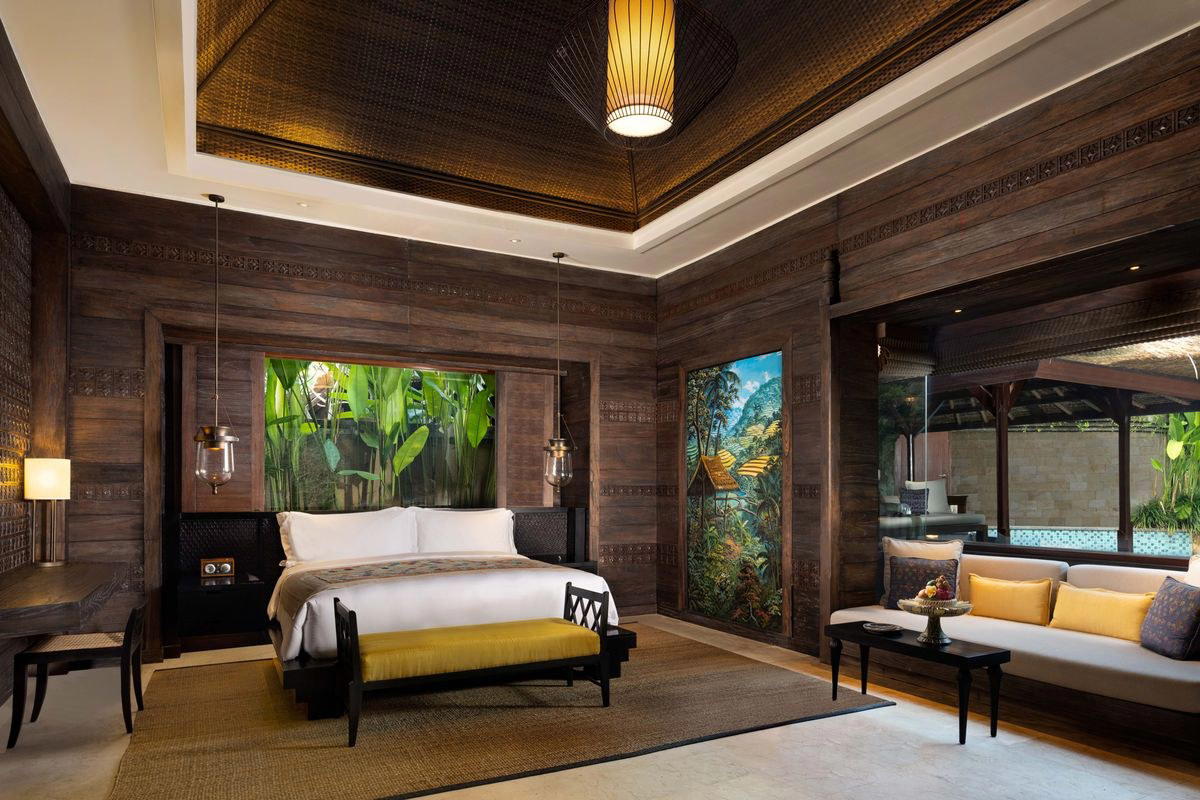
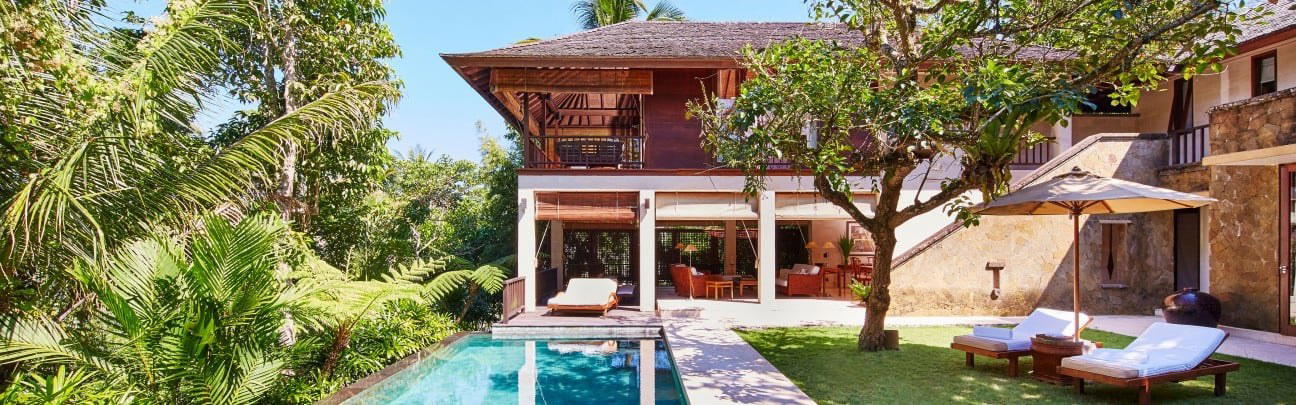
All 30 suites are walled and thatched-roof, entered through stone gateways and opening on three sides through sliding glass doors onto private garden courtyards. Bathrooms include outdoor sunken marble soaking tubs with twin vanities. Some suites have private plunge pools; the duplex configurations place the bedroom on a mezzanine level with wraparound windows looking out over the Ayung valley. The Amandari Suite adds detached bedroom options, a separate living pavilion, a private pool, and an outdoor teak and bamboo bale. The single villa extends this further across five pavilions in the rice terraces, with a two-tiered pool and dedicated staff.
Comparable smaller-scale design properties in the surrounding area include Bisma Eight Ubud and Chapung Sebali. For travellers considering Ubud alongside Bali's southern and coastal options, Potato Head Suites and Studios in Seminyak and COMO Uma Ubud represent different points on the same broad spectrum of considered design hospitality.
Planning Your Stay
Amandari is approximately 1.5 hours by road from Ngurah Rai International Airport (DPS), the standard routing for Ubud properties. Traffic in central Ubud can be slow, particularly during festival periods, which occur throughout the Balinese ceremonial calendar. The temples adjacent to Kedewatan village are within walking or short driving distance and remain functioning religious sites. The hotel can also arrange back-road cycling routes and river hikes for guests who want more structured activity outside the resort. Rates begin from $830 per night.
Cost Snapshot
Comparable venues nearby, for context on price, style, and recognition.
| Venue | Price | Awards | Notes |
|---|---|---|---|
| AmandariThis venue — the venue you are viewing | $$$$ | Michelin 1 Key | Not listed |
| Four Seasons Resort Bali at Sayan | $$$$ | Michelin 1 Key | Sayan, Contemporary Balinese resort with dramatic cantilevered design |
| Samsara Ubud | $$$$ | Michelin 1 Key | Payangan, Contemporary Balinese luxury resort blending traditional architecture with modern amenities in a secluded rainforest setting. |
| Bisma Eight Ubud | $$$$ | Michelin 1 Key | Ubud, Luxury boutique hotel blending contemporary Balinese craftsmanship with natural surroundings. |
| The Purist Villas & Spa | $$$$ | Michelin 1 Key | Kutuh Kaja, Luxury boutique resort combining contemporary and traditional Indonesian architecture with fine textiles and local artifacts. |
| Capella Ubud, Bali | $$$$ | Michelin 1 Key | Tegallalang, luxury tented camp in rainforest |
Recognition history
Dated appearances from independent guides and award organizations, with the underlying list record or original source where available.
Forbes Recommended
Forbes
La Liste Top Hotels
La Liste
Virtuoso Luxury Hotel Partner
Virtuoso
Forbes Recommended
Forbes
Michelin 1 Key
Michelin
At a Glance
- Quiet
- Elegant
- Scenic
- Intimate
- Sophisticated
- Honeymoon
- Romantic Getaway
- Wellness Retreat
- Anniversary
- Infinity Pool
- Private Villa
- Destination Spa
- Panoramic View
- Wi Fi
- Pool
- Spa
- Fitness Center
- Room Service
- Concierge
- Tennis
- Sauna
- Garden
- Mountain
- Wi Fi
- Pool
- Spa
- Fitness Center
- Room Service
- Concierge
- Tennis
- Sauna
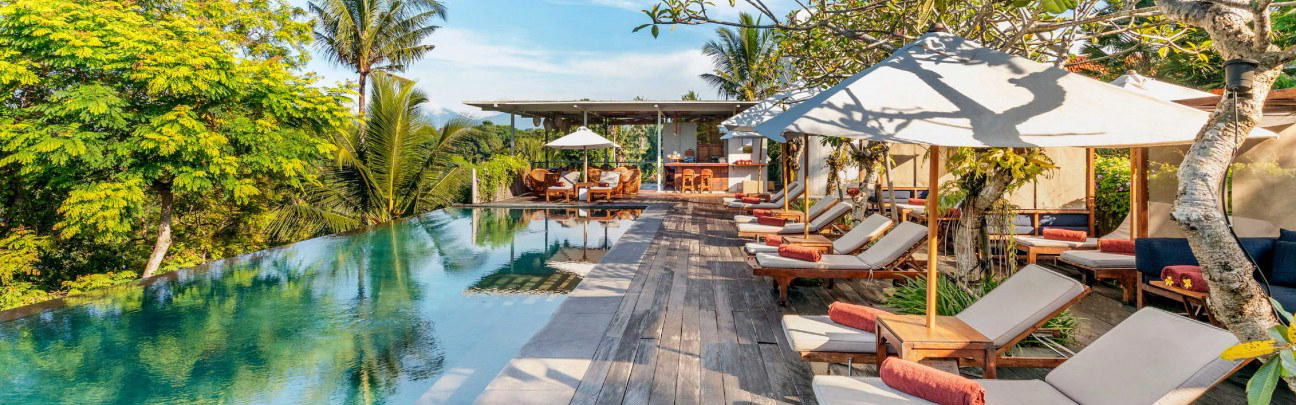
Serene and peaceful atmosphere with open-air pavilions, lush tropical gardens, lotus ponds, and valley views, enhanced by natural light, Balinese architecture, and evening gamelan music.