Our verdict
味喜寿し occupies a quiet address in Joto, Takaoka's older commercial quarter, where the sushi tradition of Toyama Bay holds particular weight. The prefecture's access to winter yellowtail, white shrimp, and firefly squid places local sushi counters in a distinct regional conversation. Visitors to Takaoka looking for a grounded neighbourhood sushi experience will find this address in the city's established dining fabric.

Pearl is the En Primeur Club membership app, where members save venues, book tables and use the concierge.
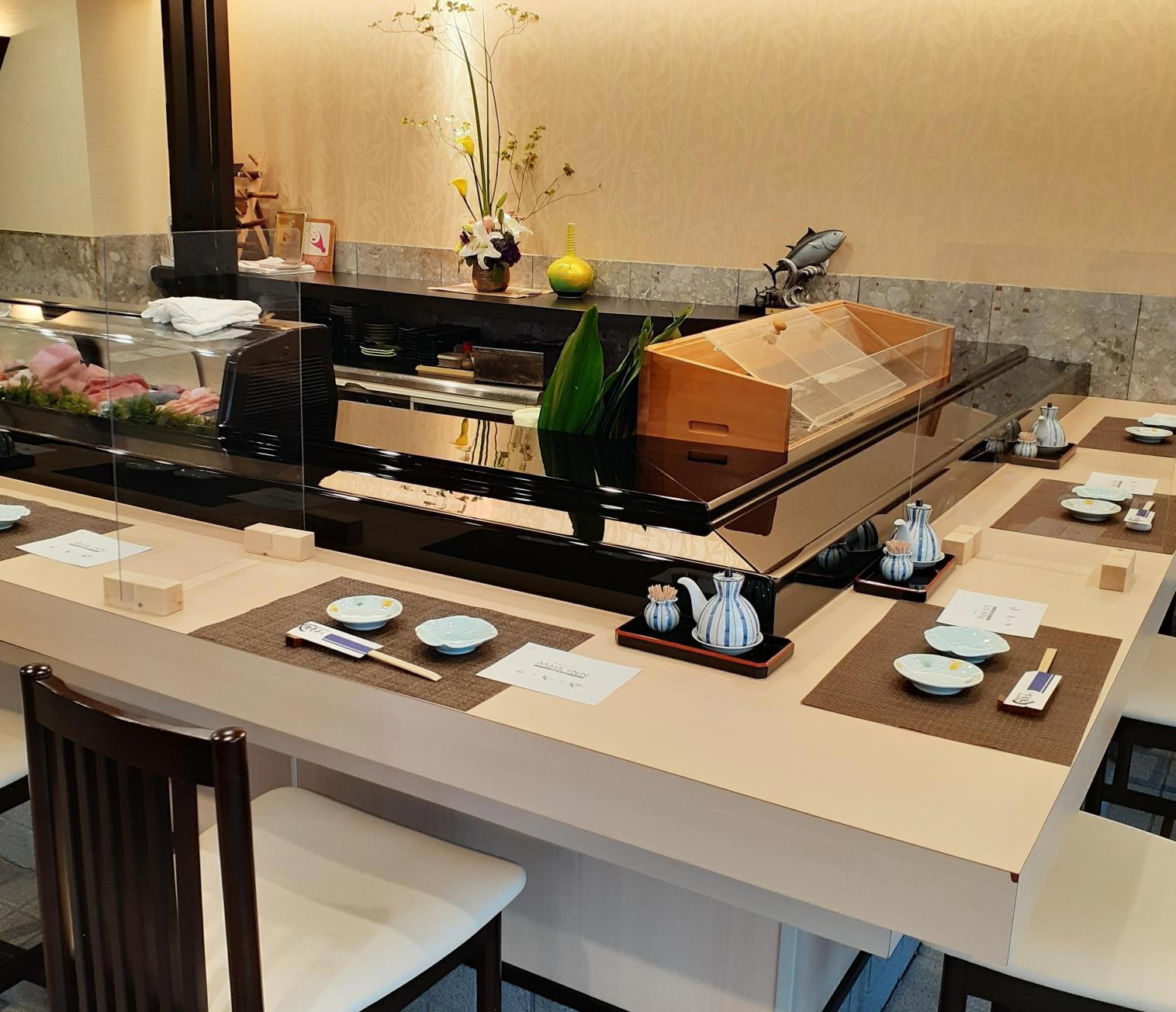
Sushi in Toyama: What the Bay Brings to the Counter
Japan's sushi geography is more layered than Tokyo's dominance suggests. While the capital's omakase counters attract the most international attention, places like Harutaka in Tokyo command multi-month waiting lists and benchmark Edomae technique against centuries of precedent, the regional counter tradition runs just as deep, often with a more direct relationship between the water and the rice. Toyama Prefecture is one of the clearest examples of this: the bay faces the Sea of Japan, drops steeply to cold depths close to shore, and produces a seasonal catch that local sushi houses have been working with long before the omakase format became an international shorthand for Japanese fine dining.
味喜寿し sits within this regional tradition, at a Joto address that places it in one of Takaoka's older commercial strips rather than in any tourist corridor. The city itself is better known for its bronze casting heritage and the Zuiryuji temple complex than for its restaurant scene, which means the dining here operates largely for residents rather than passing visitors. That orientation tends to produce a certain kind of sushi house: one calibrated to the expectations of regulars who understand the local supply, and less concerned with the performance elements that characterise destination-oriented counters in Osaka or Kyoto.
The Toyama Ingredient Argument
Any serious consideration of sushi in this prefecture has to start with what the bay actually produces. Toyama Bay's cold, deep water is the source of several ingredients that carry genuine regional distinction. White shrimp (shiroebi) are harvested almost exclusively here and appear on counters throughout the prefecture in a way that makes them a useful index of how seriously a given kitchen engages with local supply. Firefly squid (hotaruika), available from spring, have a richness and size that differs noticeably from squid caught in warmer waters. Winter yellowtail (buri), arriving with the cold currents from late autumn through February, has a fat content that changes how it behaves on rice, a detail that omakase counters in other cities sometimes try to replicate with imported fish, rarely with the same result.
This is the material context in which neighbourhood sushi houses in Takaoka operate. Compared to the kaiseki-adjacent complexity of Gion Sasaki in Kyoto or the French-influenced innovation at HAJIME in Osaka, what Toyama's sushi counters offer is a more direct, less mediated relationship with the catch. The argument is in the sourcing, not the technique layering.
Takaoka's Dining Character
Takaoka's restaurant scene sits in an interesting position within Hokuriku. The city is large enough to support a range of neighbourhood specialists but compact enough that individual addresses carry a kind of local authority that is harder to achieve in the more competitive environments of Kanazawa or Toyama city. Visitors making their way along the Sea of Japan coast often use Takaoka as a transit point toward Noto Peninsula or the onward rail connections to Kyoto, which means the city's dining gets less sustained attention than its quality sometimes warrants.
Within the Takaoka dining fabric, the sushi tradition sits alongside a wider Hokuriku food culture that places high value on local seafood, fermented ingredients, and seasonal specificity. Ahora Aquí and Tsumama represent different registers of the city's current dining range. For a broader orientation to what Takaoka's restaurant scene covers, our full Takaoka restaurants guide maps the key addresses by category.
Neighbourhood sushi in this context is not a consolation prize for travellers who cannot get a reservation at a Michelin-listed counter. It operates within a different set of values: proximity to supply, familiarity between kitchen and regular, and a pace that is not governed by the omakase format's structured timeline. The regional sushi houses of Hokuriku that have lasted are the ones that understood this distinction rather than trying to compete on the terms set by metropolitan counters.
Positioning in a Broader Japanese Sushi Conversation
Japan's sushi spectrum runs from the high-ceremony omakase format, where courses are sequenced and priced accordingly, through to the neighbourhood counter that operates more like a trusted local institution. The former gets most of the international press: counters associated with named lineages, documented training histories, and award recognition from guides like Michelin or the Tabelog rankings. The latter sustains the actual daily practice of sushi culture for most Japanese diners.
味喜寿し's Joto address places it in this second category. It is the kind of address that functions as a reference point for local knowledge rather than a destination listed in international guides. Compared to high-profile regional counters such as 一本木 石川制 in Nanao or the broader creative formats represented by Goh in Fukuoka, the scale and operating logic are different. This is not a criticism. It reflects a distinct and legitimate position within Japanese food culture, one that the most serious eaters understand to be as worth seeking as the cited counters.
For context on how regional Japanese specialists compare to internationally benchmarked formats, the contrast with places like Le Bernardin in New York City or Atomix in New York City is instructive: those venues operate within a framework of visible credentials and programmatic communication. Japanese neighbourhood sushi houses often carry equivalent craft authority but communicate it through entirely different signals, longevity, local reputation, the specificity of their seasonal fish list.
Planning a Visit
味喜寿し is located at 1 Chome-9-32 Joto, Takaoka, Toyama 933-0041. The Joto area sits within reasonable reach of Takaoka Station, which is served by both the JR Himi Line and the Ainokaze Toyama Railway, making the address accessible for visitors arriving from Kanazawa, Toyama city, or the Hokuriku Shinkansen corridor. Visiting during the autumn-to-winter window aligns with the peak buri season, when yellowtail from Toyama Bay is at its most significant. Spring visits coincide with hotaruika season, which runs roughly from March through May. Both windows are worth planning around if the regional seafood argument is the primary draw.
For reference on how other Hokuriku and wider Chubu-region specialists operate in this neighbourhood-counter tradition, addresses like 湖畔荘 in Takashima, 庄羽屋 in Nishikawa Machi, and 古仁山乃 in Sapporo offer useful comparison points for how regional Japanese dining houses position themselves within their local supply networks. Broader reference for Japanese restaurants operating at different price tiers and formats can also be found through akordu in Nara, Birdland in Sakai, Bistro Ange in Toyohashi, Blue Ocean Steak in Nakagami District, and bodai in 那智勝浦町.
Frequently asked questions
Where do I go for 味喜寿し?
味喜寿し is located at 1 Chome-9-32 Joto, Takaoka, Toyama 933-0041, Japan, Takaoka.
Is 味喜寿し close to Takaoka Station, and how does it fit into a broader Hokuriku itinerary?
味喜寿し is located at 1 Chome-9-32 Joto, Takaoka, Toyama, a district that sits within reasonable reach of Takaoka Station, which connects to Kanazawa and the broader Hokuriku rail network. That positioning makes it a workable addition for travellers moving through the region between Kanazawa and Toyama City, both of which have a growing international dining profile. Takaoka itself operates as a quieter, locally-oriented counterpoint to those larger Hokuriku cities.
What should I order at 味喜寿し?
The strongest argument for visiting any sushi counter in Takaoka is the proximity to Toyama Bay, which supplies ingredients, white shrimp, firefly squid, and yellowtail, that differ markedly from what Tokyo counters source.
Can I walk in to 味喜寿し?
No reservation policy is confirmed for 味喜寿し. Neighbourhood sushi counters in Takaoka's Joto district vary widely, with some accepting walk-ins during off-peak hours and others requiring advance booking. Contacting the venue directly before visiting is advisable, though no public phone number is currently listed.
What's the signature at 味喜寿し?
Given the counter's location in Takaoka, a city within Toyama prefecture, where the bay's cold-water catch is a regional point of differentiation, the seasonal seafood selection is the most reasonable point of focus for first-time visitors.
Budget and Context
Comparable venues nearby, for context on price, style, and recognition.
| Venue | Cuisine | Price | Awards | Notes |
|---|---|---|---|---|
| 味喜寿しThis venue (the venue you are viewing) | Traditional Toyama Sushi | $50–100 | Not listed | Not listed |
| Tsumama | Traditional Toyama Bay Sushi | $50–100 | Not listed | Takaoka, Traditional Toyama Bay Sushi |
| 串家物語 イオンモール高岡店 | 串揚げビュッフェ | $10–20 | Not listed | 高岡市, 串揚げビュッフェ |
| Yakitori Saneyuki | Yakitori | $30–50 | Tabelog 100 #83 | Takaoka, Yakitori |
| Ahora Aquí | Modern French-Japanese Fusion | $200–300 | Not listed | Not listed |
| ダ ゼロ | Natural Italian | Not listed | Tabelog 100 #67 | Sakawa-cho, Takaoka-gun, Natural Italian |
Continue exploring
More in Takaoka
Restaurants in Takaoka
All restaurants in Takaoka →
Hotels in Takaoka
Browse all →
Wineries in Takaoka
Browse all →
Details
- Classic
- Cozy
- Family
- Casual Hangout
- Special Occasion
- Open Kitchen
- Sake Program
- Local Sourcing
- Sustainable Seafood
- Omakase
- A La Carte
- Counter Dining
- Sake
Current opening hours
- Monday
- Closed
- Tuesday
- 12–1:30 PM, 5–9 PM
- Wednesday
- 12–1:30 PM, 5–9 PM
- Thursday
- 12–1:30 PM, 5–9 PM
- Friday
- 12–1:30 PM, 5–9 PM
- Saturday
- 12–1:30 PM, 5–9 PM
- Sunday
- 12–1:30 PM, 5–9 PM
Hours can change for holidays and private events. Hours as of .
Cozy traditional sushi spot with counter and small private seating, fostering an intimate atmosphere for enjoying fresh local seafood.