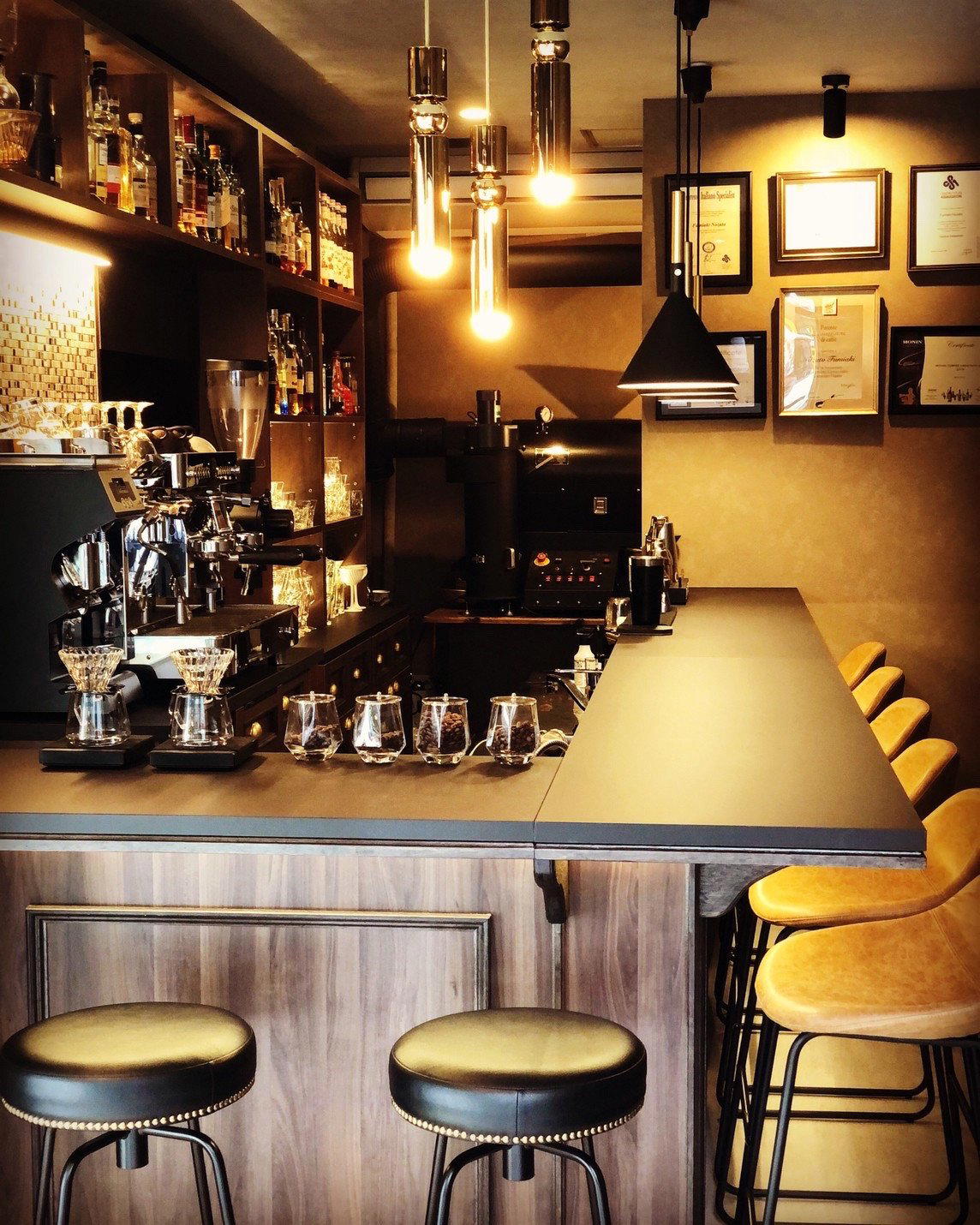
Located in Miyakojima Ward, Osaka, 笹川口 sits within a neighbourhood that rewards those who look beyond the city's more crowded dining corridors. The physical address places it inside a JC Osaka building in Katamachi, a district where local regulars tend to outnumber tourist traffic. Specific menu details and booking information are best confirmed directly with the venue before visiting.
Pearl is the En Primeur Club membership app — saves, bookings, and concierge access live there. Same editors, same standards.
- Address
- Japan, 〒534-0025 Osaka, Miyakojima Ward, Katamachi, 1 Chome−3−11 JC大阪ビル
- Phone
- +81661361770
- Website
- tablecheck.com
- Directions
- Get directions
 Saves & bookings on Pearl
Miyakojima's Quieter Register
Osaka's dining reputation is built, largely, on density: the neon-lit press of Dotonbori, the kappo counters of Kitashinchi, the standing bars of Shinsekai. But the city's restaurant map extends well beyond those well-documented corridors, and Miyakojima Ward represents a different rhythm entirely. This is a residential and light-commercial district on the north bank of the Okawa River, where the foot traffic is predominantly local and the dining rooms tend toward the neighbourhood rather than the destination.片町 川口, addressed at Katamachi 1-3-11 inside the JC Osaka building, operates within that register.
The broader context matters here. Osaka has long supported a tier of restaurants that function almost exclusively on word of mouth and repeat custom, largely invisible to the international reservation platforms that have come to define how overseas visitors book in Japanese cities. That invisibility is not a deficiency, it reflects a different operating logic, one where the physical space and the relationship between a room and its regulars carry more weight than public-facing marketing. Understanding that context is the starting point for understanding what 笹川口 represents within Osaka's wider dining architecture. For a broader orientation across the city's restaurant tiers, our full Osaka Shi restaurants guide maps the range from high-end kappo to neighbourhood specialists.
The Physical Container
In Japanese dining, the room is rarely incidental. The arrangement of a counter, the sightlines from a table to the kitchen, the acoustic quality of a space, these are design decisions that shape how a meal is experienced as much as the food itself. Osaka's most discussed restaurants understand this well: the intimate counter formats at places like Ajihei Sonezaki or the considered spatial grammar of Ajikitcho Bunbuan make the architecture part of the dining proposition.
The Katamachi address situates 笹川口 within a low-rise commercial building rather than a purpose-built or heritage structure, which places it in the mid-tier of Osaka's spatial hierarchy, not the converted machiya townhouse nor the glass-fronted statement room, but the kind of contained, functional space that Japanese neighbourhood restaurants have historically made work through careful attention to seating arrangement and service distance. The building type and district character both suggest an operation scaled for intimacy rather than volume.
That spatial scale, common across Miyakojima's dining rooms, tends to produce a particular kind of service dynamic. Smaller rooms allow for shorter lines of communication between kitchen and table, which in Japanese restaurant culture often translates into a more responsive, less formulaic progression through a meal. Comparable neighbourhood-scale formats across Japan, from Abon in Ashiya to affetto akita in Akita, demonstrate how much the physical container determines the dining character even when cuisine styles differ.
Where Miyakojima Sits in the Osaka Dining Hierarchy
Osaka supports a recognisable prestige tier anchored by venues with significant international recognition: HAJIME in Osaka operates at the three-Michelin-star level, representing the city's most formally ambitious category. Beneath that sit the kappo and omakase counters of Kitashinchi and Minami, a well-documented middle tier that absorbs most of the city's serious dining attention. Miyakojima's restaurants occupy a different bracket, not defined by awards data or international press, but by the density of local return visits and the absence of the kind of tourist infrastructure that filters into more central districts.
That positioning has parallels in other Japanese cities. In Kyoto, Gion Sasaki anchors a prestige tier that pulls visitors from across the country, while dozens of quieter neighbourhood rooms in Fushimi or Nishikyo operate at a remove from that attention. In Fukuoka, Goh holds a comparable high-profile position while smaller district operators absorb local custom. Miyakojima's restaurants, including 笹川口, function in the latter mode across both cities' frameworks.
For those comparing Osaka against other Kansai destinations, akordu in Nara illustrates how the broader region supports serious dining well outside its most-visited corridors. The pattern holds: dedicated rooms in secondary districts often deliver more consistent, locally-grounded meals than their more prominent counterparts.
The Katamachi Block and How to Approach It
Katamachi sits within Miyakojima Ward, accessible from central Osaka via the Osaka Metro Tanimachi Line (Miyakojima Station is the closest major interchange) or by crossing the Okawa River from the Kita district on foot. The neighbourhood does not have the concentrated restaurant street character of Hozenji Yokocho or Fukushima's bar-lined lanes; it is a district you navigate with a specific destination already in mind rather than one you wander through and discover restaurants en route.
That directional approach is worth building into any visit. Arriving at 笹川口's Katamachi address without prior confirmation of hours, reservation requirements, or current format risks a wasted trip, the neighbourhood's lower foot-traffic density means there are fewer fallback options within immediate walking distance. Contacting the venue in advance is the practical baseline. Comparable venues in mid-tier Osaka residential districts often operate on reduced evening sittings or closed days that are not published on third-party platforms. Aka to Shiro and Az are among the Osaka venues that operate with formats worth confirming ahead of any visit, and the same principle applies here.
For those building a broader Osaka itinerary, the Miyakojima visit pairs naturally with a morning along the Okawa River before the main tourist circuits activate, or with an evening in the quieter Tenma bar district, which sits on the southern bank and offers a different, lower-key version of Osaka's drinking culture.
Calibrating Expectations
Venues with minimal public-facing data require a different kind of visitor approach than fully mapped prestige operations. The absence of that scaffolding is not necessarily a negative signal; many of Japan's most consistent neighbourhood restaurants operate without it deliberately, maintaining a local clientele.
Restaurants like Calendrier within Osaka demonstrate that sustained recognition can exist at a remove from major award circuits. Across Japan more broadly, the gap between award-documented prestige and undocumented quality can be substantial. Aji Arai in Oita and Akakichi in Imabari both illustrate how regional Japanese restaurants build reputations through local consistency rather than international data trails. The same framework, applied to 笹川口's Miyakojima position, suggests treating confirmed local patronage as the primary credibility signal, more reliable, in this context, than the absence of formal awards.
What It’s Closest To
Comparable venues nearby, for context on price, style, and recognition.
Continue exploring