Our verdict
In a city where dining prestige defaults to kaiseki, 京都 鶏白湯そば 純 represents a quieter but equally serious tradition: the Kyoto ramen counter built around a single, obsessive broth. Located in the 604-0871 postal district, Jun specialises in tori paitan, a rich, slow-cooked chicken white broth, that positions it firmly within Japan's most technically demanding noodle category.

Pearl is the En Primeur Club membership app, where members save venues, book tables and use the concierge.
The menu
What to order
- 鶏白湯そば
- ゆず塩鶏白湯そば
- 魚貝鶏白湯そば
Broth as Discipline: Kyoto's Tori Paitan Tradition
Kyoto's dining identity is so thoroughly shaped by kaiseki that venues operating outside that register can pass beneath the radar of international visitors who arrive with reservations at Gion Sasaki or Kikunoi Honten already confirmed. But the city sustains a parallel serious-food culture at street level, one where the measure of craft is not the number of courses or the price of the sake pairing, but the clarity, or deliberate opacity, of a single bowl of broth. 京都 鶏白湯そば 純 (Kyoto Tori Paitan Soba Jun) operates inside that tradition.
Tori paitan is among the most technically demanding formats in Japanese ramen. Unlike the gentler chintan (clear chicken broth), paitan requires sustained high heat to emulsify collagen and fat into a dense, opaque white liquid. The process is unforgiving: too little heat and the broth never emulsifies; too much and the fat separates into something flat and greasy. Shops that do it well tend to attract the same kind of local regularity that Michelin-starred kaiseki houses attract from out-of-towners. The two audiences rarely overlap, but the seriousness of intent on both sides is comparable.
The Physical Register of a Ramen Counter
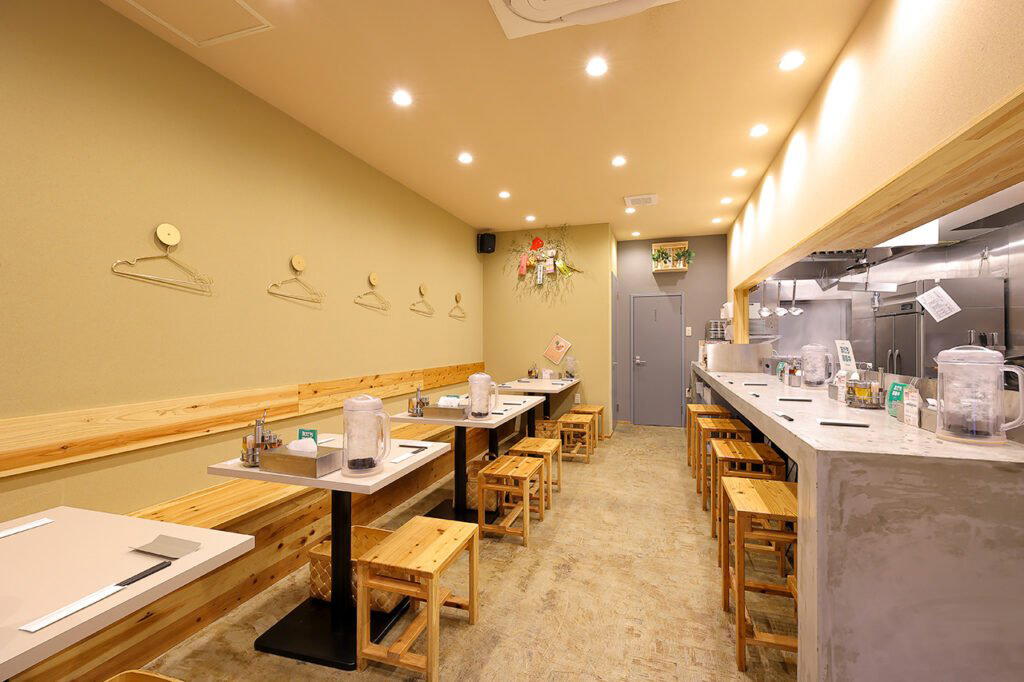
The approach to a specialist ramen counter in central Kyoto follows a pattern that differs sharply from the formal dining rooms of the kaiseki circuit. Where venues like Hyotei or Mizai communicate seriousness through architecture, sliding screens, gravel approaches, low lighting that slows you down, the ramen counter communicates it through sound and smell before anything else. Steam, the low percussion of a ladle against a pot, the particular dense animal warmth that a chicken-based broth releases when it has been cooking for hours: these are the signals that precede any visual impression.
Jun's address places it within the 604-0871 postal zone, which covers the Nakagyo and upper Kamigyo wards, central Kyoto, close enough to the commercial grid that foot traffic is a constant, far enough from the tourist-dense Gion corridor that the clientele skews local. That geography matters. A ramen shop that survives in central Kyoto on repeat local custom rather than visitor turnover is making a different kind of argument about its food than one positioned for the Shijo-Kawaramachi tourist belt.
What Tori Paitan Means in Kyoto's Broader Noodle Context
Japan's ramen geography is often mapped by region: Sapporo's miso, Hakata's tonkotsu, Tokyo's shoyu. Kyoto sits less neatly on that map. The city has a documented local style, Kyoto ramen, that typically involves chicken or pork-based broth with a pronounced soy seasoning and thin noodles, but serious Kyoto noodle shops have increasingly moved toward more technically specific sub-genres rather than leaning on regional identity alone. Tori paitan is one such sub-genre, and it carries associations with precision and restraint that fit Kyoto's culinary self-image better than, say, a maximalist tonkotsu.
The chicken-white-broth format also allows a particular kind of seasonal and textural modulation that clear broths do not. The emulsified base can be seasoned with different tare (base seasoning sauces), shio, shoyu, or miso, without losing its essential character, and the density of the broth interacts differently with varying noodle gauges and textures. Shops specialising in this format often treat those combinations with the same deliberateness that a kaiseki kitchen applies to dashi. The comparison is not as hyperbolic as it sounds: in both cases, the broth is the intellectual centre of the dish.
For a broader sense of how this kind of specialist regional cooking fits into Japan's wider premium dining scene, venues like Goh in Fukuoka and HAJIME in Osaka illustrate how regional cooking traditions can sustain rigorous, award-recognised formats. The ramen counter operates at a different price and formality register, but the underlying commitment to a single ingredient or technique as an organising principle is shared.
Positioning Within Kyoto's Mid-Register Dining Scene
Kyoto's dining scene divides fairly cleanly between the high-formality, high-spend kaiseki tier, Isshisoden Nakamura representing one of the older establishments in that category, and a much larger, more varied mid-register that includes everything from obanzai (Kyoto home-style cooking) counters to specialist noodle and tofu shops. Jun sits in this mid-register, but within it, tori paitan occupies a more technically demanding corner than general ramen or soba.
The comparison set for a venue like this is not the kaiseki houses. It is other serious broth-focused shops across the Kansai region, and by that measure, a Kyoto tori paitan counter that sustains local regulars in a competitive urban market is doing something that deserves attention on its own terms, not as a cheaper alternative to formal dining, but as a distinct discipline with its own standards of excellence. Visitors to Japan who have moved beyond the obvious temple circuits and kaiseki reservations tend to understand this distinction. Those arriving with only the formal dining tier on their radar frequently miss it.
For those planning to cover more of Japan's specialist noodle and regional cooking traditions beyond Kyoto, akordu in Nara and venues like Birdland in Sakai illustrate the range of serious, non-kaiseki dining available within a short distance of Kyoto by rail.
Know Before You Go
| Detail | Notes |
|---|---|
| Address | 京都市, 京都府, 604-0871 (Nakagyo / Kamigyo area, central Kyoto) |
| Format | Specialist ramen counter, tori paitan (chicken white broth) focus |
| Booking | No booking data available; walk-in format typical for this category |
| Hours | Not confirmed, check locally before visiting |
| Price range | Not confirmed; tori paitan counters in Kyoto typically operate at mid-range ramen pricing |
| Getting there | Central Kyoto; accessible by subway or bus from major Kyoto stations |
For the full picture of what Kyoto's dining scene offers across all price points and formats, see our full Kyoto restaurants guide. For comparison with other technically focused Japanese counters, Harutaka in Tokyo shows how a single-product focus sustains serious reputation at the premium end of a different category.
Frequently asked questions
Is 京都 鶏白湯そば 純 formal or casual?
What is the signature dish at 京都 鶏白湯そば 純?
How does 京都 鶏白湯そば 純 fit into Kyoto's ramen scene compared to more widely promoted regional styles?
How It Stacks Up
| Venue | Cuisine | Price | Awards | Notes |
|---|---|---|---|---|
| 京都 鶏白湯そば 純This venue (the venue you are viewing) | Kyoto Creamy Chicken Broth Soba | $10–20 | Not listed | Not listed |
| Gion Sasaki | Modern Kaiseki | $300–500 | 3 Michelin Stars · La Liste Top Restaurants | Kaiseki, Japanese |
| cenci | Innovative Italian-Japanese Fusion | $100–150 | 1 Michelin Star · World's 50 Best #76 | Italian |
| Ifuki | Sumibi Kappo Kaiseki | $200–300 | 2 Michelin Stars · La Liste Top Restaurants | Kaiseki |
| Kyokaiseki Kichisen | Kyoto Kaiseki | $200–300 | 2 Michelin Stars · La Liste Top Restaurants | Japanese |
| Kyo Seika | Modern Chinese Fine Dining | $150–200 | 1 Michelin Star · Tabelog Bronze #216 | Chinese |
Continue exploring
More in Kyoto
Restaurants in Kyoto
All restaurants in Kyoto →
Bars in Kyoto
All bars in Kyoto →

Hotels in Kyoto
All hotels in Kyoto →



Wineries in Kyoto
Browse all →
Details
- Cozy
- Casual Hangout
- Sake Program
- A La Carte
- Counter Dining
Cafe-like exterior with cozy counter and table seating in a residential neighborhood ramen shop.