
Tabelog 100 #31
Our verdict
In a city still rebuilding its identity after the 2024 Noto Peninsula earthquake, アユート occupies an address in Kawaimachi that speaks to Wajima's quiet culinary ambition. The restaurant sits within one of Japan's most ingredient-rich coastal zones, where Noto seafood, mountain vegetables, and artisanal producers have long supplied serious kitchens across the country. For the region's dining scene, it represents a local expression worth tracking.

Pearl is the En Primeur Club membership app, where members save venues, book tables and use the concierge.
Where Wajima's Ingredient Culture Shows Up on the Plate
The Noto Peninsula operates on a different calendar from Japan's restaurant-dense cities. Its coastline produces some of the country's most documented seafood, including Wajima's famed squid and sea bream pulled from the Sea of Japan, while the inland zones yield mountain vegetables, wild mushrooms, and specialty rice that have supplied Kanazawa's kaiseki kitchens for generations. When a restaurant takes root in this environment, the sourcing question matters more than almost anything else, because the raw material is genuinely extraordinary, and the kitchen's job is, in part, not to ruin it.
アユート, addressed at 3-158-1 Kawaimachi in central Wajima, operates within this tradition. Kawaimachi sits close to the waterfront commercial zone that has historically defined the city's daily rhythm, and proximity to that supply chain is not incidental. Wajima's morning market, the Asaichi, has run for roughly a thousand years and remains one of the few places in Japan where a restaurant kitchen and a direct-catch seafood vendor genuinely occupy the same immediate geography. That context shapes what arrives on the table in any serious local kitchen, and it frames how アユート should be understood: as part of a regional food culture built on short supply lines and seasonal specificity, not as an isolated destination operating in a vacuum.
The Noto Sourcing Argument
Japan's premium restaurant circuit has spent the last two decades arguing about provenance, with kitchens in Tokyo and Osaka paying significant premiums to source from Noto, Hokkaido, and a handful of other designated high-quality regions. Restaurants like HAJIME in Osaka and Harutaka in Tokyo have built their reputations partly on their sourcing discipline, paying for geography that Wajima kitchens access as a matter of course. A restaurant actually located in Wajima bypasses that logistical distance entirely. The squid that arrives at a Tokyo counter after overnight freight arrives here the same morning it was caught.
This is not a trivial distinction. In kaiseki and Japanese fine dining broadly, ingredient temperature, texture on delivery, and the absence of transit stress are the variables that separate technically adequate cooking from cooking that uses the full potential of its materials. Gion Sasaki in Kyoto and akordu in Nara both operate within sourcing ecosystems that reward their regional positioning. A Wajima address offers a comparable structural advantage, provided the kitchen is disciplined enough to use it.
Wajima After the Earthquake
The January 2024 Noto Peninsula earthquake caused significant damage across Wajima, and the city's hospitality and dining infrastructure is in an active recovery period. Several establishments along the Asaichi market area and the broader Kawaimachi district sustained structural damage, and the pace of reopening has varied considerably. Visiting Wajima now means engaging with a city in reconstruction, which carries its own kind of significance: the restaurants and producers that have returned to operation are, in many cases, doing so under difficult conditions and with deliberate intent.
For travellers considering the region, this context matters practically. Confirming current operating status directly before travel is not optional, it is the minimum due diligence for any destination in the Noto Peninsula at this stage of recovery. The region's tourism board and local accommodation contacts are the most reliable current sources. Our full Wajima restaurants guide is updated as operational information becomes available, and ラトリエ・ドゥ・ノト represents another address worth cross-referencing when planning a Wajima itinerary.
How Wajima Fits the Wider Japan Circuit
Japan's regional fine dining has expanded considerably beyond the Tokyo-Osaka-Kyoto triangle over the past decade. Goh in Fukuoka demonstrated that a kitchen outside the major urban centres could hold serious critical standing, and the Hokuriku region, anchored by Kanazawa, has long been understood as one of Japan's most ingredient-coherent food zones. Wajima sits at the far end of that corridor, less visited than Kanazawa but drawing from the same coastal and agricultural systems.
Comparable regional positions exist in other prefectures: 三本松 石川製 in Nanao and 湖聲荘 in Takashima both occupy that in-between space where local sourcing is the primary credential rather than urban critical mass. Wajima kitchens operating in that same mode are making a specific argument: that proximity to the source, combined with enough technical competence, produces results that urban kitchens with their transport chains cannot replicate on the same terms.
For reference, the international comparisons that come to mind when thinking about ingredient-driven regional cooking are places like Le Bernardin in New York City, where sourcing discipline is treated as non-negotiable, or Atomix in New York City, where Korean ingredient philosophy is applied with the same rigour. The principle translates regardless of geography: the kitchen's relationship to its supply chain is often the most reliable predictor of what ends up on the plate.
Planning a Visit
Wajima is accessible from Kanazawa via the Noto Satoyama Kaido expressway, a drive of roughly ninety minutes depending on conditions. There is no direct Shinkansen access to Wajima, and the nearest rail terminus for visitors coming from Tokyo or Osaka is Kanazawa, from which onward travel is by road. Given the post-earthquake environment, travellers should allow flexibility in their itinerary and confirm accommodation and restaurant reservations closer to the travel date than would normally be necessary. The shoulder seasons of late spring and early autumn have historically offered the most consistent access to Noto's full ingredient range, with spring mountain vegetables and autumn seafood both in supply. Regardless of season, arriving with confirmed reservations and verified operating hours is the baseline for any visit to this part of Ishikawa.
Further Reading in the Region
For those building an extended Hokuriku itinerary, the EP Club has coverage of several addresses that sit within comparable sourcing traditions and price brackets. 古代山乃 in Sapporo offers a northern Japan parallel, while 高羽屋 in Nishikawa Machi represents a mountain-sourcing counterpart to Wajima's coastal focus. Further afield, bodai in 那智勝浦町 and Bistro Ange in Toyohashi both occupy the regional-driven mid-tier that has become one of Japan's most interesting dining categories. Birdland in Sakai, Blue Ocean Steak in Nakagami District, and Cafe Naoshima Konichiwa in Naoshima round out a set of addresses that together illustrate how Japan's non-metropolitan dining circuit has matured.
Frequently asked questions
Is アユート good for families?
Wajima operates primarily as a destination for adult travellers with a focused interest in the Noto Peninsula's ingredient culture. The city itself, located at 3-158-1 Kawaimachi in Ishikawa Prefecture, is not structured around family-dining formats. Parents travelling with young children should confirm the restaurant's format directly before planning a visit.
Is アユート formal or casual?
Wajima sits closer to a working-port register than to the white-tablecloth formality of Kyoto or Tokyo. Restaurants in the city generally reflect that character: considered without being ceremonial. Dressing neatly is sensible given the dining context, but rigid dress codes are not a feature of Noto Peninsula dining culture.
Is Wajima a practical base for visiting アユート given the 2024 earthquake damage?
Wajima's hospitality infrastructure sustained serious damage in the January 2024 Noto Peninsula earthquake, and recovery is ongoing through 2025. A reduced number of restaurants are operating, which affects both availability and booking lead times. Travellers planning a visit should verify current conditions through up-to-date sources before finalising an itinerary, as the situation in Ishikawa Prefecture continues to evolve.
What should I order at アユート?
Wajima's position on the Sea of Japan coast means any credible kitchen here builds its menu around the local catch. Noto is documented for seasonal seafood including yellowtail, crab, and sea bream depending on the time of year. Dishes anchored to that coastline sourcing represent what the Noto Peninsula's ingredient reputation actually delivers at the table.
Where is アユート in Wajima?
アユート is located at 3-158-1 Kawaimachi, Wajima, Ishikawa 928-0001, Japan, Wajima.
Do I need a reservation for アユート?
Yes. Following the January 2024 Noto Peninsula earthquake, the number of operating restaurants in Wajima contracted significantly, concentrating demand on the establishments that remained open. That compression makes advance reservations more pressing than they would have been pre-2024. Contact details are best confirmed through local accommodation or current travel sources.
What makes アユート worth seeking out?
The Noto Peninsula carries one of Japan's more documented ingredient reputations, and Wajima sits at the centre of that sourcing geography. Kitchens in Tokyo and Osaka pay significant premiums to import Noto produce; eating in Wajima positions you at the source rather than downstream of it. For a food-focused visit to Hokuriku, that proximity is the core argument.
In Context: Similar Options
Comparable venues nearby, for context on price, style, and recognition.
| Venue | Cuisine | Price | Awards | Notes |
|---|---|---|---|---|
| アユートThis venue (the venue you are viewing) | Italian with Local Japanese Fusion | $50–100 | Tabelog 100 #31 | Not listed |
| ラトリエ・ドゥ・ノト | Contemporary French with Noto Terroir | $150–200 | Tabelog Bronze | Wajima |
| ALTEZZA | Hokkaido Italian with Tableside BBQ | Not listed | Not listed | Tomamu, Shimukappu-mura, Yufutsu-gun |
| Partenope Ebisu | Authentic Neapolitan Pizza | Not listed | Tabelog 100 #62 | Ebisu |
| SAVOY Classic (SAVOY クラシック) | Neapolitan Pizza | $20–30 | Not listed | Azabu Juban |
| Olivio | Italian Classics and Homemade Pasta | Not listed | Not listed | Kutchan, Abuta District |
Recognition history
Dated appearances from independent guides and award organizations, with the underlying list record or original source where available.
Tabelog 100 #31 · No. 31
Tabelog · Tabelog 100 - Italian - WEST - 2025
Continue exploring
More in Wajima
Restaurants in Wajima
All restaurants in Wajima →

Hotels in Wajima
Browse all →
Wineries in Wajima
Browse all →
Details
- Cozy
- Intimate
- Elegant
- Date Night
- Special Occasion
- Open Kitchen
- Sake Program
- Natural Wine
- Local Sourcing
- A La Carte
- Small Plates
- Natural Wine
Current opening hours
- Monday
- 6–10 PM
- Tuesday
- Closed
- Wednesday
- Closed
- Thursday
- Closed
- Friday
- 6–10 PM
- Saturday
- 6–10 PM
- Sunday
- 6–10 PM
Hours can change for holidays and private events. Hours as of .
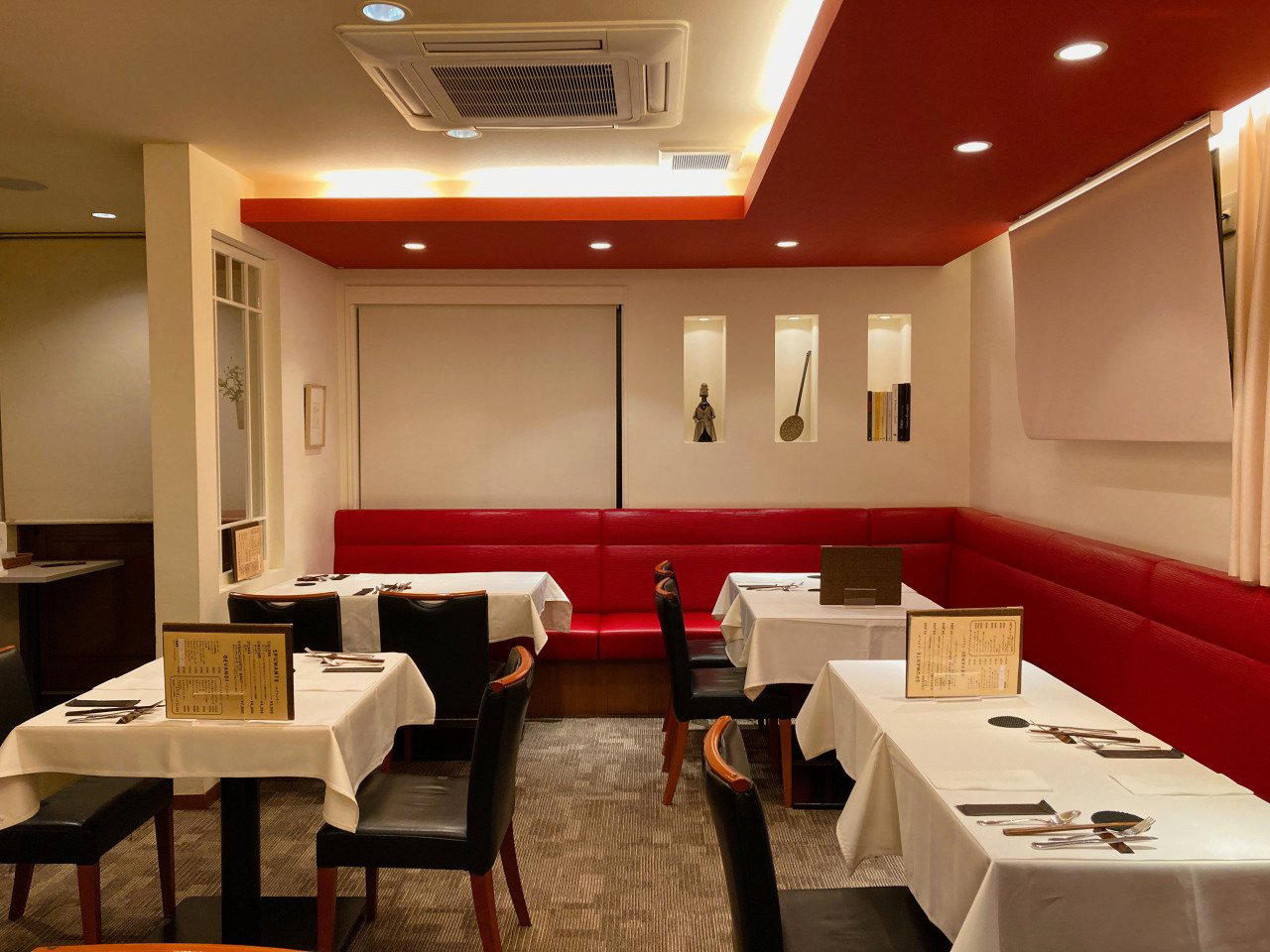
Cozy and comfortable with red sofas, white tablecloths, warm wooden elements, and a welcoming at-home atmosphere.