In Kagurazaka, Tokyo's most Franco-Japanese neighbourhood, 笑顔 occupies a position shaped by the district's layered culinary identity, where French technique and Japanese ingredient discipline have coexisted for decades. The restaurant sits within a dining scene that prizes restraint and craft over spectacle, placing it alongside a cohort of addresses where the sourcing conversation matters as much as the cooking method. Booking details are best confirmed directly through current local channels.
Pearl is the En Primeur Club membership app — saves, bookings, and concierge access live there. Same editors, same standards.
- Address
- 3 Chome-5-5 Kagurazaka, Shinjuku City, Tokyo 162-0825, Japan
- Phone
- +81 3-5225-0807
- Website
- kagurazaka-kohaku.jp
 Saves & bookings on Pearl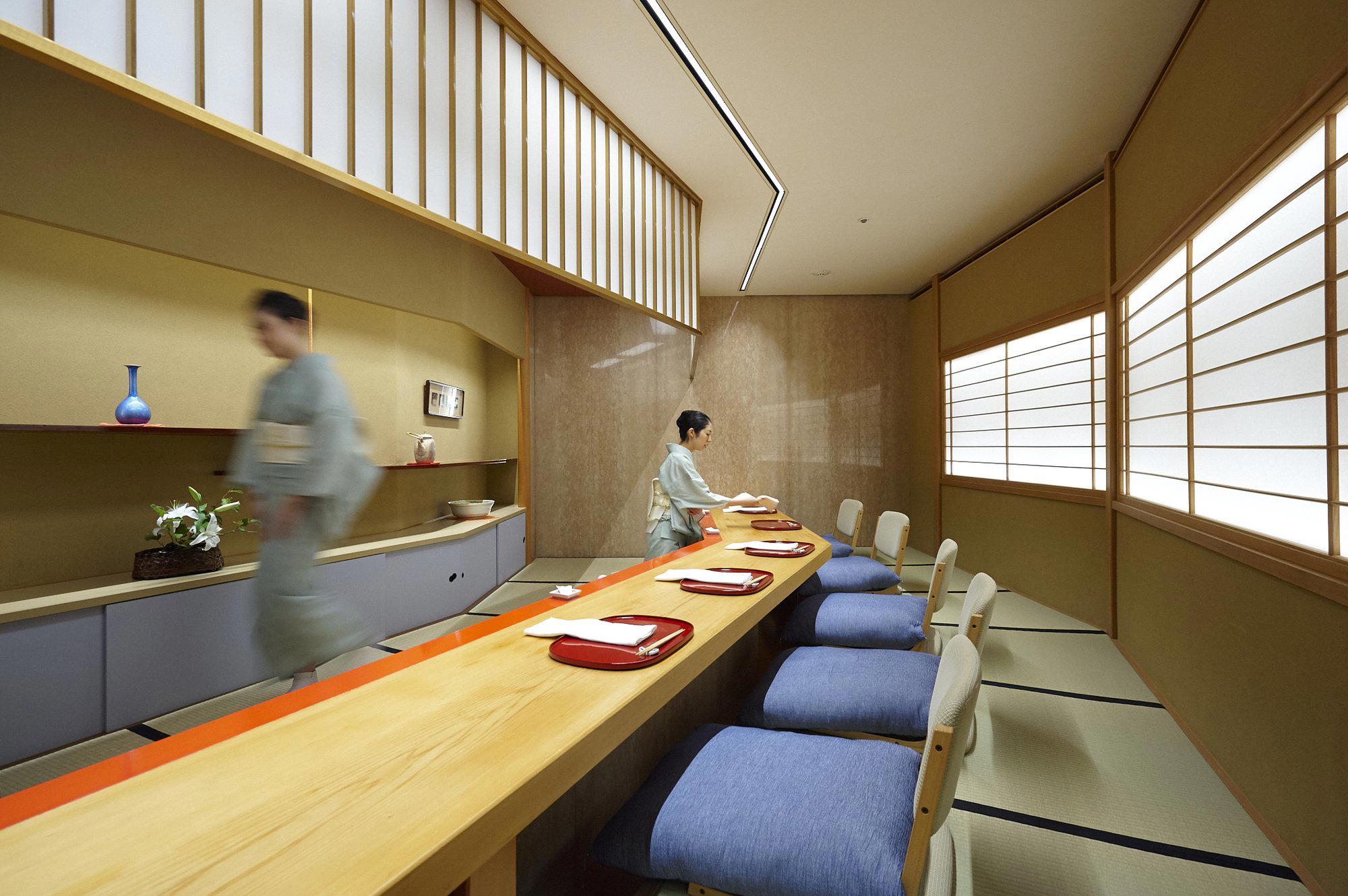
Kagurazaka and the Logic of Franco-Japanese Cooking
虎白 is a Traditional Japanese Kaiseki restaurant in Tokyo's Kagurazaka district. The neighbourhood, which occupies a hillside in Shinjuku City, spent the better part of the twentieth century as Tokyo's most recognisably French quarter, a density of bistros, boulangeries, and former geisha streets compressed into a few steep blocks. That layered identity produced a culinary microclimate where the question was never whether French technique and Japanese produce could coexist, but how precisely the intersection should be managed. The restaurants that endure here tend to answer that question with specificity rather than compromise.
笑顔 is addressed at 3 Chome, Kagurazaka, a part of the district where the lane character softens and the density of serious dining rooms increases. The address alone situates it within a competitive set defined by precision and heritage, the same set that gives Kagurazaka its reputation among Tokyo's more attentive diners as a place where craft tends to outlast trends.
Indigenous Produce, Imported Method
The approach that characterises the serious end of Franco-Japanese cooking in Tokyo is not fusion in any loose sense. It is closer to a translation discipline: classical European structure applied to ingredients sourced through the kind of producer relationships that have always defined Japanese culinary seriousness. Where a French kitchen might anchor a sauce in veal reduction, a Tokyo kitchen working in this tradition might reach for dashi logic instead, adjusting not the ambition of the dish but the idiom through which it speaks.
This matters because the ingredient supply available to Tokyo kitchens is genuinely different from what European counterparts can access. Seasonal Japanese vegetables, precision-graded seafood from specific coastal fisheries, aged and fermented condiments with no direct Western equivalent, these are not substitutions for European staples but a separate vocabulary entirely. Restaurants in Kagurazaka's upper tier have spent years mapping that vocabulary onto European structural logic, and the results tend to read as neither wholly Japanese nor wholly French but as something with its own internal coherence.
Across Japan, this approach appears at different registers of scale and formality. L'Effervescence and Sézanne represent the highest-visibility tier of this synthesis in Tokyo, both operating at ¥¥¥¥ price points with Michelin recognition to match. Crony works within a more informal version of the same register, while RyuGin approaches the ingredient-technique conversation from a kaiseki foundation and moves outward rather than inward. Each of these represents a different entry point into the same broader question about where Japanese produce and international method produce their most persuasive results.
The Kagurazaka Dining Character
Kagurazaka operates differently from Ginza or Roppongi as a dining district. The latter two reward visibility and footfall; Kagurazaka rewards knowing where to look. Rooms here tend to be smaller, the street presence more discreet, and the clientele more likely to be returning than first-time visitors navigating from a list. That character shapes what a restaurant here needs to be: less about a single statement dish and more about consistency across a meal, less about scale and more about the quality of a particular evening's produce.
For context on how this dynamic plays out across Tokyo's wider dining map, the full Tokyo restaurants guide covers neighbourhood-by-neighbourhood distinctions in detail. The contrast between Kagurazaka and, say, the high-counter sushi culture of Ginza, represented at its most concentrated by Harutaka, illustrates how differently Tokyo's dining districts have organised their identities around specific culinary forms.
Japan Beyond Tokyo: The Wider Ingredient-Technique Conversation
The logic driving Kagurazaka's better kitchens extends well beyond the capital. HAJIME in Osaka applies a comparable discipline at three-star level, translating European structural thinking through Japanese seasonal produce with notable rigour. Gion Sasaki in Kyoto approaches the conversation from within kaiseki tradition, expanding the form rather than departing from it. Further afield, akordu in Nara brings Basque culinary method to a Japanese produce context with a specificity that draws serious attention.
Regional Japan produces its own versions of this argument. Goh in Fukuoka and Abon in Ashiya each work with coastal and mountain produce that gives their menus a regional identity impossible to replicate in a city kitchen. affetto akita in Akita and aki nagao in Sapporo demonstrate how Tohoku and Hokkaido's distinct agricultural and seafood profiles generate a different set of creative constraints and possibilities. Aji Arai in Oita, Ajidocoro in Yubari District, and Akakichi in Imabari each illustrate the depth of Japan's regional dining scene, where hyper-local produce dictates a kitchen's creative range as decisively as any imported technique.
Internationally, the conversation about what happens when rigorous classical technique meets an entirely different indigenous ingredient base is tracked at addresses like Le Bernardin in New York City and Lazy Bear in San Francisco, where method and sourcing philosophy each pull hard on the final result.
Planning Your Visit
Kagurazaka's smaller rooms typically require advance reservation and do not accommodate walk-ins at the serious end of the market.
| Venue | Cuisine | Price Range | Format |
|---|---|---|---|
| 笑顔 (Kagurazaka) | Not confirmed | Not confirmed | Not confirmed |
| L'Effervescence | French | ¥¥¥¥ | Tasting menu |
| Sézanne | French | ¥¥¥¥ | Tasting menu |
| Crony | Innovative, French | ¥¥¥¥ | Counter/tasting |
| RyuGin | Kaiseki, Japanese | ¥¥¥¥ | Kaiseki |
A Credentials Check
Comparable venues nearby, for context on price, style, and recognition.
| Venue | Cuisine | Price | Notes |
|---|---|---|---|
| 虎白This venue — the venue you are viewing | Traditional Japanese Kaiseki | Not listed | Not listed |
| Wakana Sushi | Traditional Japanese Sushi | $$ | Higashi Nagasaki |
| Kajitsuen Riberu | Fruit Parlor | $$ | Meguro |
| Yakiniku Horumon Kinju | Japanese Yakiniku BBQ | $$ | Minato |
| HAGI CAFE | Seasonal Japanese cafe with hand-drip coffee | $$ | Taitō |
| Negishi | Japanese Beef Tongue Grill | $$ | Shinjuku |









At a Glance
- Special Occasion
- Sake Program
elegant Japanese ambiance