Our verdict
にしたに serves Ginza Sushi at 6 Chome-3-6 Ginza in Tokyo, with a sake program, quiet pacing, and a smart casual dress code for lunch or dinner.

Pearl is the En Primeur Club membership app, where members save venues, book tables and use the concierge.
Ginza at the Counter: Understanding にしたに
Ginza has long operated as Tokyo's most expensive dining corridor, a district where the density of serious restaurants per block remains higher than almost anywhere in Japan. The address at 6-chome places にしたに within walking distance of the counters and rooms that have defined Japanese fine dining for decades. In that neighborhood context, a reservation here is not simply a meal decision; it is a positioning choice within a competitive set that includes some of the most scrutinized tables in the country.
Ginza's premium dining tier has consolidated over the past decade around a recognizable format: intimate seating, omakase or fixed-menu structure, and a physical space that communicates intention before a single dish arrives. Harutaka, operating in the same district at the ¥¥¥¥ tier, illustrates how fully this neighborhood has committed to the counter-dining model, where the architecture of the room and the spatial relationship between chef and guest carry as much weight as any single dish. にしたに belongs to this tradition.
The Space as Statement
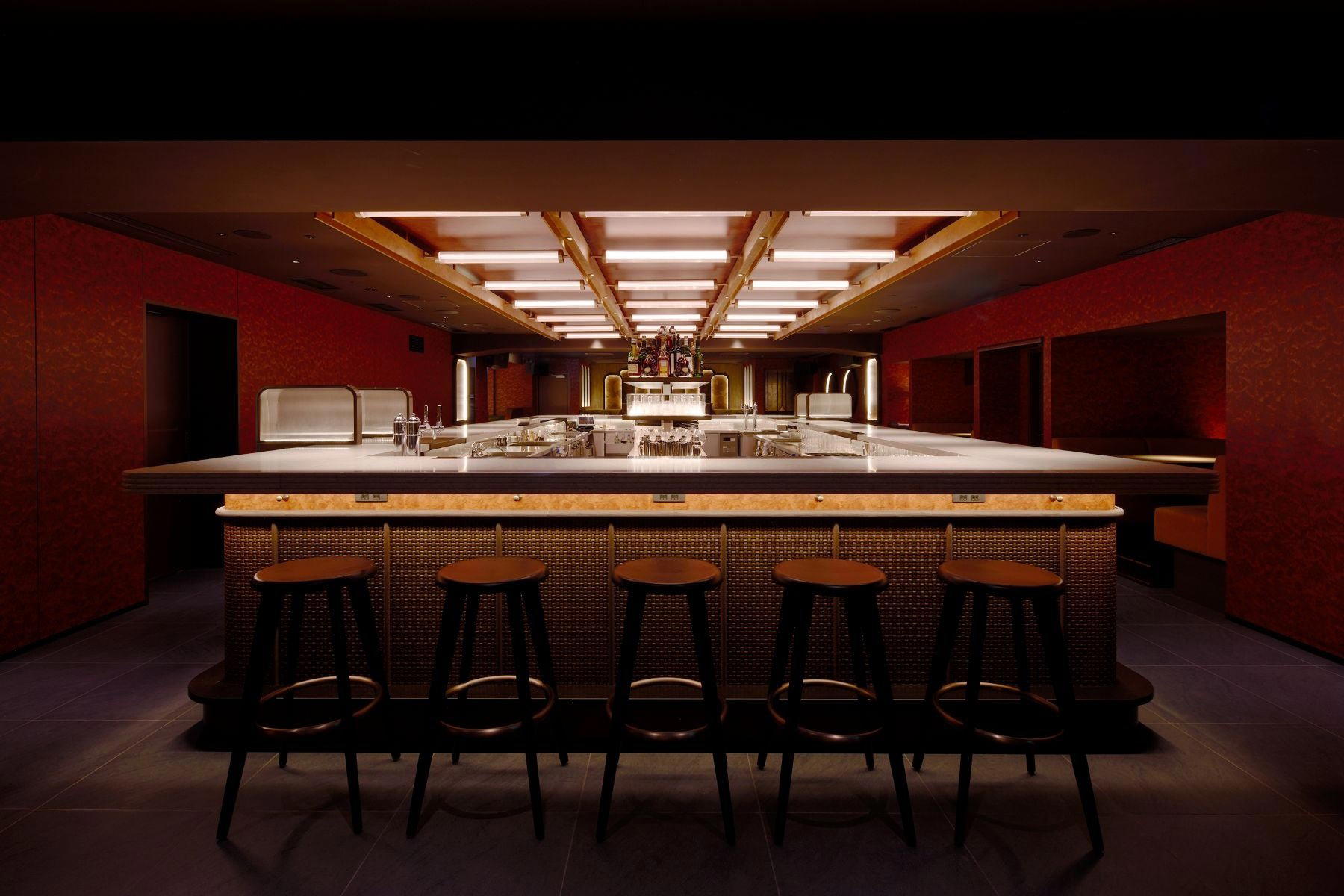
In Tokyo's top-tier restaurant culture, the physical container is rarely incidental. The design choices made at this level communicate culinary philosophy with a precision that menu descriptions seldom match. Counter configurations, material selections, ceiling heights, and the management of ambient light are all deliberate signals in a city where restaurant interiors function as a form of editorial curation.
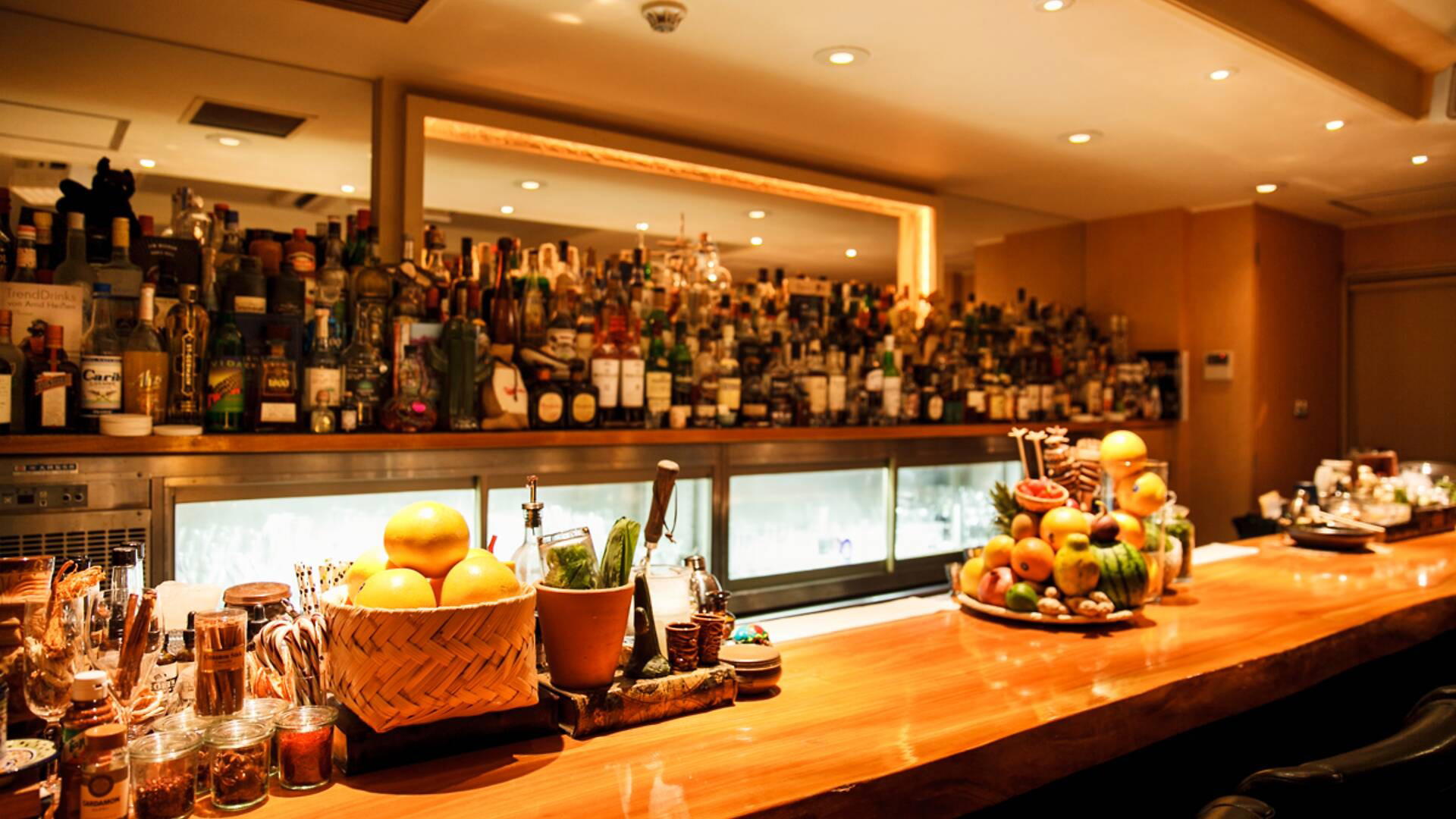
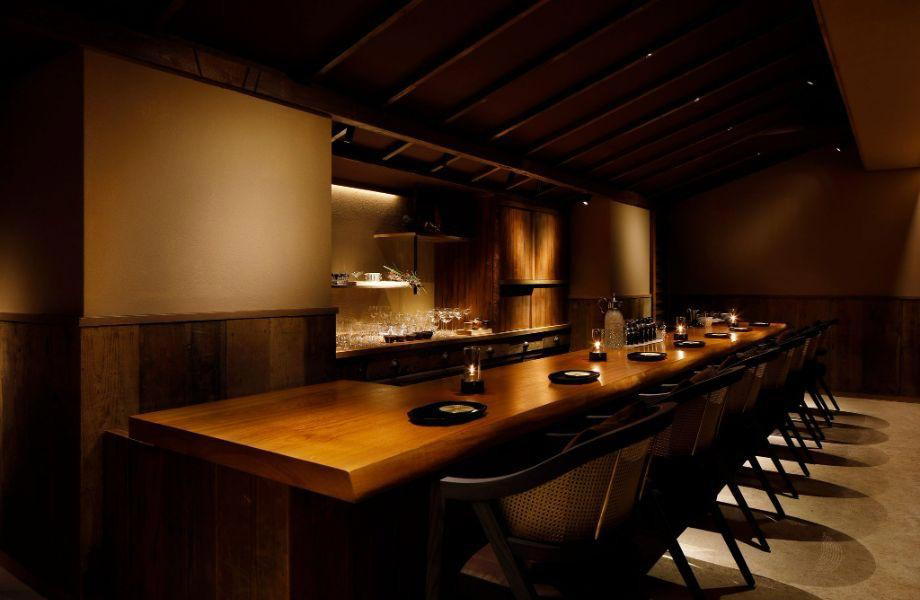
にしたに, situated on the 6th block of Ginza's Chuo district, occupies a physical address that carries implicit weight. Ginza interiors at this level tend toward restraint: warm wood grains, uncluttered sightlines, and counter arrangements that collapse the distance between kitchen and guest without removing the formality that the neighborhood expects. This architectural restraint is not minimalism for its own sake; it reflects a broader understanding that the room should not compete with the plate. The leading Japanese dining spaces operate on this principle, and Ginza's most durable rooms have held to it across decades of trend cycles.
The spatial logic of a Japanese counter at this level differs fundamentally from European fine dining formats. Where French service traditions, as practiced at Tokyo properties like L'Effervescence and Sézanne, distribute guests across a room and manage the pacing through a brigade structure, the Japanese counter format concentrates experience into a direct exchange. Every material decision in the room, every sight line and acoustic choice, exists to support that concentration.
Positioning within Tokyo's Premium Dining Scene
Tokyo's restaurant scene has developed a tiered structure that operates somewhat independently of international award frameworks, though the two increasingly overlap. Each of these operates on a different culinary logic, but all share the same fundamental proposition: the guest is committing to a single chef's vision, delivered through a fixed progression, in a space designed to eliminate distraction.
にしたに sits within this competitive cohort. The Ginza address, the counter format, and the district's prevailing price expectations place it against peers who have built long reservation queues and, in several cases, international recognition. For the traveler building a Tokyo itinerary around serious dining, this context matters: understanding where a restaurant sits in the competitive set helps calibrate expectations and plan the full schedule intelligently.
Across Japan, the dining tradition represented by Ginza's serious counters finds different regional expressions. HAJIME in Osaka operates at an equivalent level of commitment in Kansai. Gion Sasaki in Kyoto represents kaiseki in its deepest traditional form. Further afield, Goh in Fukuoka and akordu in Nara demonstrate how the premium counter concept has dispersed across the country. The Ginza incarnation, however, benefits from its proximity to Tokyo's densest concentration of sourcing networks, seasonal ingredient suppliers, and the guest base that sustains this tier year-round.
Seasonal Timing and When to Visit
Tokyo's counter dining tradition is deeply seasonal, structured around the Japanese culinary calendar in a way that makes the time of your visit consequential. Spring in Ginza brings the appearance of bamboo shoots and early seafood transitions; autumn shifts toward matsutake mushroom and fatty seasonal fish. The winter months, roughly December through February, are generally considered among the strongest periods for high-grade fish across Tokyo's premium counters, as cold water concentrates fat content in key species.
For international visitors, autumn is the most consistent window, with cooler temperatures, manageable humidity, and seasonal produce at a peak that aligns well with what serious Japanese kitchens do most fluently. Spring cherry blossom season brings high hotel occupancy and compressed availability across all premium restaurants in Ginza. Planning a visit to にしたに during either shoulder season, late October or early November, or March before the peak cherry blossom surge, typically offers better reservation access and more deliberate pacing through the neighborhood.
Restaurants operating outside the major urban centers, like a restaurant in Nanao or one in Takashima, draw on different regional seasonal patterns. The Ginza context, by contrast, aggregates the best of national sourcing into a single urban network, which means seasonal variation here reflects breadth as much as local specificity.
Planning Your Visit
| Venue | District | Format | Price Tier | Notes |
|---|---|---|---|---|
| にしたに | Ginza 6-chome | Counter (Japanese) | Not confirmed | See current booking channels |
| Harutaka | Ginza | Sushi counter | ¥¥¥¥ | Advance reservation essential |
| RyuGin | Roppongi/adjacent | Kaiseki | ¥¥¥¥ | Multiple seatings, international profile |
| L'Effervescence | Nishi-Azabu | French tasting | ¥¥¥¥ | Room-based, not counter format |
| Crony | Tokyo | Innovative French | ¥¥¥¥ | Smaller format, high booking pressure |
For international visitors, reservations at this tier in Tokyo are typically secured one to three months in advance, with some rooms extending further for peak season dates. Where website and phone data are not confirmed, concierge services through higher-category hotels in Ginza and adjacent districts are a reliable channel. If you are building a multi-city Japan itinerary, our full Tokyo restaurants guide maps the broader dining landscape alongside properties in Toyohashi, Nishikawa Machi, and Sapporo. For context on how Tokyo's counter tradition compares internationally, the tasting-menu format at Le Bernardin in New York and the Korean-influenced counter dining at Atomix offer useful reference points from outside Japan. Birdland in Sakai rounds out the domestic comparison for guests exploring regional Japanese dining alongside a Tokyo visit.
Frequently asked questions
Where exactly is にしたに?
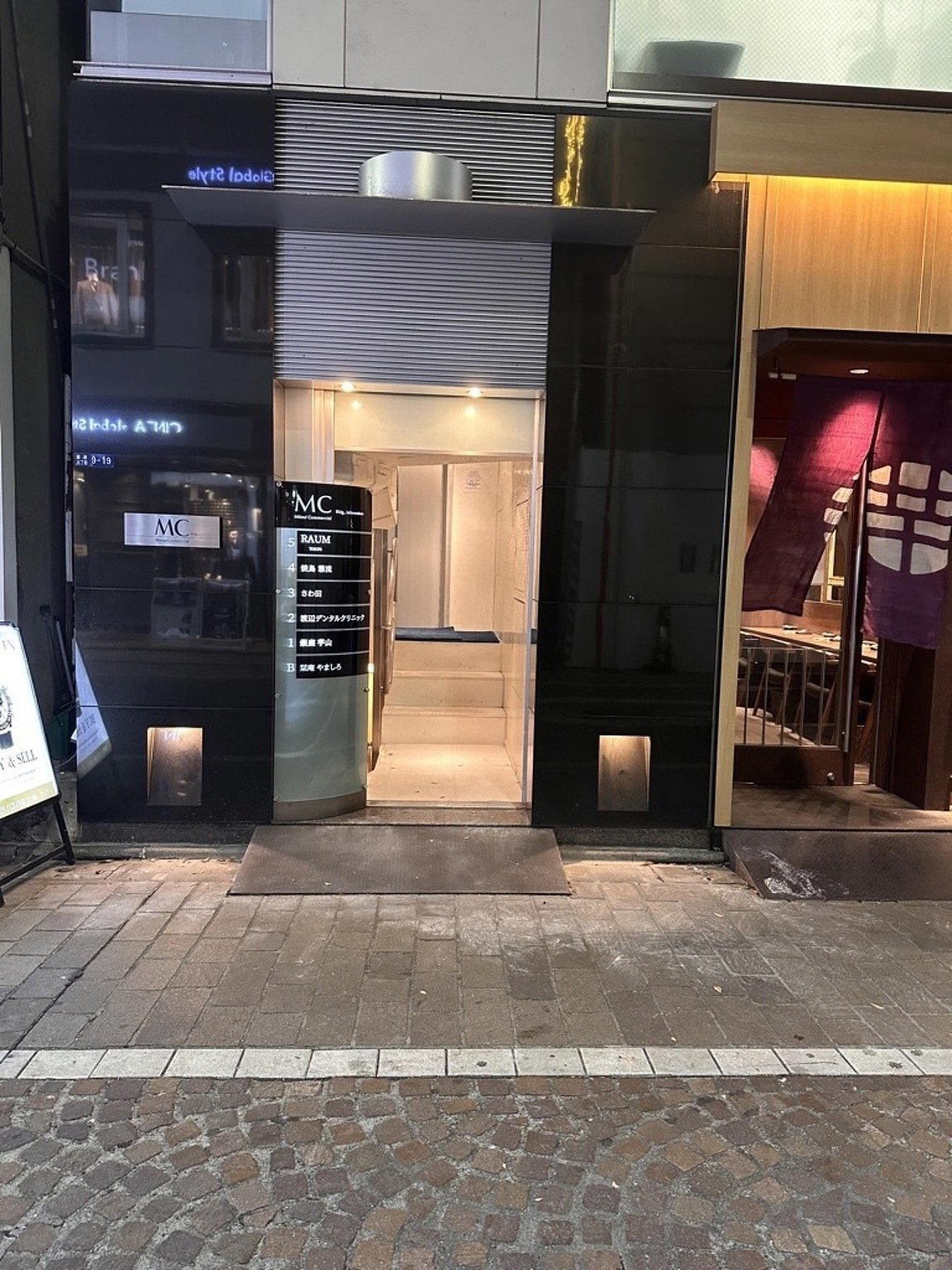
にしたに is located at 6 Chome-3-6 Ginza, Chuo City, Tokyo 104-0061, Japan, Tokyo.
Is にしたに suitable for solo diners visiting Ginza?
Counter-format restaurants in Tokyo are structurally well-suited to solo dining, a single seat at a counter in Ginza is often easier to secure than a table for two, and the format places every diner in direct relation to the kitchen. にしたに's Ginza address at 6 Chome-3-6 puts it within a compact dining corridor where solo visits are common practice among both local regulars and travelling critics.
What should I eat at にしたに?
Given its address in the 6-chome block of Ginza, one of Tokyo's most concentrated stretches of counter-format restaurants, the kitchen almost certainly follows a set-course structure, likely seasonal in composition. Arriving without dietary preconceptions gives the kitchen the most room to work.
How far ahead should I plan for にしたに?
Ginza counter restaurants at this level routinely require reservations two to three months in advance, and some operate invitation or referral systems that make walk-in bookings effectively impossible. No public booking channel for にしたに is currently listed, which suggests reservations may run through a concierge contact or personal introduction. Begin planning at least eight to twelve weeks out.
What has にしたに built its reputation on?
The venue sits at 6 Chome-3-6 Ginza, a block that carries significant weight in Tokyo's dining hierarchy simply by geography. In a district where sustained presence signals something beyond novelty, にしたに's continued operation in this location is itself a credential. Specific awards or critical citations are not on public record, but Ginza's peer pressure is ruthless, restaurants that do not perform quietly disappear.
What if I have allergies at にしたに?
Counter-format restaurants in Tokyo's Ginza tier typically require dietary disclosures at the time of booking, not on arrival, because courses are prepared in advance for each seat. No contact number or website is currently listed for にしたに, so communicating restrictions in advance may require going through a hotel concierge or the reservation channel used to secure the booking. Assume nothing can be accommodated last-minute.
Comparable Spots
Comparable venues nearby, for context on price, style, and recognition.
| Venue | Cuisine | Price | Awards | Notes |
|---|---|---|---|---|
| にしたにThis venue (the venue you are viewing) | Ginza Sushi | $100–150 | Not listed | Not listed |
| Kuriya Otona Kurogi | Japanese sweets & kakigori cafe | $20–30 | Tabelog 100 #81 | Ueno |
| Sumiyaki Unafuji Yuurakuchou ten | Traditional Nagoya-style unagi and hitsumabushi | $30–50 | Tabelog 100 #87 | Chiyoda |
| Toranomon Yakitori Kuniyoshi | Yakitori & Chicken Dishes | $100–150 | Tabelog 100 #1 | Minato |
| Yakiniku Akami Nikugatou Ningyouchou honten | Japanese Yakiniku | $50–100 | Tabelog 100 #85 | Chūō |
| Unagi Akimoto | Traditional Japanese Unagi | $50–100 | Tabelog 100 #37 | Chiyoda |