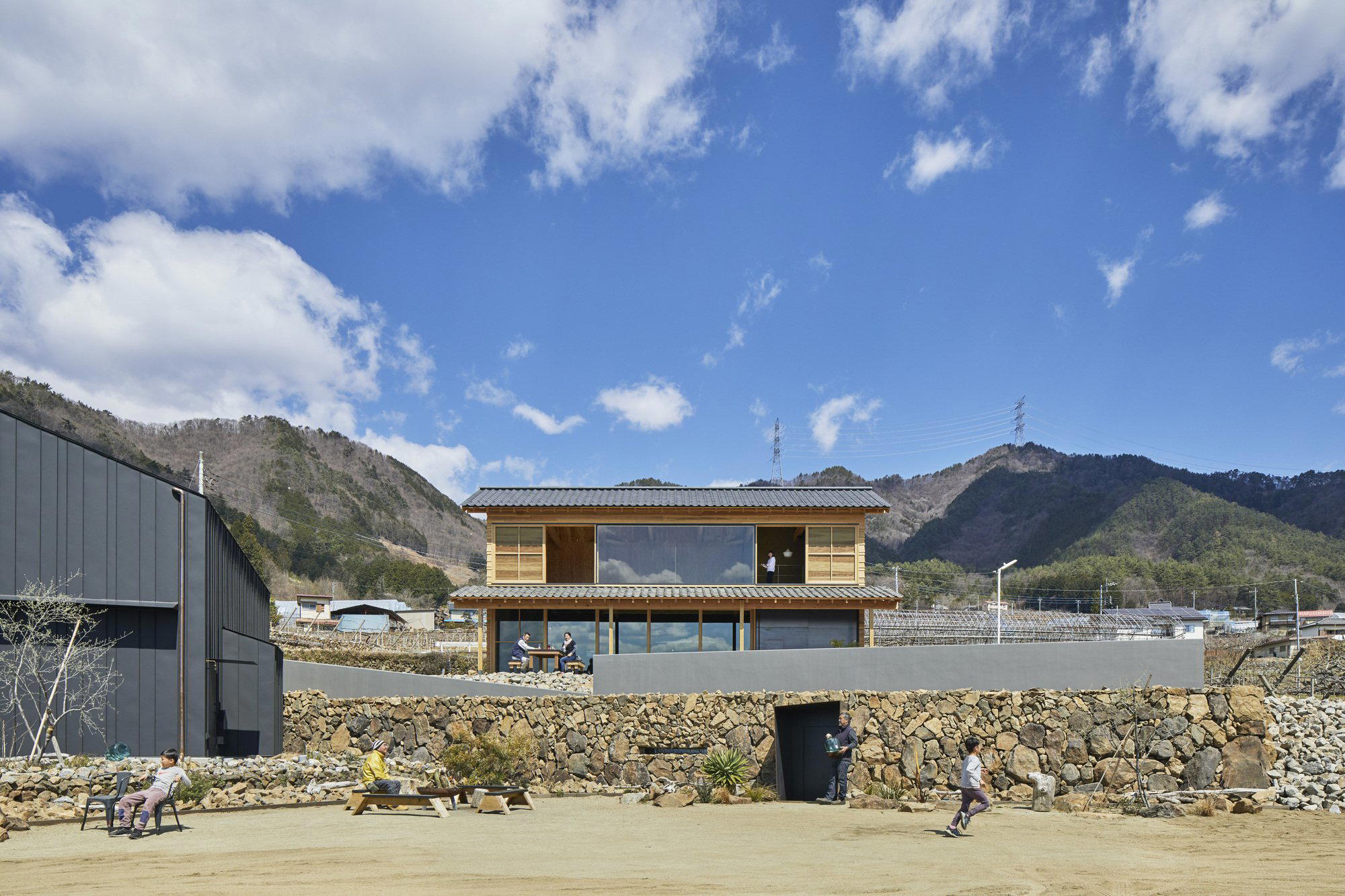
In Hokuto's Nagasakacho district, at the foot of the Yatsugatake highlands, 玄泉末 occupies a corner of rural Yamanashi where ingredient provenance is not a selling point but a structural fact of the menu. The surrounding agricultural belt, altitude, and seasonal rhythms define what arrives on the table. For those travelling through Japan's premium regional dining circuit, Hokuto is a detour worth planning around.
Pearl is the En Primeur Club membership app — saves, bookings, and concierge access live there. Same editors, same standards.
- Address
- 4551 Nagasakacho Nakamaru, Hokuto, Yamanashi 408-0036, Japan
- Phone
- +81551457703
- Website
- stove-kiyoharu.com
- Directions
- Get directions
 Saves & bookings on Pearl
Where the Highlands Shape the Plate
Yamanashi Prefecture sits at an unusual intersection in Japan's food geography. Its inland position and refined terrain, anchored by the Yatsugatake range to the north, produce growing conditions that diverge sharply from coastal prefectures: cooler summers, colder winters, and soils that reward patience over volume. The region has historically been associated with fruit cultivation, particularly peaches and grapes, but the broader agricultural calendar sustains a depth of seasonal produce that has drawn a quiet cluster of serious kitchens to the area. 素還來, addressed at 4551 Nagasakacho Nakamaru in Hokuto, sits within this agricultural corridor, and the surrounding terrain is not incidental to what happens inside. It is the premise.
Hokuto itself remains far outside the circuits that move diners between Harutaka in Tokyo, Gion Sasaki in Kyoto, and HAJIME in Osaka. That distance is part of the proposition. Kitchens in smaller Japanese cities and rural prefectures operate under different constraints than their urban peers: no walk-in trade, limited supply chains, and a guest base that has made a conscious decision to travel. Particularly coherent of these establishments respond to those constraints by building menus almost entirely from what the surrounding land and season will allow. For context on what else the Hokuto dining scene offers along these lines, see Terroir愛と胃袋 and Yatsugatake Esaki, both of which work within a similar regional framework.
Ingredient Sourcing as Architectural Logic
The food culture developing in highland Yamanashi belongs to a broader pattern visible across Japan's secondary and tertiary dining destinations. In Fukuoka, Goh has built its reputation on Kyushu produce deployed with technical precision. In Nara, akordu draws on the Kinki region's agricultural depth to support a European-inflected format. What connects these kitchens is a structural commitment to sourcing geography: the menu exists because of where the restaurant is, not in spite of it. This is distinct from the increasingly common urban practice of importing premium regional produce to city kitchens. When a restaurant is physically located within its sourcing radius, the relationship between ingredient and dish is less curated and more immediate.
Hokuto's Nagasakacho area offers a particularly concentrated version of this dynamic. The Yatsugatake volcanic soils, combined with significant diurnal temperature variation, produce vegetables and mountain herbs with pronounced flavour intensity. Altitude also affects livestock and dairy character in ways that lowland farming cannot replicate. For kitchens that structure their menus around this kind of specificity, the geography is not a backdrop; it is the central technical argument.
The Regional Kitchen Format in Practice
Across Japan's regional fine dining tier, from affetto akita in Akita to Ajidocoro in Yubari District, the format tends toward a fixed sequence with limited or no à la carte option. This is not a concession to operational simplicity; it is a direct expression of sourcing logic. If the menu changes with what the local land produces week to week, a fixed carte becomes incoherent. The tasting format, whether kaiseki in structure or something more hybrid, allows the kitchen to respond to the season without negotiation. It also places a premium on the guest's willingness to trust the sequence, which is a different kind of hospitality compact than the choice-driven urban restaurant model.
Venues like Amaki in Aichi, aki nagao in Sapporo, and Amegen in Saga each operate within this framework at different price points and with different cuisine orientations. What they share is the primacy of the sourcing calendar over the menu card. Internationally, the closest analogues are kitchens like Lazy Bear in San Francisco or Le Bernardin in New York City, which treat sourcing provenance as a primary communication to the guest, even if their urban contexts produce a fundamentally different ingredient relationship.
Planning a Visit to Hokuto
Hokuto is accessible from Tokyo via the JR Chuo Line to Kobuchizawa station, placing it within a two-hour window from Shinjuku, which makes it viable as a day trip or, more comfortably, as an overnight with accommodation in the area. The Yatsugatake highlands draw visitors primarily in late spring through autumn, when the produce calendar is at its most active, and again in winter for those who understand what cold-season root vegetables and game mean in a kitchen that sources locally.
Similarly, Akakichi in Imabari demonstrates how distance from major urban centres can sharpen rather than dilute a kitchen's identity when the sourcing geography is treated with discipline.
Side-by-Side Snapshot
Comparable venues nearby, for context on price, style, and recognition.
| Venue | Cuisine | Price | Notes |
|---|---|---|---|
| ç´ éæ«This venue — the venue you are viewing | Japanese Restaurant | $ | Not listed |
| Kobuchisawa Izutsuya | Japanese Unagi | $$ | Kobuchizawa |
| Daigahara Kinseiken Honten | Traditional Japanese Wagashi & Sweets Cafe | $ | Daigahara, Hakushumachi |
| Terroir Aitoibukuro | Seasonal Terroir-Driven French in a Historic Farmhouse | $$$$ | Takanecho Nagasawa |
| Restaurant Steakhouse Keyspring (カントリーレストラン キースプリング) | Country Steakhouse with Local Yamanashi Beef | $$$ | 小淵沢 |
| Villa Afghan | European-style curry house in the Yatsugatake mountains | $$ | Oizumi |
Continue exploring
More in Hokuto
Restaurants in Hokuto
Browse all →
Hotels in Hokuto
Browse all →
Wineries in Hokuto
Browse all →

At a Glance
Traditional Japanese atmosphere