
Daigahara Kinseiken Honten puts Hokuto’s wagashi culture in sharp focus: regional ingredients, takeaway-led service, and sweets positioned as Yamanashi souvenirs rather than restaurant ceremony. Its Tabelog 100 selection for Japanese traditional sweets and sweets cafe in EAST 2023 gives it a clear trust signal, while the modest JPY 1,000–1,999 range keeps the experience grounded in everyday local food culture.
Pearl is the En Primeur Club membership app — saves, bookings, and concierge access live there. Same editors, same standards.
- Address
- 2211 Hakushucho Daigahara, Hokuto, Yamanashi 408-0312, Japan
- Phone
- +81 551-35-2246
- Website
- kinseiken.co.jp
- Directions
- Get directions
 Saves & bookings on Pearl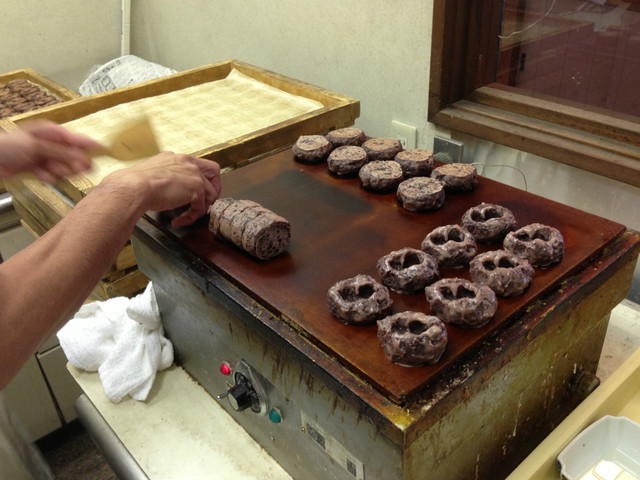
Hokuto reads differently from a city dining district. The approach is low-rise, regional, and tied to the traffic of travelers crossing Yamanashi rather than an evening crowd moving between counters and wine bars. In that setting, wagashi is not an afterthought to tea ceremony nostalgia; it functions as edible geography. Rice, water, fruit, beans, and seasonality matter because they are the structure of the sweet, not decorative backstory.
That is the frame for Daigahara Kinseiken Honten, a Japanese traditional sweets shop and cafe in Hokuto selected for Tabelog Hyakumeiten recognition in 2023. The recognition matters because wagashi rankings are not built around luxury theatrics. They tend to reward consistency, local loyalty, product clarity, and the kind of craft that can look plain until compared closely with mass-market souvenir sweets.
Hokuto wagashi makes a case for ingredients before ceremony
Yamanashi’s food identity is often discussed through fruit, mountain water, and road-trip eating, but traditional sweets give those elements a more compact form. Daigahara Kinseiken Honten sits inside that broader regional conversation without needing a formal dining-room frame. In wagashi, the details are not cosmetic. Texture, water, and restrained sweetness decide whether a sweet feels regional or generic.
The shop’s category places it in a lane distinct from plated dessert rooms or hotel patisseries: Japanese traditional sweets and a cafe featuring Japanese sweets. That detail matters because the product has to travel culturally, if not always physically, with many visitors encountering it as a regional marker. In Japan, regional sweets often carry the burden that wine labels carry elsewhere. They explain where the traveler has been.
Hokuto’s dining range is wider than a sweets stop suggests. Kobuchisawa Izutsuya, OTTO SETTE, and Asian Yatai Gohan Gogo Kichi Shokudo show how varied a Hokuto food day can become, even before dessert is considered. The useful comparison is not cuisine-to-cuisine; it is how Hokuto supports both destination dining and small-format regional food purchases inside the same travel day.
Takeaway culture suits sweets that depend on freshness
The format is compact and sweets-led, with a service model that does not ask the visitor to treat wagashi like a long tasting menu. That restraint is part of the appeal. Japanese sweets shops often work better when they avoid restaurant cosplay: choose, pay, carry, share, and let the sweet sit in the day’s route between station, roadside stop, local outing, vineyard, or hotel.
The price range, JPY 1,000–1,999, places the experience below many fuller restaurant commitments and makes it efficient for travelers building a food itinerary across the region. It also changes the editorial stakes. At this level, the question is not whether the room offers luxury; it is whether the sweet communicates place with enough precision to justify the detour. The 2023 Tabelog Hyakumeiten selection and the shop’s clear sweets category give a stronger answer than atmosphere alone could.
For a fuller Hokuto food day, the sweets stop pairs more logically with contrasting formats than with another dessert venue. Terroir Aitoibukuro and Terroir愛と胃袋 point toward the area’s ingredient-led dining conversation, while our full Hokuto restaurants guide gives the broader map. Travelers staying in the area can cross-reference our full Hokuto hotels guide, then build a slower circuit through our full Hokuto wineries guide, our full Hokuto bars guide, and our full Hokuto experiences guide.
Where it fits in a Japan food itinerary
Daigahara Kinseiken Honten is strongest as a regional anchor rather than a standalone destination meal. That distinction matters for international travelers who often overbuild Japan itineraries around famous counters and underbuild the smaller stops that explain local taste. Wagashi in Hokuto does not need the vocabulary of ceremony to be serious; its seriousness comes from category discipline, recognition within a sweets-specific context, and the confidence to remain casual.
There is a useful national comparison here, even across unrelated genres. Other Japanese dining rooms may express place through formal meals, seafood counters, casual cafes, or compact urban formats. Hokuto does something different here: it lets a traditional sweets shop carry the sense of region in a smaller, more portable register. The point is not sameness. It is that small formats can carry as much regional information as formal dining when the category and sense of place are clear.
The practical read is simple: treat this as a daytime sweets stop in Hokuto, not a lingering restaurant reservation. Its listed budget is Dinner: -; Lunch: JPY 1,000–1,999, which keeps the commitment light while still giving the stop editorial weight. The public listing places it in the categories of Japanese traditional sweets, cafe featuring Japanese sweets, and cafe, with a Tabelog score of 3.65 for the 2023 record supplied. For children, the format is easy to understand; for adults, the reason to go is sharper than nostalgia. It is a compact lesson in how Yamanashi can turn local taste into a souvenir with craft behind it.
A Quick Peer Check
Comparable venues by cuisine and price in the same metro.
| Venue | Cuisine | Price | Notes |
|---|---|---|---|
| Daigahara Kinseiken Honten | Traditional Japanese Wagashi & Sweets Cafe | $ | Daigahara, Hakushumachi |
| Kobuchisawa Izutsuya | Japanese Unagi | $$ | Kobuchizawa |
| ç´ éæ« | Japanese Restaurant | $ | Hokuto |
| Asian Yatai Gohan Gogo Kichi Shokudo | Thai & Vietnamese Street-Food Eatery | $$ | Kobuchizawa |
| Terroir愛と胃袋 | Local Terroir French-Japanese Fusion | $$$$ | Takanechō Nagasawa |
| Villa Afghan | European-style curry house in the Yatsugatake mountains | $$ | Oizumi |
Recognition history
Dated appearances from independent guides and award organizations, with the underlying list record or original source where available.
Tabelog 100 #90 · No. 90
Tabelog · Tabelog 100 - Japanese traditional sweets / Japanese sweets cafe - EAST - 2023
Continue exploring
More in Hokuto
Restaurants in Hokuto
Browse all →
Hotels in Hokuto
Browse all →

Wineries in Hokuto
Browse all →

At a Glance
- Classic
- Cozy
- Rustic
- Well Known
- Solo
- Family
- Casual Hangout
- Historic Building
- Standalone
- Local Sourcing
- Street Scene
Current opening hours
- Monday
- 9 AM–5 PM
- Tuesday
- 9 AM–5 PM
- Wednesday
- 9 AM–5 PM
- Thursday
- Closed
- Friday
- 9 AM–5 PM
- Saturday
- 9 AM–5 PM
- Sunday
- 9 AM–5 PM
Hours can change for holidays and private events. Last verified .
A nostalgic, traditional Japanese sweets shop housed in an Edo-era inn-style building, with a warm, homey feel that matches the old town streetscape and invites guests to relax while enjoying classic wagashi.
Know Before You Go
- Reservations
- Walk in friendly
- Getting there
- 2211 Hakushucho Daigahara, Hokuto, Yamanashi 408-0312, Japan