

Tabelog Bronze #293
Our verdict
Mumyo belongs to Nagano’s small, serious tier of destination Japanese restaurants, where mountain produce, seasonality, and restraint matter more than spectacle. Its six-seat format, Tabelog Award Bronze recognition from 2023 through 2026, and OAD Recommended listing place it well above casual Chino dining, with pricing in the JPY 20,000–29,999 bracket for both lunch and dinner.

Pearl is the En Primeur Club membership app — saves, bookings, and concierge access live there. Same editors, same standards.
- Address
- 5-4 Nakamachi, Chino, Nagano 391-0005, Japan
- Hours
- Mon 9 AM–5 PMTue–Wed ClosedThu–Fri 7–9 PMSat 12:30–3 PM, 7–9 PMSun 12:30–3 PM, 7–9:30 PM
- Website
- mumyo.jp
- Directions
- Get directions
- Booking
- Book on TableCheck
The menu
What to order
- Deep-fried sweetfish with buckwheat flour
- Matsutake mushrooms
- Wild boar stew
- Fried shamo chicken
Chino is not the Nagano most travellers build their eating itinerary around first. The city sits close to the Yatsugatake foothills and Suwa basin, where the mood is quieter than Karuizawa resort dining and less urban than Nagano City. That matters for Japanese cuisine: the region’s strength is not abundance for its own sake, but the discipline of using mountain vegetables, freshwater culture, rice-country technique, and short seasonal windows without turning them into theatre.
Mumyo fits that Nagano grammar. The restaurant is listed as Japanese cuisine rather than a broader washoku catch-all, and its recognition gives useful scale: Tabelog Award Bronze in 2023, 2024, 2025, and 2026; selection for Tabelog Japanese Cuisine EAST 100 in 2023 and 2025; and a 2026 Opinionated About Dining Recommended listing. Those signals place it in a narrow national conversation, not merely the local Chino circuit. The room is tiny, with six seats, so the experience belongs to the counter-era of Japanese dining: low capacity, fixed rhythm, and limited room for casual drop-ins.
Mountain-region Japanese cooking with national signals
Nagano’s serious restaurants often have to answer a different question from Tokyo’s: how much can a meal say without access to the capital’s constant luxury supply chain? The stronger answer is sourcing intelligence. In this part of central Honshu, seasonality is not a decorative word. Snowmelt, altitude, vegetable harvests, freshwater fish, mushrooms, buckwheat culture, and preserved foods all shape the regional pantry. A Japanese restaurant working at this level is judged by how cleanly it turns those materials into a sequence, and how little imported prestige it needs to prove the point.
That is why Mumyo’s awards profile carries more weight than a simple popularity cue. Tabelog’s Bronze tier, repeated across four consecutive award years, suggests consistency across changing seasons rather than a single wave of attention. Its presence in Tabelog Japanese Cuisine EAST 100 places it among Japanese restaurants across eastern Japan, where rural, provincial, and metropolitan dining rooms compete in the same category. OAD’s Recommended listing adds a second recognition channel, useful because OAD tends to reward restaurants followed by highly committed diners rather than casual search traffic.
The comparison inside Nagano is also instructive. ca’enne works from an Italian frame, while Bleston Court Yukawatan belongs to the resort-French side of the prefecture’s dining culture. Aoitou, Chamonix, and Chinese Sai Muen show how broad Nagano’s serious restaurant map has become, from local Japanese cooking to European and Chinese formats. Mumyo is the more inward-looking proposition: fewer seats, a higher average spend than many regional meals, and a format built around Japanese cuisine rather than international translation.
Six seats change the stakes
Small restaurants in Japan are often described romantically, but the practical effect is concrete. Six seats means the room has little margin for lateness, indecision, or large-party improvisation. It also means the meal is closer to a shared sequence than a flexible restaurant visit. In a city like Chino, that scale changes how the diner should read the price. The JPY 20,000–29,999 range for both lunch and dinner puts the restaurant far above everyday regional dining and into destination territory, but below the extreme pricing of elite counters in Tokyo and Kyoto.
That middle-high bracket is where Nagano can be persuasive. The value is not in lavishness; it is in concentration. A six-seat Japanese restaurant in a mountain prefecture has to earn attention through product timing, rice and broth work, knife discipline, and the ability to make local materials feel inevitable rather than rustic. The absence of private rooms reinforces the point. This is not a corporate entertaining room or a broad family occasion restaurant. It is a focused meal for diners willing to give the kitchen control of pace and tone.
The restaurant’s photography rules are also part of the culture, not a footnote. Food and exterior photography are permitted, while interior, equipment, staff, other guests, and video are restricted. In Japan’s small-counter dining rooms, that boundary protects more than privacy; it keeps the room from becoming content production. For travellers, the implication is simple: this is a meal to be followed closely, not documented aggressively.
How to place it within a Nagano itinerary
Nagano rewards travellers who split their time by purpose. Karuizawa has resort polish, Nagano City has temple-town depth and broad dining access, Matsumoto brings craft and castle-town pacing, and the Suwa-Chino area offers a more grounded mountain-lake corridor. Mumyo makes the strongest sense when that geography is part of the trip rather than an isolated detour. It pairs naturally with an itinerary built around Suwa, Yatsugatake, onsen stays, or a wider central Japan food route.
For broader planning, our full Nagano restaurants guide gives the regional dining map more context, while our full Nagano hotels guide is the smarter companion for deciding whether to base in Chino, Suwa, Matsumoto, or Karuizawa. Travellers building a longer food-and-drink route can also use our full Nagano bars guide, our full Nagano wineries guide, and our full Nagano experiences guide to avoid treating dinner as the only serious appointment of the day.
Outside Nagano, the useful comparison is not with casual Japanese restaurants, but with small-format specialists where the format defines the commitment. A traveller considering -Grilled beef Sukiyaki- KAMAKURA TANUKIAN 鎌倉 たぬき庵 in Kamakura. 鮪と炭火焼き うお炭 秋葉原店 in Tokyo.cafe in Osaka.know in Kumamoto, (Shoku) Vietnam in Kawasaki, [Curry Senmon Ten] Maruyama Kyoju. in Sapporo, Jōdo Saké Bar in Los Angeles, or Onigiri Time in Pasadena is comparing formats, cities, and appetite for commitment. Mumyo asks for the quieter version: a small Japanese room in Chino, a serious budget, and attention to Nagano’s ingredients rather than metropolitan display.
Frequently asked questions
Does Mumyo work for a family meal?
It can, provided the party fits the six-seat dining room and follows the reservation-only policy. For larger family gatherings, the venue lists private use for up to 20 people, which is the more practical format in Nagano.
What kind of setting is Mumyo?
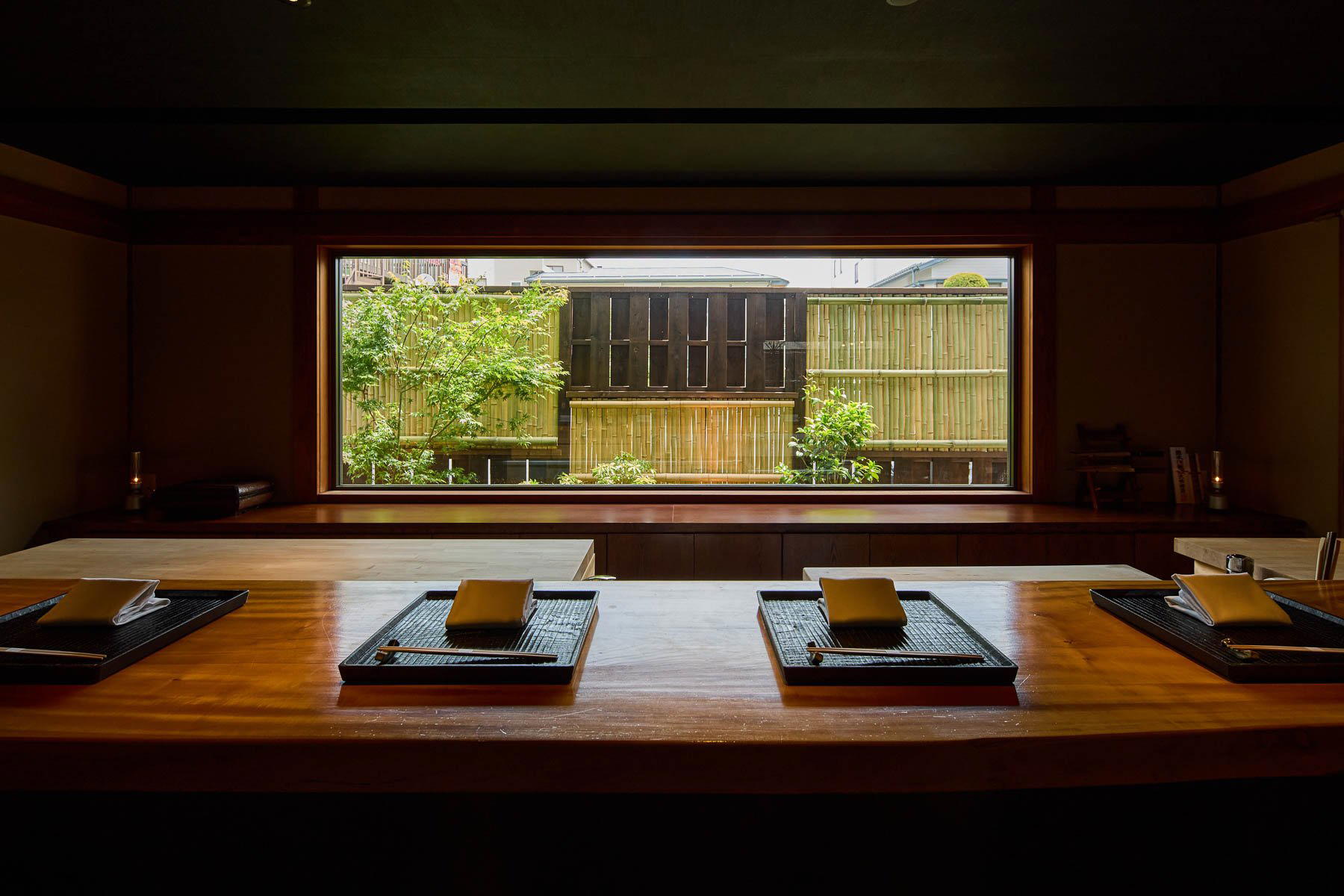
Mumyo is a six-seat, non-smoking restaurant at 5-4 Nakamachi, Chino, with service limited to reservation-only dining. The room is set up for a close, quiet meal, and the photography rules restrict images to the exterior and food.
What are the operating hours at Mumyo?
Hours at Mumyo: Mon 12:30 - 15:30 19:00 - 22:00.
What is Mumyo known for?
Mumyo is primarily known for its core concept and execution in Nagano.
Quick Comparison
Comparable venues by cuisine and price in the same metro.
| Venue | Cuisine | Price | Awards | Notes |
|---|---|---|---|---|
| MumyoThis venue — the venue you are viewing | Modern Japanese Kaiseki | $150–200 | Tabelog Bronze #293 | Not listed |
| Yukimoto | Modern Japanese Kaiseki with Wild Game | $200–300 | La Liste Top Restaurants · Tabelog Gold #36 | Iida |
| Kikuzushi | Edomae Sushi | $50–100 | Tabelog Silver #54 | Iizuna |
| Suki Tei Honten | Traditional Sukiyaki & Shabu-Shabu with Shinshu Beef | $50–100 | Tabelog 100 #14 | near Nagano Prefectural Office |
| 蕎麦処 そばの実 | Togakushi Soba | $20–30 | Tabelog 100 #53 | Togakushi |
| Uzura Ya | Traditional Togakushi soba restaurant | $20–30 | Tabelog 100 #52 | Togakushi |
Recognition history
Dated appearances from independent guides and award organizations, with the underlying list record or original source where available.
Opinionated About Dining Top Restaurants in Japan Recommended
Opinionated About Dining
Tabelog Bronze #293
Tabelog
Full recognition history (4 entries)
Tabelog 100 #49 · No. 49
Tabelog · Tabelog 100 - Japanese cuisine - EAST - 2025
Tabelog Bronze
Tabelog
Continue exploring
More in Nagano
Restaurants in Nagano
Browse all →
Bars in Nagano
Browse all →
Hotels in Nagano
Browse all →
Wineries in Nagano
Browse all →
Details
- Intimate
- Cozy
- Minimalist
- Elegant
- Special Occasion
- Chefs Counter
- Sake Program
- Local Sourcing
- Omakase
- Sake Program
Current opening hours
- Monday
- 9 AM–5 PM
- Tuesday
- Closed
- Wednesday
- Closed
- Thursday
- 7–9 PM
- Friday
- 7–9 PM
- Saturday
- 12:30–3 PM, 7–9 PM
- Sunday
- 12:30–3 PM, 7–9:30 PM
Hours can change for holidays and private events. Last verified .
Compact and deliberate with simple materials, practical warmth, open sightlines to the kitchen, and low sound levels fostering intimate family-style sharing.