Our verdict
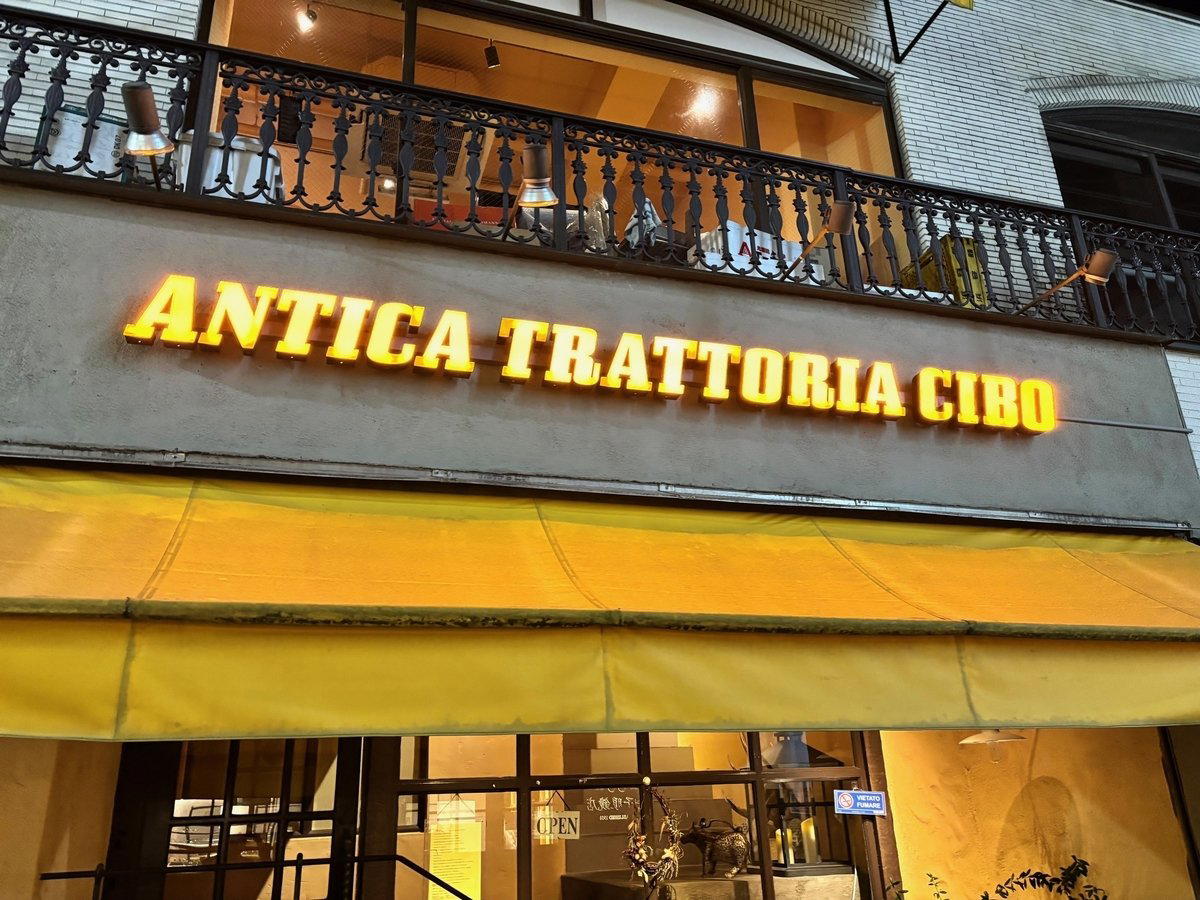
A neighbourhood Italian trattoria on the second floor of a Jiyugaoka building, アンティカ トラットリア チーボ sits within one of Tokyo's most quietly serious dining districts. The restaurant represents the strand of Italian cooking that Tokyo has absorbed and reinterpreted over decades, pitched at the residential scale of the surrounding streets rather than the high-gloss circuits of Ginza or Roppongi.

Pearl is the En Primeur Club membership app, where members save venues, book tables and use the concierge.
Jiyugaoka and the Italian Question in Tokyo
Jiyugaoka has spent the better part of three decades building a reputation as Tokyo's most European-inflected residential neighbourhood, and not by accident. The area's low-rise streetscape, independent retail culture, and proximity to the quieter southern wards attracted a particular kind of restaurateur: one less interested in the Michelin circuit than in the kind of cooking that sustains a neighbourhood rather than anchors a destination itinerary. Italian restaurants took hold here earlier and more deeply than in most Tokyo districts, partly because the cuisine's register, shared plates, wine-forward service, mid-week regulars, suited the existing social texture of the streets. アンティカ トラットリア チーボ, occupying the second floor of a low building on 1 Chome-26-8 in the Kikumoto Building, fits within that tradition rather than deviating from it.
Tokyo's relationship with Italian cooking is worth understanding before you book a table anywhere in the city. What began as a trickle of Italian-trained Japanese chefs returning home in the 1980s became, by the 2000s, a fully formed parallel tradition. Tokyo now has more Italian restaurants per capita than most Italian cities outside Rome and Milan, a density that has produced fierce internal stratification. At the leading end, you find tasting-menu formats with wine pairings that price against establishments like L'Effervescence and Sézanne. Further down the register sits the trattoria tier: more direct, more pasta-heavy, less theatrical. チーボ operates in that middle register, where the editorial interest lies not in spectacle but in consistency and neighbourhood fit.
The Evolution of a Neighbourhood Italian
The trattoria format in Japan has undergone its own quiet evolution since its introduction. Early iterations tended toward faithful reproduction: red-checked tablecloths, Chianti carafes, a menu that read like a greatest-hits compilation of central Italian cooking. What emerged over subsequent decades was something more hybrid, Italian structure absorbed into Japanese precision. Portion discipline, seasonal ingredient sourcing from domestic producers, and the absence of improvisational rusticity gave Japanese trattorias a tidier character than their Roman or Florentine counterparts. The genre shifted from imitation toward interpretation, and that shift is what defines the more credible establishments in Jiyugaoka today.
チーボ sits within that evolved cohort. Its address on the second floor of a building on Jiyugaoka's quieter commercial edge signals the priorities immediately: this is not a venue competing for foot traffic or street-level visibility. Second-floor dining in Tokyo functions as a mild filter, discouraging the casual drop-in and concentrating the tables around guests who came specifically. That operational choice shapes the atmosphere as much as any design decision, and it places チーボ in a category occupied by establishments across Tokyo that value a contained, return-visit dynamic over volume throughput.
For comparison, the high-commitment end of Tokyo's Italian and European dining scene, venues like Crony, which presses French and innovative European traditions into a more formal tasting structure, demonstrates how far the city's European cooking has diverged from its origins. チーボ does not operate in that register. Its value proposition is closer to the other end: the kind of dinner that doesn't require a dedicated planning exercise, that fits into a neighbourhood evening rather than anchoring one. That is a distinct and increasingly rare thing to offer in a city where even the mid-tier has tilted toward occasion dining.
Where チーボ Sits in the Tokyo Italian Scene
Situating チーボ within Tokyo's Italian restaurant hierarchy requires acknowledging how compressed and competitive that hierarchy has become. The city's top-tier Italian tables, many of them omakase-format or tasting-menu-only, have pushed the category's price ceiling significantly over the past decade. That pressure has clarified the identity of the trattoria tier: it is defined by what it does not do as much as by what it does. No mandatory menus, no theatrical service sequences, no wine pairings priced to match the food. What remains is the à la carte structure, the pasta anchor, and the kind of room that does not demand performance from its guests.
Within that context, Jiyugaoka's dining scene offers a more residential version of the city's Italian offer. The neighbourhood draws a mix of local regulars, residents from the surrounding Meguro and Setagaya wards, and visitors who have exhausted the obvious Shibuya and Ebisu circuits. It does not have the destination density of Nishi-Azabu or the Michelin concentration of Ginza, venues like Harutaka or RyuGin operate in entirely different gravitational fields, but it has a coherence and a pace that rewards the visitor willing to spend an evening off the main circuit.
Japan's serious dining culture extends well beyond Tokyo, of course. Visitors with time to travel should consider HAJIME in Osaka, Gion Sasaki in Kyoto, akordu in Nara, or Goh in Fukuoka. For those staying in the capital, our full Tokyo restaurants guide maps the city's dining tiers in detail. Further afield, regional Japanese dining includes entries like 一本木 有川製 in Nanao, 古代今山乃 in Sapporo, 湖邸庄屋 in Takashima, 庭羽屋 in Nishikawa Machi, Birdland in Sakai, and Bistro Ange in Toyohashi. For international comparison points in the Italian-adjacent European dining tradition, Le Bernardin in New York City and Atomix in New York City offer a sense of how comparable cities have calibrated their European fine-dining tiers.
Planning a Visit
チーボ is located on the second floor of the Kikumoto Building at 1 Chome-26-8, Jiyugaoka, Meguro City. Jiyugaoka Station on the Tokyu Toyoko and Oimachi lines is the access point for the neighbourhood, and the streets around it reward walking rather than navigation by app. The neighbourhood's dining rhythm peaks mid-week and on weekend evenings, when local tables fill early. As with most second-floor establishments in Tokyo's residential dining zones, arriving at the listed address and checking building signage is more reliable than relying on map applications, which sometimes omit upper-floor venues from their default layers.
Frequently asked questions
What's the dish to order at アンティカ トラットリア チーボ?
What the trattoria category in Jiyugaoka reliably anchors on is house-made pasta and seasonal vegetable preparations sourced from Japanese producers, the standard of Italian cooking that Tokyo's residential neighbourhoods have refined over three decades. Go with whatever the kitchen describes as the day's preparation; that is where the trattoria tradition places its emphasis.
Can I walk in to アンティカ トラットリア チーボ?
Second-floor neighbourhood trattorias in Tokyo occupy a booking tier below the city's Michelin-tracked tasting rooms, which means walk-in availability is more plausible than at venues like the ¥¥¥¥-tier counters that plan months ahead. That said, Jiyugaoka's dining room capacity is generally small, and weekend evenings in the neighbourhood fill quickly. Arriving without a reservation is a reasonable option mid-week; for weekend dining, attempting contact in advance reduces risk.
What do critics highlight about アンティカ トラットリア チーボ?
The venue holds no confirmed award listings. What the trattoria format in Tokyo's residential tier is generally recognised for, in publications covering the city's Italian scene, is kitchen precision applied to a casual format: the contrast between the discipline of the cooking and the informality of the setting. Whether チーボ represents that tradition at a distinctive level requires on-the-ground assessment beyond the scope of available data.
What if I have allergies at アンティカ トラットリア チーボ?
No website or phone number is confirmed in EP Club's records. If dietary requirements are a concern, the most reliable approach is to raise them at the point of booking or on arrival. Italian cooking in Tokyo's neighbourhood tier tends to rely on dairy, gluten, and shellfish as structural ingredients; communicating restrictions clearly before ordering is the standard protocol at this category of restaurant across the city.
Is a meal at アンティカ トラットリア チーボ worth the investment?
The trattoria tier in Tokyo is not priced against the city's high-commitment tasting rooms. The value question at this category of restaurant is less about price-per-course and more about whether the cooking holds the precision that Tokyo's leading neighbourhood Italians have established as the category standard. That is the benchmark worth applying.
How does アンティカ トラットリア チーボ fit into Jiyugaoka's dining character compared to other European-style restaurants in the neighbourhood?
Jiyugaoka has accumulated a denser concentration of European-style independent restaurants than almost any other residential district in Tokyo's southern wards, with Italian cooking representing the largest single strand. チーボ's second-floor positioning and trattoria format place it within the neighbourhood's established pattern of low-visibility, return-visit dining rather than the destination-seeking model that drives bookings in Ginza or Azabu-Juban. For visitors mapping the neighbourhood as a dining destination rather than passing through it, understanding this context is more useful than treating any single venue as the area's representative address.
Peers Worth Knowing
Comparable venues nearby, for context on price, style, and recognition.
| Venue | Cuisine | Price | Awards | Notes |
|---|---|---|---|---|
| アンティカ トラットリア チーボThis venue (the venue you are viewing) | Italian Trattoria | $50–100 | Not listed | Not listed |
| TARANTELLA da luigi | Traditional Southern Italian & Neapolitan Pizzeria | $50–100 | Tabelog 100 #28 | Minato |
| ダオルモ | Northern Italian Regional (Trentino-Alto Adige) | $50–100 | Not listed | Minato |
| エリオ・ロカンダ・イタリアーナ | Authentic Southern Italian Trattoria | $50–100 | Tabelog 100 #86 | Chiyoda |
| Daikanyama ASO Celeste Nihonbashi ten | Modern Italian fine dining | $50–100 | Tabelog 100 #2 | Chūō |
| Angelo | Seasonal Italian Omakase | $50–100 | Michelin Plate | Shinagawa |
Continue exploring
More in Tokyo
Restaurants in Tokyo
All restaurants in Tokyo →
Bars in Tokyo
All bars in Tokyo →
Details
- Rustic
- Cozy
- Intimate
- Classic
- Date Night
- Special Occasion
- Standalone
- Sake Program
- A La Carte
- Italian Wine
Current opening hours
- Monday
- Closed
- Tuesday
- 6–11 PM
- Wednesday
- 6–11 PM
- Thursday
- 6–11 PM
- Friday
- 6–11 PM
- Saturday
- 6–11 PM
- Sunday
- 6–10:30 PM
Hours can change for holidays and private events. Hours as of .
Warm, welcoming space reminiscent of an Italian trattoria with simple rustic decor on the second floor of a building.