Ulster American Folk Park
Spread across a hillside outside Omagh, the Ulster American Folk Park traces the 18th and 19th-century migration story through reconstructed streetscapes, farm buildings, and dockside structures that span two continents. The site places architectural preservation at the centre of its interpretive approach, letting the built environment carry the historical argument. It is among the more considered open-air museums in the British Isles for visitors serious about Ulster-Scots heritage.

Pearl is the En Primeur Club membership app — saves, bookings, and concierge access live there. Same editors, same standards.
- Address
- 2 Mellon Rd, Omagh BT78 5QU, United Kingdom
- Phone
- +44 28 8224 3292
- Website
- ulsteramericanfolkpark.org
- Directions
- Get directions
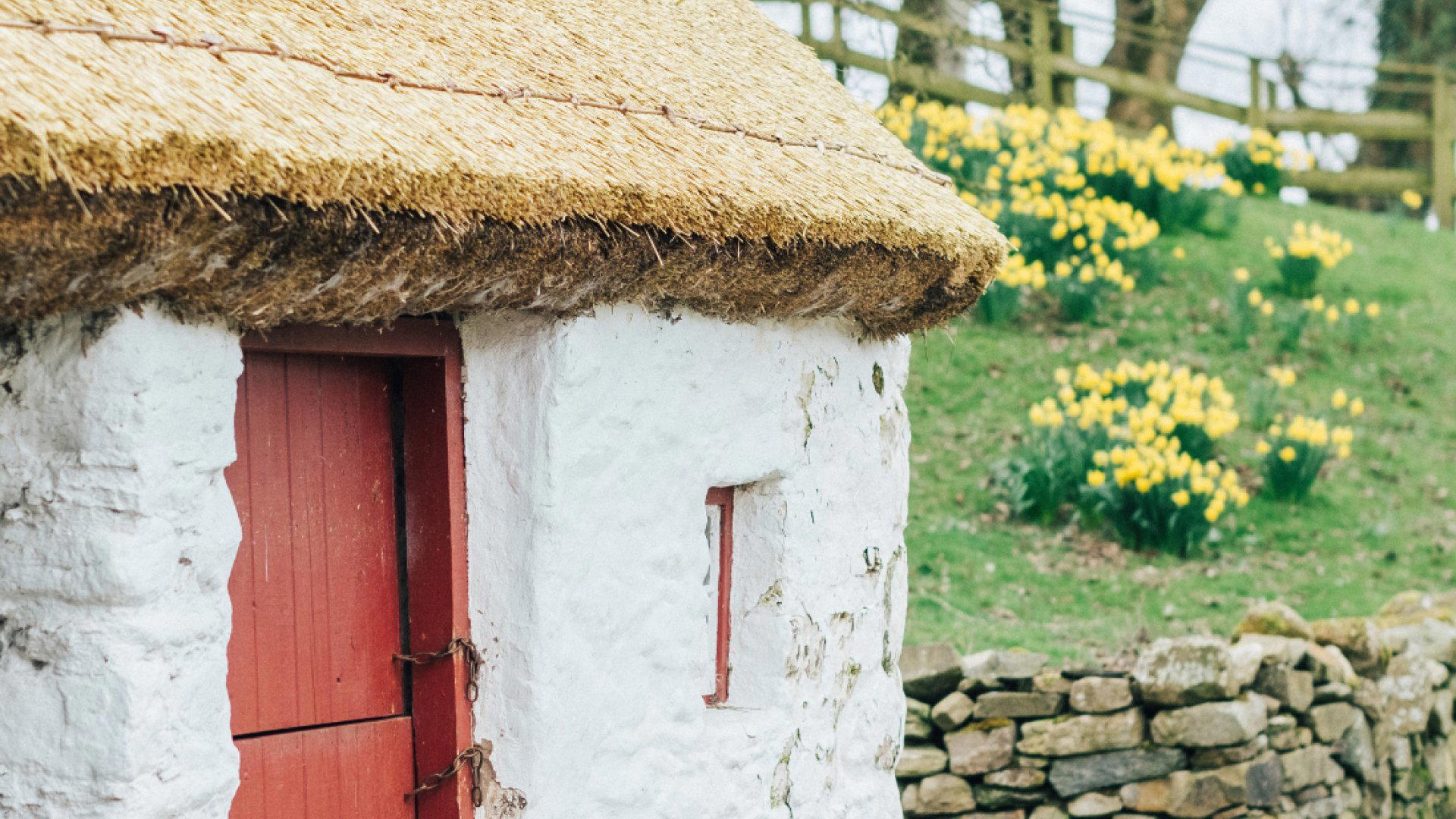
Where Architecture Does the Talking
Open-air museums live or die by the credibility of their built fabric, and the Ulster American Folk Park, on Mellon Road outside Omagh in the Fermanagh and Omagh district, makes a serious case on those terms. The site reconstructs the physical world that Ulster emigrants left behind in the 18th and 19th centuries and, across a covered ship exhibit and dockside section, gestures at what they encountered on arrival in North America. The interpretive method is architectural rather than didactic: the buildings themselves carry the argument about poverty, aspiration, and displacement, and that is a more honest approach than most heritage attractions attempt.
The park occupies a meaningful place in the broader story of Ulster-Scots emigration, a movement that shaped large parts of the American interior. Estimates put the number of Ulster emigrants to North America between 1718 and 1775 at somewhere between 100,000 and 250,000, and the communities they formed in Pennsylvania, the Carolinas, and beyond left a documented mark on American political and cultural life. The folk park takes that broad historical fact and anchors it to specific, tactile objects: thatched cottages, a forge, a schoolhouse, a weaver's dwelling. Visitors move through the structures rather than viewing them from behind barriers, which changes the quality of attention the space demands.
The Built Fabric: Old World to New
The site divides into two primary zones connected by a reconstructed emigrant ship and dockside streetscape. The Old World section presents the kind of rural Ulster that most emigrants departed from: single-storey cottages with low ceilings and earthen floors, farm outbuildings arranged around small yards, and domestic interiors furnished to period. The spatial compression of these structures is itself informative. The buildings are not cramped in the romantic sense that heritage tourism often implies; they read as the product of limited materials, a specific climate, and an agrarian economy that left little margin.
New World section shifts register. The structures become more varied in type and slightly more substantial in scale, reflecting the different building traditions and available timber of the American colonies and early republic. Log construction appears here in a way that would have been unfamiliar to an Ulster carpenter working in stone and thatch. That architectural contrast, laid out along a walking route, is the park's most effective interpretive device. No label text is needed to communicate what changed when these emigrants crossed.
Covered ship exhibit bridges the two zones and addresses a part of the emigrant experience that outdoor reconstruction cannot otherwise convey: the crossing itself. The built environment stops being landscape here and becomes vessel, which shifts the spatial experience in a way that outdoor sections cannot replicate.
Heritage Design in a British-Irish Context
Open-air museum design across the British Isles has evolved considerably since the Scandinavian models of the late 19th century introduced the idea of relocating vernacular structures into curated outdoor settings. The Ulster Folk and Transport Museum at Cultra, Beamish in County Durham, and St Fagans in Cardiff each represent distinct regional approaches to the same basic challenge: how do you preserve working-class and rural built heritage when the buildings themselves were never designed to last? The Ulster American Folk Park operates within this tradition but with a specific transatlantic thesis that most comparable sites do not attempt. The site is not simply preserving local vernacular architecture; it is staging an argument about where that architecture led, geographically and historically.
For visitors travelling through Ireland or Northern Ireland with a serious interest in heritage architecture and emigration history, the Omagh site offers something that neither the National Museum of Ireland nor the Ulster Folk Museum at Cultra addresses with comparable focus. The Mellon family connection to the site is part of the public record: Thomas Mellon, who emigrated from Camphill near Omagh in the early 19th century and went on to establish a banking dynasty in Pittsburgh, is documented as a founding reference point for the park's development. That American philanthropic thread also links the site to a broader pattern of diaspora investment in heritage preservation that shaped several institutions in the north of Ireland during the latter 20th century.
Planning Your Visit
Omagh sits in the Fermanagh and Omagh district of Northern Ireland, roughly equidistant between Enniskillen and Strabane. Visitors travelling by road from Belfast should allow approximately 90 minutes. The site is spread across open ground and requires comfortable footwear; the walking distances between structures are not negligible, and the terrain is uneven in places. The interpretive experience rewards a longer visit, particularly for those who want to read the building interiors with care rather than move through quickly. Seasonal programming, including living history demonstrations, is documented on the park's public record, and timed visits around those programmes add a practical dimension to the architectural tour. For broader trip planning in Northern Ireland, our full Fermanagh and Omagh guide maps accommodation and dining options across the district.
Travellers combining the folk park with a wider British Isles itinerary focused on heritage properties and landscape hotels might consider how the site pairs with stays at places like Lime Wood in Lyndhurst, The Newt in Somerset, or Gleneagles in Auchterarder, each of which places landscape and material culture at the centre of its hospitality proposition. For those approaching from Scotland, Langass Lodge in the Outer Hebrides, Glen Mhor Hotel in the Highlands, Dun Aluinn in Aberfeldy, and Monachyle Mhor in Stirling offer comparable attention to regional character in their accommodations. Burts Hotel in Melrose is another Scottish option worth considering for its understated regional focus. In England, Estelle Manor in North Leigh and Babington House in Kilmersdon occupy a comparable position for heritage-adjacent stays. Urban bases in the north of England and Scotland are well served by Hope Street Hotel in Liverpool, King Street Townhouse in Manchester, and Glasgow Grosvenor Hotel. For those extending the transatlantic thread the folk park traces into a literal itinerary, The Fifth Avenue Hotel in New York and Aman New York represent the upper end of that city's hotel market, while Muir, A Luxury Collection Hotel in Halifax connects to the Canadian side of the emigrant geography the park documents. Elsewhere on the Atlantic seaboard of Europe, Aman Venice and Claridge's in London anchor the premium end of the European itinerary. For coastal stays in the British Isles, Lifeboat Inn in St Ives, Hell Bay Hotel on Bryher, and Avon Gorge by Hotel du Vin in Bristol each offer a distinct register. Drakes Hotel in Brighton, Malmaison Edinburgh, and Ardbeg House on Islay round out the options for travellers building a longer British Isles circuit.
In Context: Similar Options
| Venue | Price | Awards |
|---|---|---|
| Ulster American Folk ParkThis venue — the venue you are viewing | Not listed | Not listed |
| Lime Wood | Not listed | 2 Michelin Keys · La Liste Top Hotels |
| Muir, A Luxury Collection Hotel, Halifax | $300–500 | 1 Michelin Key · Forbes 4-Star |
| Raffles London at The OWO | $1,000–1,500 | 3 Michelin Keys · World's 50 Best #28 |
| The Connaught | $1,000–1,500 | 3 Michelin Keys · World's 50 Best #49 |
| 51 Buckingham Gate, Taj Suites and Residences | Not listed | Michelin Selected · La Liste Top Hotels |
Continue exploring
More in Fermanagh And Omagh
Hotels in Fermanagh And Omagh
Browse all →
Bars in Fermanagh And Omagh
Browse all →
Restaurants in Fermanagh And Omagh
Browse all →
Details
- Rustic
- Scenic
- Historic
- Family Vacation
- Historic Building
- Garden
- Garden
- Wheelchair Accessible
Current opening hours
- Monday
- Closed
- Tuesday
- 10 AM–5 PM
- Wednesday
- 10 AM–5 PM
- Thursday
- 10 AM–5 PM
- Friday
- 10 AM–4 PM
- Saturday
- 10 AM–5 PM
- Sunday
- 10 AM–5 PM
Hours can change for holidays and private events. Last verified .
Immersive historical atmosphere with rustic thatched cottages, farm settings, and costumed demonstrators evoking 18th-19th century rural Ulster and American frontier life.