


Michelin Bib Gourmand · The Sunday Times Ireland’s 100 Best Restaurants · Wine Spectator Award of Excellence
Our verdict
Thyme holds a Michelin Bib Gourmand and operates as the most serious kitchen in County Westmeath, where chef-owner John Coffey builds menus around local game, seasonal produce, and suppliers from the surrounding Midlands. The cheese course arrives with crackers made from grains sourced at the brewery next door. At the €€ price point, the cooking punches well above its tier.

Pearl is the En Primeur Club membership app — saves, bookings, and concierge access live there. Same editors, same standards.
- Address
- Custume Pl, Athlone, Co. Westmeath, Ireland
- Phone
- +353 90 647 8850
- Hours
- Mon–Tue ClosedWed–Sat 5–9 PMSun 1–7 PM
- Website
- thymerestaurant.ie
- Directions
- Get directions
- Booking
- Book on the venue's website
The Midlands Table That Earns Its Recognition
Athlone sits at the geographic centre of Ireland, which has historically made it easy to overlook as a dining destination. The pull of Dublin, Cork, and the Wild Atlantic Way has drawn most food press attention westward or coastward, leaving the Midlands underrepresented in the national conversation. Ireland's regional dining scene has matured considerably over the past decade, and the pattern has been consistent: a single kitchen in a mid-size town raises the bar for everything around it, not by following metropolitan trends but by going deep into its own locality. Thyme, holding a Michelin Bib Gourmand since 2025, occupies exactly that position for County Westmeath. See our full Athlone restaurants guide for broader context on where the town's dining sits today.
The Room and What It Signals
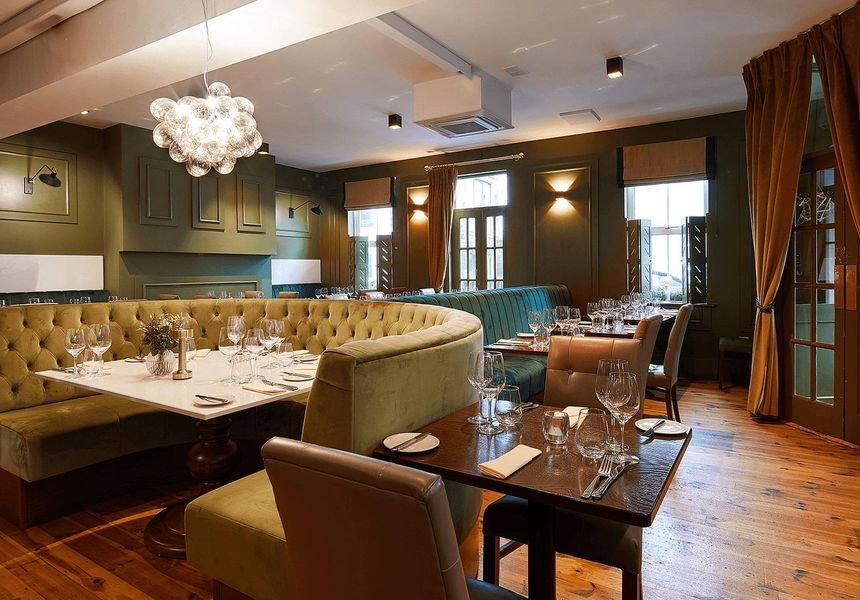
The dining room at Thyme is calm in a way that communicates confidence rather than quietude. There is no performative theatre in the space, no design gesture competing with the food for attention. What you notice is that the staff move with assurance, the tables are well-spaced, and the atmosphere carries the ease of a room that has been doing this long enough to stop trying too hard. That ease is earned. John Coffey has been the chef-owner here for long enough to become, as Michelin's own notes put it, something of a veteran — though the cooking reads younger than that description suggests. Athlone is a town that rewards this kind of longevity. Unlike the coastal restaurant towns where turnover is seasonal and the audience partly transient, a Midlands restaurant builds its reputation on repeat local diners and destination visitors who have made a conscious choice to come. The room's composure reflects the confidence of a kitchen that knows its audience.
How the Menus Are Built
The two menus at Thyme are structured to showcase the locality, a phrase that in Ireland's better kitchens means something specific: relationships with named producers, seasonal flexibility, and a willingness to put less glamorous ingredients at the centre of the plate. Coffey's sourcing runs to fresh vegetables, free-range pork, local game birds, and wild meats. The game and wild meat sourcing is particularly relevant to the Midlands, where the agricultural calendar and hunting seasons shape what's available in ways that don't always map onto the ingredients that dominate urban Irish menus. Cooking wild birds and meats with what Michelin describes as sympathy and imagination is a different discipline from the more controlled universe of farmed product, and it gives the menu a seasonality that shifts genuinely rather than cosmetically. At the €€ price point, this level of sourcing commitment is not the norm. Compare the approach to Aniar in Galway, which pursues a similarly producer-led agenda at the €€€€ tier, or Chestnut in Ballydehob, another regional Irish kitchen that treats locality as its primary editorial lens. Thyme reaches comparable sourcing depth at a materially lower price.
A Chef's Evolution, Read Through the Plate
Editorial angle assigned to Thyme often gets described in terms of a chef's journey, but the more useful frame is what sustained tenure in a regional kitchen produces over time. Coffey's cooking has the confidence of someone who has stopped proving himself and started refining. The dessert course is where this is most legible: the deconstructed Irish coffee, served as a coffee custard tart with whiskey ice cream and a milk foam crisp, is the kind of dish that only arrives after a chef has earned the right to be playful with national culinary references. It is technically accomplished and genuinely witty, using recognisable ingredients to land an unexpected result. That wit, applied to a dish that tourists and locals alike will know, reflects a chef comfortable enough in his own cooking to make the familiar strange without condescension. The cheese course carries a similar intelligence: the cheeses themselves draw on regional producers, and the homemade crackers are made using grains from the brewery next door on Custume Place, a detail that turns the bread basket equivalent into a statement about place. This is the kind of cross-business collaboration that works well when the chef has been in a neighbourhood long enough to know who the neighbours are. For comparison on how Irish regional kitchens at higher price points handle the same localism, Campagne in Kilkenny and Lady Helen in Thomastown are instructive peers. For the upper end of the Irish Modern tier, Liath in Blackrock and Chapter One by Mickael Viljanen in Dublin represent where the national conversation is happening at the €€€€ level. Thyme's position is different: it is not competing in that tier, but the recognition it has earned suggests the cooking quality crosses the threshold that Michelin applies regardless of price bracket.
Where Thyme Sits in the Irish Regional Picture
Ireland's regional dining map has filled in considerably since the mid-2010s. Kitchens like dede in Baltimore, Bastion in Kinsale, Homestead Cottage in Doolin, House in Ardmore, and Terre in Castlemartyr have established that serious cooking is no longer confined to cities or coastal resorts. The Midlands, however, remain the least written-about quadrant of this story. Thyme's continued recognition by Michelin is the clearest signal available that the region's dining identity is not entirely determined by geography. What the Bib Gourmand implies, placed alongside the review language about the leading cooking in the county, is that Thyme occupies a local monopoly on serious restaurant dining in its immediate competitive set. That is a different position from a restaurant competing for attention in a dense urban market, and it shapes the experience accordingly. The diners around you are largely people who have sought this out, which gives the room a different social register than you would find in a city neighbourhood. Coffey has built the kind of place where the audience has already self-selected for engagement with the food. For those planning a broader Athlone visit, the full Athlone hotels guide, bars guide, wineries guide, and experiences guide cover the wider town. For those curious how Ireland's modern restaurant cooking compares internationally, Frantzén in Stockholm and FZN by Björn Frantzén in Dubai represent the Nordic-influenced modern cuisine tier that has shaped European fine dining over the same period.
Planning Your Visit
Thyme is located at Custume Place in Athlone, Co. Westmeath, which sits roughly equidistant between Dublin and Galway on the M6 motorway corridor. At the €€ price range, it is accessible by the standards of any serious dinner out, and the two-menu format gives diners a clear framework for the evening. The cheese course with its brewery-grain crackers is worth reserving space for at the end, regardless of how satisfying the earlier courses prove. Booking ahead is advisable given the restaurant's local reputation and recognition status. Specific hours and reservation channels are best confirmed directly with the venue.
Frequently asked questions
Is Thyme child-friendly?
Thyme's €€ pricing makes it one of Athlone's more accessible dinner options for families. The composed, seasonal format means the kitchen is focused rather than adaptable, so younger children who require simple or substituted dishes may find the menu less accommodating. It suits older children comfortable with a sit-down dinner setting.
Is Thyme formal or casual?
The room runs calm and confident rather than formal. Thyme holds a Michelin Bib Gourmand, a designation that recognises quality at accessible prices, and the €€ pricing reflects that positioning. Athlone doesn't enforce dress codes, and the atmosphere here follows suit — considered, but not stiff.
Is Thyme award-winning?
Thyme has received recognition including: The chef-owner here is one who’s constantly reinvesting in his beloved restaurant and is always on the search for great new local suppliers – whether that’s fresh vegetables or free-range pork – and the pride he has in his establishment is ….
What's the best thing to order at Thyme?
Michelin's own review of Thyme singles out the seasonal game and wild meat dishes as the clearest expression of John Coffey's cooking. The cheese course is also specifically noted, served with homemade crackers made from grains sourced at the brewery next door — a detail that captures how deliberately local the sourcing runs.
Fast Comparison
| Venue | Cuisine | Price | Awards |
|---|---|---|---|
| ThymeThis venue — the venue you are viewing | Modern Irish Fine Dining | $50–100 | Michelin Bib Gourmand · The Sunday Times Ireland’s 100 Best Restaurants |
| Patrick Guilbaud | Irish - French, Modern French | Not listed | Michelin 2 Star |
| Aniar | Modern Irish, Modern Cuisine | Not listed | Michelin 1 Star |
| Bastion | Progressive American, Modern Cuisine | Not listed | Michelin 1 Star |
| LIGИUM | Creative | Not listed | Michelin 1 Star |
| Host | Nordic, Modern Cuisine | Not listed | Not listed |
Recognition history
Dated appearances from independent guides and award organizations, with the underlying list record or original source where available.
Michelin Bib Gourmand
Michelin
The Sunday Times Ireland’s 100 Best Restaurants
The Sunday Times
Wine Spectator Award of Excellence
Wine Spectator
Full recognition history (5 entries)
Michelin Bib Gourmand
Michelin
Michelin Bib Gourmand
Michelin

Details
- Cozy
- Elegant
- Intimate
- Date Night
- Special Occasion
- Business Dinner
- Open Kitchen
- Extensive Wine List
- Local Sourcing
- Farm To Table
- Set Menu
- A La Carte
- Vegetarian Friendly
- Vegan Options
- Allergy Accommodating
Current opening hours
- Monday
- Closed
- Tuesday
- Closed
- Wednesday
- 5–9 PM
- Thursday
- 5–9 PM
- Friday
- 5–9 PM
- Saturday
- 5–9 PM
- Sunday
- 1–7 PM
Hours can change for holidays and private events. Last verified .
Lovely, cozy atmosphere with stylish lighting, beautiful green interior, and welcoming hospitality.