Burts Hotel
On Melrose's Market Square, Burts Hotel occupies a position that reflects the Scottish Borders' particular approach to hospitality: unhurried, grounded in place, and more attentive than its modest setting suggests. The town itself is defined by Melrose Abbey's ruins and a walking culture that draws visitors year-round, and Burts sits at the centre of that quiet civic life.

Pearl is the En Primeur Club membership app, where members save venues, book tables and use the concierge.
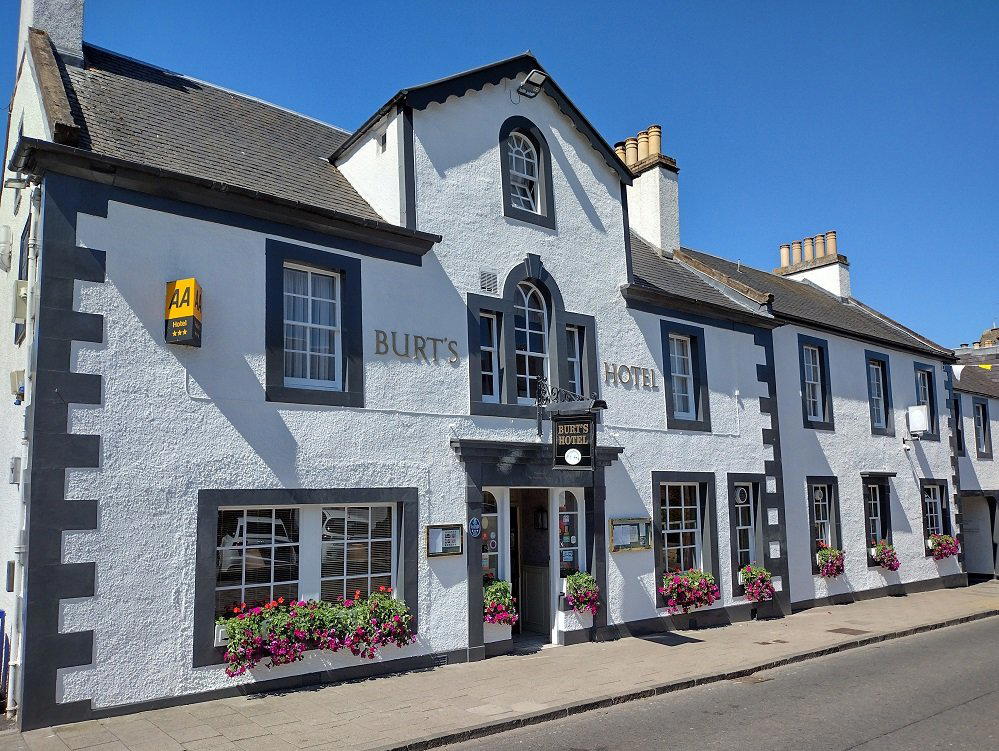
A Market Square Address in the Scottish Borders
Melrose is not a town that announces itself loudly. It sits in the Borders, where the River Tweed moves through a countryside shaped more by farming rhythms and monastic history than by tourism infrastructure. The market square at its centre has the proportions of a place built for local commerce rather than visitor spectacle, and Burts Hotel occupies that square without architectural pretension. This is not incidental. In a region where the most compelling hospitality tends to come from properties that read their surroundings rather than impose upon them, physical rootedness in the town fabric is itself a design statement.
The Borders sit roughly an hour south of Edinburgh by road, placing Melrose in a genuinely in-between geography: close enough to Scotland's capital for a long weekend, distant enough that visitors who arrive have made a deliberate choice. That self-selection matters for a hotel of this type. The guests drawn to a market square property in a town of this scale are not, by and large, those seeking resort-scale amenity or urban spectacle. They are walkers following the St Cuthbert's Way or the Southern Upland Way, visitors drawn to Melrose Abbey's twelfth-century ruins just steps away, and those moving through the Borders on a circuit that might include the Scott Country, Abbotsford House, Dryburgh, Kelso, whose historical density rewards slower travel.
What the Building Communicates
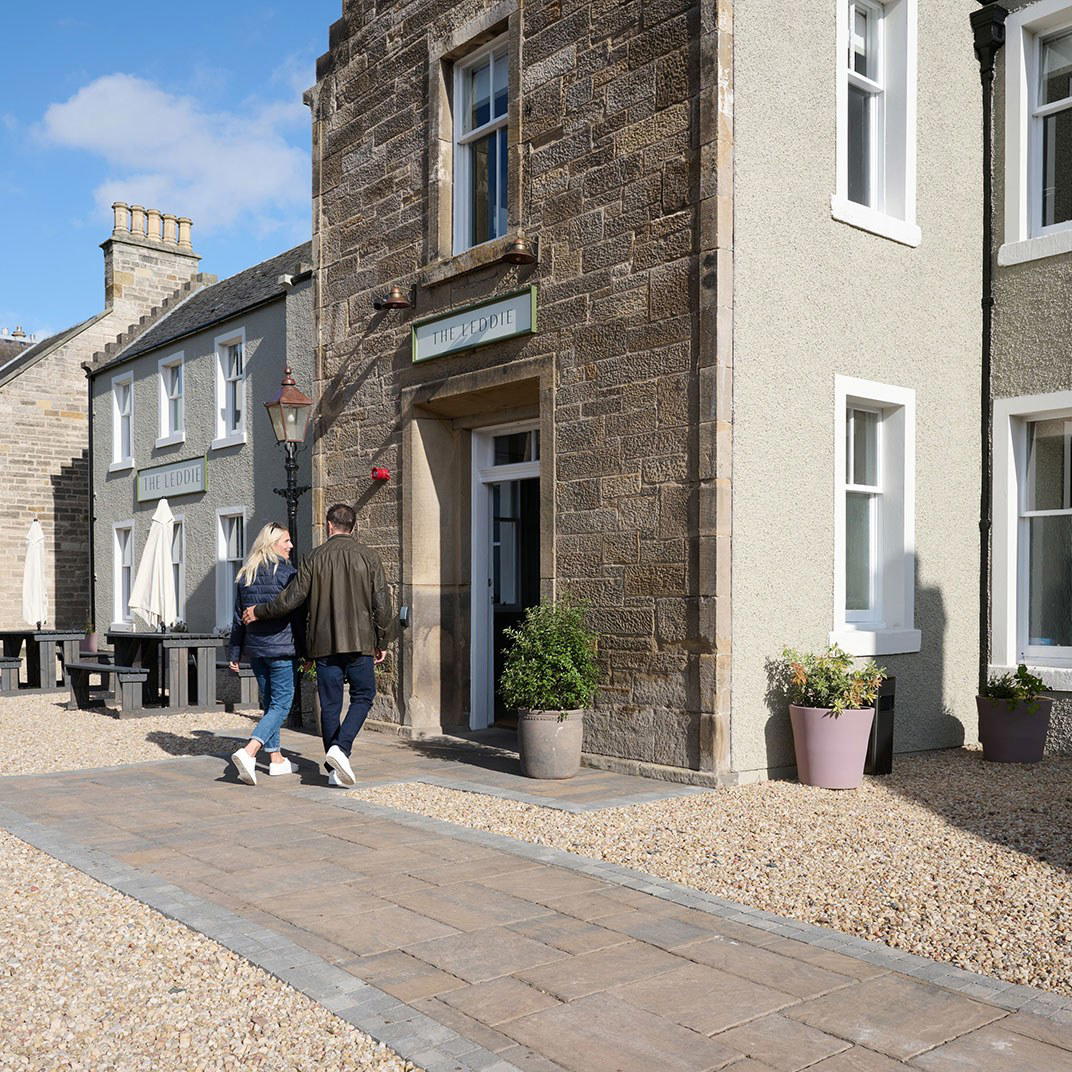
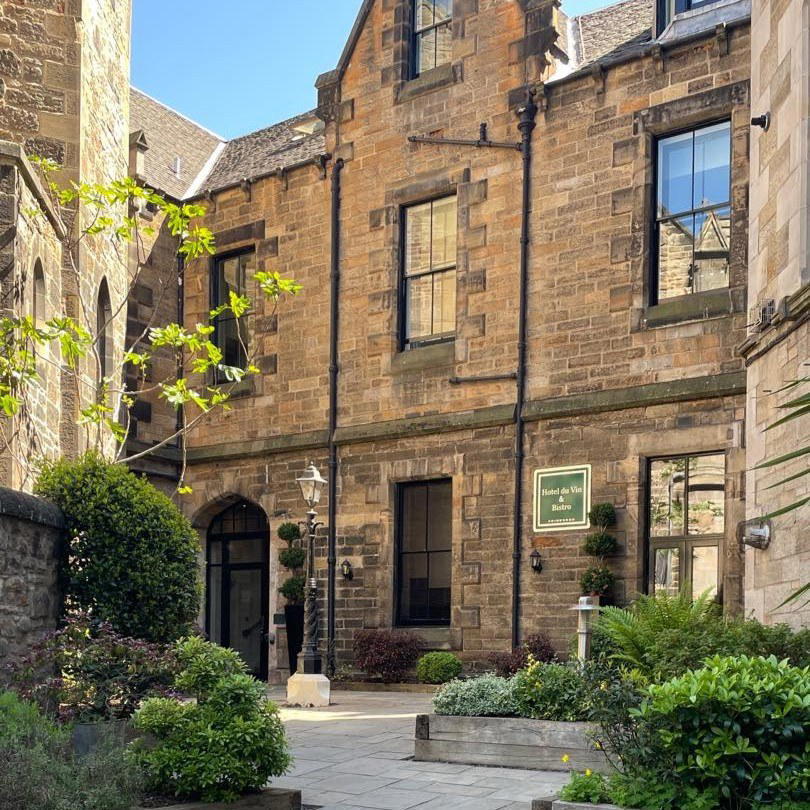
Georgian and Victorian market-town hotels across Scotland share a consistent grammar: modest frontages, internal spaces that consolidate rather than expand, and a relationship to the street that places them in civic rather than escapist territory. Burts Hotel belongs to this category. The building's position on Market Square means arrival is immediate and unprepossessing, you approach from the street, not down a private drive, and the threshold between public town life and hotel space is crossed in a few steps. This is architecturally significant in the context of British provincial hospitality, where the country house model has long dominated the premium tier. A market-town hotel that succeeds does so by doubling down on its urban character rather than softening it with pastoral gestures.
That said, the Scottish Borders exercise a particular pull on properties that can frame access to the surrounding landscape. The proximity to Melrose Abbey, whose red sandstone remains constitute one of the most atmospheric ecclesiastical ruins in Scotland, gives the hotel an orientation that no amount of internal design work could replicate. Looking outward, toward the abbey, toward the Eildon Hills, toward the Tweed, is part of the spatial logic of staying here. Properties that understand this tend to treat their public-facing rooms as viewing positions rather than enclosed retreats.
For comparison across the spectrum of British property-led hospitality: at one end sit large-format estate hotels like Gleneagles in Auchterarder, where the landscape is essentially curated within the property boundary; at the other, smaller town and village hotels where the surrounding place is the asset and the building serves as a well-positioned base. Monachyle Mhor Hotel in Stirling offers a comparable dynamic in a different Scottish context, where remoteness and landscape immersion are the primary value proposition. Burts operates in a middle register: embedded in a functioning town, but with access to countryside and history that many urban properties cannot match.
The Borders Hotel Category
Scottish Borders hospitality has never assembled a dense cluster of high-profile properties in the way that, say, the Highlands or the central belt have. This is partly demographic, the region is sparsely populated and attracts a narrower visitor profile, and partly a function of the area's identity as a working landscape rather than a tourism-first destination. The hotels that work here tend to be those that serve multiple functions: accommodating walkers and cyclists alongside leisure guests, supporting the agricultural calendar, and providing dining that draws a local clientele rather than relying exclusively on room guests. A hotel operating this way develops a relationship with its town that resort properties, by definition, cannot.
This is a pattern visible in other parts of the UK where premium hospitality has been reimagined at smaller scale and in genuinely local settings. Langass Lodge in Na H-Eileanan an Iar operates within a similarly community-anchored model in the Western Isles. Dun Aluinn in Aberfeldy reflects the Perthshire approach to small-scale, place-specific stays. What connects these properties is that the building and its setting are not separable from the experience, the architecture is the argument.
Planning a Stay
Melrose sits on the A6091, accessible from the A68 and within reasonable driving distance of Edinburgh (roughly 38 miles via the A68 and A6091), the Border towns, and Newcastle to the south. The nearest rail connections run through Tweedbank, the terminus of the Borders Railway, which links to Edinburgh Waverley in under an hour and brings the town into practical reach for those travelling without a car. That rail connection, opened in 2015, meaningfully changed Melrose's accessibility and has influenced visitor patterns in the town.
Timing matters in the Borders. The Melrose Rugby Sevens, held each April, draws substantial crowds and affects accommodation availability in the town significantly. The summer months bring walkers and abbey visitors; autumn is quieter and arguably better for landscape travel, when the hills take on colour and the crowds thin. For those pairing Melrose with a broader Scottish itinerary, properties such as Glen Mhor Hotel in Highland or Malmaison Edinburgh offer urban or Highland counterpoints that complete a varied circuit. Those exploring comparable English market-town stays might look at Number One Bruton in Somerset or Hope Street Hotel in Liverpool for a sense of how this category performs across different regional contexts. For walks, the Eildon Hills circular from the town takes roughly three hours at a moderate pace and returns you to Market Square, which, practically speaking, returns you to the hotel door. See our full Melrose restaurants guide for dining options across the town.
Quick Comparison
| Venue | Price | Awards |
|---|---|---|
| Burts HotelThis venue (the venue you are viewing) | Not listed | Not listed |
| Lime Wood | Not listed | 2 Michelin Keys · La Liste Top Hotels |
| Muir, A Luxury Collection Hotel, Halifax | $300–500 | 1 Michelin Key · Forbes 4-Star |
| Raffles London at The OWO | $1,000–1,500 | 3 Michelin Keys · World's 50 Best #28 |
| The Connaught | $1,000–1,500 | 3 Michelin Keys · World's 50 Best #49 |
Continue exploring
More in Melrose
Hotels in Melrose
All hotels in Melrose →
Details
- Cozy
- Charming
- Historic
- Intimate
- Rustic
- Romantic Getaway
- Weekend Escape
- Historic Building
- Garden
- Terrace
- Wi Fi
- Restaurant
- Bar
- Garden
- Room Service
- Meeting Rooms
- EV Charging
- Garden
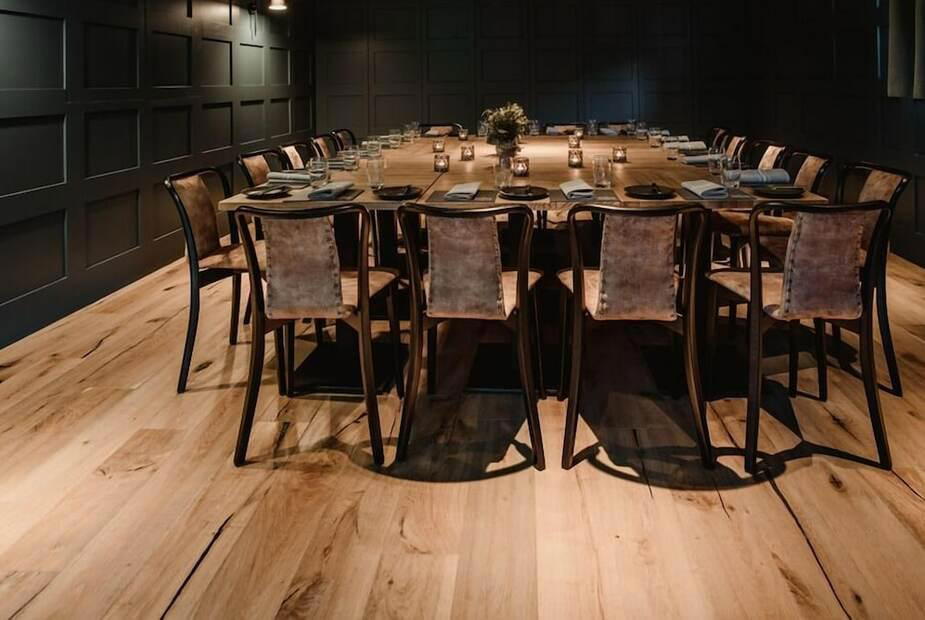
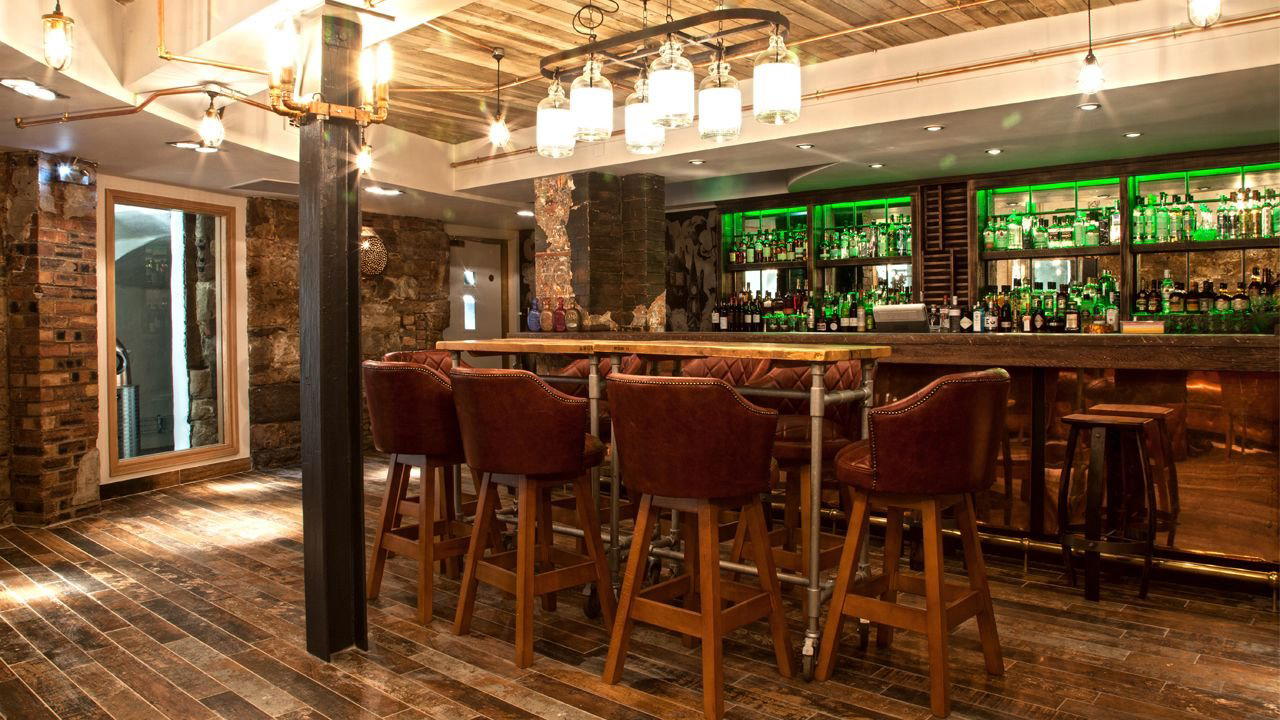
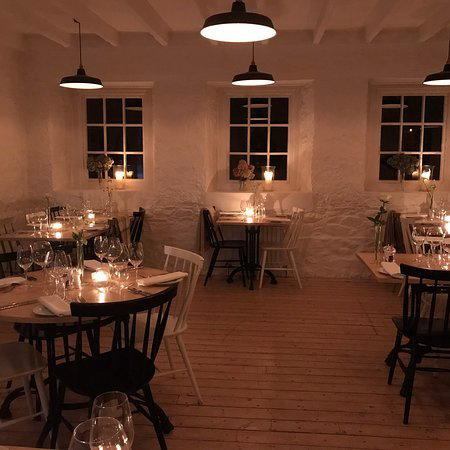
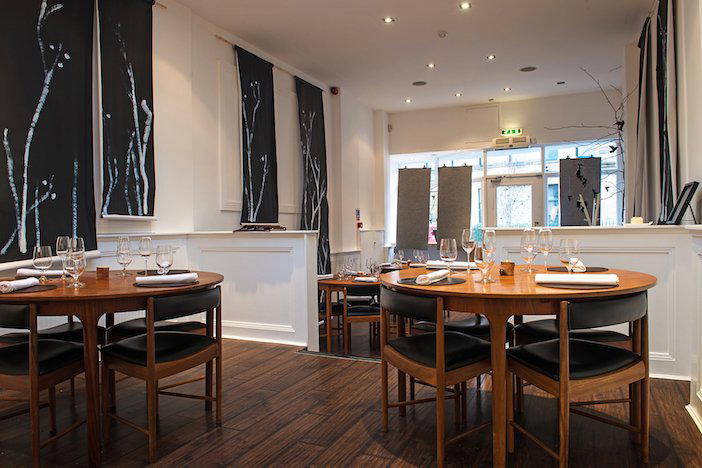
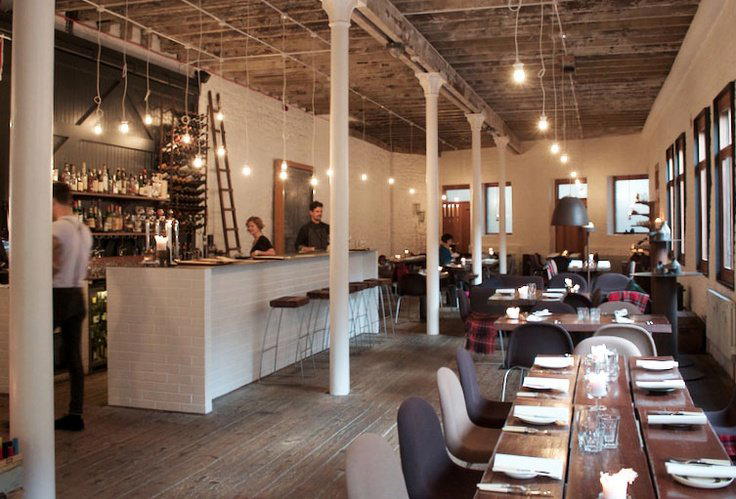
Warm, unfussy atmosphere blending traditional and contemporary design with cozy lighting in a quaint historic setting.