Hell Bay Hotel
On the car-free island of Bryher in the Isles of Scilly, Hell Bay Hotel occupies a position that very few British properties can claim: genuine remoteness with considered comfort. The Atlantic faces you on three sides, the architecture keeps deliberately low to the heath, and the scale stays small enough that the island itself remains the dominant experience. Getting there is part of the point.

Pearl is the En Primeur Club membership app, where members save venues, book tables and use the concierge.
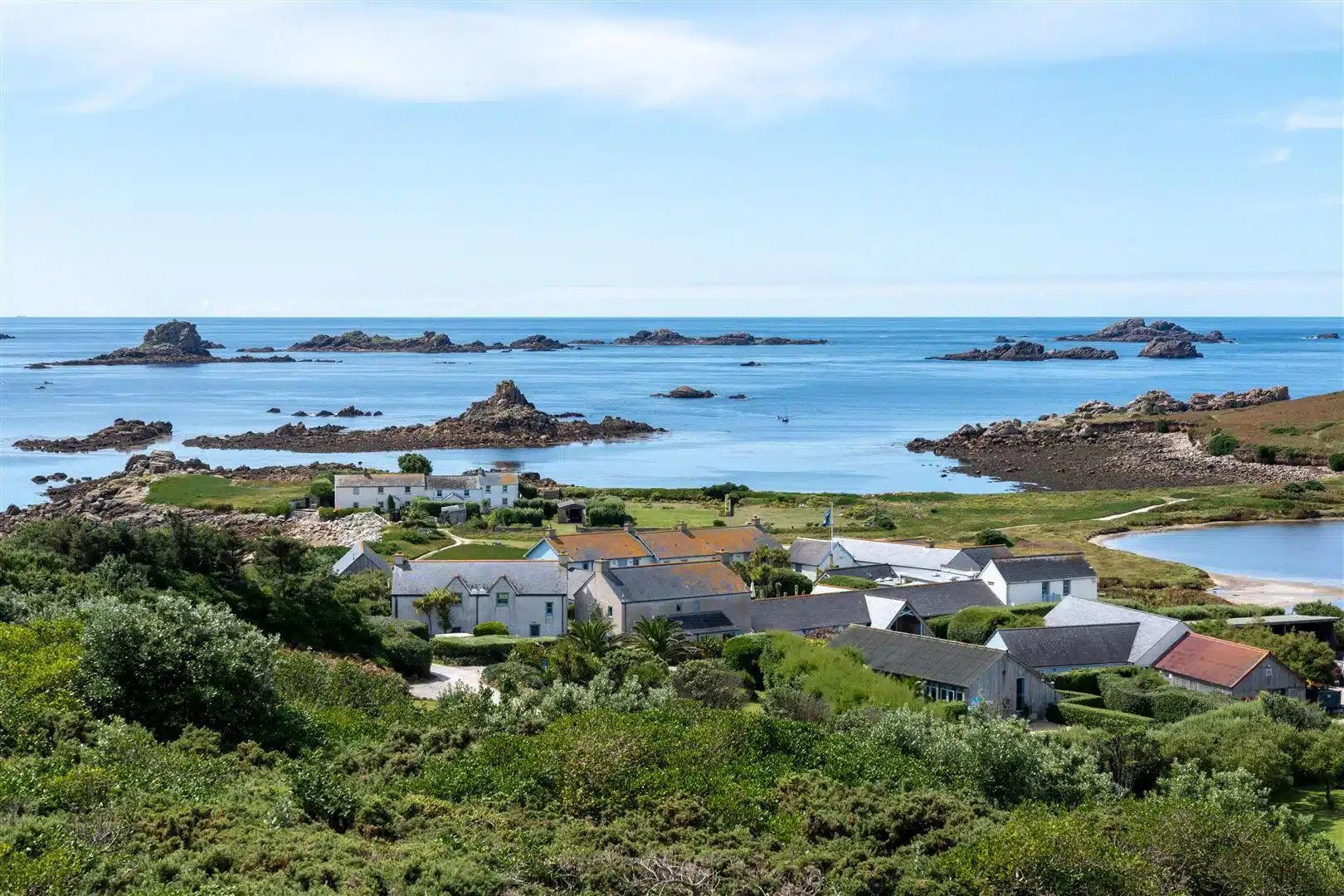
Where the Atlantic Sets the Terms
The Isles of Scilly sit 28 miles southwest of Land's End, and Bryher is the smallest and least populated of the five inhabited islands in the archipelago. There are no cars, no through roads in any meaningful sense, and no way to arrive without intention. The crossing from Penzance by ferry takes roughly two and a half hours; the helicopter from Penzance or a fixed-wing flight from Land's End, Newquay, or Exeter cuts that considerably. The logistics are not incidental: the difficulty of reaching Bryher is precisely what has preserved its character, and Hell Bay Hotel sits at the far western edge of the island, where the land meets open Atlantic without interruption.
British coastal hospitality broadly divides between high-volume seaside resorts built around convenience and a smaller cohort of properties that use remoteness as a deliberate design condition. Hell Bay Hotel belongs firmly to the latter group.
Architecture That Defers to the Heath
The design logic at Hell Bay is rooted in low-profile, cluster-style accommodation that reads more like a Scillonian fishing settlement than a conventional hotel. The buildings stay close to the ground, finished in the pale render and timber typical of island vernacular, and arranged so that no single structure dominates the view from another. This is not an architectural accident. On an island where planning constraints and wind exposure would challenge any building that reached upward, the horizontal emphasis is both practical and compositionally correct.
The broader pattern here reflects a shift visible across British rural hospitality: properties with genuine landscape credentials have moved away from the country-house convention of the grand facade and toward something that reads as embedded rather than imposed. The Newt in Somerset does this through estate integration; Estelle Manor in North Leigh does it through restoration rather than addition. Hell Bay does it through scale and silhouette, keeping the heathland and the Atlantic horizon as the dominant visual experience from nearly every vantage point on the property.
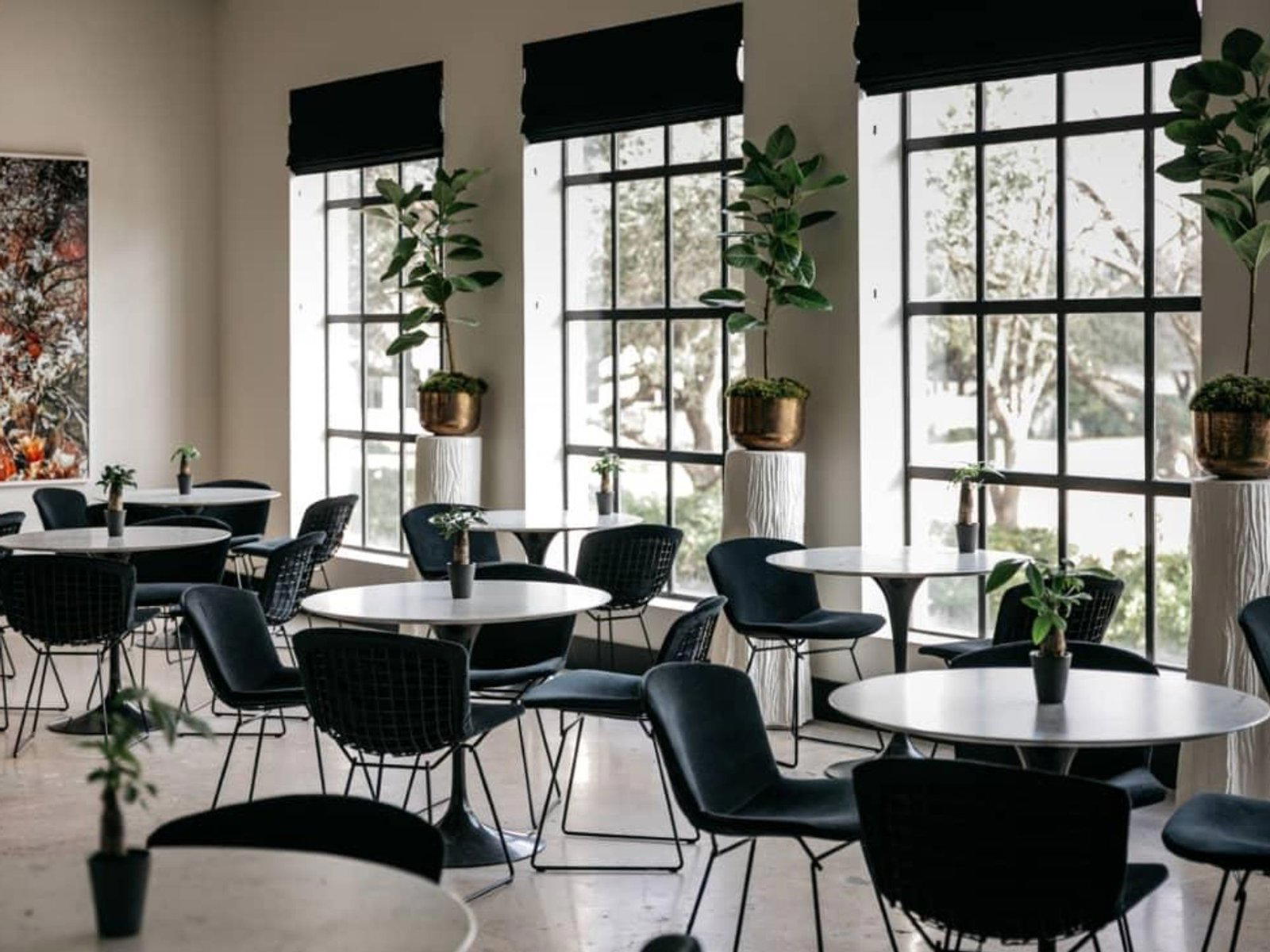
Inside, the approach continues the deference to place. Scilly-specific references in materials and artwork are common across the property, grounding the interiors in the specific geography rather than applying a generic coastal palette. The result is a hotel that reads coherently whether you are looking at it from the beach path or sitting inside looking out.
The Bryher Context
Bryher's population sits well under a hundred year-round residents. The island is roughly one mile long, and a walk across it in almost any direction takes under thirty minutes. The western coast, where Hell Bay sits, faces Shipman Head Down and the open Atlantic, giving the hotel exposure that shifts dramatically with the weather. In winter, the west coast of Bryher is genuinely raw. In spring and summer, the same exposure delivers light that has little competition from haze or development.
This is not Cornwall with a ferry crossing tacked on. The Scillies have their own ecological and cultural character: Mediterranean-adjacent flora, bird migration patterns that draw serious ornithologists from across Europe, and a pace of life calibrated to tides and boats rather than roads and schedules. For travellers comparing Hell Bay against properties like Lime Wood in the New Forest or Babington House in Somerset, the critical difference is not amenity level but experiential premise: those properties offer countryside escape with urban connectivity intact; Hell Bay offers genuine disconnection.
For our full overview of eating and drinking options across the island, see our full Bryher restaurants guide.
How It Compares Across the British Isles
The market for remote island accommodation in the UK is genuinely thin. Monachyle Mhor in Stirling offers a comparable sense of working-landscape immersion in Scotland. Dun Aluinn near Aberfeldy operates at the smaller, more exclusive end of Highland retreats. In England's southwest, the competition for the Bryher tier is essentially nonexistent: no other property on the inhabited Scilly islands operates at the same combination of scale, permanence, and considered finish that Hell Bay has developed over its years on the island.
For travellers calibrating against better-known British luxury hotels, the reference points shift considerably. Gleneagles in Perthshire and Claridge's in London represent the high-service, high-infrastructure tier where staff ratios, dining programs, and amenity lists are the primary value proposition. Hell Bay operates on a different basis entirely: the value is the place, and the hotel's job is to make that place accessible without diluting it.
Planning a Stay
Reaching Bryher requires booking transport ahead of the hotel. Skybus operates seasonal fixed-wing flights from Land's End, Newquay, and Exeter to St Mary's, the main island, with onward boat connections to Bryher. The Scillonian III ferry runs from Penzance to St Mary's during the spring and summer season, and the crossing is exposed enough that rough-weather cancellations are not unusual. Timing matters: late April through September represents the practical season for most travellers, with peak wildflower interest in April and May and the most settled weather in June and July.
Because the island has no alternative accommodation at comparable standard, rooms at Hell Bay book well in advance for summer weeks. Visitors who have previously stayed at properties like the Lifeboat Inn in St Ives or Number One Bruton in Somerset will find the operational register familiar; the logistics of arrival are considerably more demanding.
Travellers who want the Atlantic-island experience without the Scilly-specific remoteness might consider the Scottish island alternatives, or look at Avon Gorge by Hotel du Vin in Bristol as a southwestern England base from which to plan a longer trip. For those for whom the journey is the commitment, however, Hell Bay is the only property in England that delivers this particular combination of island exposure, considered design, and year-round operation.
Fast Comparison
| Venue | Price | Awards |
|---|---|---|
| Hell Bay HotelThis venue (the venue you are viewing) | $200–300 | Not listed |
| Lime Wood | Not listed | 2 Michelin Keys · La Liste Top Hotels |
| Muir, A Luxury Collection Hotel, Halifax | $300–500 | 1 Michelin Key · Forbes 4-Star |
| Raffles London at The OWO | $1,000–1,500 | 3 Michelin Keys · World's 50 Best #28 |
| The Connaught | $1,000–1,500 | 3 Michelin Keys · World's 50 Best #49 |
Continue exploring
More in Bryher
Hotels in Bryher
All hotels in Bryher →
Bars in Bryher
All bars in Bryher →
Details
- Romantic
- Scenic
- Quiet
- Elegant
- Romantic Getaway
- Family Vacation
- Weekend Escape
- Anniversary
- Beachfront
- Waterfront
- Panoramic View
- Private Dining
- Garden
- Terrace
- Spa
- Pool
- Sauna
- Bar
- Restaurant
- Waterfront
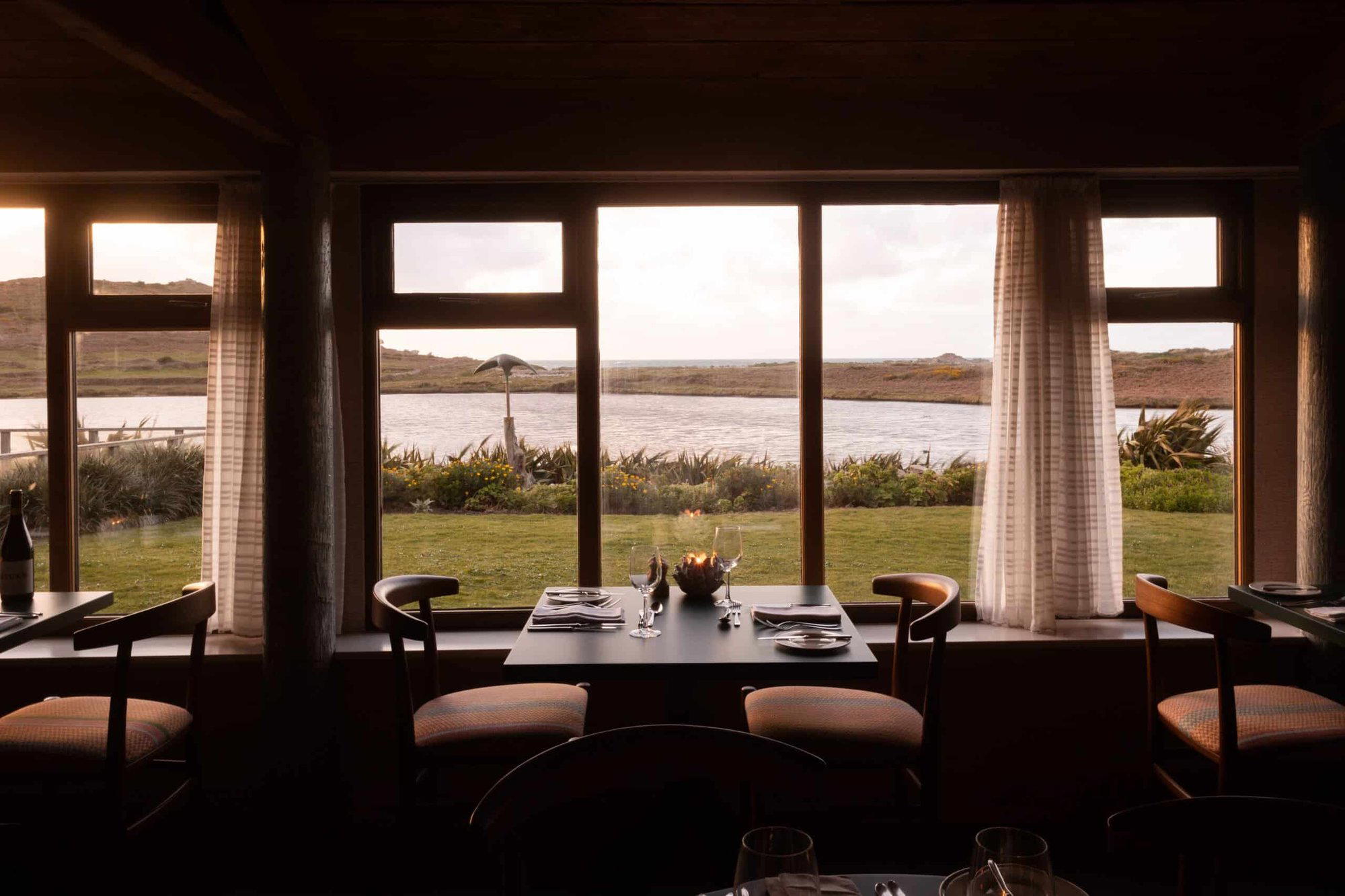
Light-filled, breezy New England aesthetic with pastel shades, soft fabrics, and floor-to-ceiling windows framing dramatic seascapes; serene and laid-back despite sophisticated design.