SS Rotterdam
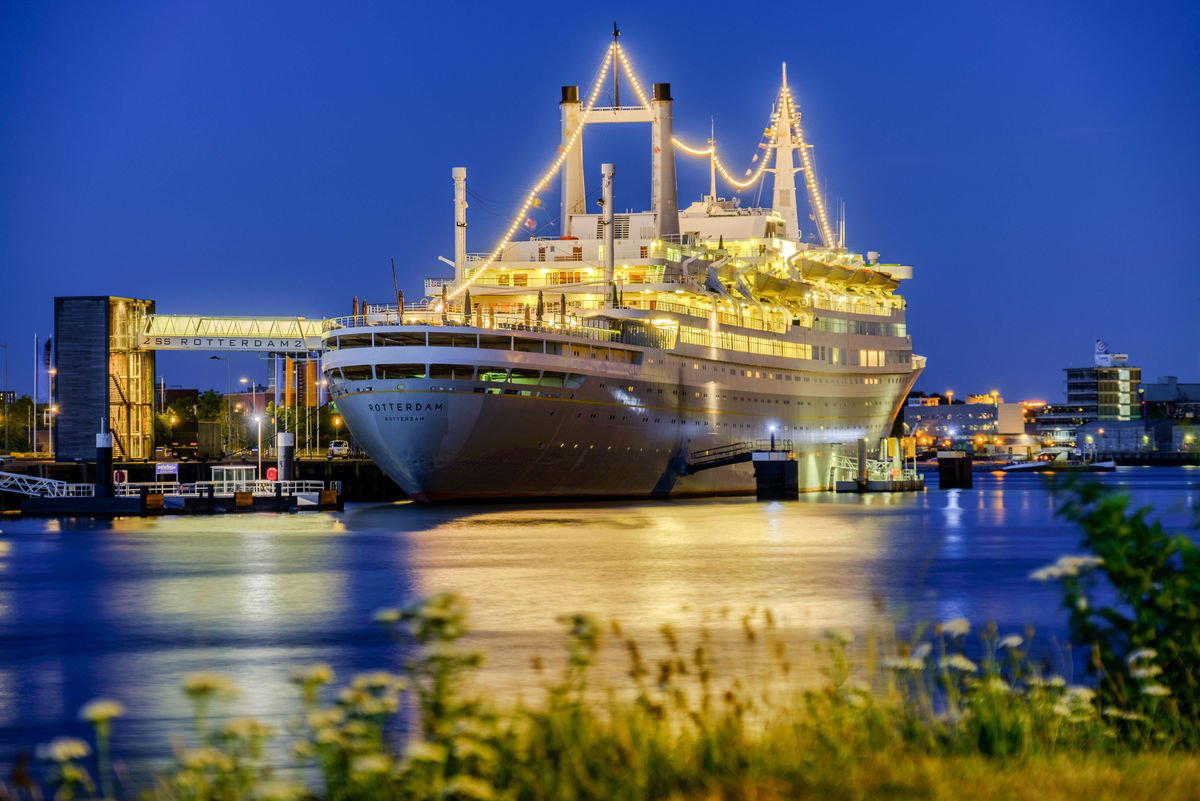
SS Rotterdam is a decommissioned Holland America Line ocean liner permanently moored on Rotterdam's Katendrecht peninsula, now operating as a hotel, event venue, and dining destination. The ship preserves its original mid-century interiors across multiple bars and restaurants, offering an experience grounded in maritime history rather than themed novelty. It sits within walking distance of Rotterdam's regenerated harbour district.

Pearl is the En Primeur Club membership app, where members save venues, book tables and use the concierge.
A Ship That Never Left Rotterdam
Rotterdam has spent the past two decades remaking its waterfront, and the results are uneven in the way that genuine urban transformation always is: cranes still visible at one end, destination restaurants at the other, and in between a series of adaptive reuse projects that range from earnest to spectacular. The SS Rotterdam falls into the latter category. Moored permanently at the 3e Katendrechtse Hoofd on the Katendrecht peninsula, the former flagship of the Holland America Line sits at the edge of a neighbourhood that has itself undergone a significant reinvention, from docklands to one of the city's more characterful dining and nightlife districts.
Approaching the ship from the quayside, the scale reads differently than photographs suggest. Ocean liners are designed to dwarf their surroundings, and even in retirement, permanently fixed to a Rotterdam pier, the SS Rotterdam does exactly that. The hull rises above the waterline with the particular authority of something built for the North Atlantic, not for a harbour view. That first physical encounter with the ship sets the tone for what follows inside: this is not a venue that gestures toward maritime heritage through porthole-shaped windows and rope-knot motifs. The original structure is the heritage.
Mid-Century Interiors as Living Archive
The SS Rotterdam launched in 1959 as the most advanced ship in the Holland America fleet, and much of what made her interiors notable at the time has been preserved through the conversion rather than erased by it. Mid-century ocean liner design occupied a specific architectural moment: the competition between shipping lines for transatlantic passengers meant investment in interior quality that most hotels of the period could not match. Teak decking, brass fittings, and the particular proportions of public rooms designed to make sea voyages feel civilised rather than claustrophobic define the aesthetic throughout.
That preservation creates a distinctive service environment. Guests move through spaces where the design decisions were made before the building existed as a hospitality venue, which means the architecture imposes its own logic on how staff and guests interact. Corridors are narrower than modern hotel corridors; public rooms have a formality built into their dimensions. The ship's dining rooms and bars were designed for a specific social ritual of mid-century ocean travel, and that ritual leaves traces in how the spaces feel even now.
Service in a Fixed Ship Context
The editorial angle on service at converted heritage venues like SS Rotterdam is rarely about individual staff performance and almost always about how a physical environment shapes guest expectations before anyone has spoken a word. Ocean liners of the SS Rotterdam's generation operated a tiered service model across multiple cabin classes, and the conversion to a hotel has redistributed those spaces rather than erased their original social architecture. Guests who pay attention will notice that different areas of the ship carry different registers: some retain the gravity of first-class public rooms, others the more functional character of working ship spaces.
What this means practically is that the service experience at SS Rotterdam is less standardised than at a purpose-built hotel. The physical constraints of a 1950s ship, including original lifts, preserved corridors, and rooms that reflect cabin rather than hotel-room logic, create conditions where anticipatory service requires a different kind of attention. Staff working in a space with this many fixed variables need to compensate with flexibility that a standard hotel layout does not demand. For guests, this creates moments of genuine specificity: the ship's geography becomes part of the stay rather than a neutral backdrop to it.
Katendrecht and Rotterdam's Broader Context
Katendrecht's transformation from working docks to destination neighbourhood is one of the clearer examples of Rotterdam's post-industrial regeneration. The peninsula had a reputation through most of the twentieth century that reflected its docklands function, and the arrival of restaurants, design studios, and the SS Rotterdam itself as an anchor institution has reoriented it significantly. From the ship's upper decks, the view across the Maas toward the city centre captures Rotterdam's skyline in a way that few fixed points in the city can match: the Erasmusbrug visible to the east, the Wilhelminapier development in the middle distance.
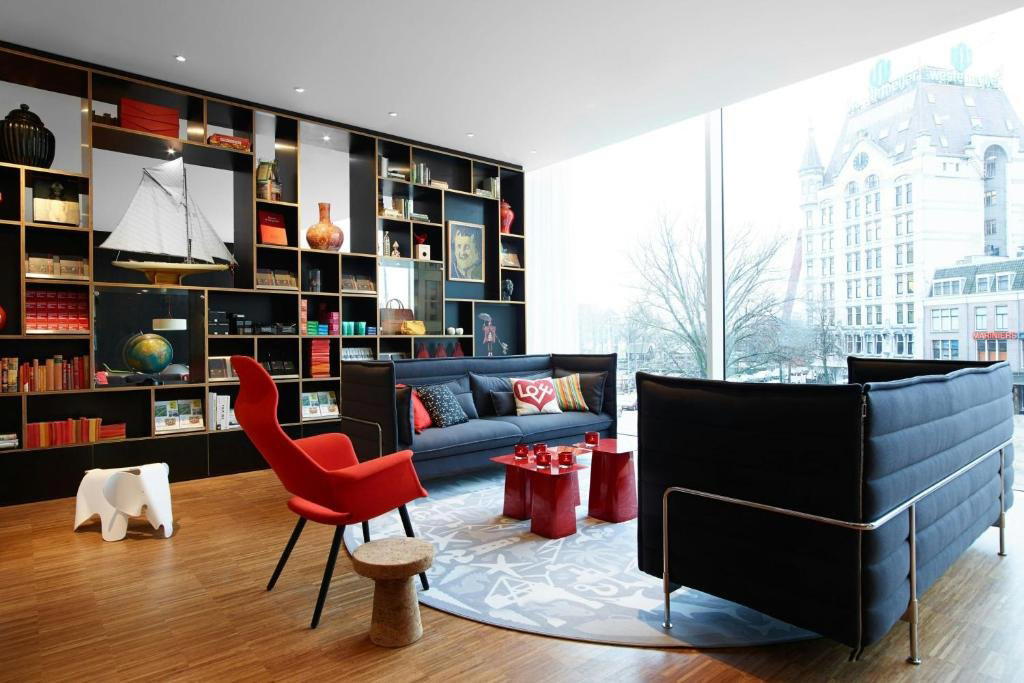
For visitors staying elsewhere in Rotterdam, the ship functions as a destination in itself. citizenM Rotterdam and Hotel nhow Rotterdam both sit on the Wilhelminapier, close enough that the SS Rotterdam makes a logical evening excursion. The Social Hub Rotterdam provides another base option for those spending time on this side of the Maas. Rotterdam's dining and hospitality scene has developed in ways that reward lateral exploration rather than concentration in a single district, and Katendrecht is an argument for that approach.
Elsewhere in the Netherlands, properties that similarly work with preserved or historically significant structures include De Librije in Zwolle, Château Neercanne in Maastricht, Château St. Gerlach in Valkenburg aan de Geul, and Weeshuis Gouda in Gouda. Each represents a version of the same Dutch approach to heritage hospitality: the building carries the story, and the operation's job is to make that story liveable rather than merely visible. Kazerne in Eindhoven takes a more industrial-modernist direction with the same underlying logic.
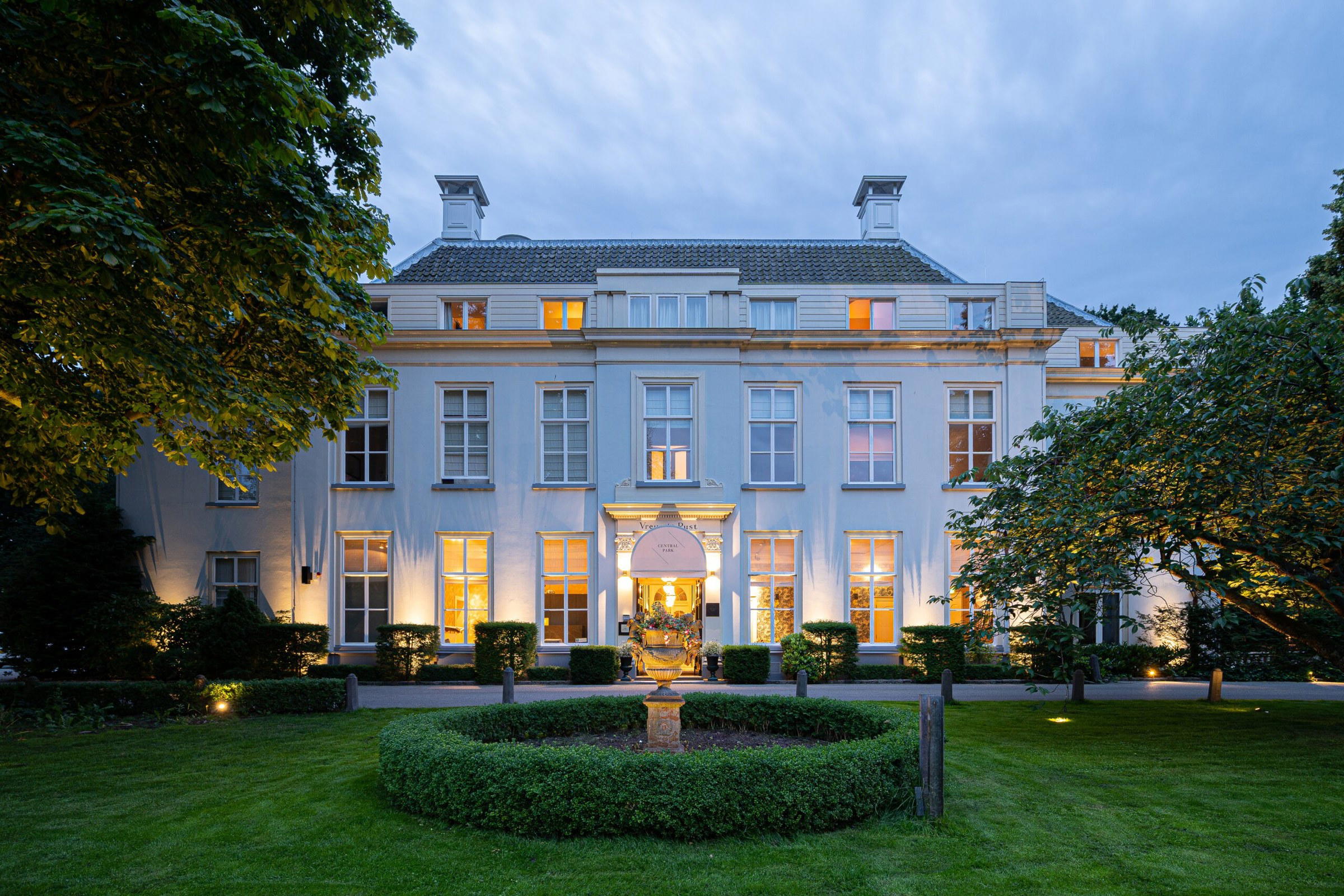
For those using Rotterdam as part of a broader Dutch itinerary, the country's hotel network covers considerable ground: Hotel 717 in Amsterdam, citizenM Schiphol Airport in Schiphol, Inntel Hotels Amsterdam Zaandam in Zaandam, 2L de Blend Hotel in Utrecht, Central Park Voorburg in Voorburg, De Plesman Hotel The Hague in The Hague, Grand Hotel Huis ter Duin in Noordwijk aan Zee, Posthoorn in Monnickendam, Bij Jef in Den Hoorn, Landgoed Hotel Het Roode Koper in Leuvenum, Mooirivier in Dalfsen, and Op Oost in Oosterend represent the range from airport transit to rural retreat. See our full Rotterdam restaurants and hotels guide for a mapped view of the city's current offer.
For international travellers who set their expectations against a different scale of heritage hospitality, Aman Venice in Venice, Aman New York in New York City, The Fifth Avenue Hotel in New York City, and Amangiri in Canyon Point all occupy the tier where architectural specificity is the primary product. SS Rotterdam operates on the same principle at a different price point and with a different cultural register: Dutch mercantile history expressed through the most ambitious ship the country's flagship line ever built.
Planning Your Visit
The SS Rotterdam is located at 3e Katendrechtse Hoofd 25, 3072 AM Rotterdam. Katendrecht is accessible from Rotterdam Centraal by tram and metro connections to the south bank, with the ship visible from the quayside once you reach the peninsula. Given the venue's scale and the variety of spaces aboard, arriving with time to explore before a meal or event is a practical recommendation rather than a romantic one: the ship rewards orientation.
Cuisine and Recognition
| Venue | Awards |
|---|---|
| SS RotterdamThis venue (the venue you are viewing) | Not listed |
| citizenM Rotterdam | Michelin Selected |
| Hotel nhow Rotterdam | Michelin Selected |
Continue exploring
More in Rotterdam
Hotels in Rotterdam
All hotels in Rotterdam →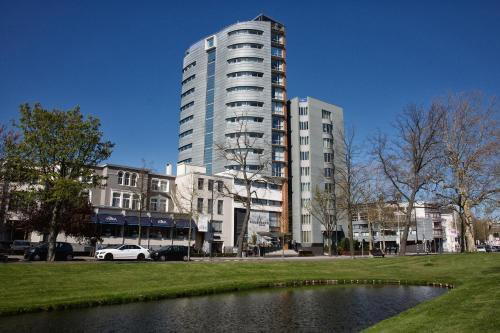
Bars in Rotterdam
All bars in Rotterdam →
Restaurants in Rotterdam
All restaurants in Rotterdam →
Wineries in Rotterdam
Browse all →
Details
- Classic
- Well Known
- Historic
- Family Vacation
- Weekend Escape
- Historic Building
- Waterfront
- Terrace
- Wi Fi
- Pool
- EV Charging
- Waterfront
- Skyline
- Elevator
Retro 1950s maritime elegance with Art Deco elements, wooden staircases, piano music in the lobby, and nostalgic decor creating a splendid, history-immersed atmosphere.