

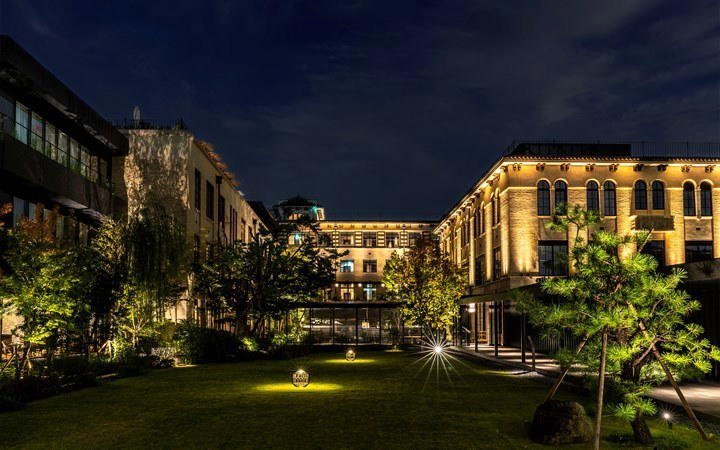
The former Nintendo headquarters in Kyoto's Shimogyo Ward, operational as an 18-key hotel since 2022, occupies a 1930s structure reworked by architect Tadao Ando. It holds 2025 World Luxury Hotel Awards recognition at regional, national, and continental levels, placing it among Japan's most awarded small luxury properties. For travellers seeking design-led intimacy over branded scale, Marufukuro represents a credible alternative to Kyoto's international hotel chains.
Pearl is the En Primeur Club membership app — saves, bookings, and concierge access live there. Same editors, same standards.
- Address
- Japan, 〒600-8126 Kyoto, Shimogyo Ward, Kagiyacho
- Phone
- +81 75-353-3355
- Website
- marufukuro.com
- Directions
- Get directions
 Saves & bookings on Pearl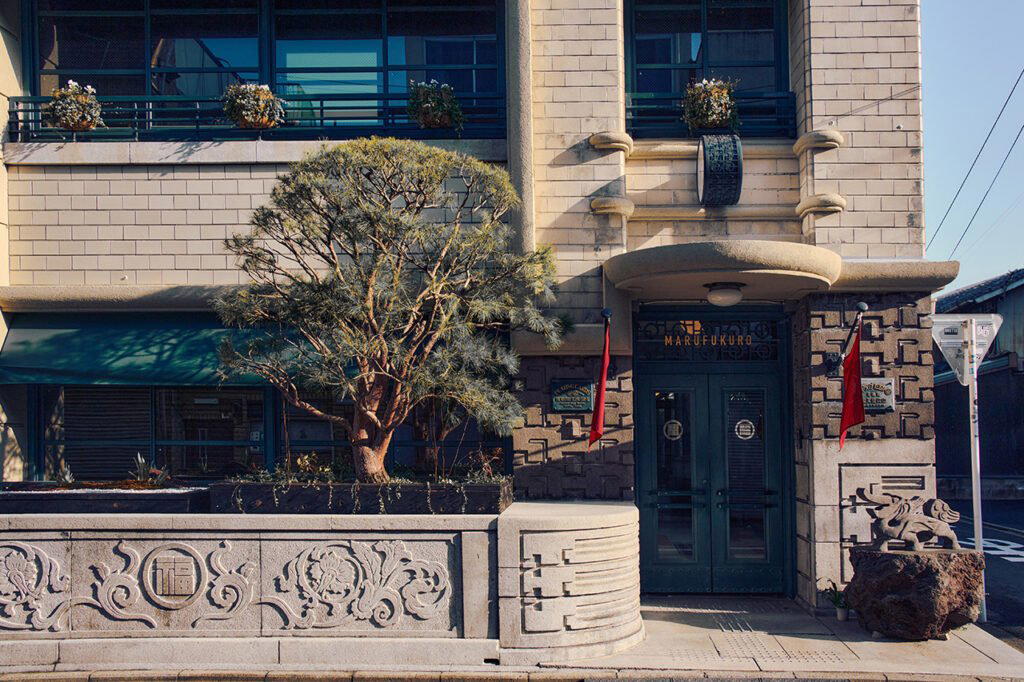
A 1930s Building Remade for the Small-Key Era
Kyoto's premium accommodation has split decisively over the past decade. On one side sit the large international flagships: the Four Seasons Hotel Kyoto, the Park Hyatt Kyoto, properties that trade on brand recognition and room count. On the other sits a smaller cohort of design-led, low-key-count hotels that prioritise architectural specificity and controlled intimacy. Marufukuro belongs firmly to that second group. At 18 keys, it operates at a small scale closer to The Shinmonzen or SOWAKA. The 2025 World Luxury Hotel Awards recognised it at regional, national, and continental levels.
The building itself sets the terms. Constructed in the 1930s as the headquarters of Marufuku Nintendo Co. the precursor entity to the company that would eventually produce the Famicom, the structure carries a particular weight of commercial history. When the hotel opened in 2022, the design brief was not to erase that history but to hold it in tension with a contemporary architectural intervention. That intervention came from Tadao Ando, whose concrete-and-light vocabulary shaped the redesign. The combination of a preserved interwar commercial building and an Ando reworking produces something that sits outside the conventions of either heritage ryokan or new-build boutique hotel.
Shimogyo Ward and What It Tells You About Placement
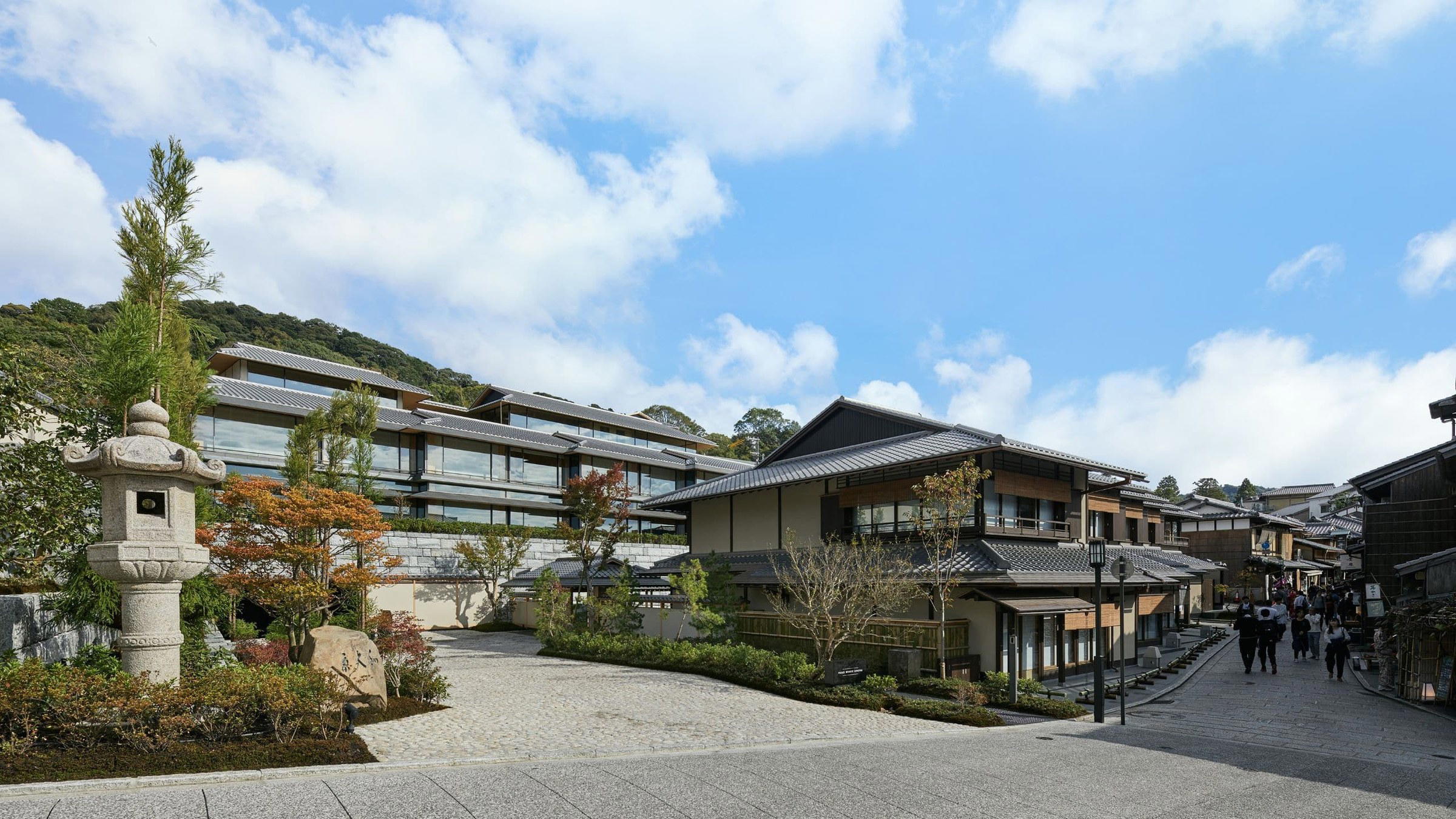
Location in Kyoto carries considerable editorial weight. The city's accommodation map roughly stratifies by district: Higashiyama for temple-adjacent heritage immersion, Gion for the preserved machiya streetscape, Nakagyo for accessibility, and Shimogyo for a more workmanlike urban grain that has, in recent years, attracted a wave of design-conscious openings. Marufukuro's address in Kagiyacho, Shimogyo Ward, places it in this latter zone. It is not a location that sells itself on proximity to a garden or a listed temple path. Instead, it asks guests to engage with a Kyoto that is less curated for tourism, closer to the grid of the city's commercial and residential life.
For comparison: Aman Kyoto deploys its signature seclusion in the northern hills above the city, an entirely different spatial proposition. HOTEL THE MITSUI KYOTO occupies a former samurai estate adjacent to Nijo Castle. Ace Hotel Kyoto planted itself in the Nakagyo cultural corridor around the former Kyoto Central Telephone Exchange. Each location signals something about the property's identity. Marufukuro's Shimogyo address signals a preference for architectural authenticity over scenic adjacency, which is a coherent editorial position for the hotel it has chosen to become.
The Architecture as the Core Offering
In the small-key luxury segment across Japan, the architectural or design proposition increasingly functions as the primary differentiator. At Benesse House in Naoshima, the entire premise is inhabiting a Tadao Ando museum complex. At Zaborin in Kutchan, spare modernist pavilions frame Hokkaido forest. At Gora Kadan in Hakone, a former imperial villa provides the bones. Marufukuro follows the same logic: the building's lineage, from its 1930s Marufuku construction through to the Ando conversion, is the asset the hotel sells around, not merely the container for amenities.
The preservation approach is meaningful here. Rather than stripping the original structure to create a neutral backdrop for contemporary interiors, the conversion retained the existing frame and its associations with Nintendo's early corporate history. That decision positions Marufukuro within a growing strand of Japanese adaptive reuse hospitality, a category that includes properties like Nishimuraya Honkan in Kinosaki-cho and, further afield, Asaba in Izu, where the physical accumulation of time is treated as value rather than obstacle.
Placing Marufukuro in the Wider Japan Small-Luxury Map
Japan's premium small-hotel sector is, by any global measure, deep and competitive. Properties like Amanemu in Mie operate within the Aman network's hyper-controlled quiet luxury grammar. ENOWA Yufu in Yufu, Fufu Kawaguchiko in Fujikawaguchiko, and Fufu Nikko in Nikko each anchor their identity in specific landscape or onsen contexts. Halekulani Okinawa and Jusandi in Ishigaki serve a coastal-resort register entirely distinct from urban Kyoto. Sekitei in Hatsukaichi-shi works within the traditional kaiseki-ryokan framework.
Marufukuro's position in this map is as an urban, architecturally-defined property whose claim to attention rests on the specificity of its building and the rigour of its conversion rather than on landscape, onsen access, or cuisine category. That is a narrower pitch, but it is a coherent one. The 2025 World Luxury Hotel Awards recognition across three geographic tiers suggests the pitch is resonating with the judging community.
For those calibrating against similar design-led urban properties in other markets: the Bvlgari Hotel Tokyo operates in a comparable prestige register but within a brand-driven framework that Marufukuro explicitly does not occupy. Aman Venice offers a useful international parallel for adaptive reuse of a historically significant building at low key count. The logic is the same: the building's history does a portion of the editorial work that a new-build property must achieve entirely through design specification.
Planning a Stay: What to Know Before You Book
Marufukuro opened in 2022, which means it is operating in its third year and has moved past the typical opening-year calibration period. At 18 keys, availability is limited by structure rather than by demand management, and the property's award recognition at three geographic tiers through the 2025 World Luxury Hotel Awards will have increased its profile among the relevant booking audience. Anyone considering a stay should treat lead time as a practical necessity. The Kagiyacho address in Shimogyo Ward is accessible from Kyoto Station, which anchors the shinkansen network, making the property workable as a base for wider Kansai movement as well as for those spending their full itinerary in the city. Our full Kyoto restaurants guide covers the dining options around the Shimogyo area and across the city's distinct neighbourhoods, which is relevant context given that Marufukuro's food and beverage programming specifics are not publicly detailed at the time of writing.
For travellers who carry the Tadao Ando catalogue as a travel frame, the property offers something that no amount of new-build luxury can replicate: the specific texture of an Ando intervention applied to a pre-existing structure with its own accumulated significance. That is a narrow audience, but Marufukuro appears to have been designed precisely for it.
A Tight Comparison
Comparable venues nearby, for context on price, style, and recognition.
| Venue | Price | Notes |
|---|---|---|
| MarufukuroThis venue — the venue you are viewing | $$$$ | Not listed |
| SOWAKA | $$$$ | Higashiyama, Restored traditional Japanese ryokan with modern comforts in a historic teahouse. |
| Imperial Hotel Kyoto | $$$$ | Higashiyama, Boutique heritage hotel in restored cultural landmark |
| The Hotel Higashiyama by Kyoto Tokyu Hotel, A Pan Pacific Hotel | $$$$ | Higashiyama, Blends traditional ryokan hospitality with contemporary luxury inspired by Kyoto's feudal-era Higashiyama district. |
| FAUCHON L'Hotel Kyoto | $$$$ | Shimogyō, Luxury boutique hotel merging French Parisian design with Japanese minimalism and contemporary aesthetics |
| Hyatt Regency Kyoto | $$$$ | Higashiyama, Traditional Japanese luxury with modern facilities |
Recognition history
Dated appearances from independent guides and award organizations, with the underlying list record or original source where available.
Michelin Selected
Michelin
World Luxury Hotel Awards WLHA Continent Winner
World Luxury Hotel Awards
World Luxury Hotel Awards WLHA Country Winner
World Luxury Hotel Awards
World Luxury Hotel Awards WLHA Regional Winner
World Luxury Hotel Awards
Continue exploring
More in Kyoto
Hotels in Kyoto
Browse all →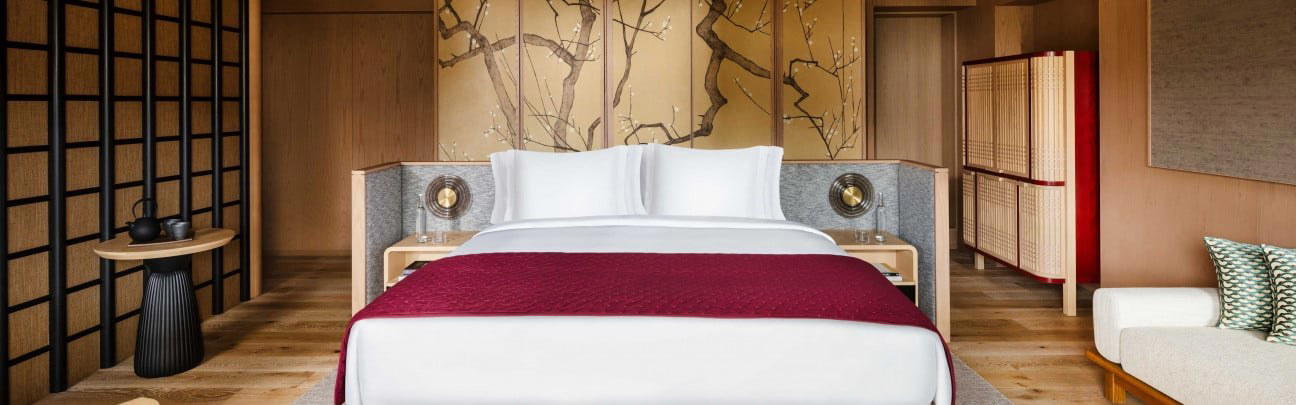
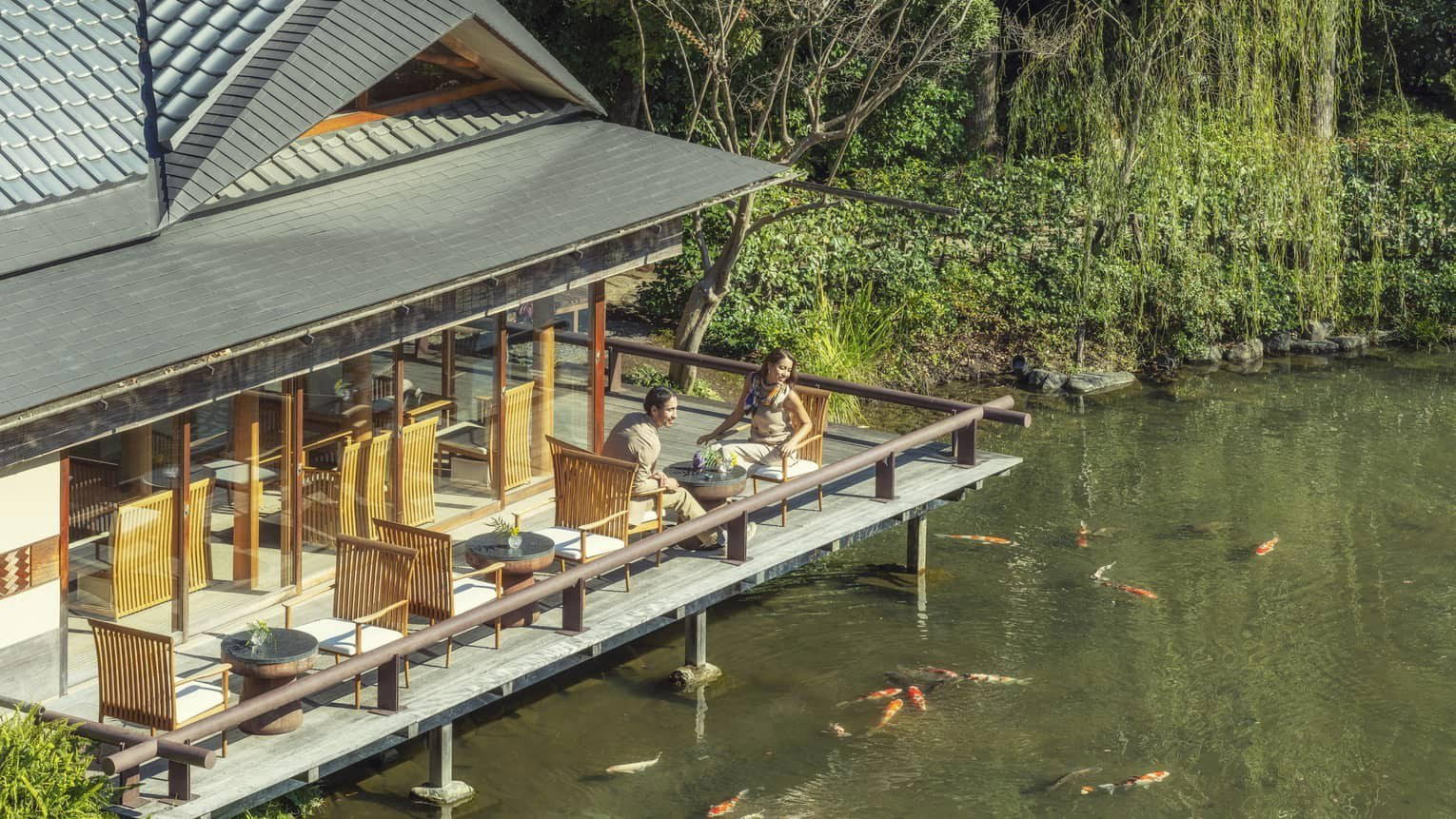
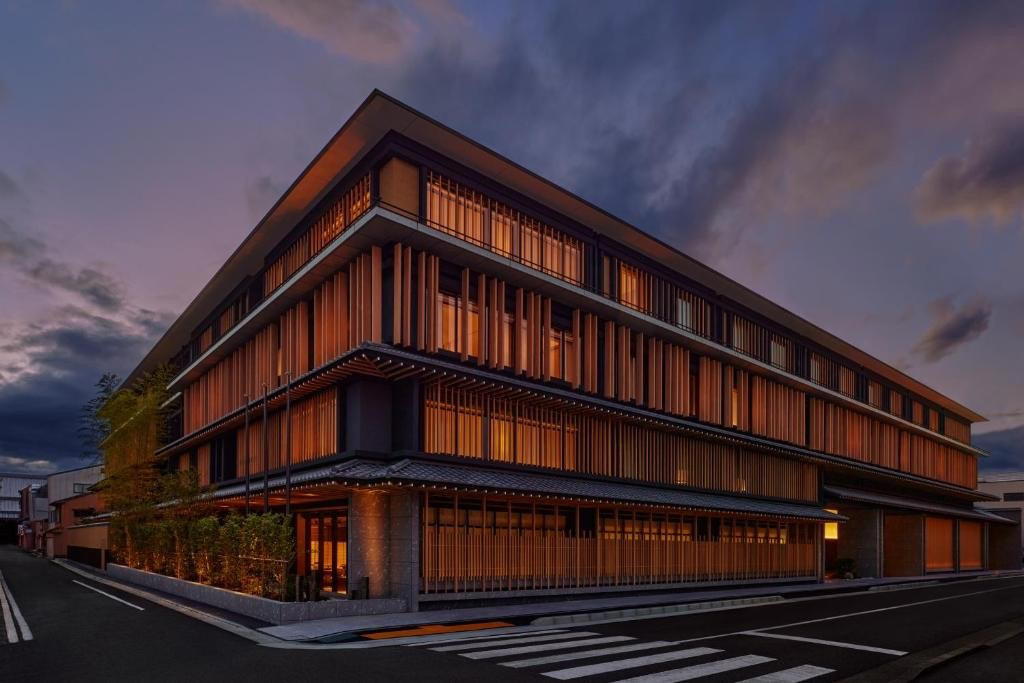
Bars in Kyoto
Browse all →
Restaurants in Kyoto
Browse all →
Wineries in Kyoto
Browse all →
At a Glance
- Elegant
- Historic
- Intimate
- Sophisticated
- Quiet
- Romantic Getaway
- Anniversary
- Celebration
- Weekend Escape
- Historic Building
- Garden
- Waterfront
- Design Destination
- Private Dining
- Spa
- Fitness Center
- Sauna
- Massage
- Bicycle Rental
- Bar
- Restaurant
- Garden
- Wi Fi
- Concierge
- Garden
- Waterfront
- Spa
- Fitness Center
- Sauna
- Massage
- Bicycle Rental
- Bar
- Restaurant
- Garden
- Wi Fi
- Concierge
Warm, nostalgic, and refined with Edo Period and 1930s Japanese design elements; intimate spaces filled with natural light, original furnishings, and carefully curated historical details that evoke stepping back in time.