
Small Luxury Hotels of the World Member
Kawana Hotel sits on the Izu Peninsula's eastern coastline, where two championship golf courses face the Pacific and a heritage of grand-hotel hospitality stretches back decades. It carries a cultural footnote, Marilyn Monroe spent her honeymoon here in 1954, that speaks to its long-standing position among Japan's resort institutions. The property occupies a tier between the intimate ryokan tradition and the large international resort format.

Pearl is the En Primeur Club membership app, where members save venues, book tables and use the concierge.
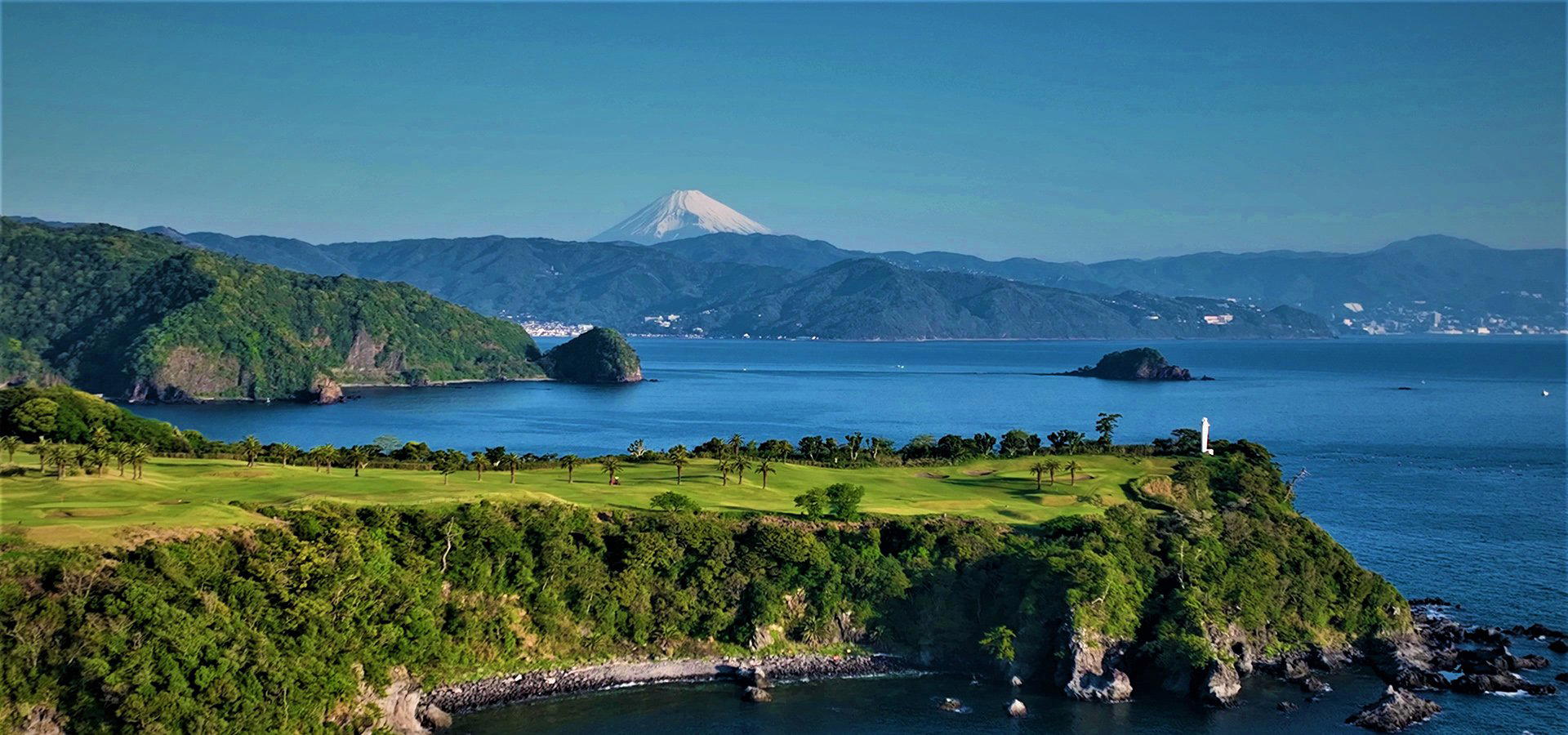
Where the Izu Coast Meets a Century of Resort Tradition
The stretch of Izu Peninsula coastline south of Atami has long drawn a particular kind of traveller: those who want Pacific air, pine-shaded fairways, and the sense of being somewhere with genuine history rather than recent construction. Kawana Hotel and Golf Course, occupying a clifftop position above Sagami Bay in Itō, fits squarely into that tradition. Opened in 1936 under the direction of Baron Okura as Japan's first internationally styled resort hotel, it predates the postwar luxury hotel boom and carries the architectural gravity of that era: low-slung, colonial-inflected buildings set against ocean panorama, with corridors that feel less like a hotel and more like a country estate that happens to have a front desk. The ocean horizon from the upper terraces sits uninterrupted, and the two championship golf courses (Fuji and Oshima) are routed across terrain that drops toward the sea in a way that makes the sport itself feel secondary to the setting.
The Dining Programme: Japanese Resort Cooking at Its Most Established
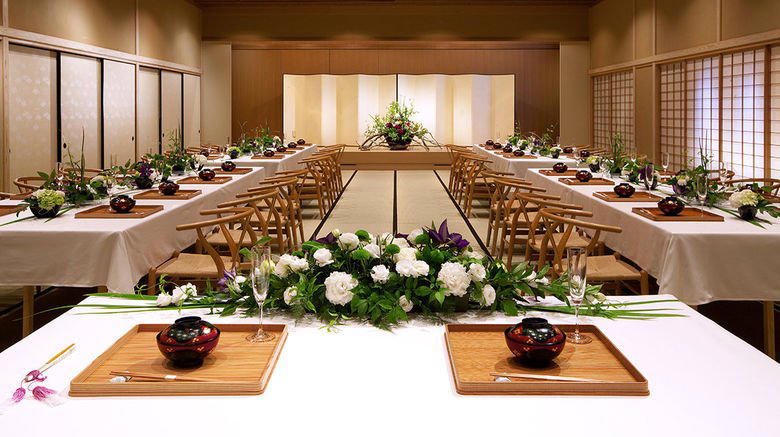
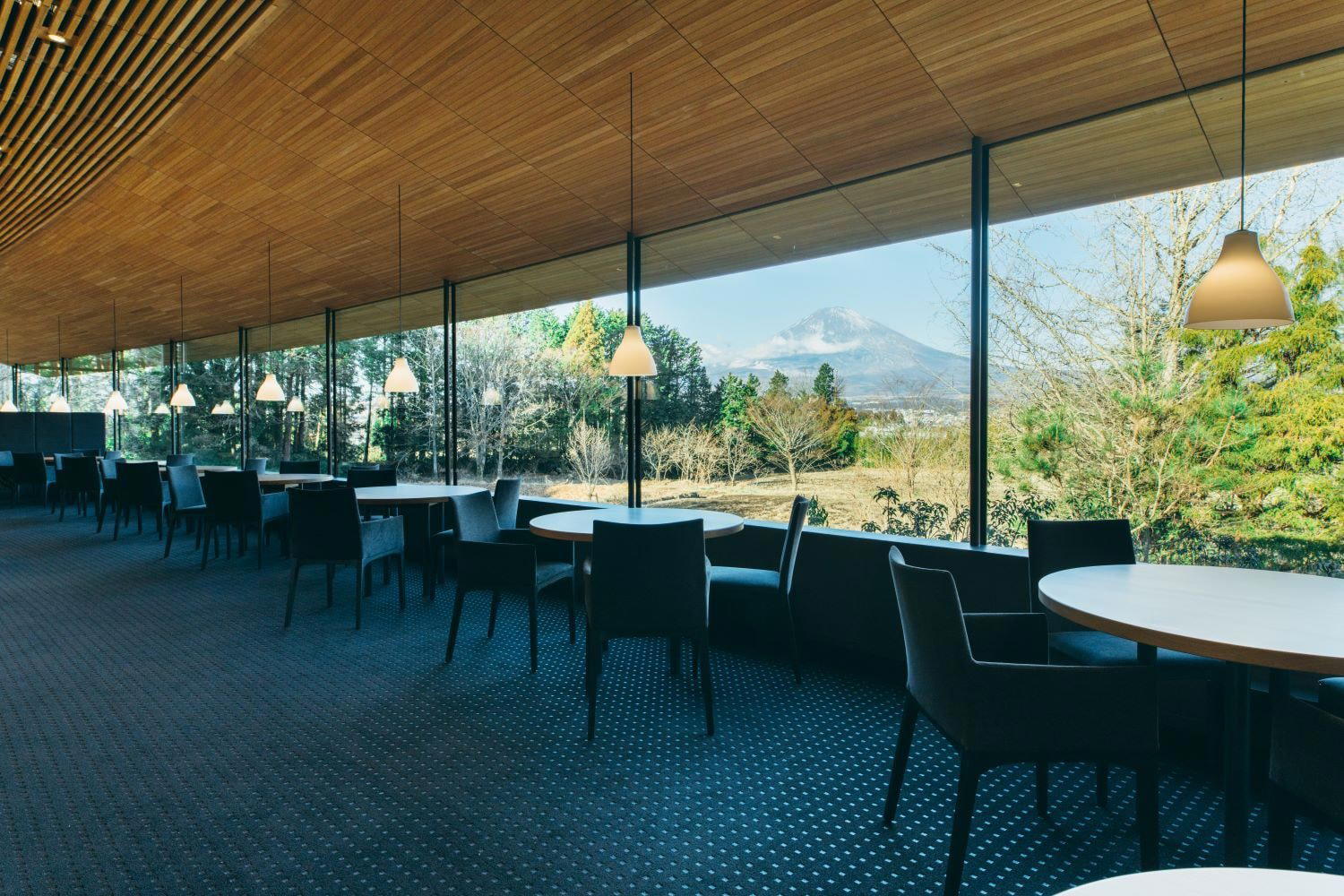
Resort dining in Japan's heritage properties tends to split between two modes: a kaiseiki-anchored Japanese programme that treats the meal as ceremonial, and a Western dining room that indexes heavily on the property's international history. Kawana runs both, and the pairing reflects the hotel's original design intent as a venue equally comfortable to Japanese and foreign guests. The main dining room has served European-style table d'hôte menus since the Showa era, a format that feels less dated here than it might elsewhere because the room itself provides the context: high ceilings, floor-to-ceiling ocean windows, white tablecloths and service cadences that have been practised long enough to feel earned rather than performed.
The Japanese restaurant operates on a separate register, drawing on Shizuoka's considerable larder. The prefecture produces some of Japan's most consistent wasabi (the Izu region accounts for a substantial share of national output), and local seafood from Sagami Bay appears consistently across menus at properties of this calibre. Sakura shrimp, haul-to-plate whole fish, and regional citrus round out the seasonal palette. For properties in this bracket along the Izu coast, the question is rarely whether local ingredients appear but how deliberately the kitchen connects them to place. At an institution with Kawana's longevity, that connection tends to be structural rather than trend-driven.
The golf club dining component adds a third layer, with post-round meals forming a distinct social ritual at Japanese resort clubs. This is not incidental: in the culture of members' clubs and resort golf that Kawana has served for nearly ninety years, the nineteenth hole carries as much weight as the first tee. The property's F&B programme is calibrated accordingly, with the golf facilities and the main hotel operating as complementary rather than competing dining destinations.
The Marilyn Monroe Signal and What It Actually Tells You
Kawana is often referenced in connection with Marilyn Monroe's honeymoon stay in 1954, when she and Joe DiMaggio visited Japan during DiMaggio's goodwill baseball tour. The detail circulates because it is accurate and verifiable, but its editorial value lies less in celebrity association than in what it confirms: that Kawana was already, by the mid-twentieth century, the kind of property that international figures of that profile were directed to. Japan's postwar luxury resort circuit was small, and Kawana's position in it was near the leading. That positioning has remained stable across decades in a way that many resort properties cannot claim. Properties with genuine longevity in the Japanese luxury market, such as Asaba in Izu and Gora Kadan in Hakone, carry similar signals: the guest history is not the selling point but it is useful evidence of sustained standard.
Register and Atmosphere: More Composed Than High-Energy
Kawana sits firmly at the composed, unhurried end of the Japanese luxury resort spectrum. It is not an onsen ryokan in format or philosophy, though thermal bathing is available in the region broadly. It is not a design-forward property repositioning itself for a younger luxury traveller, as some newer entrants, including ENOWA Yufu in Yufu and Zaborin in Kutchan, have done. Kawana's energy is that of a well-run private club where the default pace is slow and the social contract involves a certain degree of formality. Dress expectations at dinner in the main dining room align with that register. Guests arriving from Tokyo for a weekend of golf and seafood meals will read the atmosphere immediately; those expecting nightlife or high-stimulus programming will be better served elsewhere.
For context on the broader Izu corridor, Izu-Imaihama Tokyu Hotel and Shimoda Tokyu Hotel occupy the same prefecture but at a different price register and with a more resort-casual character. Kawana sits above them in formality and in the cultural weight it carries as an established institution.
Room Categories and What Guests Tend to Choose
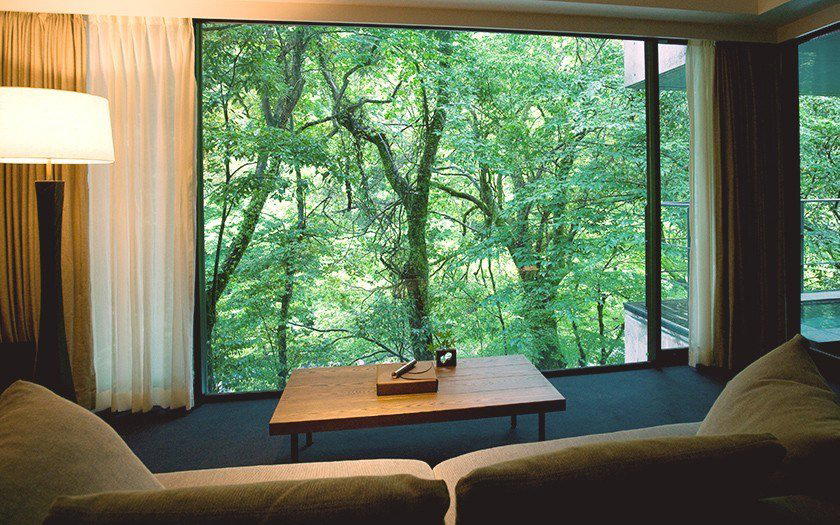
Japanese resort hotels of Kawana's era were built with a clear hierarchy of room types, and that hierarchy still operates in practice. Ocean-facing rooms command the most attention for obvious reasons: the cliff position and the Bay of Sagami view are the property's single strongest physical asset, and rooms oriented toward the courses and sea make that asset legible from the first morning. Guests familiar with heritage Japanese resorts generally gravitate toward the categories with the most direct connection to the landscape rather than the largest floor plan. At properties like Atami Izusan Karaku or Nishimuraya Honkan, the same logic applies: the room's relationship to its setting matters more than square footage.
The comparison set includes resort properties across the country where golf, formal dining, and ocean outlook are the central programme, rather than private thermal baths and kaiseki courses delivered to the room. That distinction shapes the guest profile considerably.
Getting There and Planning Logistics
Itō sits roughly ninety minutes south of Tokyo on the Izu Kyuko line, connecting via Atami on the Tokaido Shinkansen. The journey is one of Japan's more satisfying resort approaches: the train follows the coast from Atami, with intermittent Pacific views before arriving at Itō station, from which the hotel is a short drive. The timing makes Kawana genuinely viable as a weekend extension of a Tokyo trip without requiring domestic flight connections, which differentiates it from more remote luxury properties such as Halekulani Okinawa or Jusandi in Ishigaki. Golf tee times on the Fuji and Oshima courses are in demand during spring and autumn when the fairway conditions and coastal visibility are at their most consistent, and booking dining alongside rooms is standard practice for guests arriving for a full resort programme. For the wider Shizuoka dining and hotel context, see our full Shizuoka restaurants guide.
For travellers building a longer Japan itinerary, Kawana connects naturally into a coastal route that might also include Amanemu in Mie for onsen immersion or HOTEL THE MITSUI KYOTO for heritage urban accommodation. Urban reference points at a different scale include Bvlgari Hotel Tokyo and Aman New York, both of which occupy a different tier and format but serve a broadly comparable international guest profile for those cross-referencing across regions.
Price and Recognition
Comparable venues nearby, for context on price, style, and recognition.
| Venue | Price | Awards | Notes |
|---|---|---|---|
| Kawana Hotel & Golf CourseThis venue (the venue you are viewing) | Not listed | Small Luxury Hotels of the World Member | Not listed |
| Izu-Imaihama Tokyu Hotel | $1–100 | Preferred Hotels Member | Kawazu, beachfront resort with onsen facilities |
| Shimoda Tokyu Hotel | $100–200 | Preferred Hotels Member | Shimoda, Izu Peninsula, Contemporary Japanese resort with traditional hot-spring heritage; renovated in 2017 to blend modern comfort with authentic onsen culture. |
| Kyo no Ondokoro Kamanza Nijo #2 | Not listed | Michelin Selected | Nakagyo, Renovated traditional machiya townhouse |
| Haneda Excel Hotel Tokyu | Not listed | Preferred Hotels Member | Ōta, Airport hotel blending modern design and functionality |
| Hanaya Ryokan (別所温泉 旅館花屋) | Not listed | 4-Star | Bessho Onsen, Taisho-era heritage ryokan blending traditional Japanese aesthetics with early 20th-century modernist design elements. |
Recognition history
Dated appearances from independent guides and award organizations, with the underlying list record or original source where available.
Small Luxury Hotels of the World Member
Small Luxury Hotels of the World
Continue exploring
More in Shizuoka
Hotels in Shizuoka
All hotels in Shizuoka →
Bars in Shizuoka
Browse all →
Details
- Scenic
- Elegant
- Classic
- Romantic Getaway
- Weekend Escape
- Golf Course
- Panoramic View
- Wi Fi
- Pool
- Spa
- Fitness Center
- Room Service
- Concierge
- Golf Course
- Tennis Court
- Sauna
- Waterfront
- Garden
- Mountain
- Elevator
- Wheelchair Accessible
Serene and elegant atmosphere with natural light from panoramic sea views, historic art deco interiors, and relaxing hot spring baths.