
Tabelog Bronze #127
Our verdict
Ichi Unagi gives Shizuoka’s eel tradition a small-counter expression in Itō, where the decision is less about variety than about focus. The case for going rests on format and recognition: nine counter seats, unagi as the sole culinary lane, a Tabelog Award 2026 Bronze citation, and selection for Tabelog Unagi 100 in 2024 and 2022.

Pearl is the En Primeur Club membership app — saves, bookings, and concierge access live there. Same editors, same standards.
- Address
- 1 Chome-9-6 Yukawa, Itō, Shizuoka 414-0002, Japan
- Phone
- +81 557-37-9927
- Hours
- Mon 12–1:30 PM, 5:30–7 PMTue–Wed ClosedThu–Sun 12–1:30 PM, 5:30–7 PM
- Website
- tabelog.com
- Directions
- Get directions
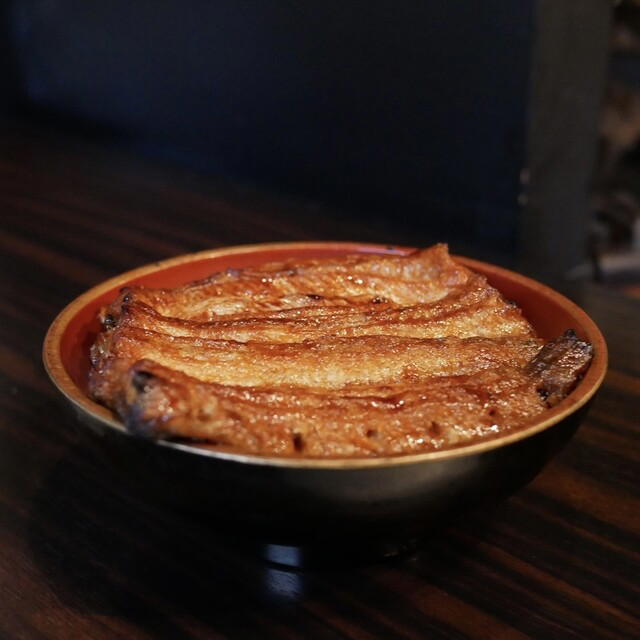
Itō’s restaurant rhythm changes quickly around the station: seaside inns, day-trip traffic, and compact specialty counters sit close together, and eel fits that geography better than flashier forms of dining. Unagi is a craft built on repetition, heat control, and sourcing discipline, not menu sprawl. At Ichi Unagi, the room’s nine-seat counter makes that point before the meal does. This is the small-format end of Shizuoka dining, where the value of a seat comes from proximity to the work rather than from luxury theatre.
Shizuoka has a serious claim on freshwater eel culture because the prefecture sits between lake, river, and coastal foodways. Hamamatsu is the name many travelers associate with unagi, but the wider prefecture has a deeper range than a single city label suggests. Itō adds a different context: onsen-town pacing, seafood-town expectations, and a dining scene where small restaurants can carry narrow specialisms without needing a broad tourist menu. That matters because eel restaurants depend on confidence. A kitchen that commits to one category asks diners to judge fundamentals: source, cut, steam, grill, sauce, rice, pacing.
Shizuoka eel culture, seen through a nine-seat counter
Japan’s unagi tradition splits broadly between regional technique, with Kanto-style preparation associated with steaming before grilling and Kansai-style preparation often grilled more directly. The difference is not academic; it changes texture, timing, and how the tare reads against the flesh. Without overclaiming the kitchen’s exact method, the important editorial point is that a dedicated unagi counter lives or dies by these decisions. There is little camouflage. Sauce cannot rescue poor sourcing, and a generous portion cannot disguise clumsy heat.
Ichi Unagi’s recognition places it in a national conversation rather than a purely local one. The restaurant is a Tabelog Award 2026 Bronze winner and was selected for Tabelog Unagi 100 in both 2024 and 2022, with a Tabelog score listed at 4.01 in the 2026 award data. For a single-category restaurant outside the Tokyo-Osaka-Kyoto axis, that combination is meaningful. It signals that the counter competes within Japan’s specialist unagi tier, not merely within Itō’s visitor economy.
The narrowness is the appeal. In broader Shizuoka dining, travelers can move from local seafood to kaiseki, Chinese cooking, yakitori, and bar-led evenings; Aozora, Asaba (Kaiseki), Blue Label, Chabo, and Chinese Muramatsu all point to different parts of the prefecture’s dining map. Eel asks for a narrower lens. It rewards diners who want one ingredient handled with seriousness rather than a multi-course survey of place.
Ingredient discipline is the real luxury here
Premium unagi is ingredient-led in a way that can be easy to miss. The diner sees lacquer, rice, and steam, but the meaningful decisions happened earlier: procurement, holding, portioning, and the consistency required to grill fatty fish without flattening its character. In Japan, eel also carries seasonality in the cultural imagination, especially around summer’s doyō no ushi no hi, when demand rises sharply. Serious counters are judged less by novelty than by whether they can hold quality when attention on the ingredient spikes.
That is where the format helps. A nine-seat counter reduces the number of variables in service. It also changes the reader’s expectations. This is not the place to look for a long drinks program or a table built for lingering through several unrelated courses. Sake and shochu are listed, but the center of gravity remains eel. The room is non-smoking, private rooms are not part of the setup, and the experience is better understood as focused rather than expansive.
Comparison is useful only when it clarifies the category. Unagi Musashino, Unagi (Eel) in Saitama occupies a similar specialist lane at a comparable spend, which shows how Japan’s eel restaurants often compete on trust, repetition, and ingredient handling rather than on breadth. The better question is not which city has the definitive version; it is whether the restaurant’s format gives eel enough attention to justify making it the meal’s whole point.
For travelers building a Shizuoka itinerary, Ichi Unagi works as a counterweight to ryokan dining and coastal seafood meals. Itō’s appeal often gets summarized through hot springs and views, but its food culture is strongest when small, technical restaurants are allowed to remain small. Pairing an eel lunch or dinner with a stay in the region makes more sense than treating it as a casual add-on. For wider planning, Our full Shizuoka restaurants guide, Our full Shizuoka hotels guide, Our full Shizuoka bars guide, Our full Shizuoka wineries guide, and Our full Shizuoka experiences guide give the prefecture a broader frame.
Who should make the detour
The right diner is someone who values compression: few seats, one category, and little distraction from the ingredient. That makes the restaurant better suited to solo diners and pairs than to groups expecting a social room. It is also a smart stop for travelers who have eaten eel in major cities and want to see how a coastal Shizuoka counter positions the same tradition outside the usual metropolitan circuit.
The caution is equally clear. A small counter has less tolerance for loose planning, and a specialist unagi meal is not a flexible compromise for diners who want a wide menu. Payment is also part of the practical calculus, since cards, electronic money, and QR payments are not accepted. Those details do not reduce the appeal; they define the kind of meal being offered. This is old-school specialist dining with modern recognition, and the discipline is the point.
Readers extending the trip beyond Shizuoka can use the contrast to sharpen their own priorities: beef-focused cooking at -Grilled beef Sukiyaki- KAMAKURA TANUKIAN 鎌倉 たぬき庵 in Kamakura, charcoal seafood at. 鮪と炭火焼き うお炭 秋葉原店 in Tokyo, café culture at.cafe in Osaka, contemporary regional dining at.know in Kumamoto, Vietnamese cooking at (Shoku) Vietnam in Kawasaki, curry specialization at [Curry Senmon Ten] Maruyama Kyoju. in Sapporo, and sake-bar dining at Jōdo Saké Bar in Los Angeles. Against that range, Ichi Unagi is a reminder that a single ingredient, handled with enough restraint, can carry an entire meal.
Frequently asked questions
Is Ichi Unagi okay with children?
Those details are not published. That format suits diners who are comfortable with a compact, counter-led meal rather than a loose family setup. Check the venue's official channels for the latest details.
Is Ichi Unagi better for a quiet night or a lively one?
It suits a quiet night. With only nine counter seats, no private rooms, and a no-charge counter setup in Shizuoka, the room is built for focus rather than noise.
How would you describe the cuisine at Ichi Unagi?
Ichi Unagi serves Unagi (Eel) cuisine.
How much does it cost to eat at Ichi Unagi?
Pricing at Ichi Unagi is listed as JPY 6,000 - JPY 7,999 JPY 6,000 - JPY 7,999.
What are Ichi Unagi's hours?
Hours at Ichi Unagi: Mon: 12–1:30 PM, 5:30–7 PM; Tue: Closed; Wed: Closed; Thu: 12–1:30 PM, 5:30–7 PM; Fri: 12–1:30 PM, 5:30–7 PM; Sat: 12–1:30 PM, 5:30–7 PM; Sun: 12–1:30 PM, 5:30–7 PM.
Where exactly is Ichi Unagi?
Ichi Unagi is located in Shizuoka.
How It Stacks Up
Comparable venues by cuisine and price in the same metro.
| Venue | Cuisine | Price | Awards | Notes |
|---|---|---|---|---|
| Ichi UnagiThis venue — the venue you are viewing | Traditional Japanese Unagi | $50–100 | Tabelog Bronze #127 | Not listed |
| Taihei | Traditional Japanese Izakaya & Seafood | $50–100 | Tabelog 100 #50 | Aoi Ward (Ryougaemachi) |
| Go | Japanese Grill & Izakaya-Style Dining | $50–100 | Tabelog 100 #68 | Aoi-ku |
| Simples | Modern French-inspired Japanese Omakase | $150–200 | Tabelog Bronze #413 | Mariko, Suruga-ku |
| Suehiro Zushi | Traditional Shimizu Sushi with Hagashi Tuna | $100–150 | Tabelog 100 #72 | Shimizu Ward |
| Chabo | Traditional Yakitori | $50–100 | Tabelog 100 #28 | Aoi Ward |
Recognition history
Dated appearances from independent guides and award organizations, with the underlying list record or original source where available.
Tabelog Bronze #127
Tabelog
Full recognition history (2 entries)
Tabelog 100 #8 · No. 8
Tabelog · Tabelog 100 - Unagi - 2024
Details
- Classic
- Cozy
- Intimate
- Solo
- Special Occasion
- Sake Program
- A La Carte
Current opening hours
- Monday
- 12–1:30 PM, 5:30–7 PM
- Tuesday
- Closed
- Wednesday
- Closed
- Thursday
- 12–1:30 PM, 5:30–7 PM
- Friday
- 12–1:30 PM, 5:30–7 PM
- Saturday
- 12–1:30 PM, 5:30–7 PM
- Sunday
- 12–1:30 PM, 5:30–7 PM
Hours can change for holidays and private events. Last verified .
Relaxing counter-only space with stylish and intimate atmosphere.